Asbestos fibers vary in length and diameter and individual fibers are too small to identify with the naked eye. One OSHA air-sampling method counts fibers at least 5 micrometers long with a length-to-width ratio of at least 3:1. That is a counting rule for the method, not a claim that shorter fibers do not exist or are safe.
Asbestos is a group of fibrous minerals
Asbestos refers to several naturally occurring minerals that form long, thin fibers. The Agency for Toxic Substances and Disease Registry explains that an individual asbestos fiber is too small to see with the naked eye. A visible speck or a material’s texture cannot establish whether it contains asbestos.
Fibers vary in length, diameter and mineral type. A single number does not describe every fiber in a building material or air sample. If material may contain asbestos, do not disturb it simply to compare it with a photograph or an online size chart.
Length and diameter are different measurements
A micrometer, written µm, is one thousandth of a millimeter. Fiber length measures along the fiber; diameter describes its width. A fiber can be long relative to its width while both measurements remain microscopic.
Laboratories may describe an aspect ratio, which compares length to width. A 3:1 ratio means the length is at least three times the width; it does not specify an absolute length or identify the mineral by itself. Ask the laboratory which method and definitions were used.
What OSHA’s counting definition means
In an OSHA asbestos air-sampling procedure, a countable fiber is at least 5 µm long with a length-to-width ratio of at least 3:1. This definition makes results from that procedure comparable under its rules. It is not a minimum size below which asbestos cannot exist.
Asbestos fibers can be too thin for phase contrast microscopy to see. A method’s optical limits and counting criteria affect what it reports. Do not infer that uncounted smaller fibers are harmless or absent.
Different methods see different things
Phase contrast microscopy and transmission electron microscopy have different capabilities and limitations. OSHA explains that phase contrast microscopy cannot distinguish asbestos fibers from other fibrous particles and may not see very thin fibers. A laboratory report should state the method and what was measured.
An air sample and a bulk material sample answer different questions. A result is tied to the sample, collection conditions, laboratory method and detection limit; it is not a permanent guarantee about every area or future disturbance. A qualified inspector can help decide what question to test.
Why size matters without providing a safe shortcut
Fiber dimensions and durability can influence where inhaled fibers deposit and how they persist. ATSDR identifies length, diameter and persistence among factors relevant to health effects. Exposure level and circumstances also matter.
Do not use a size cutoff to decide that an exposure is safe or to diagnose a health condition. A clinician can discuss a person’s exposure history and health concerns. A building professional can assess the material and appropriate controls.
Suspect material in a home
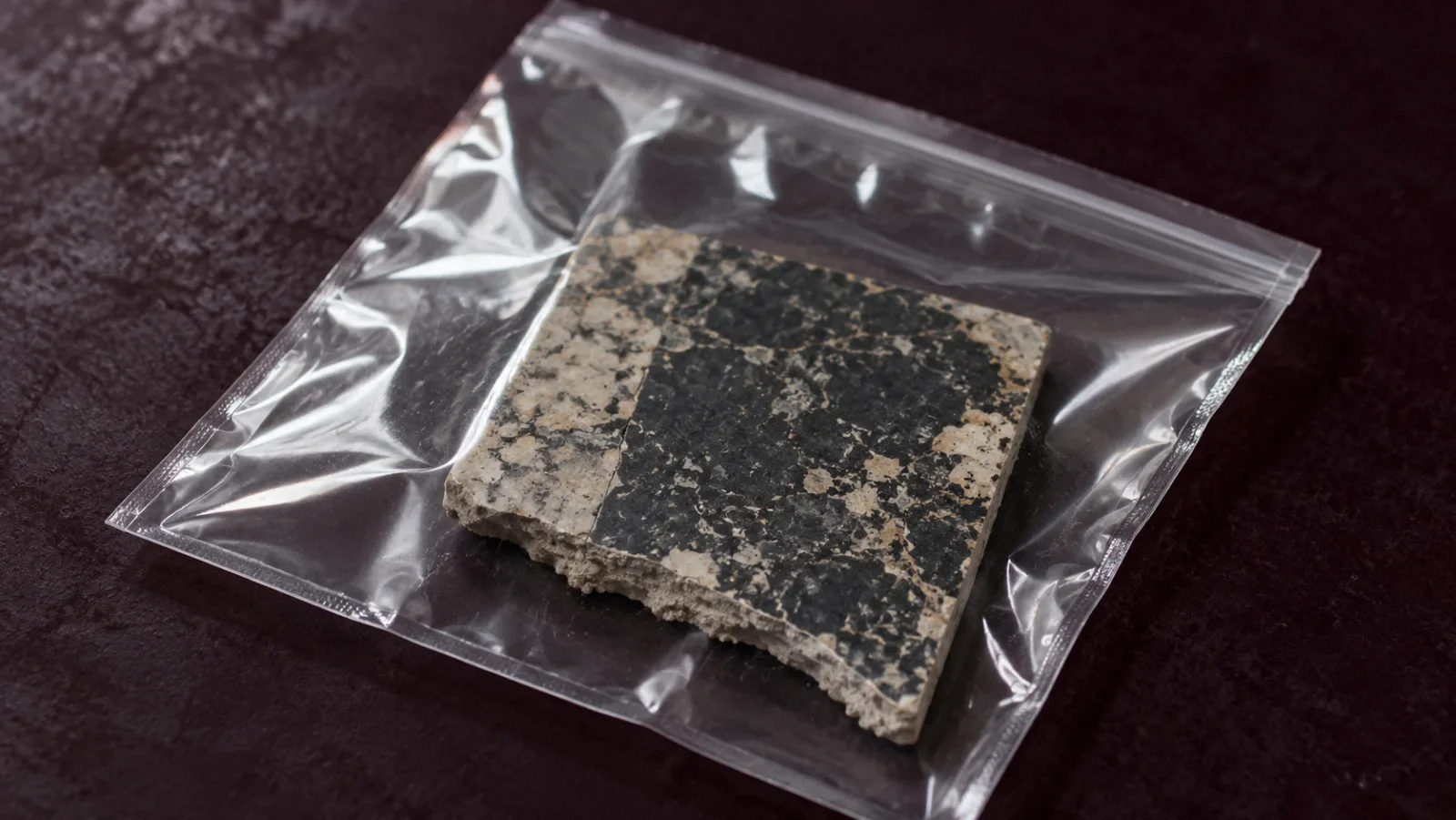
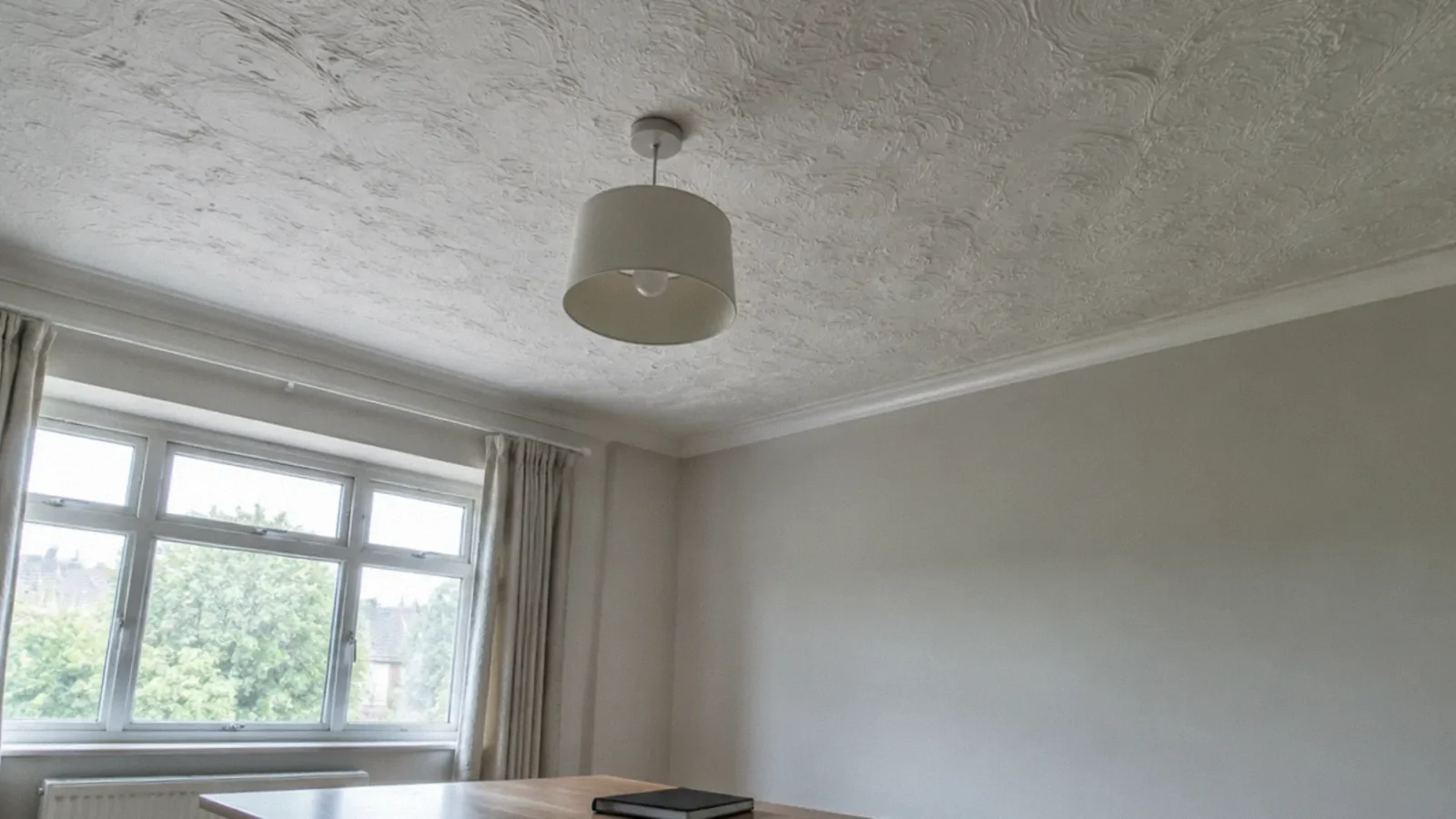
Older flooring, insulation, textured finishes and other building products can contain asbestos, but age or appearance alone does not prove it. An intact suspect material may present a different situation from material being cut, drilled or broken. Stop work that may disturb it until it has been evaluated.
Do not sweep, sand, scrape or take a sample unless you are qualified and the applicable procedures permit it. Isolate the area as appropriate and contact a qualified asbestos inspector or the relevant local agency. In California, follow applicable state and local requirements.
Reading a report
Ask whether a result relates to air or bulk material, what method was used, the sample location and date, and the method’s detection limit. A non-detect means the target was not detected above that method’s reporting limit in that sample; it is not proof of zero fibers everywhere.
If work is planned, ask how the sampling plan relates to the materials that will be disturbed. A professional can explain uncertainty, any required notifications and appropriate next steps. Keep the report with the property and renovation records.
If material was disturbed
Stop the activity and keep others away from the affected area. Do not attempt to clean dust with an ordinary vacuum or dry sweep it. Contact a qualified asbestos professional or local agency for a site-specific assessment and cleanup plan.
If you are concerned about a possible exposure, note what happened and discuss it with a healthcare professional. A single internet estimate of particle size cannot determine an individual’s dose or future health outcome.
Your next-step checklist
- Do not identify asbestos by sight or color.
- Treat 5 µm as a method-specific counting criterion, not a safety threshold.
- Avoid disturbing suspect materials.
- Ask a qualified professional about testing and next steps.
Related questions
How small are asbestos fibers?
They vary. Individual fibers are too small to identify with the naked eye, and some are too thin for phase contrast microscopy to see.
Are all asbestos fibers at least 5 micrometers long?
No. The 5 µm value is a counting criterion in a particular OSHA air-sampling procedure, not a minimum physical size.
Can I tell whether dust is asbestos by looking at it?
No. Identification requires an appropriate assessment and laboratory method.
Does a negative sample prove there is no asbestos anywhere?
No. It describes the sampled material or air under the method’s detection limit and collection conditions.
Sources & context
Public guidance supports the principles in this article. The practical questions and examples are editorial interpretation, not a site assessment or a coverage decision. State-specific rules apply only where identified.
- OSHA: Asbestos standard and fiber definitionfederal workplace standard
- OSHA: Asbestos in air methodfederal laboratory method
- OSHA: Evaluating and controlling asbestos exposurefederal workplace guidance
- ATSDR: Asbestos and your healthfederal public health guidance
- OSHA: Polarized light microscopy of asbestosfederal laboratory guidance