Keep people away from the water, avoid wet electrical equipment and stop a known water source only if you can reach its shutoff safely. A toilet backup may contain sewage; stop using affected plumbing and seek appropriate help. The source and affected materials determine the cleanup.
Keep people away from hazards
A flooded bathroom can have slippery floors, contaminated water and electrical equipment close to the water. Keep children and pets out. Do not stand in water to reach an outlet, hair dryer, switch or breaker. If water is near electricity, seek qualified help.
If the ceiling is sagging, water is spreading rapidly or there is another immediate danger, leave the area. A towel on the floor does not control an active electrical or structural hazard. Call emergency services when there is an immediate threat.
Stop the source if it is safe
If a sink or tub faucet is running, turn it off if you can do so without entering a hazardous area. A toilet or fixture may have a nearby supply valve; use it only if you can identify and reach it safely. If a supply pipe is leaking and the fixture valve cannot stop it, a known main shutoff may be needed.
Do not force an old valve or reach through water near electrical equipment. A plumber can stop a source you cannot safely control. If water is coming from a drain or toilet backup rather than a supply line, closing a fixture supply alone may not stop wastewater from elsewhere.
Do not add water to a backup
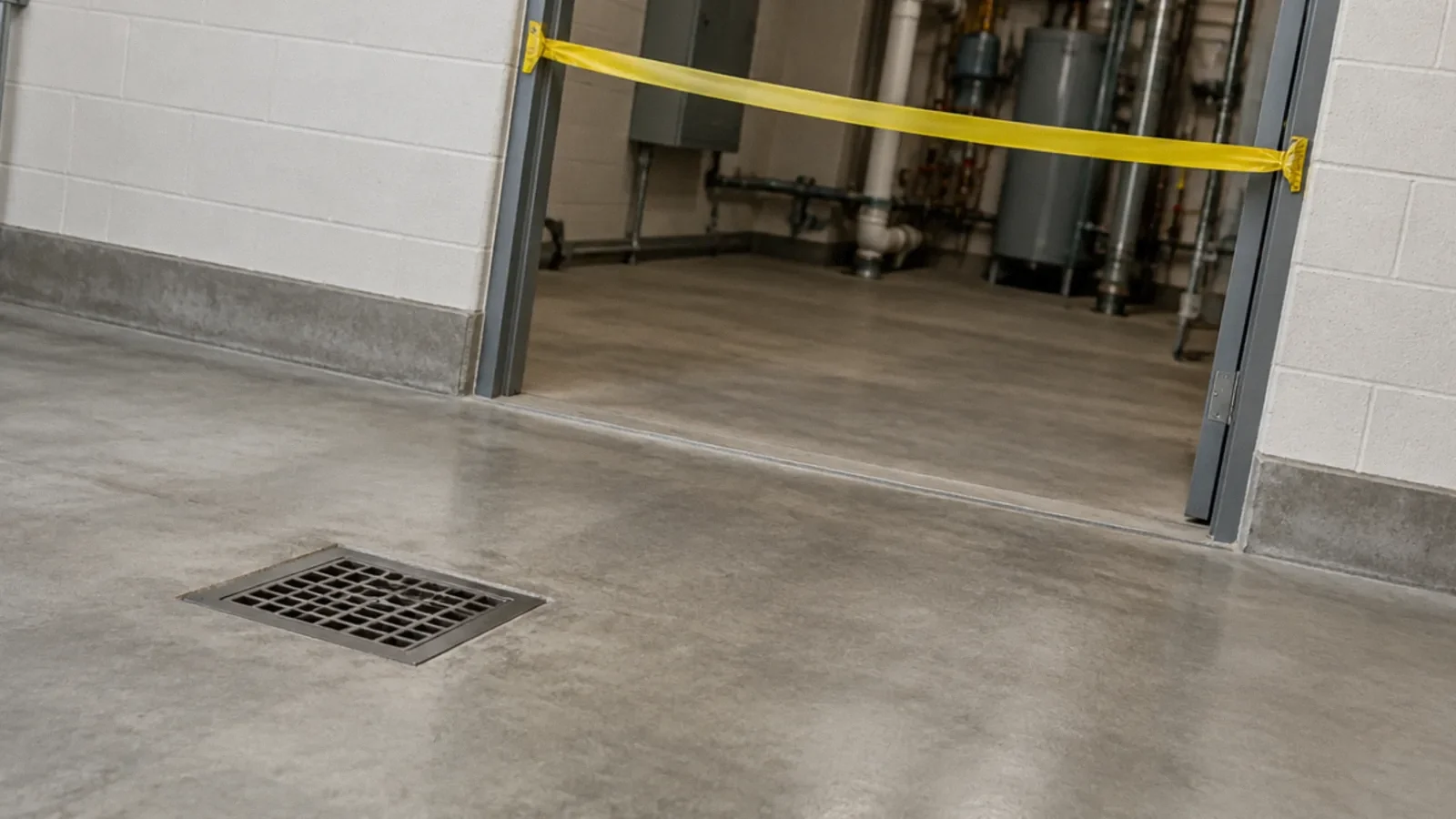
If wastewater is rising from a toilet, shower or floor drain, stop flushing and limit use of sinks, laundry and other connected plumbing. Contact a plumber or the responsible sewer authority. Multiple fixtures backing up can indicate a problem beyond the bathroom, but the visible symptom does not locate it.
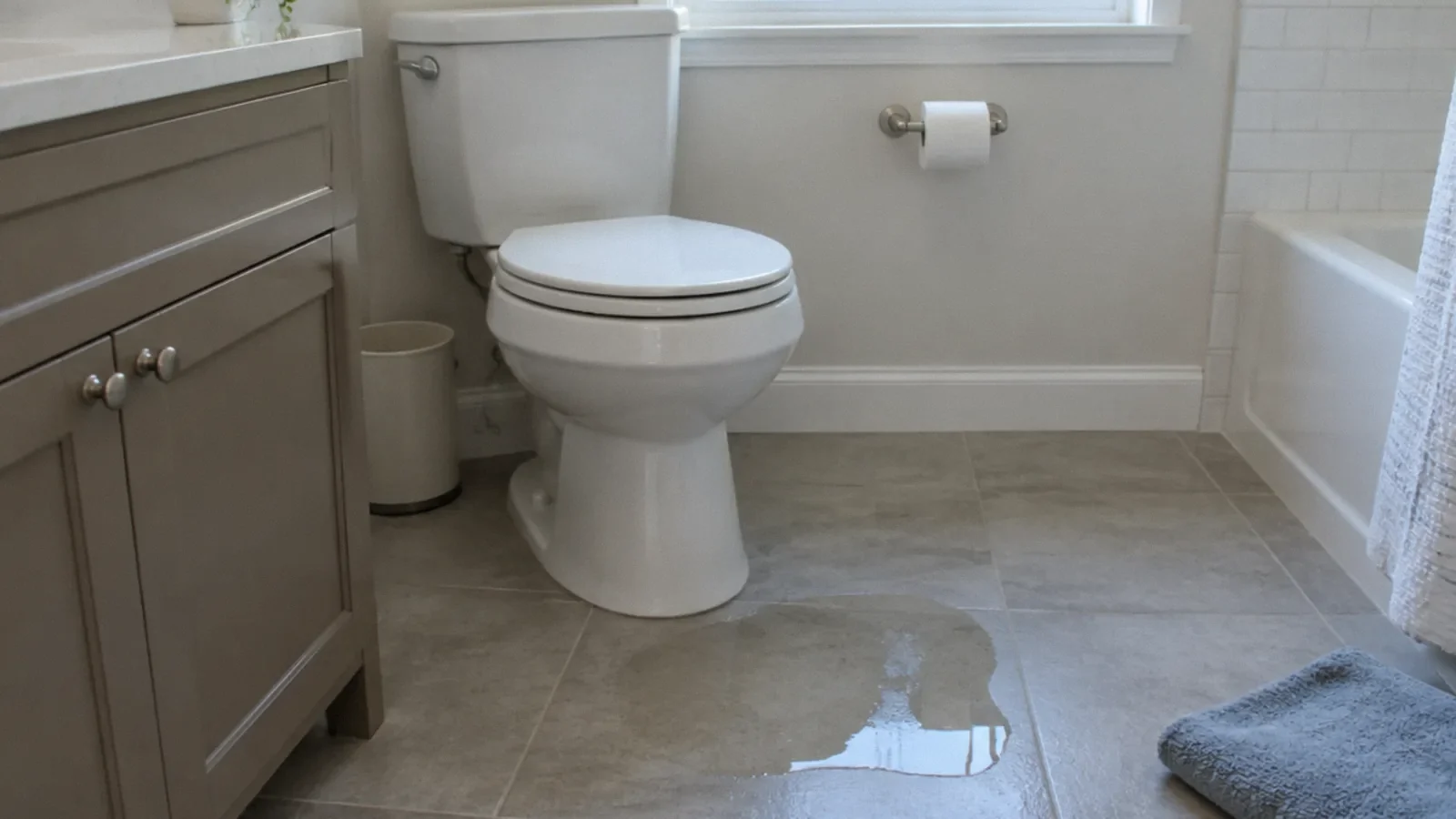
Avoid opening a cleanout or adding a chemical drain cleaner to a backed-up line. Sewage may contain harmful organisms; CDC advises avoiding contact with floodwater that may be contaminated. Keep people away and arrange appropriate cleanup.
Identify the water source
A clean supply-line leak, a tub overflow and a sewage backup do not present identical cleanup decisions. Water can become contaminated as it contacts surfaces or remains in place. If the source is uncertain, avoid contact and ask a qualified professional to assess it.
Note when the flooding started, which fixture was operating and whether the water continues after a shutoff. Do not deliberately recreate the overflow to test it. A safe photograph and a brief timeline can help a plumber, restorer or property manager.
Assess floors, walls and the room below
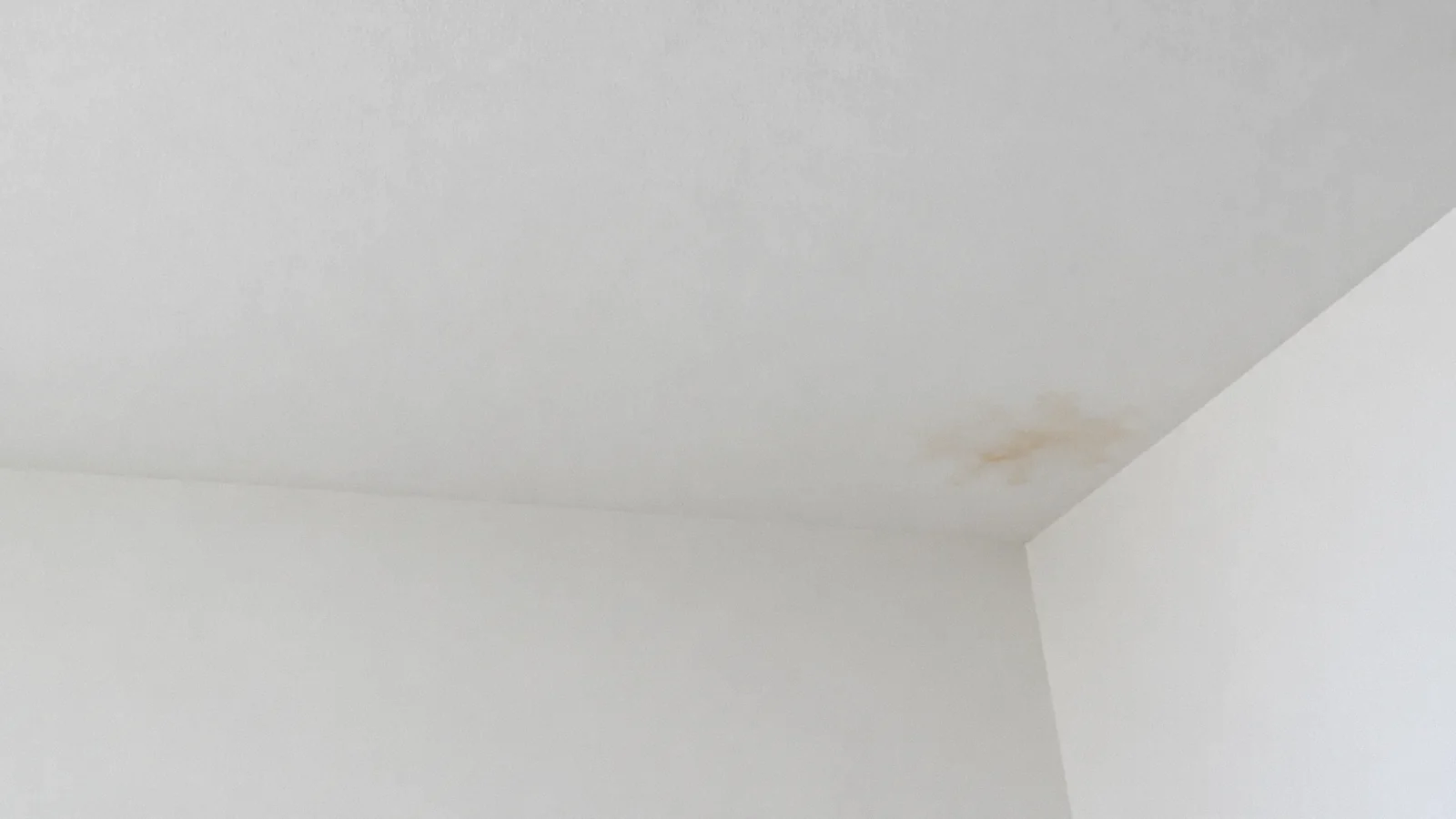
Water can move under tile, vinyl, cabinets and baseboards or into a ceiling below a second-floor bathroom. The visible puddle may be smaller than the affected assembly. Look from a safe location for a growing stain or a bowed ceiling and keep people out from underneath.
Do not open a wall or remove flooring near wiring or suspect hazardous materials without appropriate expertise. A restoration professional can assess access, moisture in underlying layers and whether materials can be cleaned and dried or require removal.
Remove water appropriately
Once the source and hazards are controlled, a small clean-water spill may be blotted and dried using equipment appropriate for wet use. A normal dry vacuum is not designed for liquid. Sewage, unknown contamination, extensive water or wet electrical equipment calls for specialized assessment.
Drying the top surface is not proof that a subfloor or cabinet core is dry. Use the material maker’s instructions and appropriate monitoring. Do not direct air onto visible suspected mold or use a fragrance to conceal an unresolved moisture problem.
Document and coordinate repairs
Photograph the affected area when safe, record when the water was noticed and keep receipts. Notify the property manager or insurer as appropriate and ask what documentation or authorization is required. Coverage depends on the policy and cause.
Separate stopping the leak, removing contamination, drying and reconstruction in the written scope. A cosmetic patch should not close a cavity that remains wet. Ask the contractor to explain which materials were assessed and how drying was verified.
Prevent another overflow
Repair the cause rather than relying on towels or repeated unclogging. Inspect accessible supply hoses and fixtures for leaks, and have slow or recurring drains evaluated. Know where the relevant shutoffs are before an emergency.
Keep electrical devices away from wet areas and avoid flushing items not intended for the toilet. If a drain problem affects several fixtures, report that pattern to the plumber. Routine bathroom cleaning does not replace repair of a failed pipe or sewer line.
Shower overflow and upstairs flooding
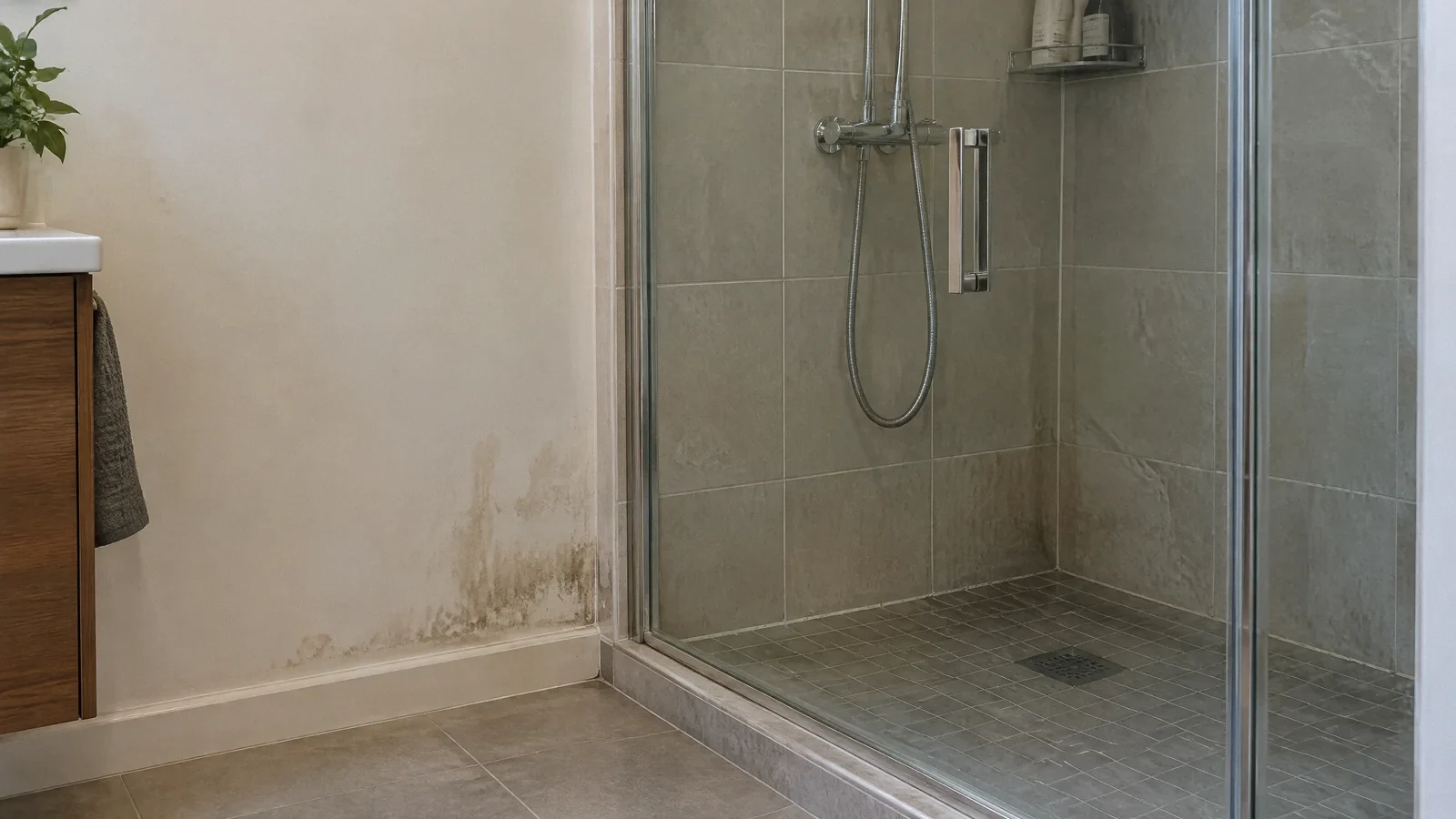
A flooded bathroom can result from an overflowing toilet or tub, a failed supply connection, or a blocked drain that backs up. After a shower, water outside the enclosure may have escaped past a curtain or door, leaked through an enclosure, or backed up through the drain. Note where water is visible without running the shower again to reproduce the flood.
If an upstairs bathroom flooded, keep people away from a sagging ceiling or wet electrical fixtures below. Stop the source only if safe, photograph visible damage and notify the building manager or insurer as appropriate. The floor, wall edges and ceiling below may need moisture assessment and drying before finishes are repaired; sewage or uncertain water requires specialist cleanup.
Your next-step checklist
- Keep people away from water and electrical hazards.
- Stop a known source only when the shutoff is safe to reach.
- Stop using plumbing if wastewater is backing up.
- Assess hidden moisture and document the damage.
Related questions
What should I do if my bathroom floods?
Avoid water near electricity, stop a known safe-to-reach source and contact a plumber or appropriate professional. Keep away from suspected sewage.
Can I clean toilet overflow water myself?
The water may contain sewage. Avoid contact and seek appropriate guidance, especially for extensive contamination or water in porous materials.
Should I keep flushing to clear the toilet?
No. Stop adding wastewater when a fixture is backing up and ask a plumber to diagnose the problem.
Can bathroom water damage the ceiling below?
Yes. Water can travel through flooring and into the room below. Keep clear of a sagging ceiling and seek assessment.
Sources & context
Public guidance supports the principles in this article. The practical questions and examples are editorial interpretation, not a site assessment or a coverage decision. State-specific rules apply only where identified.
- CDC: Septic and wastewater systems during floodsfederal public health guidance
- EPA: Sanitary sewer overflow questionsfederal wastewater guidance
- EPA: Mold and moisturefederal guidance
- Primary guidance: www.cdc.govprimary guidance
- Primary guidance: www.epa.govprimary guidance