Stop using the shower and arrange an assessment. A supply line, drain, pan, enclosure or condensation can produce similar stains; the source and affected materials must be identified before rebuilding.
Recognize a possible shower leak
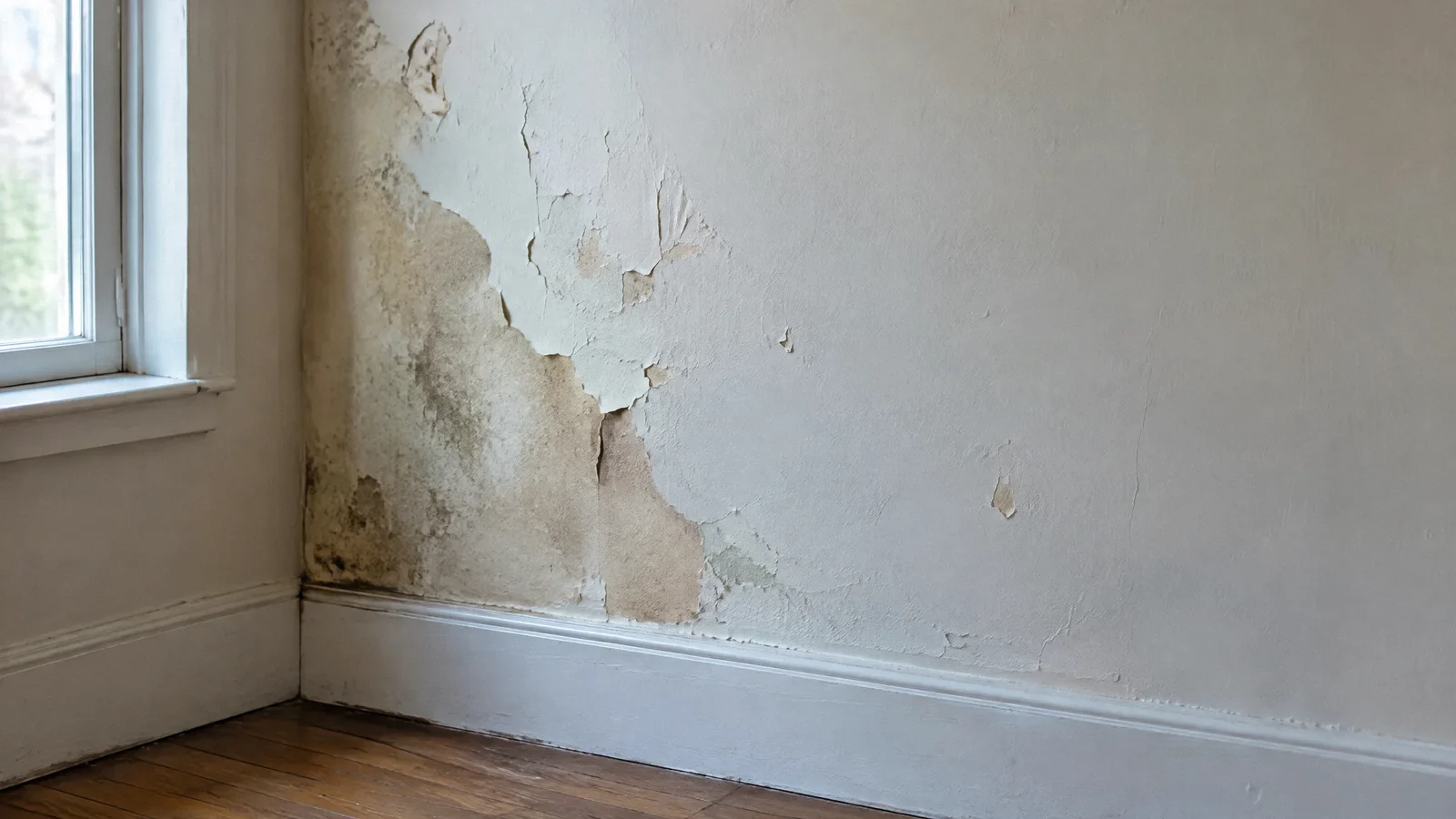
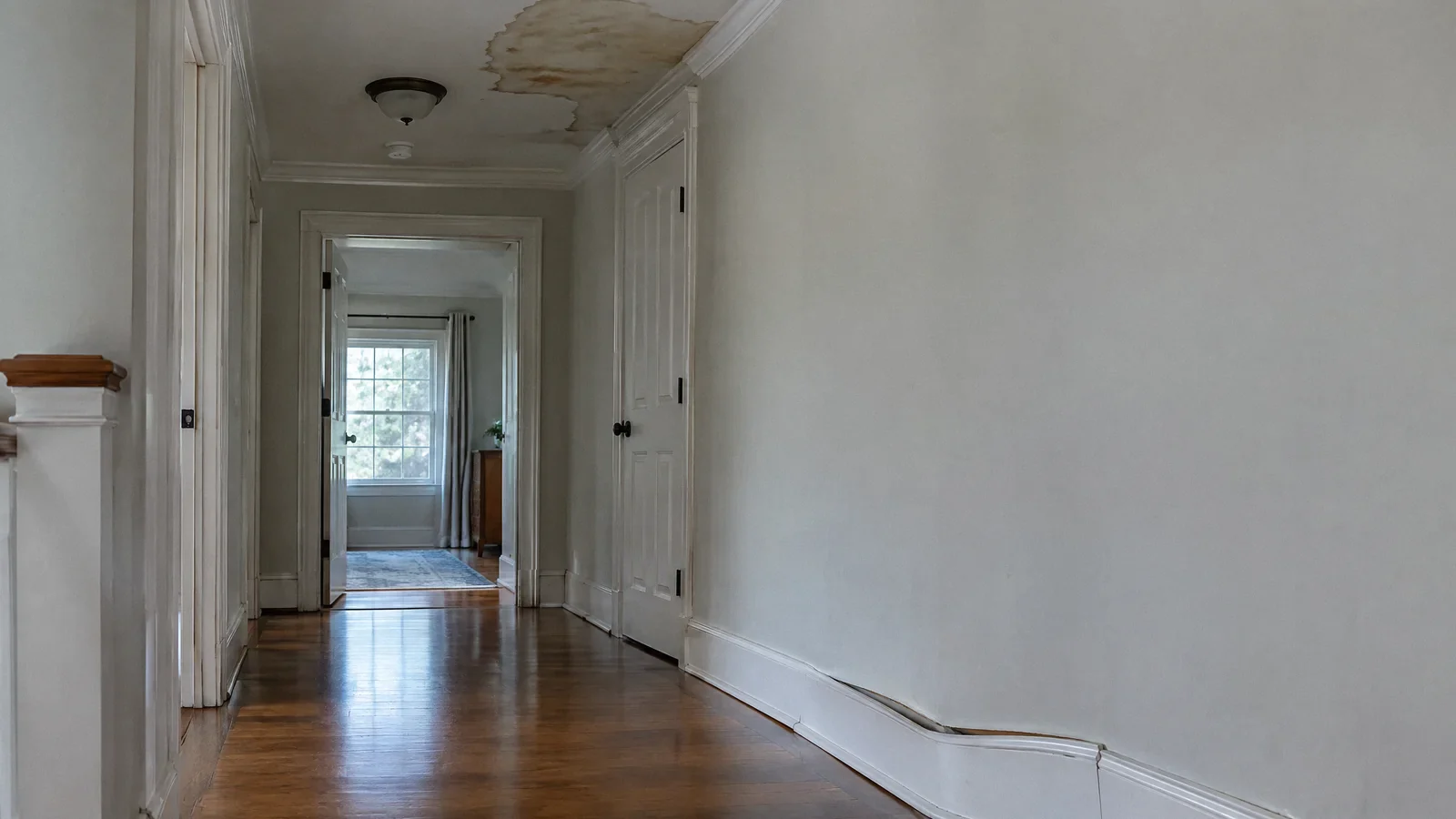
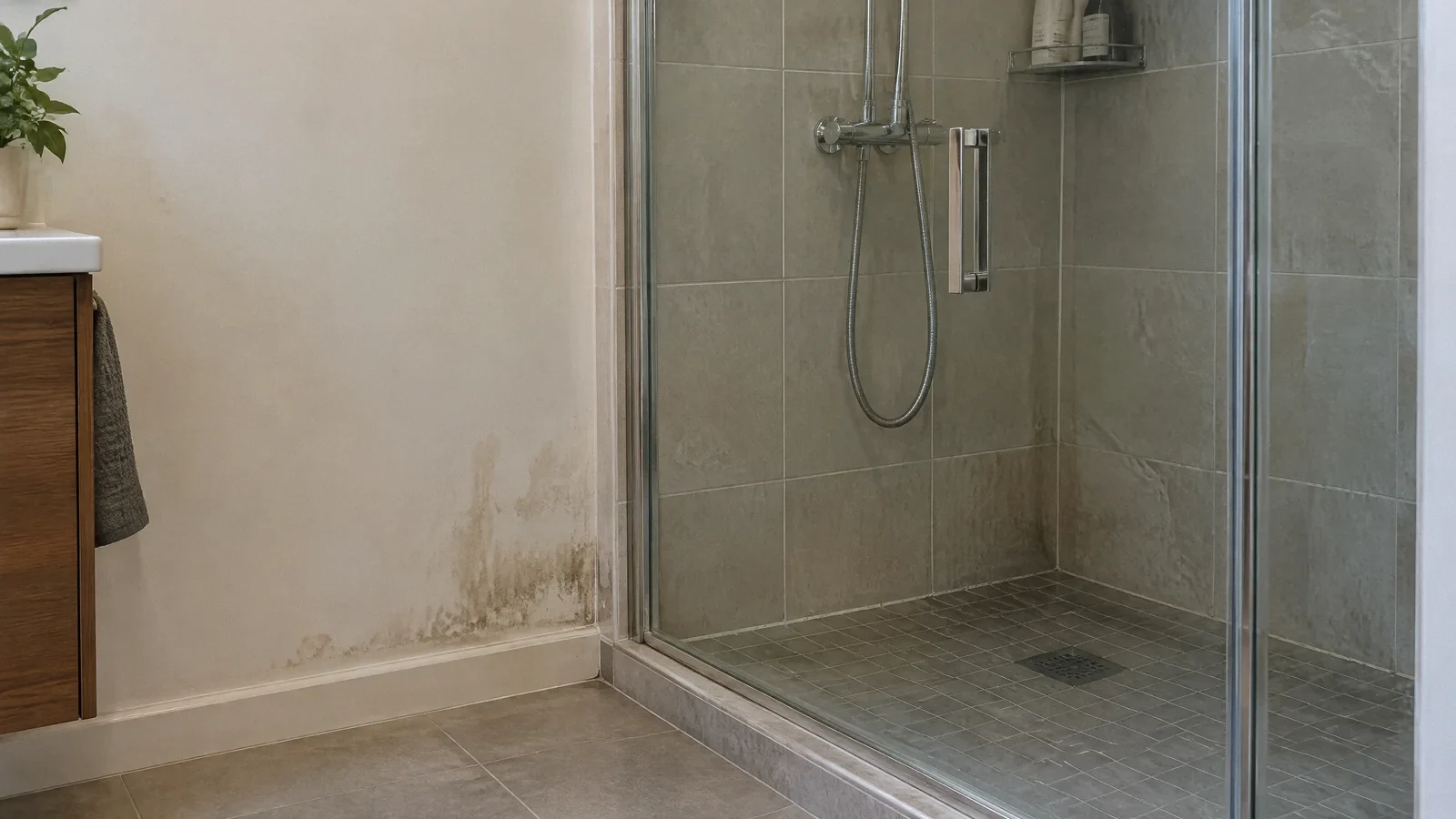
A stain on a ceiling below a bathroom, swollen baseboard beside a shower, loose tile or a musty smell can prompt investigation. Water can travel along framing before it appears, so a mark does not identify the exact leak. A stain may also be old. Photograph the area safely and note when the change first appeared.
A leak may occur only during shower use or may continue when the shower is off. A supply pipe, valve, drain, shower pan, enclosure or water escaping past a door can create different patterns. Condensation from humid air is another possibility. The visible symptom alone cannot distinguish them.
Stop use and protect the area
Stop using the suspected shower until the source is evaluated. Do not repeatedly run it to see whether the stain grows: that can add water to a hidden cavity. Keep people away from sagging ceilings, unstable floors and wet electrical equipment. If there is immediate danger, leave and contact emergency services or the relevant utility.
Notify the property manager promptly in a rental. Photograph damage from a safe location and retain messages. If water continues when the shower is unused, contact a plumber promptly; a pressurized supply leak is one possible cause. Ask the plumber or building manager how to isolate the source safely.
Possible sources behind the wall
A supply connection or valve can leak inside the wall, while a drain connection can leak when water flows through it. Water reaching the floor outside the enclosure can travel behind trim. Cracked grout or deteriorated caulk may indicate a maintenance issue, but surface appearance alone cannot establish where water passes through the assembly.
Tile and grout are finishes, not reliable proof that the concealed waterproofing system is intact. The shower pan and waterproofing details depend on the assembly. A qualified contractor can assess the pan, transitions, drain and surrounding materials before recommending a repair. Replacing a line of caulk without finding the source may only conceal a continuing leak.
How professionals narrow the source
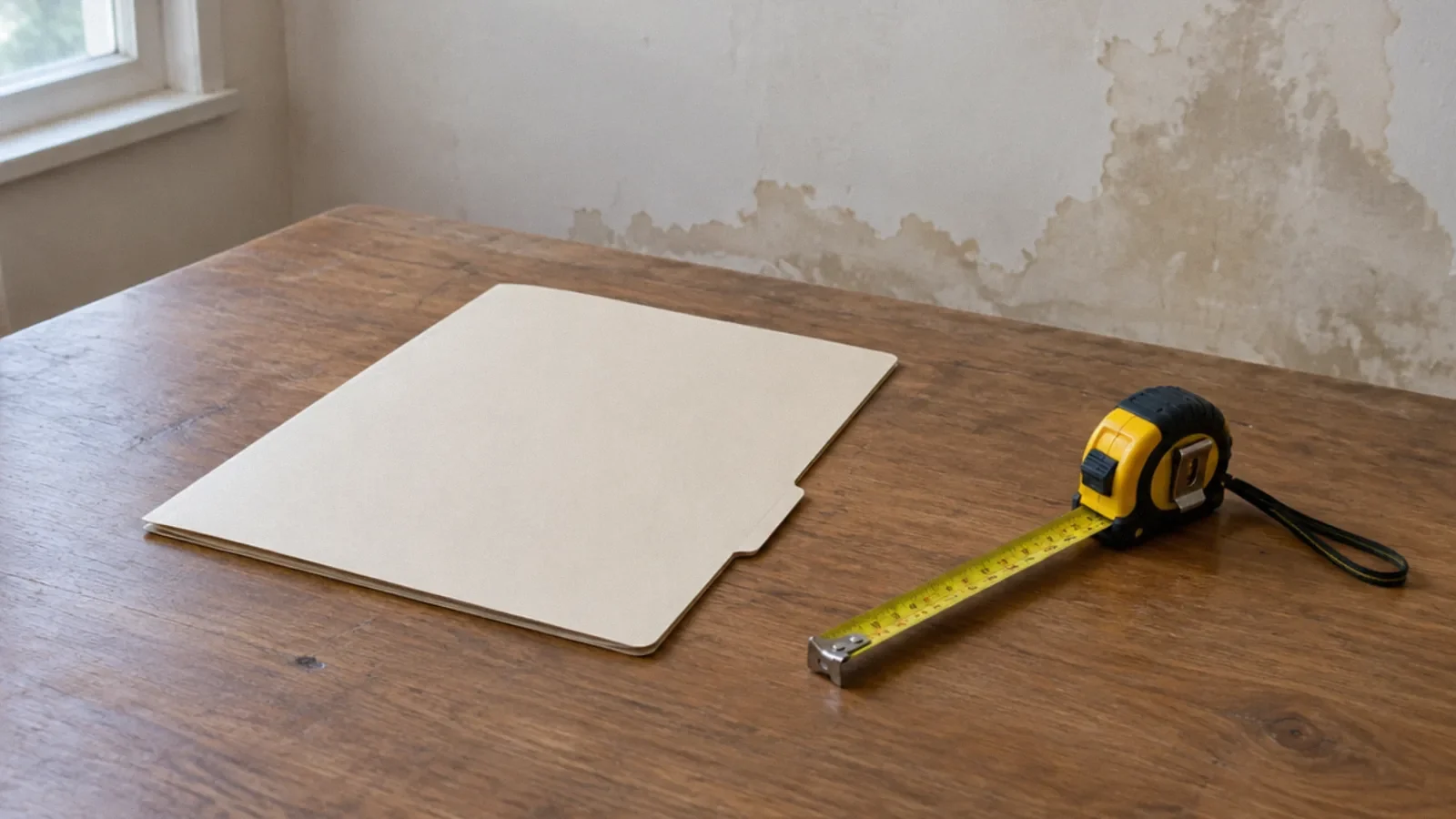
Give the inspector a timeline, photographs, previous repairs and the location of stains in adjacent rooms or below the bathroom. Ask what can be checked without opening the wall and whether access from an adjoining room would be useful. A test should be controlled and planned to avoid unnecessary additional damage.
Moisture meters and thermal images can help locate areas requiring further investigation, but neither identifies a leak by itself. Ask what readings mean for the specific material, what was compared and which areas remain inaccessible. A limited opening may be necessary; agree on the location, containment and restoration of that opening.
Drying and damaged materials
Once the source is controlled, wet materials need assessment and drying. EPA advises fixing moisture problems promptly and not enclosing or painting wet or moldy materials. Some wallboard, insulation, wood or flooring may be retained if suitable and fully dried; other materials may require removal depending on contamination, condition and access.
A dry-looking tile surface does not prove the wall cavity or subfloor is dry. Ask how drying will be monitored and what evidence supports closing the assembly. If hidden mold is suspected, disturbing a cavity can release material; an experienced professional can plan an appropriate investigation. Color alone does not establish mold species or health risk.
Repairing the shower and rebuilding
The source repair and restoration may involve different trades. Ask who will repair plumbing, who will address the shower waterproofing and who will restore walls, flooring and finishes. The work should match the actual shower system and applicable local requirements. A cosmetic surface repair is not a substitute for fixing a failed concealed component.
Request a written scope describing affected areas, materials, access, testing, exclusions and a process for unforeseen damage. If a pan or enclosure must be rebuilt, ask how the contractor will verify the completed assembly before finishes are closed. Keep the report and photographs for future reference.
The estimate should state whether tile matching, adjacent finishes and disposal are included. If the full extent is hidden, ask how additional discoveries will be documented and priced before work continues. Keep copies of product instructions and any final inspection records.
Insurance and prevention
Report the loss to your insurer if appropriate and ask about your actual policy, deductible, documentation and inspection requirements. Coverage can depend on the cause and facts; a contractor’s estimate is not a coverage decision. Keep invoices and approved changes, and document only from a safe location.
After repair, maintain the shower enclosure and ventilation. EPA recommends using a bathroom exhaust fan or opening a window when appropriate to reduce humidity. Ventilation helps control condensation but does not repair a leaking pipe or shower pan. Watch for a returning stain or odor and report it promptly.
Your next-step checklist
- Stop using the suspected shower.
- Stay clear of wet electrical equipment and unstable surfaces.
- Document visible changes safely.
- Ask for a source diagnosis and drying plan.
- Verify the repair before closing affected materials.
Related questions
Does a ceiling stain prove the shower pan leaks?
No. Plumbing, drainage and water escaping the enclosure are other possibilities; the source needs investigation.
Will new caulk fix any shower leak?
No. It may address a specific surface joint but will not repair every plumbing or concealed waterproofing failure.
Can I paint over a damp wall?
Fix the source and assess and dry affected materials first. Paint can conceal unresolved moisture.
Sources & context
Public guidance supports the principles in this article. The practical questions and examples are editorial interpretation, not a site assessment or a coverage decision. State-specific rules apply only where identified.
- EPA: interactive mold house tourfederal guidance
- EPA: indoor biological contaminantsfederal guidance
- EPA: brief guide to mold and moisturefederal guidance