As accessed October 31, 2026, Angi reports a national average of $3,867 and a typical range of $1,385–$6,369 for water damage restoration, based on 1,500 verified projects in its marketplace. Its guide lists a San Francisco example of $1,600–$9,700. These are not quotes: the source of water, affected materials, access and repair scope determine the actual price.
Use national and local figures carefully
Angi’s cost guide, accessed October 31, 2026, reports a national average of $3,867 and a typical range of $1,385–$6,369 using 1,500 verified projects from its professionals. The sample reflects that marketplace’s reported work, not every restoration project in the country. Different scopes can produce very different totals.
The same guide lists an illustrative San Francisco range of $1,600–$9,700, with an average of $5,650. It does not establish the price for another Bay Area city or your home. Request current written estimates for the actual damage and check what each amount includes.
Safety and source control come first
Water near electrical equipment, sewage, a sagging ceiling or unstable flooring can make a building unsafe. Keep away from those hazards and request qualified help. Stop a known water source only if its shutoff can be reached safely; a price comparison should not delay emergency action.
A plumber may repair a pipe while a different contractor assesses water removal, contaminated materials and drying. Ask who is responsible for each part. The cost of stopping the source is not always included in a restoration estimate.
Water source changes the scope
A supply leak, contaminated backup and outdoor floodwater can require different protection, cleaning and disposal. The water’s color or smell does not establish whether it is safe. A contractor should identify the known source and explain how uncertainty changes the scope.
Sewage or floodwater may affect porous materials and require experienced cleanup. A small visible puddle can reach a wall cavity or floor assembly, so a price based only on the visible surface may not include the entire affected area. Ask what was inspected and what remains inaccessible.
What mitigation may include
Mitigation generally refers to limiting further damage: emergency response, water removal, protection of unaffected areas, removal of unsuitable material and drying or monitoring as appropriate. The exact services depend on the event and the contractor’s written scope.
Ask whether equipment setup, daily monitoring, after-hours response, disposal and documentation are included. A pump, fan or dehumidifier charge without a description of the work and duration makes estimates difficult to compare. Clarify how equipment time is measured and when charges stop.
Drying versus reconstruction
Replacing drywall, flooring, cabinets or finishes may be quoted separately from emergency mitigation. Electrical, plumbing, structural or hazardous-material work can also require separate professionals. Ask whether painting, trim, permits and cleanup are included in the proposed repair.
Before rebuilding, request the basis for determining that the affected assembly is ready, including measurements where appropriate and a list of areas that could not be assessed. A dry-looking surface or a fixed number of days alone does not prove that concealed materials are dry.
A bathroom or small-room estimate
A bathroom leak can affect tile, subfloor, cabinetry and the room below. The repair price depends on the water source and layers involved, not only the size of the visible stain. A small area of water may require limited work, or it may reveal a more complex problem after access is made.
Ask the contractor to separate the cost of opening and inspecting an area from the cost of reconstruction. Agree in writing how unexpected damage will be documented and authorized. Do not assume that a national average describes a particular bathroom.
Insurance and records
Coverage depends on the policy, cause, exclusions, limits and insurer’s assessment. Contact the insurer promptly when a claim may apply and ask about emergency work, documentation and the claims process. Keep photographs taken from a safe position, communications, invoices and receipts.
An estimate is not the same as a coverage decision, and an insurer’s payment is not automatically the full cost of every desired upgrade. Ask the contractor and insurer to explain differences in scope or quantities. Do not delay necessary safety measures while waiting for paperwork.
Compare written estimates
A useful estimate identifies the source, affected rooms and materials, water removal, containment where needed, drying, disposal and repair. It should state what is excluded, how extra work is approved and when payment is due. Compare the same tasks and materials across contractors.
Ask about experience, appropriate credentials, insurance and references. Be cautious of a guaranteed price for concealed damage without an inspection or a claim that every room needs the same treatment. Retain the completed drying and repair records for later review.
Wall, basement and carpet repair estimates
For wall damage, ask whether the estimate includes opening the wall, drying the cavity, insulation, drywall, finish work and repainting. A basement quote may also need source investigation, sump or drainage work, contamination controls and contents handling. These are separate decisions; a national average cannot price a particular home.
For carpet, ask whether extraction, padding removal, subfloor drying, disposal and replacement are included. The water source and condition of the material affect whether cleaning is appropriate. Compare itemized scopes and local written quotes rather than treating a square-foot number as a guaranteed total.
Comparing a flood damage repair estimate
Floodwater may contain sewage, debris or chemicals, so a flood estimate can include protective measures, removal of porous materials and additional cleaning beyond an ordinary clean-water leak. The depth of visible water alone does not determine the total.
Ask for separate line items for water removal, debris disposal, cleaning, drying, structural work and replacement finishes. Flood coverage and homeowners coverage depend on the policy and facts; request a written coverage explanation and obtain local quotes for the actual scope.
Cost to repair a water-damaged subfloor
Angi’s October 1, 2026 national subfloor guide lists about $3–$10 per square foot for replacement, with its example of a 300-square-foot room ranging from $900–$3,000. This is a broad national reference for replacement, not a Bay Area quote or a reliable price for a small patch.
The total may also involve removing finish flooring, investigating and repairing the water source, drying, joist repairs, mold remediation, disposal and reinstalling finishes. Ask which of these are included and whether the subfloor needs replacement at all. Get an itemized local assessment before relying on a per-square-foot figure.
Wet or flooded crawl-space cleanup cost
HomeGuide’s February 2026 national guide lists $1,500–$5,000 as an average range for water-damage cleanup in a wet crawl space. This is a broad national estimate, not a Bay Area bid or a quote for sewage cleanup. Restricted access, the water source, affected materials and duration can change the scope.
Sewage or other contaminated water may require additional protection, removal and disposal, so a clean-water estimate should not be assumed to cover it. Ask for an itemized local assessment covering source control, water removal, drying, insulation or structural repairs, and disposal. Stay out of standing water near electrical equipment.
Restoration and mitigation cost per square foot
Angi’s guide, accessed October 31, 2026, gives an illustrative national water-damage repair range of $3–$7.50 per square foot on average. This is a broad repair estimate, not a separate guaranteed mitigation-only rate or a Bay Area quote. The source, contamination, access and affected materials can change the scope.
Ask whether a per-area quote includes extraction, equipment, monitoring, demolition, disposal and rebuilding, and how inaccessible or contaminated areas are handled. A smaller visible area may not include moisture in a wall or under a floor. Compare itemized written local estimates rather than multiplying floor area alone.
Flooded basement cleanup: a separate cost reference
HomeGuide’s national guide, accessed October 31, 2026, estimates $4–$12 per square foot for water extraction, drying and sanitizing, with major repairs and reconstruction excluded. The publisher describes totals ranging from around $1,600 for a small fresh-water loss to $12,000 or more for a larger contaminated loss. These are broad commercial estimates, not Bay Area quotes or insurance determinations.
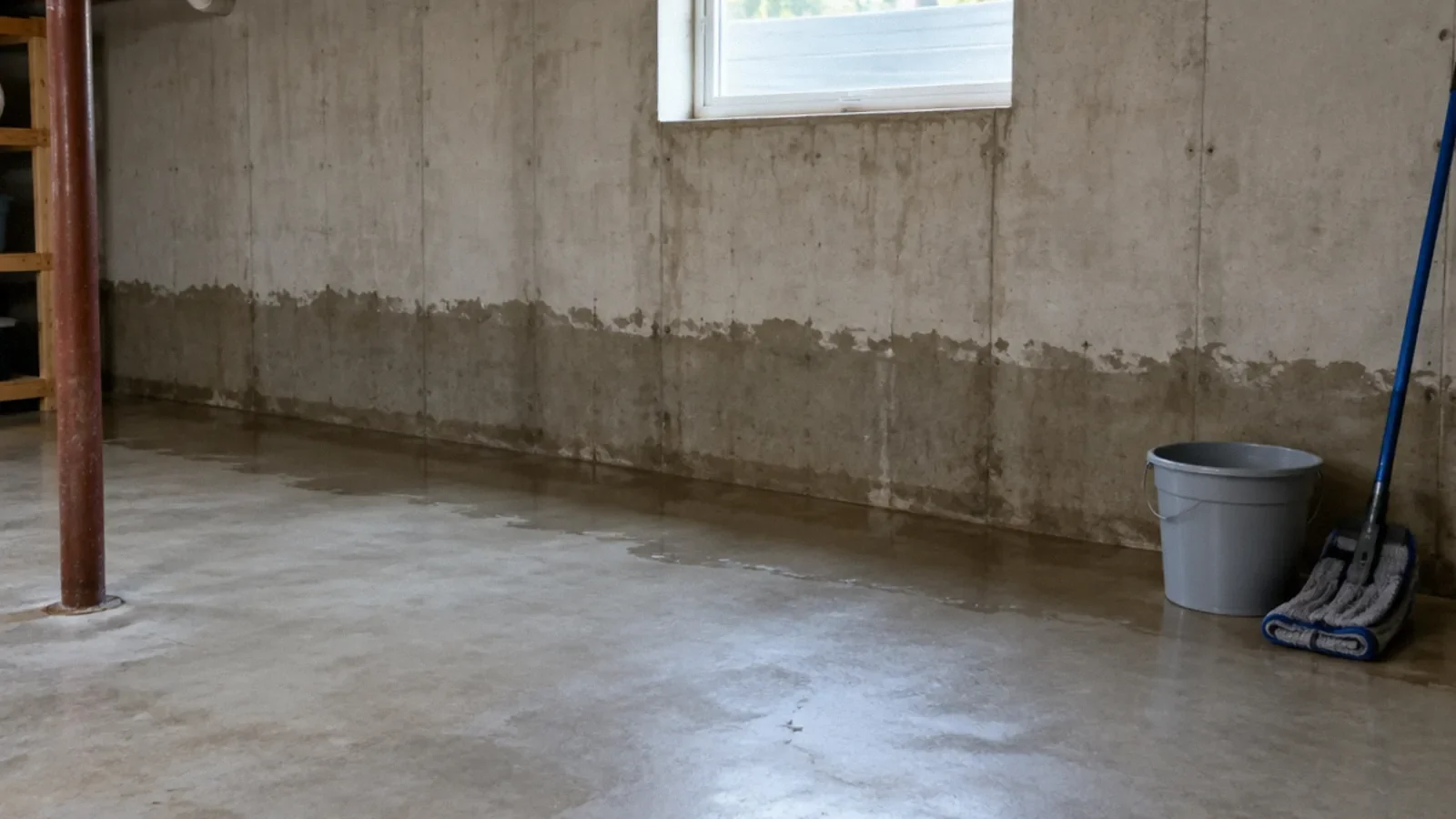
The source, contamination, access, area and affected materials change the scope. A completed basement, electrical damage or sewage can require additional specialists and repairs. Ask for an itemized estimate and do not pump a flooded basement or enter water near electrical equipment without qualified safety guidance.
Floor and carpet examples are separate from drying
Angi’s water-damaged flooring guide updated August 4, 2026 reports a broad national $3–$20 per square foot for floor repair or replacement, not a local quote. Wood, vinyl, tile and carpet differ in salvageability and labor; the source does not provide a reliable water-damage-only rate for each material. Ask for separate quantities for finish removal, drying, subfloor work, disposal and installation.
Angi’s October 27, 2026 carpet repair guide lists $140–$400 per repair project generally; it is not specific to sewage or water treatment. Its September 9, 2026 wet-carpet removal guide lists $1.20–$1.55 per square foot for removal, a separate task from replacement, drying the pad and subfloor, and contamination control. Confirm the actual scope in a local quote.
Extraction-only and wall estimates
The cited basement cleanup range combines extraction, drying and sanitizing, and cannot be presented as a pump-only price. We did not find a reliable separate extraction-only or mitigation-only per-square-foot rate in the reviewed sources. Ask for an itemized price listing water removal, equipment, monitoring, disposal, drying and repair separately; minimum charges and access can matter more than area.
For a water-damaged wall, Angi’s Dallas drywall guide updated July 6, 2026 lists $600–$1,550 per project as its national water-damage drywall reference. This is an illustrative marketplace estimate, not a Bay Area quote; it does not establish that source repair, drying framing, insulation, painting or disposal are included. Ask for those items separately. Basement waterproofing or a complete remodel is a different scope from restoration after a water event and should be priced separately.
Your next-step checklist
- Keep clear of electrical, structural and contamination hazards.
- Stop a known water source only if safe.
- Get a written scope for mitigation and repairs.
- Confirm equipment, monitoring, disposal and exclusions.
- Keep claim, drying and repair records.
Related questions
How much does water damage restoration cost?
Angi reported a $1,385–$6,369 national typical range as accessed October 31, 2026. The actual cost depends on the source, scope and local conditions.
How much does water damage restoration cost in San Francisco?
Angi listed a $1,600–$9,700 local example in its September 2026 guide. A property-specific written estimate can fall outside that range.
Does a mitigation quote include rebuilding?
Not necessarily. Ask whether drywall, flooring, cabinets, painting and other reconstruction are included or separately priced.
Will insurance cover the work?
Coverage depends on the policy and cause of loss. Contact the insurer and ask how emergency work and estimates should be documented.
What affects the cost to remove water from a basement?
Water depth and source, access, pumping or extraction, contamination, disposal and affected materials can change the scope. Request a local itemized quote that separates removal, drying and repairs.
Sources & context
Public guidance supports the principles in this article. The practical questions and examples are editorial interpretation, not a site assessment or a coverage decision. State-specific rules apply only where identified.
- Angi: Water damage restoration cost, September 2026marketplace cost dataset
- U.S. EPA: Mold cleanup in your homefederal guidance
- CDC: Reentering a flooded homefederal health guidance
- Angi: Subfloor replacement cost, updated October 1, 2026national consumer cost guide
- HomeGuide: Crawl-space repair and cleaning costs, February 2026national consumer cost guide
- HomeGuide: Flooded basement cleanup costcommercial national cost guide
- Angi: Water-damaged floors, August 2026national consumer cost guide
- Angi: Carpet repair, October 2026national consumer cost guide
- Angi: Carpet removalnational consumer cost guide
- Angi: Drywall repair by damage type, July 2026national consumer cost reference