Costs depend on access, the amount and condition of sewage, affected materials, repairs and disposal. A 2025 HomeGuide national estimate for sewage cleanup generally is $7–$15 or more per square foot; it is not a Bay Area crawl-space quote. Obtain an itemized local assessment and do not enter a contaminated crawl space.
Treat the area as a safety problem first
Keep people and pets away from the crawl-space opening and any contaminated water. Sewage can contain harmful organisms, and a low or enclosed space can have dangerous atmospheric or electrical conditions. Do not enter to measure the spill or attempt a rescue; call emergency services if someone is in immediate danger.
OSHA warns that hydrogen sulfide can occur in sewage-related work and accumulate in low or confined spaces. Smell is not a reliable safety test because the ability to smell it can be lost. Appropriate trained personnel must evaluate the hazards and any confined-space requirements.
Understand the published national range
HomeGuide’s August 22, 2025 national sewage-cleanup guide lists an average of $7 to $15 or more per square foot and a broad $2,000 to $15,000 or more total for sewage cleanup generally. These figures are not a crawl-space-only sample, a current Bay Area bid or a guaranteed price.
The source states that restricted basement or crawl-space access can add cost. The number of affected square feet alone does not describe the volume, contamination, access or necessary repairs. Use the figures only as background and request a written assessment for the actual property.
Access and entry planning
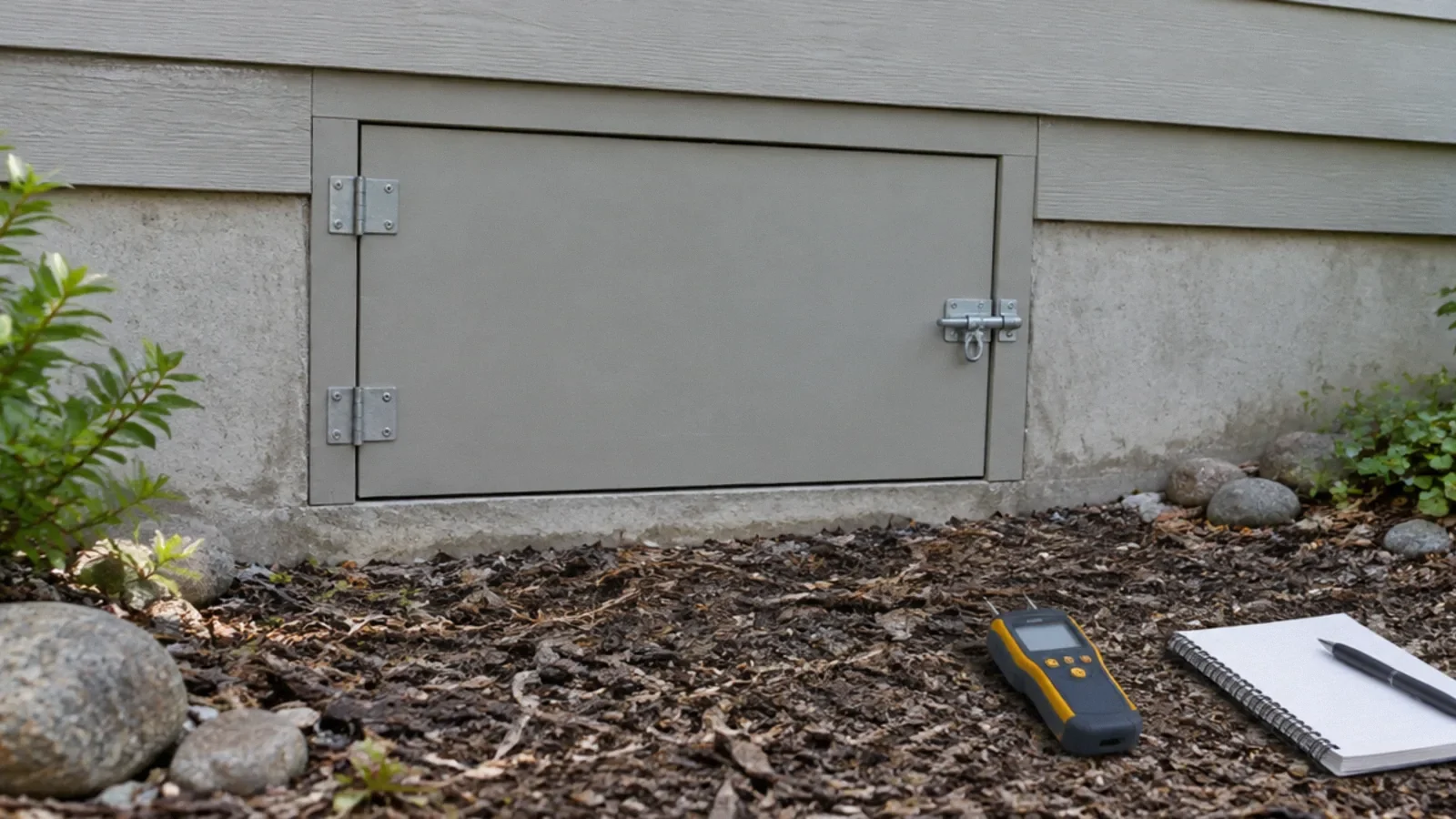
A low opening, limited working height, utilities, standing water or difficult equipment access can change the scope. A contractor should assess hazards and explain the access and worker-protection plan before entry. A homeowner should not crawl into a suspected sewage area to collect a better photograph.
Not every crawl space is automatically classified the same way; workplace confined-space requirements depend on the specific space and work. Ask the contractor how it evaluates atmospheric hazards, safe entry, supervision and emergency procedures for the actual site.
Source repair comes before restoration
The source may be a sewer line, drain connection, septic component or another system. A plumber or other qualified professional should identify and repair the failure. Continuing to use fixtures connected to the affected line can worsen a backup.
A cleanup estimate and a plumbing repair estimate may be separate. Ask who coordinates access, diagnosis, isolation and testing. Do not assume that pumping visible sewage fixes a broken pipe or that a plumbing repair alone addresses contaminated soil and building materials.
Removal, cleaning and drying
A scope may include removal of contaminated water and material, cleaning of suitable surfaces, disposal and drying. The work depends on the material, the exposure and the conditions. Porous insulation or other affected materials may need removal; a contractor should explain the basis and limits of the proposed work.
Ask how the contractor will document conditions before and after work and how moisture will be evaluated. A deodorizer or a dry-looking surface does not establish that hidden material has been cleaned or that the source is fixed. Reconstruction should follow the assessment and drying plan.
Cost factors and exclusions
Ask whether the quote includes emergency response, access, extraction, containment, removal, waste disposal, cleaning, drying equipment and monitoring. Also identify whether pipe repairs, contaminated soil, insulation, vapor barriers, structural repairs and finish work are included or excluded.
Prices may change if inspection reveals additional damage. Request a written change-order process and a clear explanation of unknowns. A low per-square-foot figure is not a comparable bid if another proposal includes access, disposal and reconstruction that the first excludes.
Insurance and documentation
Report the incident to the insurer or property manager promptly if appropriate, and ask about documentation and inspection requirements. Coverage for a sewer backup, pipe repair, gradual leakage or a deductible depends on the actual policy and circumstances. Do not assume a cleanup quote guarantees payment.
Photograph damage only from a safe location. Preserve the plumber’s diagnosis, contractor reports, approved changes and invoices. Necessary steps to stop ongoing damage should be coordinated with the insurer when possible, but personal safety comes first.
Compare local providers
Ask about experience with sewage in restricted spaces, training, hazard evaluation, waste handling and the scope of post-cleanup documentation. Confirm how plumbing repairs and restoration will be coordinated and who will communicate any need for temporary relocation or restricted access.
Request an itemized local estimate rather than applying a national average mechanically. A provider should be able to explain what is known, what remains unknown and how a discovery will affect the price. Never select a contractor solely on an unsupported promise that a crawl space will be sterile.
What the estimate must separate
An under-house sewage cleanup quote should identify assessment, safe access and protective measures, removal and disposal of contaminated material, cleaning, drying and verification. A crawl space is one under-house location; slab construction or a basement may require a different access method and therefore a different estimate.
Ask separately for the plumber’s source repair, any subfloor or insulation replacement, electrical work, permits and reconstruction. A national range is a starting reference, not a price for a particular house. Obtain written scope and exclusions before comparing proposals, and ask your insurer how the policy applies.
Your next-step checklist
- Stay out of the contaminated crawl space.
- Stop using affected fixtures and arrange source repair.
- Ask about confined-space and gas hazards.
- Request an itemized cleanup and disposal scope.
- Check policy terms and preserve safe documentation.
Related questions
How much does sewage cleanup under a house cost?
The cost varies widely. HomeGuide’s 2025 national range for sewage cleanup generally was $7–$15 or more per square foot; a local crawl-space estimate may differ substantially.
Can I enter the crawl space to inspect sewage?
Do not enter a suspected contaminated or hazardous space. Have trained professionals assess it.
Does cleanup include fixing the sewer pipe?
Not necessarily. Ask whether source repair, cleaning, drying and reconstruction are included.
Can I rely on smell to detect sewer gas?
No. OSHA warns that the ability to smell hydrogen sulfide can be lost; trained personnel must assess hazards appropriately.
Sources & context
Public guidance supports the principles in this article. The practical questions and examples are editorial interpretation, not a site assessment or a coverage decision. State-specific rules apply only where identified.
- HomeGuide: Sewage cleanup cost, August 2025dated national cost reference
- OSHA: Hydrogen sulfide in workplacesfederal worker safety guidance
- OSHA: Hydrogen sulfide overviewfederal worker safety guidance