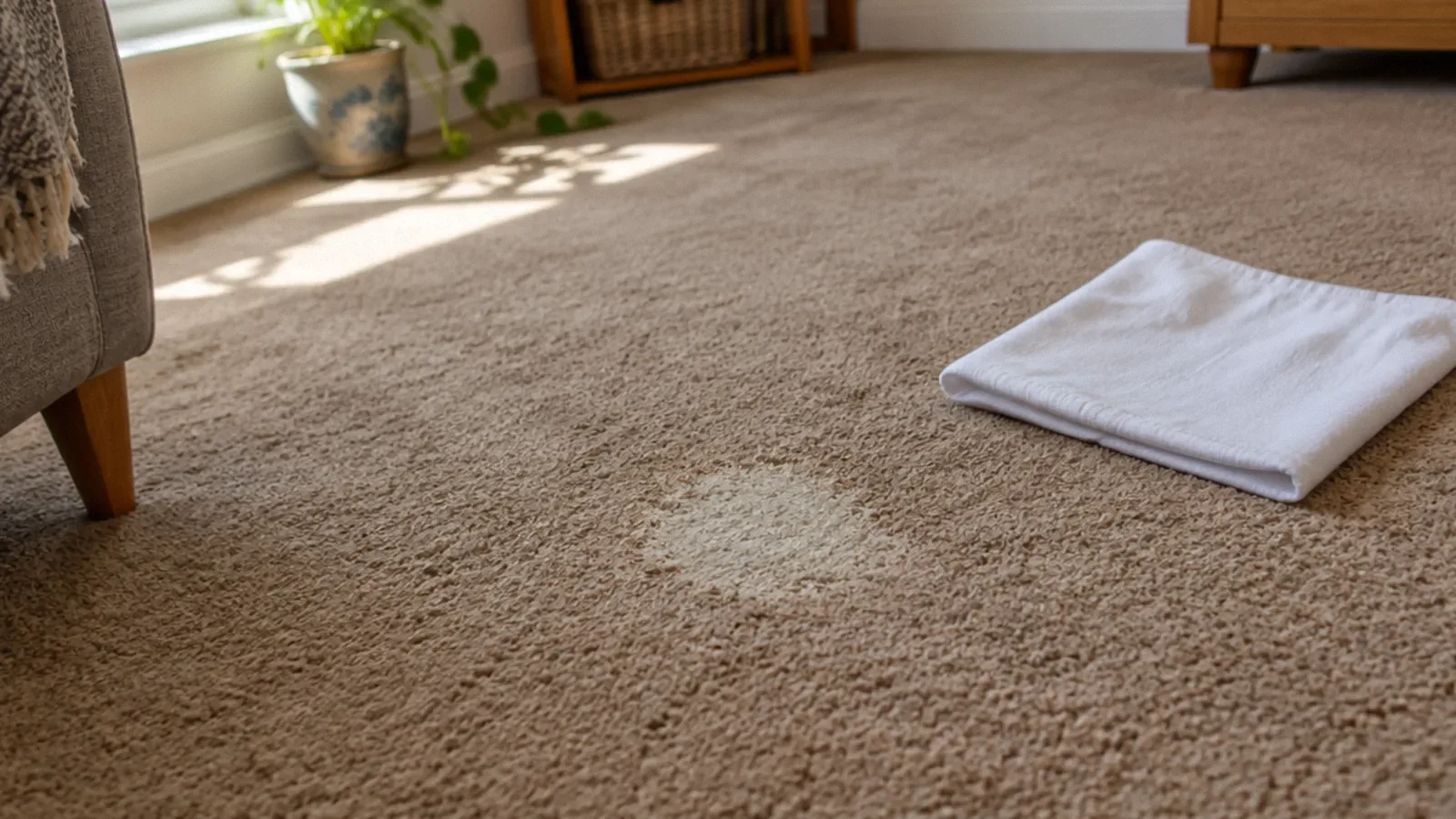
Fresh bleach is a chemical exposure that needs careful handling. Once bleach has removed carpet dye, the pale patch is color loss rather than an ordinary deposit that can simply be cleaned away. A carpet repair or color specialist can assess whether a patch or dye repair is appropriate.
Keep people and pets away
Move children and pets away from a fresh spill and prevent anyone tracking it through the home. Open windows or doors if you can do so safely. Follow the product label and wear the protective gloves it recommends; avoid touching your face while handling the affected materials.
If a large spill, strong fumes or uncertain product makes the area unsafe, leave it and get guidance rather than trying to neutralize it. For an exposure call Poison Control at 1-800-222-1222; if someone has trouble breathing, collapses or has severe symptoms, call 911.
Do not mix cleaners
Never add vinegar, ammonia, toilet cleaner, another stain remover or an unknown cleaning product to bleach residue. Mixing bleach with acids or ammonia can release hazardous gases. A pleasant-smelling additive or a household recipe does not make that combination safe.
If products have already been mixed and fumes develop, leave the area for fresh air and contact Poison Control. Do not return to experiment with another chemical. Follow emergency responders’ instructions if symptoms or a substantial exposure warrant assistance.
Respond to a small fresh spill
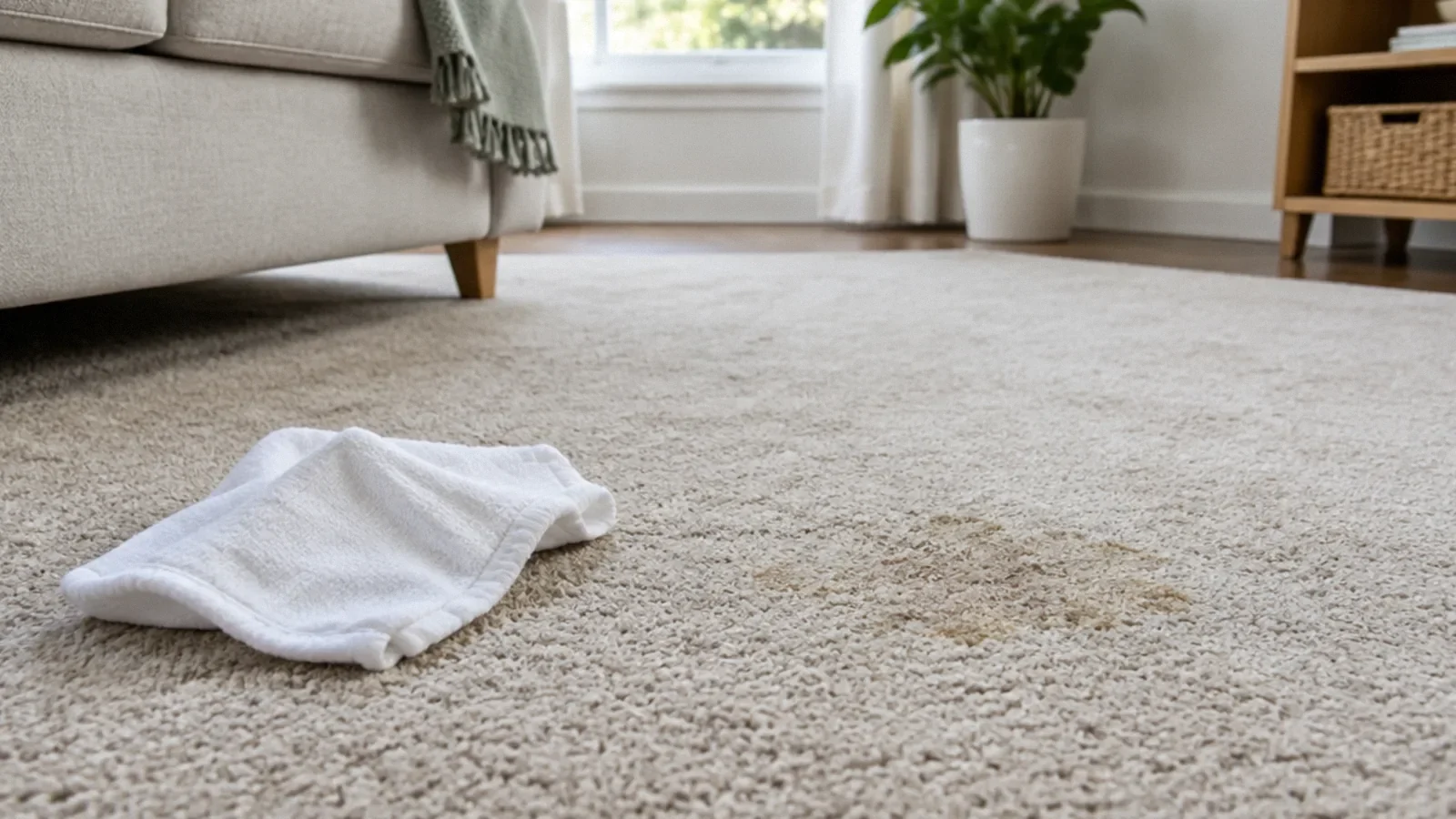
Read the specific product’s spill and cleanup instructions. For a small spill you can handle safely, use a clean white absorbent cloth to blot liquid without rubbing or spreading it. Do not use a normal dry household vacuum for liquid. Keep the used cloth away from children and pets.
The correct next steps depend on the product concentration, the carpet and what has already been applied. Follow the label and seek the carpet manufacturer’s or Poison Control’s guidance if uncertain; avoid soaking the backing or introducing another cleaner. Follow local disposal rules for contaminated materials.
Why a pale patch is different from a stain
Many stains add color or material to the carpet. Bleach may instead remove or alter existing dye, leaving a lighter area. Removing remaining liquid cannot restore dye that has already changed, even if the spot is often called a bleach stain in everyday speech.
Color change may appear uneven because fibers, dye systems and exposure vary. A white mark is not by itself proof of which chemical caused it. If you do not know what spilled, treat it as unknown and avoid testing chemicals on it.
Assess the carpet before attempting a repair
Locate the product or installation information and note fiber type, color, age and whether a warranty applies. Photograph the affected spot in daylight and measure it. Do not trim pile or pull fibers while investigating: that can make a cosmetic repair more difficult.
Check for frayed or weakened fibers and an affected backing. If the area is large, the carpet is valuable, or the spill reached padding, a professional inspection is more useful than repeated home recipes. Ask for a written assessment that distinguishes cleaning from repair.
Dye repair, patching and replacement
A carpet color specialist may be able to re-dye some color-loss spots, but a satisfactory match is not guaranteed. Results depend on the carpet’s fiber and dye, age, fading and extent of damage. Ask for a small test and a realistic explanation of expected variation.
A carpet installer may use a matching remnant or inconspicuous donor section to patch a localized area. Direction of pile, wear and dye lot can make a patch visible. Larger damage or deteriorated backing may make replacement a more practical choice.
What to avoid
Do not apply permanent marker, paint or fabric dye without understanding how it will affect the fiber and future repair. A product that looks close when wet can dry unevenly or transfer to socks and furniture. An inconspicuous test and professional evaluation reduce the chance of making the mark more visible.
Do not add extra bleach to blend a mark. It may remove more color, weaken material and increase exposure. Avoid aggressive scrubbing and hot water, and do not assume a carpet-cleaning machine is compatible with bleach.
Prevent another spill
Keep cleaning products closed in a stable, labeled container away from carpeted areas and where children cannot reach them. Carry bottles in a tray and place them on a protected hard surface. Never transfer a chemical into an unmarked drinking container.
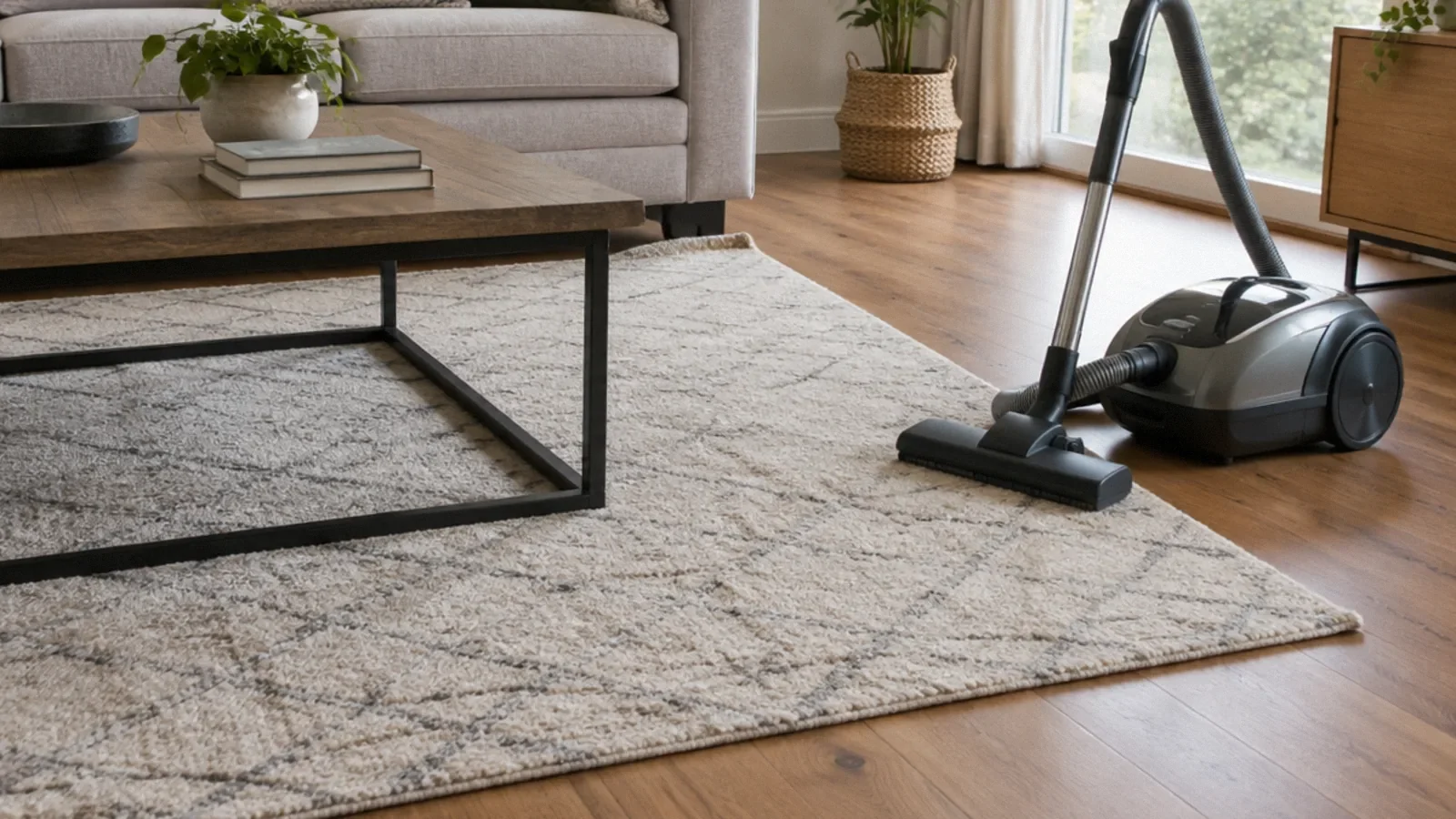
For everyday carpet spots choose a cleaner approved for that carpet and follow its label. A white cloth and a prompt blot often prevent an ordinary spill from spreading, but an unknown chemical or extensive contamination needs a different response.
Your next-step checklist
- Separate people and pets from a fresh spill.
- Avoid mixing bleach with any other cleaner.
- Read the product label and seek exposure advice when uncertain.
- Photograph color loss and ask about repair options.
Related questions
Can you wash a bleach stain out of carpet?
You can address residual liquid according to the product label, but washing cannot restore carpet dye that has already been removed.
Can vinegar neutralize bleach on carpet?
Do not add vinegar or another acid to bleach. The combination can produce dangerous chlorine gas.
Can a professional fix a bleach spot?
A carpet specialist can assess dye repair, patching or replacement. A perfect color match is not guaranteed.
Should I use more bleach to even out the color?
No. More bleach can increase color loss and damage and create additional exposure.
Sources & context
Public guidance supports the principles in this article. The practical questions and examples are editorial interpretation, not a site assessment or a coverage decision. State-specific rules apply only where identified.
- Poison Control: Chlorine gas and cleaning productspoison center guidance
- Poison Control: Safe cleaning practicespoison center guidance
- Carpet and Rug Institute: Carpet care guideindustry care guidance