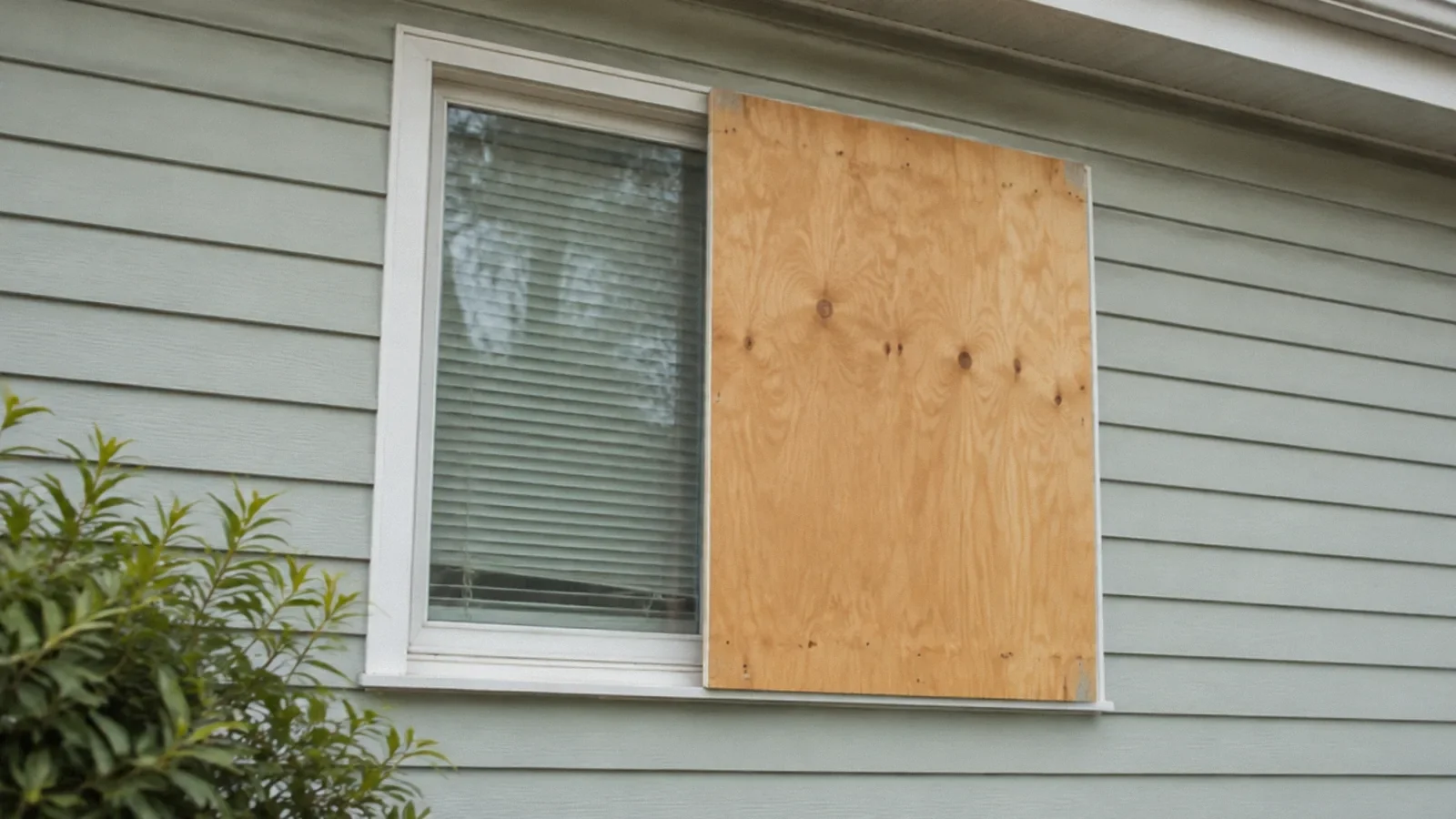
A temporary board-up can help secure an opening and reduce exposure to weather after a window is damaged. First wait for safe access, avoid broken glass and preserve required exits. A qualified contractor can assess the opening and install temporary protection appropriate to the building and local requirements.
Make the area safe first
Keep people and pets away from broken glass, unstable framing and damaged walls. If the building was affected by fire, severe weather or another emergency, wait until officials say it is safe to enter. Do not work outside during dangerous wind, lightning or an active storm.
If an opening is near a downed power line, damaged electrical equipment or a sagging structure, stay away and call the appropriate utility or emergency service. A board cannot make an unsafe structure safe. Arrange qualified assessment before work begins.
Why a temporary board-up may help
A secure temporary covering can reduce unauthorized entry and limit rain or debris entering through an opening while permanent repairs are arranged. The U.S. Fire Administration describes securing broken windows and other openings as one way to protect an unoccupied building.
Temporary protection is not the same as a repaired, weather-tight window or a rated storm shutter. The opening, wall, expected weather and duration affect the method. Ask a qualified contractor what the temporary work can and cannot do.
Preserve safe escape routes
Do not block a required door, window or other exit in an occupied building. A temporary security measure must be coordinated with fire safety, accessibility and applicable local requirements. If safe escape cannot be maintained, ask the fire authority or building official for guidance before the space is occupied.
A board-up method intended for a vacant building should not be copied blindly into an occupied bedroom. Tell the contractor who is using the building and which openings serve as exits. An emergency cover must not trap occupants.
Broken glass and access
Broken glazing can fall unexpectedly and sharp fragments may remain in the frame or surrounding area. Do not reach into an unstable opening or use a ladder in poor conditions. A contractor with the appropriate equipment can assess safe access and handle the material.
Older coatings and surrounding building materials can present additional hazards if disturbed. Do not assume a painted frame is safe to drill or sand without assessment. Protect adjacent finishes and ask how debris will be collected and disposed of.
What a contractor should assess
The provider should examine the size of the opening, frame and wall condition, access, weather exposure and whether the space is occupied. The attachment and materials must suit the actual structure. A generic plywood thickness or fastening diagram cannot cover every building.
Ask how the covering will be secured, whether it can be removed without unnecessary damage, how water will be directed and when it needs inspection. Make clear that temporary weather protection is not a promise against all wind or water intrusion.
Planning before a storm
Permanent or tested storm shutters and other approved products may be appropriate for a property, but selection and installation depend on local requirements and the manufacturer’s instructions. Prepare well before a storm; once hazardous conditions are close, leave the work and follow official instructions.
Do not rely on tape on glass as a substitute for an appropriate protection system. Never sacrifice evacuation time to finish boarding a window. The safe choice in an approaching storm may be to leave immediately.
Insurance and records
Photograph the damage from a safe location and contact the insurer or property manager. Ask whether temporary protection and permanent window replacement are handled under separate scopes and what documentation is needed. Policy coverage depends on the cause, terms and limits.
Request a written estimate for emergency work, including travel, materials, installation and later removal. Keep receipts and do not sign an assignment or open-ended contract without understanding it. A temporary board-up does not establish approval of the final repair.
Permanent repair and follow-up
Arrange a window or building professional to assess the frame, glazing, flashing and adjacent wall. Water can enter around an opening even when the visible glass is covered. Check the temporary covering after conditions are safe and report a loose or leaking installation.
Replace the window or complete the permanent repair as planned and restore any required exit. Keep the work records and inspect for hidden moisture. If a room cannot be safely secured and occupied, follow the advice of the relevant authority and property owner.
Your next-step checklist
- Wait for safe access and keep clear of broken glass.
- Preserve required exits in occupied spaces.
- Request a suitable written temporary protection plan.
- Arrange permanent repair and check for hidden water damage.
Related questions
Why board up a broken window?
A suitable temporary covering can help secure an opening and reduce weather exposure while permanent repairs are arranged.
Can I cover every window in an occupied home?
Do not block required exits. Ask the appropriate professional or authority how to maintain safe escape.
Is a board-up the same as a permanent window repair?
No. It is temporary protection and may not provide a complete weather seal or rated storm protection.
Should I board windows during a severe storm?
Do not work in dangerous weather. Follow evacuation and emergency instructions and prepare well in advance.
Sources & context
Public guidance supports the principles in this article. The practical questions and examples are editorial interpretation, not a site assessment or a coverage decision. State-specific rules apply only where identified.
- U.S. Fire Administration: Protecting homesfederal fire safety guidance
- U.S. Fire Administration: Board-up proceduresfederal technical guidance
- U.S. Fire Administration: Home fire escape plansfederal fire safety guidance