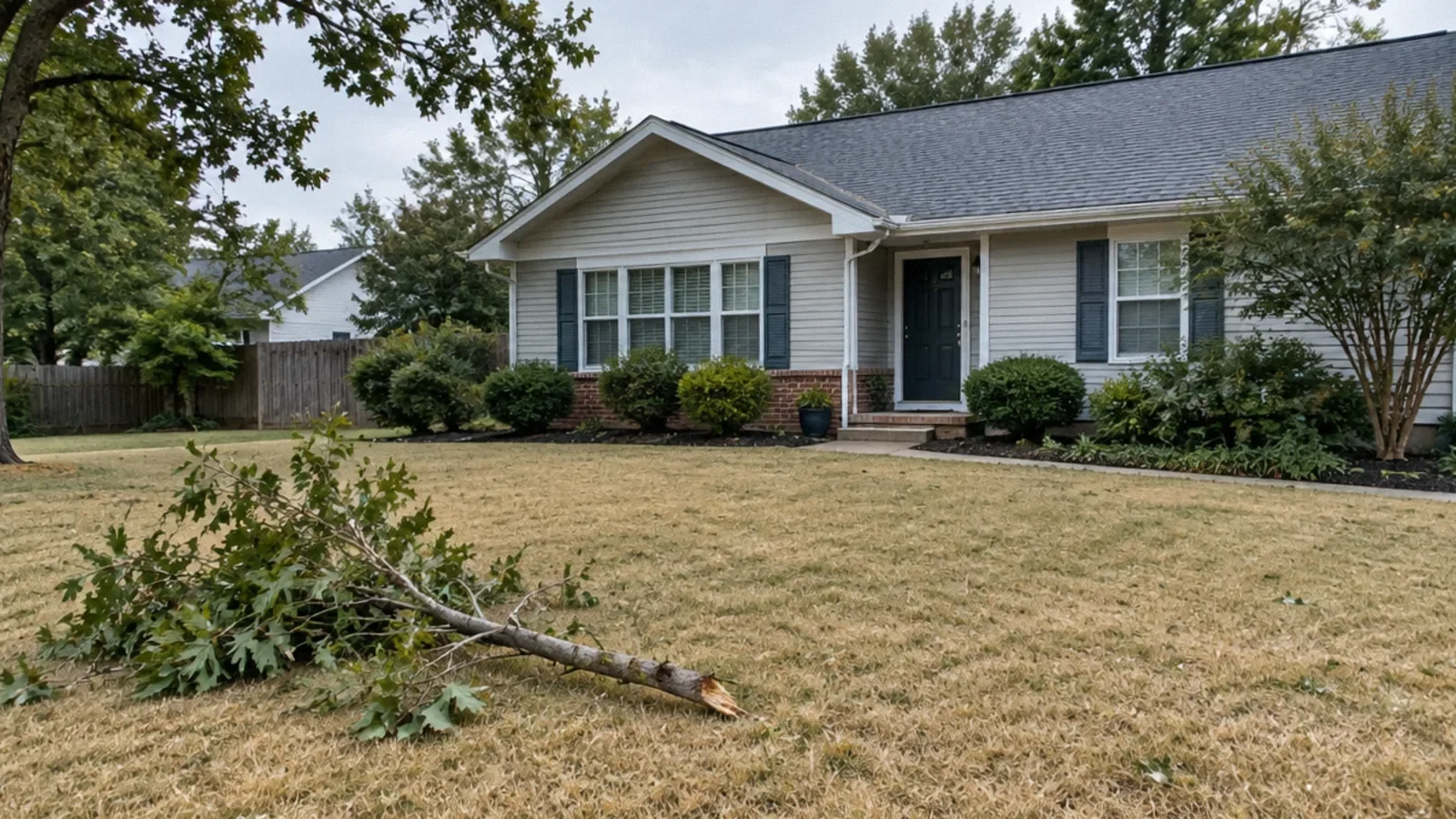
If a tree strikes a home or the structure may be unsafe, leave by a safe route and call 911 for an immediate emergency. Stay away from downed wires and damaged areas. Do not climb onto a storm-damaged roof; arrange qualified assessment and temporary protection only after the weather and structure are safe.
Put people and immediate hazards first
A falling tree can damage walls, ceilings, utility lines and exits. If someone is injured, a fire or gas leak is suspected, or the structure is unstable, leave by a safe route and call 911. Tell responders if anyone remains inside. Do not return to collect belongings until authorities say it is safe.
Stay far away from fallen power lines and anything touching them, including a tree, fence or vehicle. A line can remain energized even when it is silent or the neighborhood has lost power. Report it to the utility and emergency services from a safe location.
Do not move the tree yourself
A tree resting against a building can be under tension or support damaged material. Cutting a limb may shift the load or bring down debris. Contact emergency responders, the utility and qualified tree and structural professionals as appropriate; coordinate their work before anyone approaches.
If a suspected gas leak is present, leave without using switches, phones or vehicles near the hazard, then call 911 and the utility from a safe location. Do not attempt to repair a damaged utility connection or enter a room beneath a compromised roof.
Keep out from under a damaged ceiling
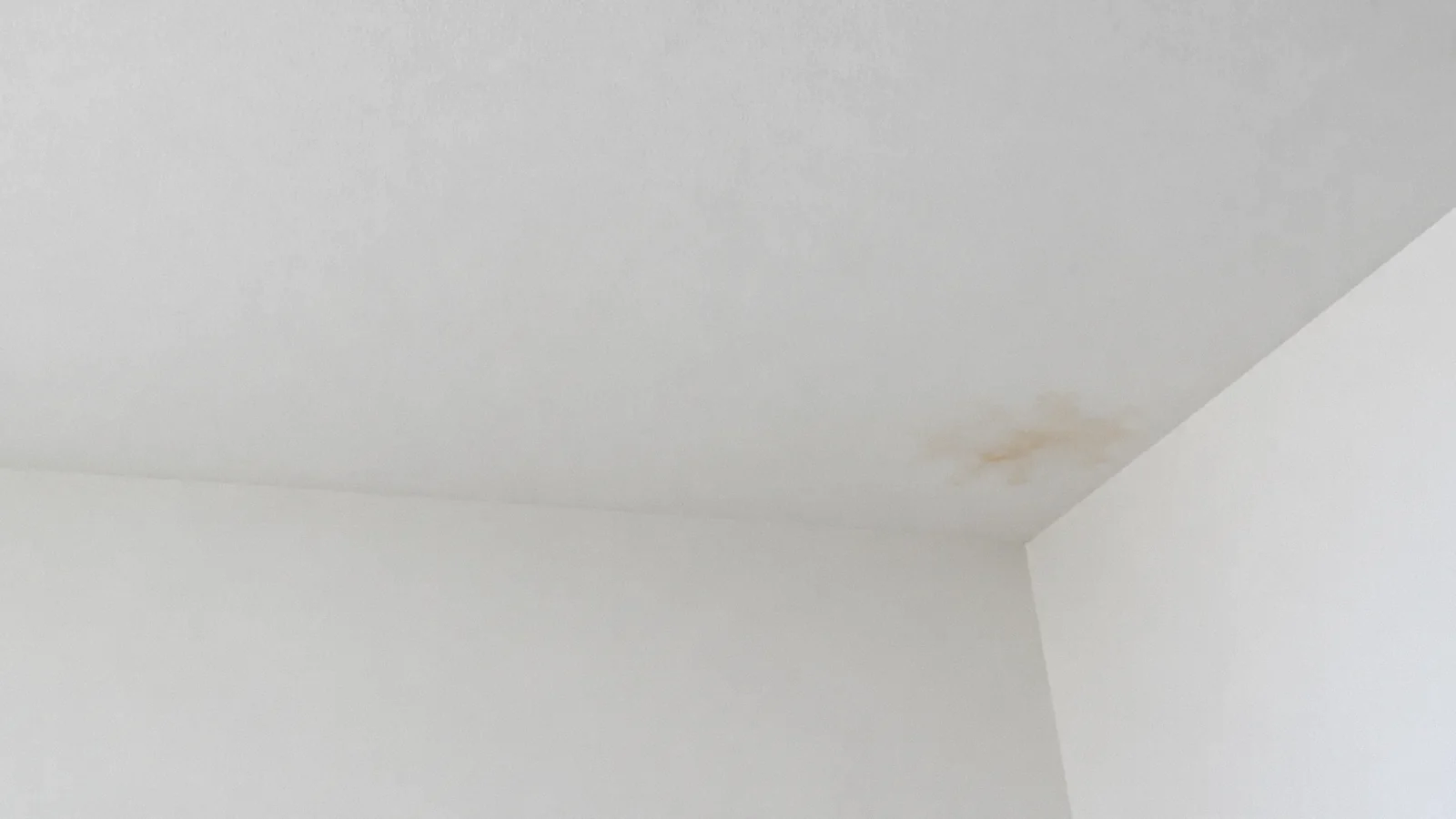
A sagging, bulging or cracked ceiling can fail, especially when water has accumulated above it. Keep people and pets away and do not puncture it. Water near lights, outlets or electrical equipment creates additional danger; do not operate wet devices.
If a known water supply is involved, close its shutoff only when it is clearly identified and safely accessible. Roof leaks and rainwater usually require a different response. Request qualified help to make the area safe and assess the source.
Temporary roof protection
A tarp can provide temporary protection from additional water, but it does not repair a roof or make a damaged structure safe. OSHA warns that roof tarping presents fall and electrical hazards and says not to install a tarp during windy or rainy storm conditions.
A qualified crew should assess roof strength, electrical hazards and safe access before work. Ask how the damaged area will be covered and secured, what limitations remain and when permanent repair is planned. Do not climb onto a wet, steep or compromised roof to install a tarp yourself.
Document and report damage
When authorities allow safe access, photograph visible damage from a safe location and record the date, affected areas and emergency work. Contact the insurer and ask about notification, temporary protection and documentation. Coverage depends on policy terms and the cause of damage.
Keep receipts, reports and communications. Do not delay emergency safety actions for photographs or paperwork. If a tree is close to a property boundary, responsibility can depend on local facts and the policy; avoid making assumptions before the parties and insurers assess the situation.
Compare repair scopes
Request a written inspection identifying the damaged covering, flashing, penetrations, underlying structure and inaccessible areas. Ask whether tree removal, temporary covering, water removal, drying and interior repairs are included or handled separately. A complete scope matters more than a headline price.
Ask about credentials, insurance, permits and how unexpected damage will be authorized. Hail, wind and impact can require different repairs. Seek another qualified assessment for major work when time and safety allow.
After the roof is protected
A covered roof can still leave wet insulation, ceilings or walls below it. Arrange assessment and drying after electrical and structural hazards are controlled. A dry-looking ceiling or a tarp in place does not prove that concealed materials are dry.
Keep the temporary protection under the contractor’s monitoring plan and schedule permanent repairs. If water returns, a wire falls or the structure shifts, move away and contact the appropriate emergency service or professional. Save final reports and warranties for future reference.
Hail and later leaks
Hail can damage roof coverings, and a weakened covering can allow water entry immediately or during a later rain. A stain alone cannot establish when or how the roof was damaged. Ask a qualified roofer to inspect safely and document the cause and repair scope. Do not climb onto a storm-damaged roof. For broader damage signs and temporary protection, see signs of roof damage and how to tarp a roof.
Roof damage after a monsoon storm
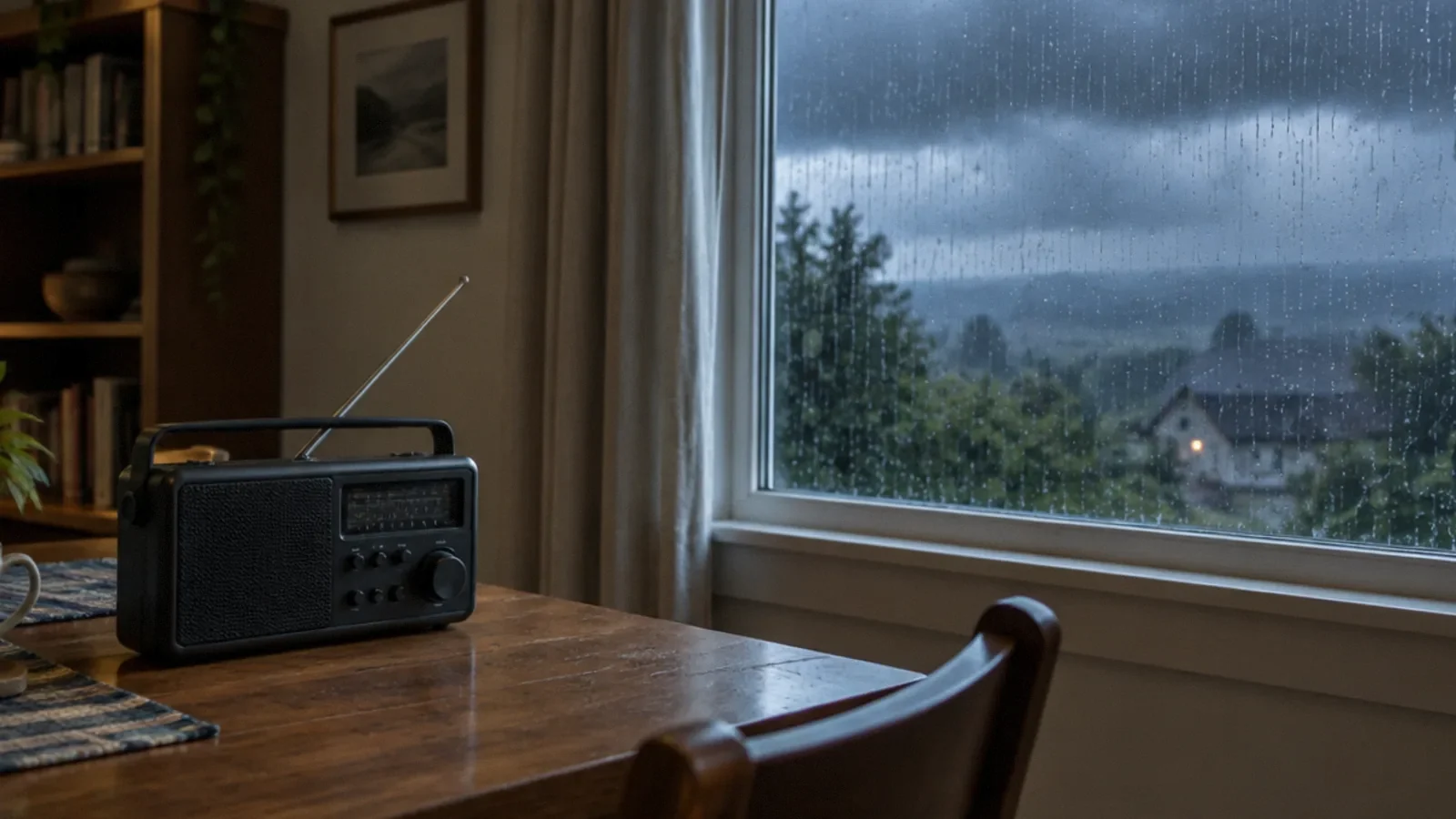
Monsoon thunderstorms can combine damaging winds and heavy rain. Wind damage can create a path for water before a leak becomes visible indoors. Once local authorities say conditions are safe, look from the ground for displaced roofing, debris or new water entry and arrange a qualified roof inspection.
Do not climb up during rain or gusts, and do not approach fallen wires or unstable trees. The repair questions remain specific to the roof: what opened, which layers became wet and what temporary protection is safe. Follow local warnings; a monsoon label does not establish the cause of every stain.
Your next-step checklist
- Leave by a safe route if the structure is threatened.
- Stay away from downed wires and fallen trees.
- Call 911 for immediate danger and notify the utility.
- Use qualified crews for tree removal and roof tarping.
- Document and arrange repairs only after safe access.
Related questions
Should I call 911 if a tree falls on my house?
Call 911 for injuries, fire, a suspected gas leak, downed wires or an immediate structural danger. Leave by a safe route.
Can I tarp a roof during a storm?
No. OSHA warns against installing a tarp while it is windy or raining. A qualified crew should assess the structure and hazards afterward.
Does a tarp permanently repair a roof?
No. It is temporary protection; the damaged roof and any wet interior materials still need assessment and repair.
Sources & context
Public guidance supports the principles in this article. The practical questions and examples are editorial interpretation, not a site assessment or a coverage decision. State-specific rules apply only where identified.
- OSHA: Roof tarping safetyfederal worker safety guidance
- PG&E: Natural disaster safetyutility safety guidance
- U.S. EPA: Mold preventionfederal guidance
- National Weather Service: Monsoon safetyfederal weather safety guidance