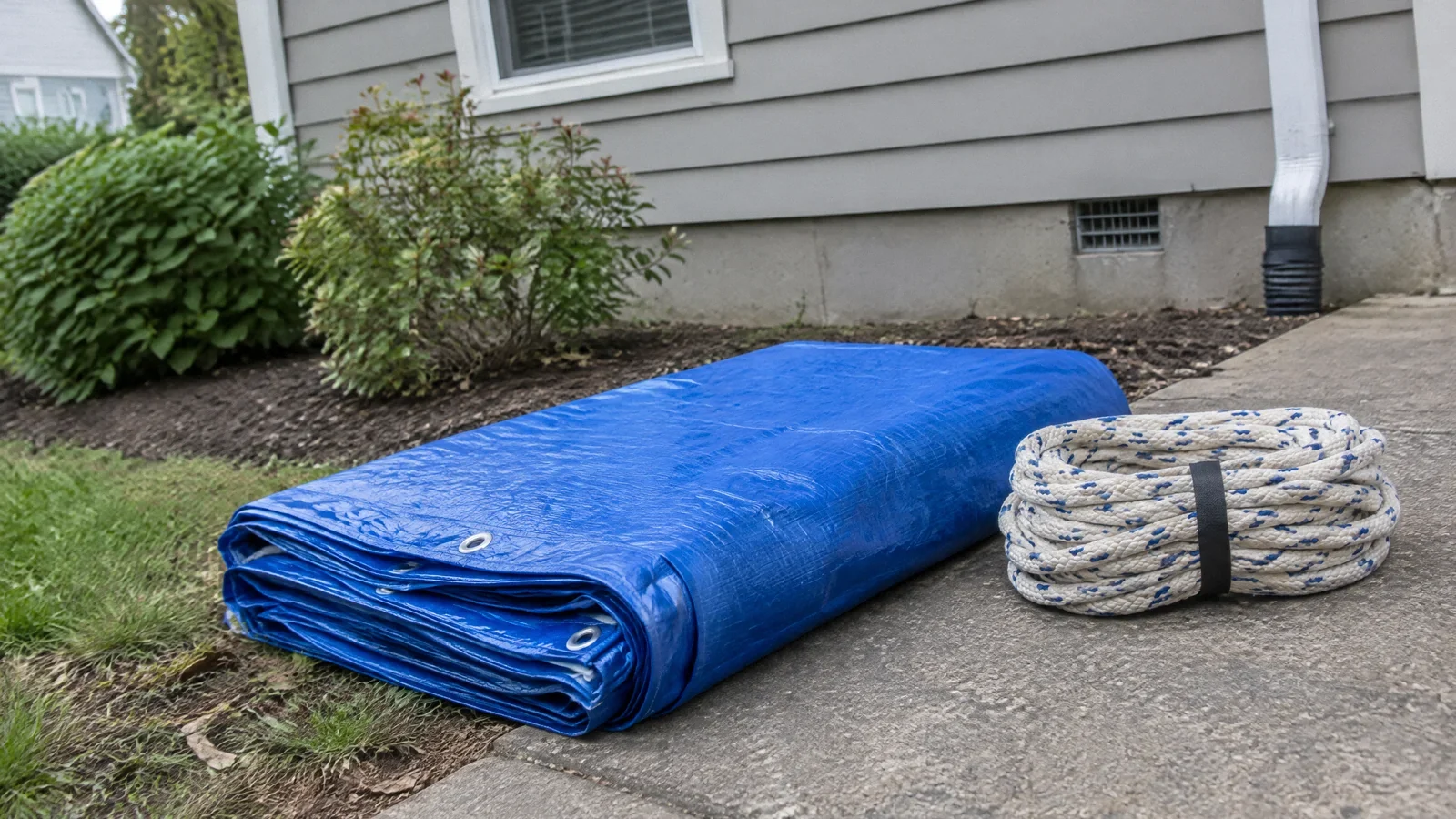
A leaking roof needs a temporary weather barrier, but the installation belongs to a qualified roofer or emergency mitigation contractor. A wet or storm-damaged roof can collapse, hide holes, or place a person close to energized lines. From a safe location, protect belongings, document the damage, and arrange a professional assessment. A tarp can reduce additional rain intrusion; it does not repair the roof or guarantee that the building is safe to occupy.
Start safely
A leaking roof needs a temporary weather barrier, but the installation belongs to a qualified roofer or emergency mitigation contractor. A wet or storm-damaged roof can collapse, hide holes, or place a person close to energized lines. From a safe location, protect belongings, document the damage, and arrange a professional assessment. A tarp can reduce additional rain intrusion; it does not repair the roof or guarantee that the building is safe to occupy.
Protect people and property
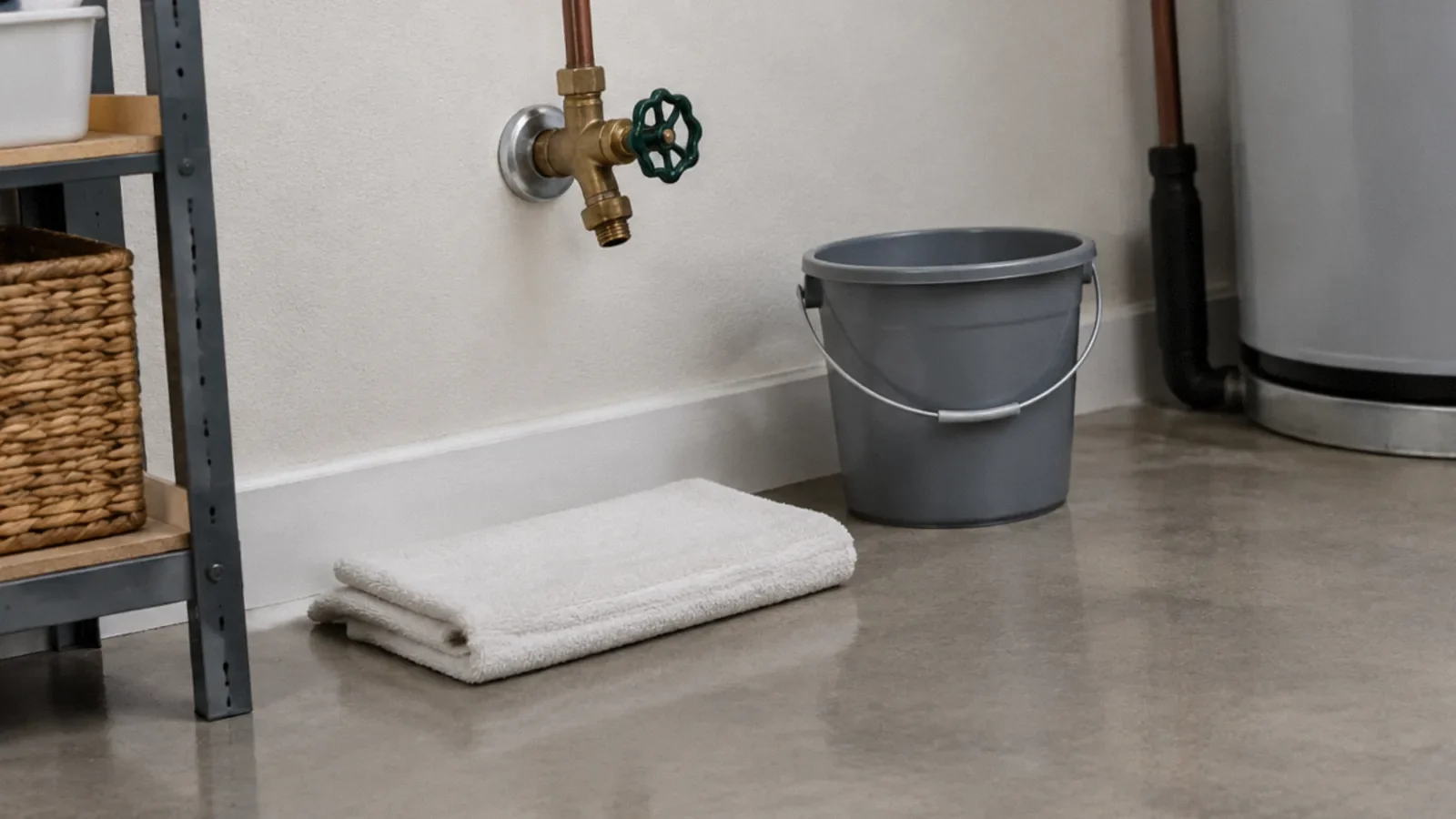
If water is close to lights, wiring, outlets, or electrical equipment, stay clear and arrange for the utility or an electrician to address the hazard. Do not operate wet switches or appliances. If the ceiling is bulging, sagging, or cracking, keep people away and seek an assessment. Leave if the structure appears unsafe; contact emergency services when there is immediate danger. A bucket can catch a small drip only where the location is safe. Move furnishings away without walking beneath a sagging ceiling.
Document the loss
Photograph the visible damage and water entry from the ground or a safe interior position. Note when the leak began, weather conditions, and affected rooms. Contact the insurer promptly and ask what documentation it needs for emergency mitigation. Keep invoices and photographs, and ask the contractor for an itemized scope. Coverage depends on the policy and circumstances; authorization to prevent further loss is not a promise that every repair will be paid.
What a professional checks
The contractor first assesses the roof structure, safe access, overhead lines and weather. OSHA warns that damaged roofs require an assessment of structural integrity before workers go on them. Rain, wind and lightning can delay installation. If a tree or debris is involved, removal and structural evaluation may need to happen first. A tarp cannot bridge every damaged roof safely, and a severely compromised building may require shoring, a different temporary enclosure, or restricted occupancy.
How the cover works
The roofer identifies the likely entry area and selects a reinforced covering large enough to direct water over sound roofing. Water can travel under shingles or along framing before it appears indoors, so the visible ceiling stain is not necessarily directly below the opening. Valleys, ridges, penetrations and roof edges need particular attention. Ask the contractor how the chosen cover will shed water and how its edges will be secured without creating new paths for water.
Fasteners and roof materials
A conventional temporary cover may use wood strips and mechanical fasteners. For example, a 2017 U.S. Army Corps of Engineers Blue Roof description explains that reinforced plastic sheeting was secured using wood strips and nails or screws. This can leave holes or damage the existing roof, so ask where fasteners will go, who will repair those locations and whether the roof covering can support the system. Roof tile, slate, metal, low-slope membranes and fragile or deteriorated surfaces may need different treatment. Do not assume one attachment method works on all of them.
Can a roof be tarped without nails?
Ask for a professional no-nails option if avoiding penetrations is important. Depending on the roof and product, a contractor may assess a compatible self-adhering temporary membrane or a specifically engineered nonpenetrating restraint system. Adhesives require suitable, sufficiently sound and clean surfaces and appropriate temperature and moisture conditions; they can leave residue, lift coatings or conflict with the roofing manufacturer's instructions. A system secured without nails may still rely on other attachment points or impose loads elsewhere. Request the product instructions, proposed attachment points, compatibility assessment, removal plan and any effect on the roof warranty. If the contractor cannot verify a safe, compatible system for this roof, a no-nails solution may not be appropriate.
Wind and weather limits
A loose sheet or improvised weights are not a dependable wind-rated system. Wind can lift a tarp, tear the material or move objects used to hold it down. Ask the installer what conditions the particular assembly is designed for, what inspection it needs after wind or rain, and when it should be removed. Do not treat a generic tarp, a product label, or a past storm survival story as a guarantee for the whole installed assembly. If severe weather is approaching, follow local emergency directions rather than asking someone to work on an exposed roof.
After installation
Before the crew leaves, ask for photographs of the completed cover and a written description of the protected area, limitations, expected inspection schedule and contact for new leaks. Inspect from the ground only when it is safe. If the cover flaps, shifts, collects water or the leak returns, contact the installer; do not climb up to adjust it. Water may already have entered insulation or wall and ceiling cavities, so arrange an interior moisture assessment and drying as needed.
Arrange permanent repair
A temporary cover buys time for a permanent roof repair. Schedule the full inspection and repair promptly; the usable life of a cover varies with the material, installation, weather and roof condition. Do not wait for the cover to fail before arranging the permanent work. Keep documentation of both the emergency work and final repair for your records.
Your next-step checklist
- Stay clear of sagging ceilings and electrical hazards.
- Photograph damage from a safe location and contact your insurer.
- Ask a qualified contractor about temporary cover and attachment options.
- Arrange permanent repairs and monitor the cover from the ground.
Related questions
Can a roof tarp stop every leak?
No. A cover reduces exposure but can shift, leak, or miss a water entry path. Arrange follow-up and permanent repair.
Can a roofer use a tarp without nails?
A contractor can assess compatible adhesive membranes or engineered nonpenetrating systems, but their suitability depends on the roof, product, weather and attachment details.
Sources & context
Public guidance supports the principles in this article. The practical questions and examples are editorial interpretation, not a site assessment or a coverage decision. State-specific rules apply only where identified.