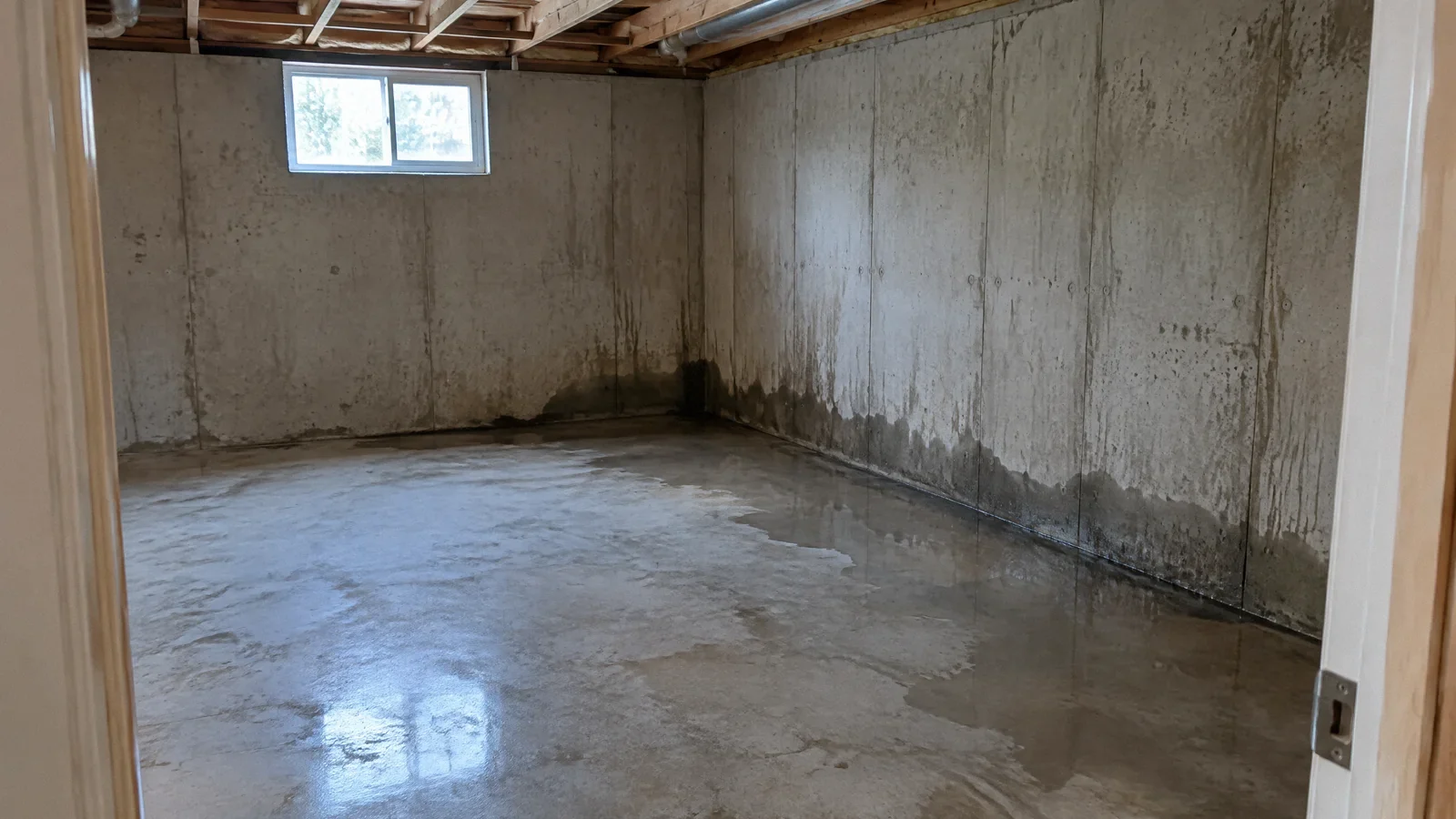
There is no universal “water first” or “power first” sequence. The safe route controls the decision. A reachable plumbing shutoff can limit a leak, but never cross standing water or touch wet electrical equipment to reach either a valve or a breaker.
Two different hazards can occupy the same space
A burst supply pipe creates an immediate water-control problem. Once water reaches receptacles, wiring, appliances, or service equipment, it also creates an electrical problem that cannot be judged by the clarity or depth of the puddle. A shallow wet floor can still lie between you and a dangerous appliance. An apparently normal light does not establish safe conditions.
CDC says never operate power switches or use electrical tools while standing in water. Its flooded-home guidance allows power to be turned off from a dry location, but directs people to call an electrician when reaching the main switch requires entering standing water. Apply that boundary before considering the value of the property being damaged.
Locate and operate the correct shutoff
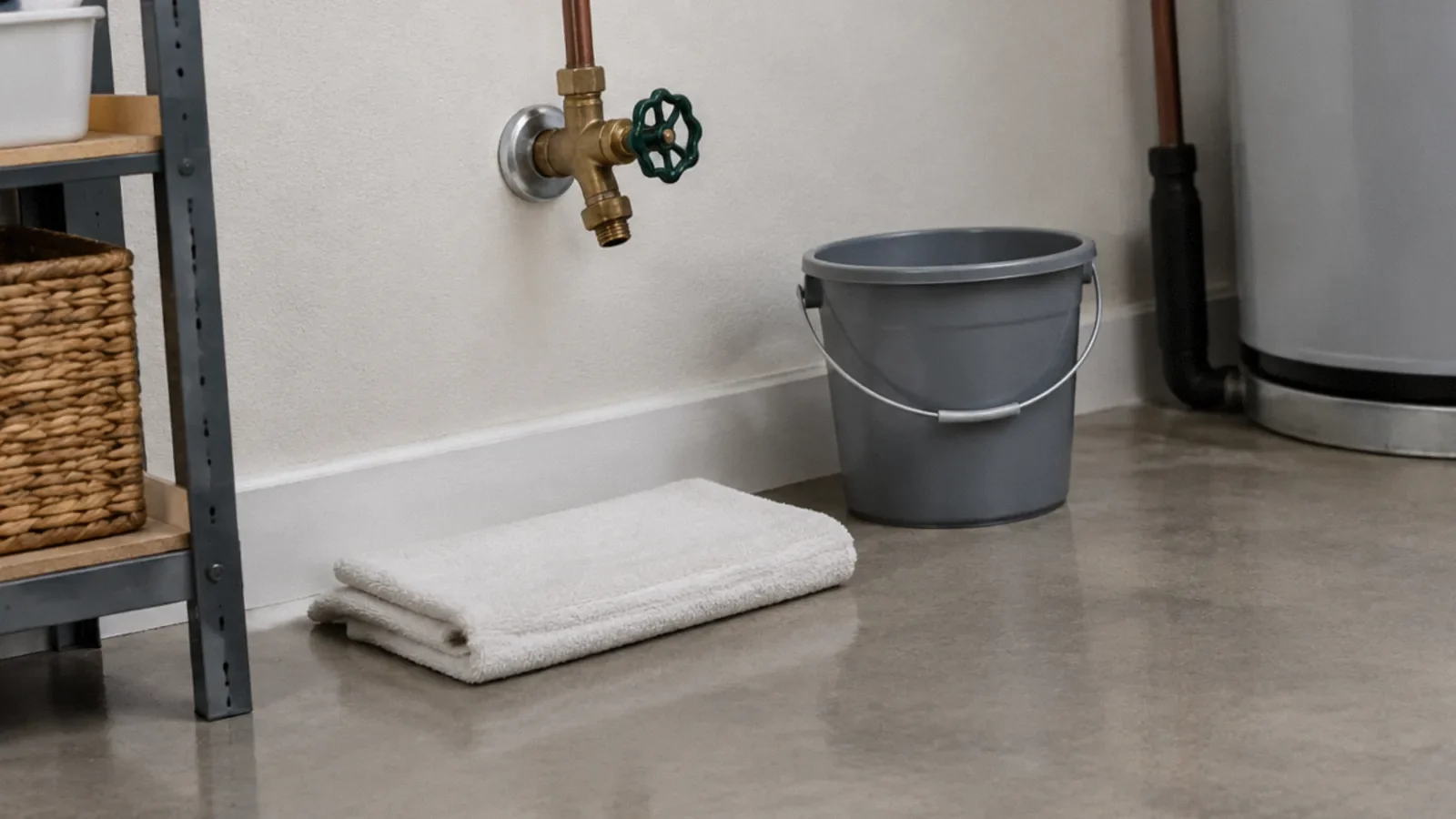
The main customer shutoff is commonly near where the water supply enters the building, though it can be inside or outside. San Francisco’s utility notes that location varies by home. Identify it before an emergency and distinguish your valve from utility-owned meter equipment. In an apartment or mobile home, ask the manager or utility where authorized isolation points are located.
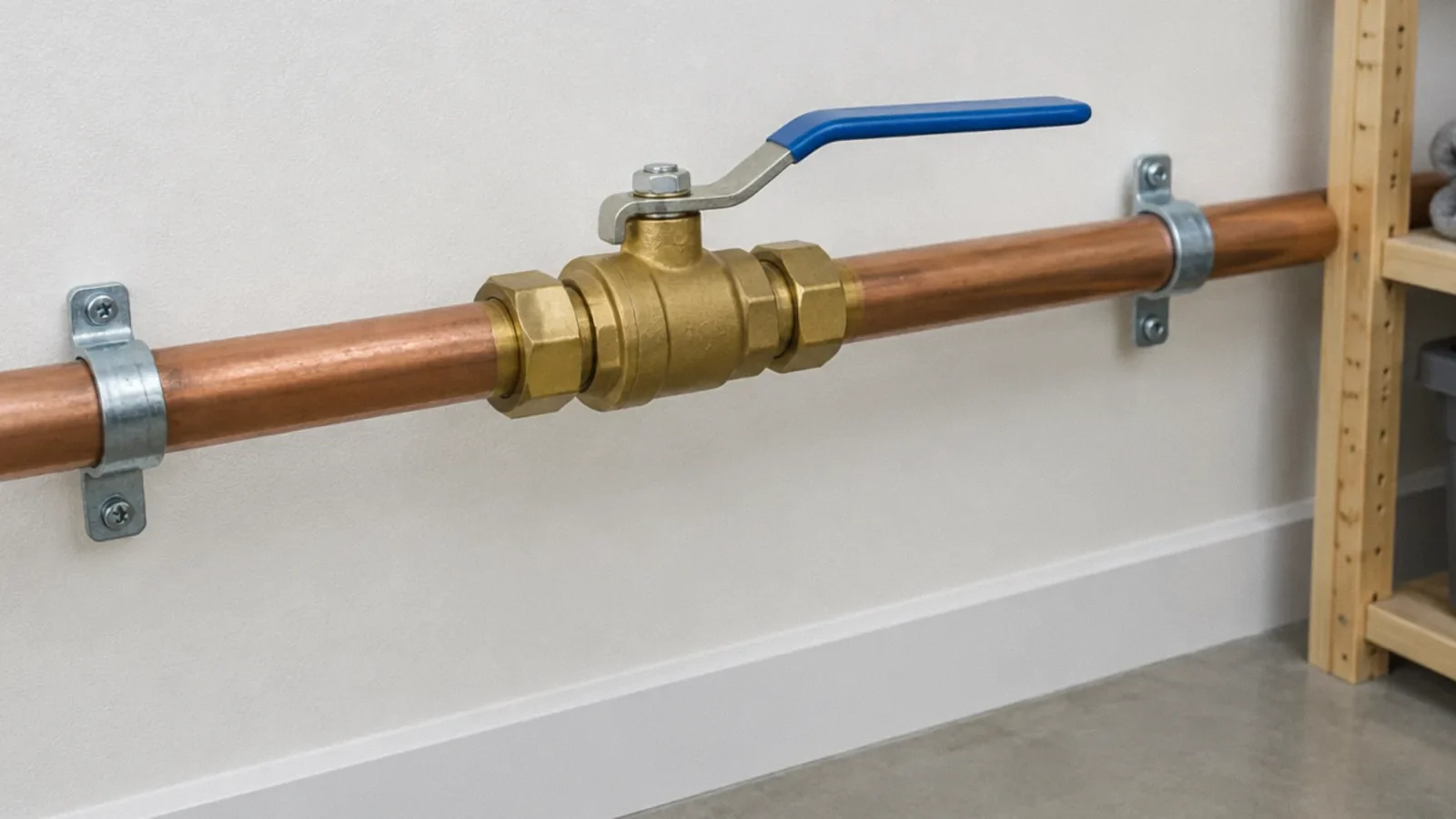
Common wheel-type gate valves close by turning clockwise; a typical quarter-turn ball valve is closed when its handle is perpendicular to the pipe. Follow the valve and utility instructions, move it gently and never force a stuck valve. If the route is wet near electrical equipment, stay clear and call qualified help.
Use a safe water-control point when one exists
A familiar, accessible main water shutoff may be outside the wet area. If you can reach it without entering water, approaching damaged electrical equipment, or crossing an unstable ceiling zone, shutting it can reduce a domestic supply leak. Do not manipulate unfamiliar utility equipment or force a damaged valve. If the location or operation is uncertain, contact the plumbing or utility responder.
An appliance valve may be closer to the leak but less safe to access. Do not reach behind a wet washing machine or move a wet refrigerator to look for a valve. Isolation farther upstream can be the more practical choice. Describe which fixture or pipe is leaking and whether the main supply has been stopped.
Know when the water valve will not help
Sewer backup, groundwater entry, roof leaks, and neighboring-unit leaks may continue after your water main is shut. The valve is not a diagnostic test that proves all remaining water is harmless. In a multiunit building, notify management because the relevant isolation point and source may serve other units.
Avoid testing the repair by repeatedly reopening the supply while ceilings or walls remain unassessed. Ask the plumber how the source repair will be checked and who will monitor downstream areas during that check. Source repair and drying are separate jobs: stopping flow does not remove moisture already inside the assembly.
Power isolation is not permission to handle wet equipment
Even when power has been disconnected, damaged equipment needs assessment before reuse. Do not plug a wet vacuum into a nearby outlet simply because another circuit appears unaffected. Extension cords, multiple machines, and damp connectors add conditions that should be considered by the qualified person arranging temporary power.
CDC recommends an electrician check the electrical system before power is restored after flooding. Keep the electrical evaluation in the project record, particularly when receptacles, appliances, panels, or concealed wiring were affected. Air drying an exterior surface is not equivalent to evaluating internal contamination, insulation, contacts, or corrosion.
Give responders a concise situation report
From a safe position, describe where the water entered, which rooms are wet, and whether equipment or outlets were submerged or sprayed. Mention unusual buzzing, burning odors, sparks, gas odors, or visible structural movement immediately. Follow emergency-service instructions for immediate threats rather than trying to investigate their cause yourself.
Also tell the restoration crew what is unknown. “The power was turned off somewhere” is less useful than identifying who isolated it and what areas they assessed. A reliable handoff prevents a second person from assuming the building is ready for powered extraction merely because someone has already visited.
When two responders need to coordinate
For a kitchen supply leak near a dishwasher, the plumber may stop water from a remote dry location while an electrician assesses affected equipment. That division is useful: the plumber’s successful repair does not certify the appliance or circuit, and electrical isolation does not confirm that the leak has stopped.
Ask each responder to describe the boundary of the work completed. If the restoration crew arrives afterward, provide both reports and identify any equipment that remains out of service. This avoids a dangerous assumption that one completed task has made every connected system ready to operate.
Plan future access after the incident
Once the building is safe, label the normal water shutoff location and keep the access path clear. Ask an electrician or utility professional to explain safe emergency isolation for the actual installation, and keep that information with household emergency contacts. Do this during ordinary conditions, when equipment can be identified without urgency.
For a recurring leak location, consider whether an accessible upstream isolation point or properly selected leak-detection control would reduce the need to approach appliances. Such planning does not replace inspection or maintenance, but it can turn an emergency decision into a familiar action that stays outside the wet area.
Recognize your valve
Locate and identify your safe shutoff before an emergency. The separate valve types guide explains common designs.
Is the water valve on or off?
For a typical quarter-turn lever, the handle parallel to the pipe generally indicates open and perpendicular indicates closed; designs differ, so check markings or the manufacturer instructions. A round-wheel valve commonly closes clockwise, but do not force a stuck valve. Water flow at a safe fixture can help confirm isolation, although other feeds or trapped water can complicate the result. If access is unsafe, leave it to the utility or a qualified plumber.
A hot-water line may have its own identified isolation valve, but closing it does not necessarily isolate cold water or another leak. Ask a plumber which valve controls the affected line, and avoid operating unfamiliar heater controls.
Your next-step checklist
- Keep everyone out of any water that could involve energized equipment or wiring.
- Choose only a known shutoff reachable by a safe, dry path.
- Tell the responder if the water continues after the domestic supply is stopped.
- Record who isolated electricity and which systems were evaluated.
- Obtain explicit guidance before reconnecting wet appliances or running temporary drying equipment.
Related questions
Will rubber boots make it safe to reach the breaker?
Do not rely on ordinary footwear or gloves to make entry safe. CDC’s boundary remains clear: never operate electrical controls while standing in water. Have the utility or electrician handle isolation when the approach is unsafe.
Can I reset a breaker that tripped during the leak?
Do not repeatedly reset it to keep equipment operating. Report the trip and wet conditions to the electrician; the cause and affected equipment need evaluation before service is restored.
Does switching off one room stop all electrical danger there?
Do not assume that it does. Multiple circuits or equipment feeds may be present, and labeling can be incomplete. A qualified assessment is needed when water has involved the electrical installation.
How do I shut off water to a shower?
Some installations have an accessible fixture isolation valve; others require the main customer shutoff. Do not force a valve or enter an electrical hazard, and ask a plumber or manager if the correct valve is unclear.
Sources & context
Public guidance supports the principles in this article. The practical questions and examples are editorial interpretation, not a site assessment or a coverage decision. State-specific rules apply only where identified.
- CDC: Reentering Your Flooded Homeofficial
- EPA: Mold Cleanup in Your Homeofficial
- San Francisco Public Utilities Commission: Home water shutoff valveutility guidance
- Los Angeles County: Water main shutoff valvescounty guidance
- EPA: Leak detectionofficial guidance
- EPA: Home maintenanceofficial guidance
- Public utility: how to shut off waterofficial guidance
- CDC: Electrical hazardsofficial guidance
Community questions behind this topic
These discussions helped identify reader concerns. They are anecdotal, not technical or legal authority.