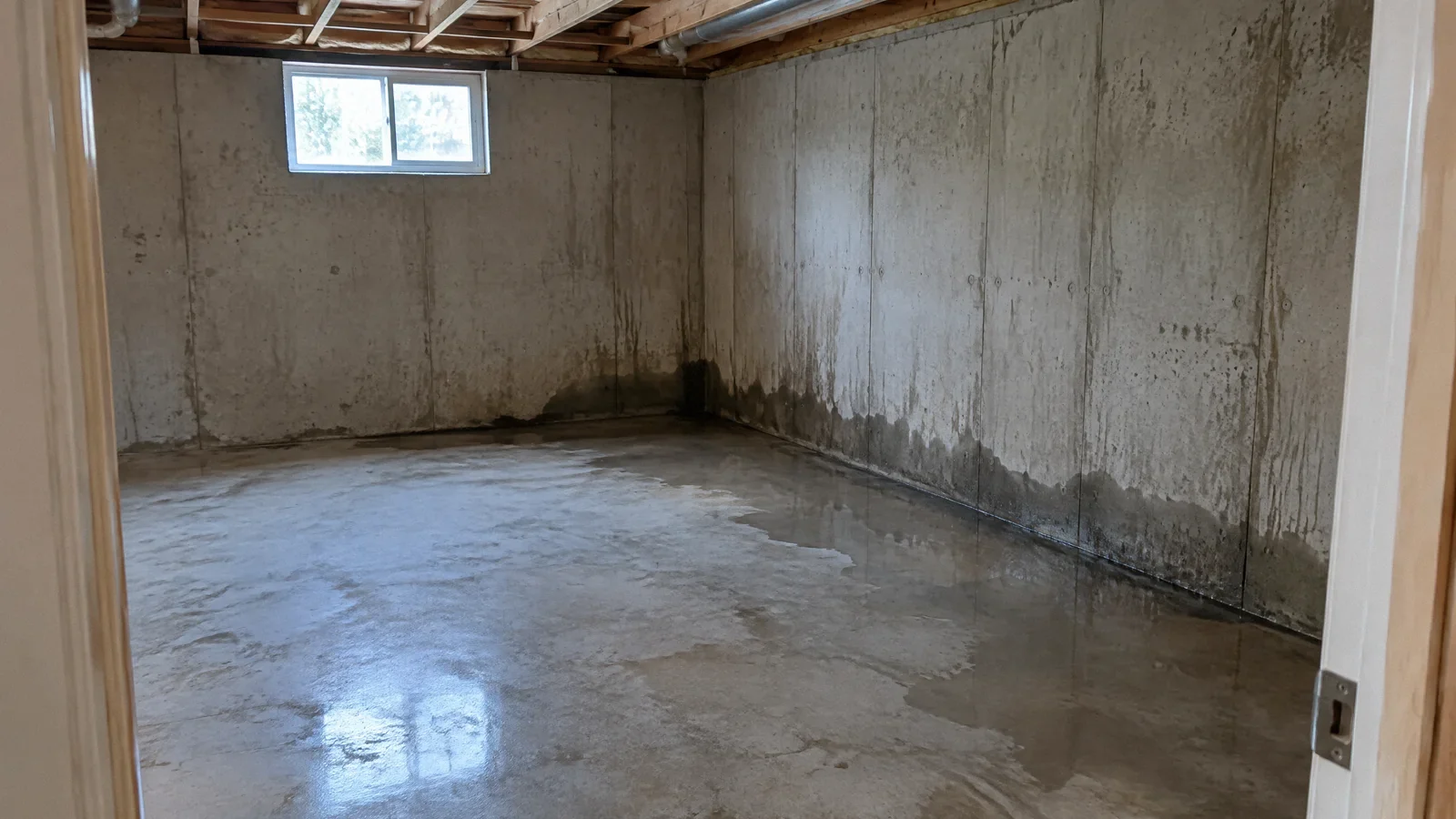
When groundwater surrounds a flooded basement, rapid pumping can create damaging pressure across walls and slabs. Do not assume the fastest pump is the safest solution. Obtain local emergency or structural guidance when flooding is deep, groundwater remains high, or the structure is damaged.
Why water inside sometimes balances water outside
Saturated soil and groundwater exert pressure on a basement. Water inside the basement may partially counter that force. Removing the inside water while substantial pressure remains outside can increase the net load on walls and floors. FEMA’s basement-flood guidance warns that walls may buckle or collapse and floors may crack under these conditions.
This warning is particularly relevant to widespread flooding and persistent high groundwater. It does not mean every washing-machine leak requires the same pumping strategy. The source, exterior water conditions, construction, and visible movement determine which assessment is needed.
Do not inspect a flooded basement by entering it
Floodwater can conceal electrical hazards, debris, sewage, and changes in the walking surface. Look only from a safe location. Do not descend stairs into water to check a pump or breaker, and do not assume utility isolation has occurred because neighborhood power is out. CDC recommends qualified electrical evaluation before using powered equipment after flooding.
If you see bowed walls, new major cracks, displaced supports, or a lifted slab, keep clear and report the observations. A restoration crew’s ability to extract water does not itself establish structural safety. The appropriate building or structural professional may need to set the pumping constraints.
Why a universal pumping rate is the wrong shortcut
Older public guidance gives staged drawdown examples, but a schedule copied from a webpage cannot account for the actual soil, foundation, water level, or structural condition. Use the FEMA warning to understand the risk and obtain a site-specific plan. Ask who has assessed exterior pressure and what observations should trigger stopping.
A plan may require monitoring the water level and checking whether it rises again, but those observations should be made without unsafe entry. Record the source of instructions and the times and levels observed. If conditions change, contact the person responsible rather than continuing simply because a planned interval has elapsed.
Arrange power and discharge as part of the job
Pumping moves a hazard as well as water. Discharge must not return against the foundation, flood a neighbor, enter an inappropriate drain, or conflict with local rules. Sewage-contaminated water may require a different handling route. Have the responder identify where extracted water will go.
Generators and combustion-powered pumps add carbon monoxide hazards. CDC says gasoline-powered pumps, generators, and other gasoline engines must operate outdoors at least 20 feet from doors, windows, and vents, never inside a home, garage, carport, porch, or other enclosed or partly enclosed space. An open garage is not a safe workaround. Temporary electrical supply and wet-area equipment also need appropriate assessment, rather than a chain of extension cords improvised through the basement.
Questions for the person directing drawdown
Ask whether the assessment considers water outside the foundation, visible wall and slab condition, and the type of construction. Also ask who can authorize a change if the water rises again or a crack appears. These questions identify responsibility without turning the homeowner into the structural evaluator.
For example, a basement filled during a river flood while the surrounding ground remains saturated presents a different pressure situation from a localized clean-water appliance release on a dry day. Both can involve electrical hazards and wet materials, but their pumping constraints may differ. The work order should not copy one scenario’s approach into the other.
Record the source of site instructions, the observed water levels, and the sequence of extraction. These records help later reviewers understand whether damage was observed before, during, or after drawdown. They should be made from safe locations or by the assigned crew.
Stop and obtain reassessment if new movement, unusual sounds, displaced elements, or other signs of instability are reported. Do not send someone into the basement to confirm the report by touch. The property-loss objective never requires an occupant to enter a potentially unstable or electrically hazardous area.
After extraction, assess what the water reached
An empty basement still may have soaked walls, floor assemblies, insulation, and contents. Photograph the water line and record areas that were inaccessible. Begin the appropriate contamination assessment and drying once structural and electrical conditions permit.
Investigate recurrence before rebuilding. Groundwater pressure, surface runoff, failed drainage, plumbing releases, and sewer backup require different prevention measures. Restoring the same finished wall over unresolved exterior water can recreate the loss, even if the immediate cleanup was competent.
Your next-step checklist
- Identify whether the event involves high exterior groundwater or only an internal release.
- Keep occupants out of standing water and away from visibly stressed structural elements.
- Obtain pumping instructions from the appropriate local or structural authority when pressure is a concern.
- Document the discharge destination, power arrangement, monitoring responsibility, and stop conditions.
- Inspect retained materials after extraction rather than equating an empty basement with a completed cleanup.
Related questions
Should I immediately shut down a running sump pump?
Do not make a blanket change from online advice. Contact the responder assessing your conditions, especially if there is deep flooding or structural concern. The correct operation depends on the building and outside water level.
Can I use a rented high-capacity pump?
Capacity alone is not the deciding factor. Safe access, electrical supply, discharge, contamination, and the effect of drawdown on the structure all matter.
What does a rising water level after pumping mean?
It indicates continued entry, but not its exact source or a safe next pumping rate. Record the observation from a safe location and have it incorporated into the assessment.
Who should document cracks found during extraction?
Have the responsible crew or structural assessor record location, appearance, and timing from safe access. Photographs can preserve observations, but they do not determine structural significance. New movement should prompt reassessment by the appropriate professional before ordinary cleanup continues.
Sources & context
Public guidance supports the principles in this article. The practical questions and examples are editorial interpretation, not a site assessment or a coverage decision. State-specific rules apply only where identified.
Community questions behind this topic
These discussions helped identify reader concerns. They are anecdotal, not technical or legal authority.