Household shutoffs include main ball or gate valves and fixture stops such as angle or straight sink valves. Choose according to location, pipe and connection type, potable-water listing and local rules. A valve’s appearance does not prove it works; never force a stuck or leaking handle.
Main and fixture shutoffs
A main shutoff controls water to the building or a major portion of it. Fixture stops isolate a sink, toilet or appliance, allowing other fixtures to remain supplied. Locate and label both before an emergency, but check the actual layout: irrigation, a water heater or another branch may be connected upstream. The meter and utility valve may belong to the water supplier; ask before operating equipment in a meter box.
Ball and gate valves
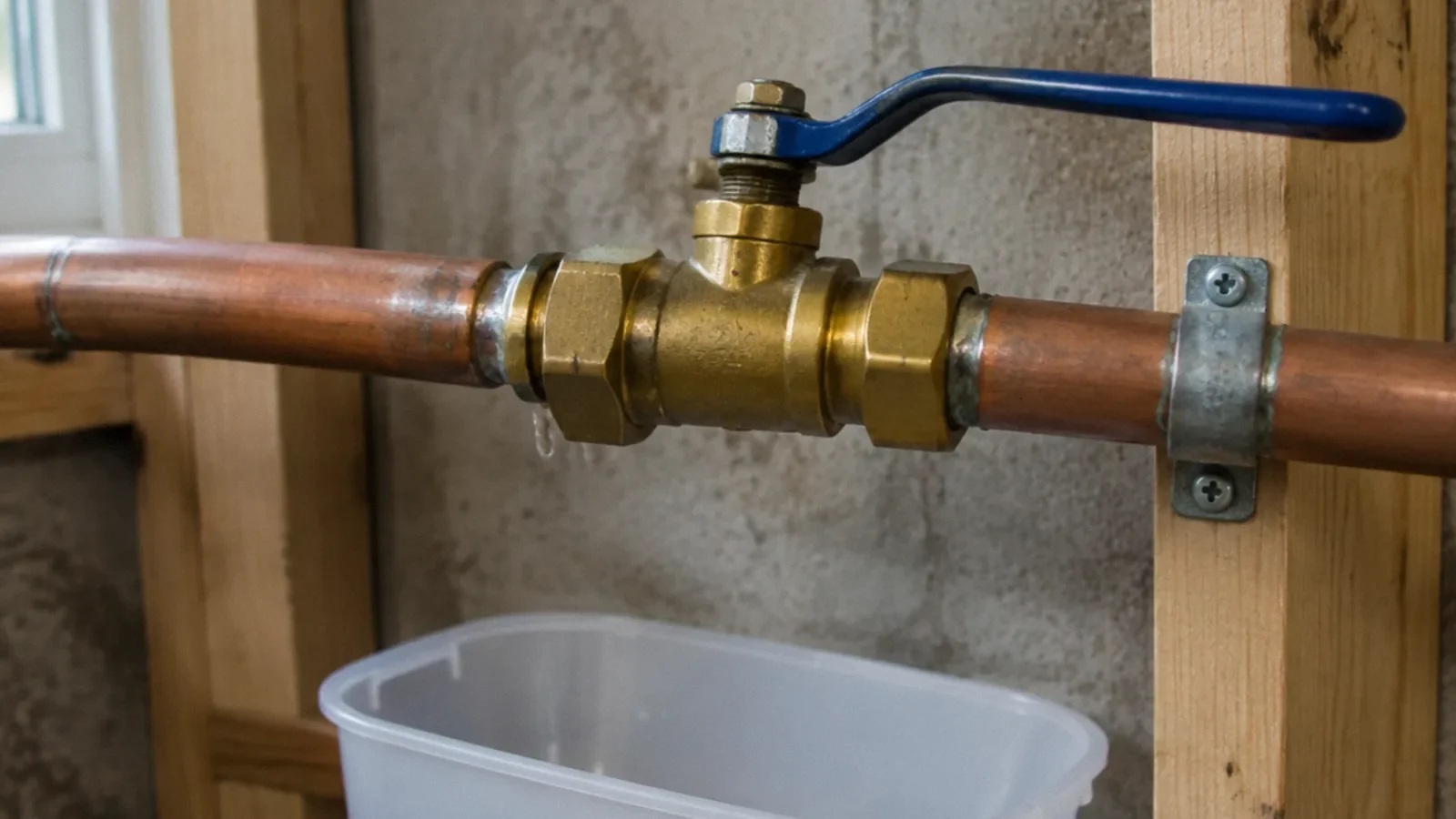
A ball valve typically has a lever that turns one quarter turn. On a conventional valve, the lever parallel to the pipe indicates open and perpendicular indicates closed. A gate valve commonly has a round wheel and takes several turns. SFPUC notes that either can serve as a main shutoff. Do not assume handle shape proves a valve is functional or that it isolates every branch.
Sink stops and connection shapes
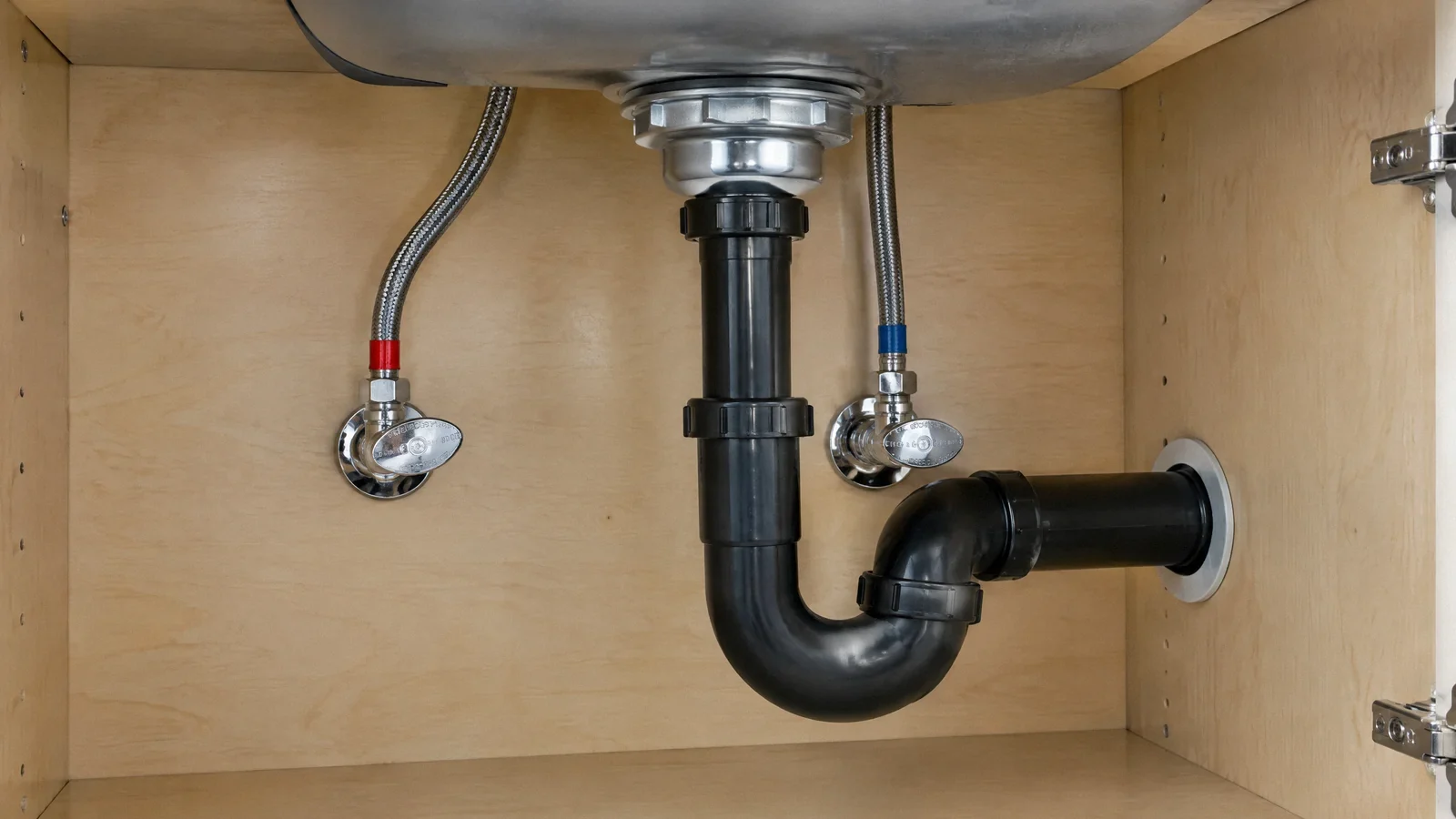
Under a sink, separate stops commonly serve hot and cold supplies. An angle stop changes the direction of flow when the supply emerges from a wall; a straight stop continues in line, such as where a pipe rises from the floor. Both may use quarter-turn or multi-turn mechanisms. The shape describes the route, not whether the valve fits a particular pipe or faucet connector.
Choosing a replacement
A suitable valve must match pipe material, inlet and outlet sizes, connection method, potable-water requirements, temperature and pressure rating, local code and available clearance. Compression, threaded, soldered and other connections are not interchangeable simply because they look similar. A plumber can inspect the pipe and choose compatible parts. An inaccessible main valve may justify a discussion about relocating or adding an accessible shutoff where permitted.
Operation and problems
A stiff, corroded or leaking valve may fail when forced. Do not use excessive force or tools on a stuck handle; arrange repair. If it is safe and the valve operates normally, verify isolation at a suitable fixture and remember that residual water can drain after closure. A valve that continues to pass water may need attention. Follow local utility instructions for the service valve and meter.
Planning for an emergency
Show household members where the accessible main and fixture stops are and keep the route clear. A fixture stop helps when its supply connection leaks; a leaking pipe upstream of it may require the main shutoff. If water has reached electrical equipment, do not enter water to reach a valve. Contact the utility, building management or a qualified professional according to the situation.
Other valves and what they do
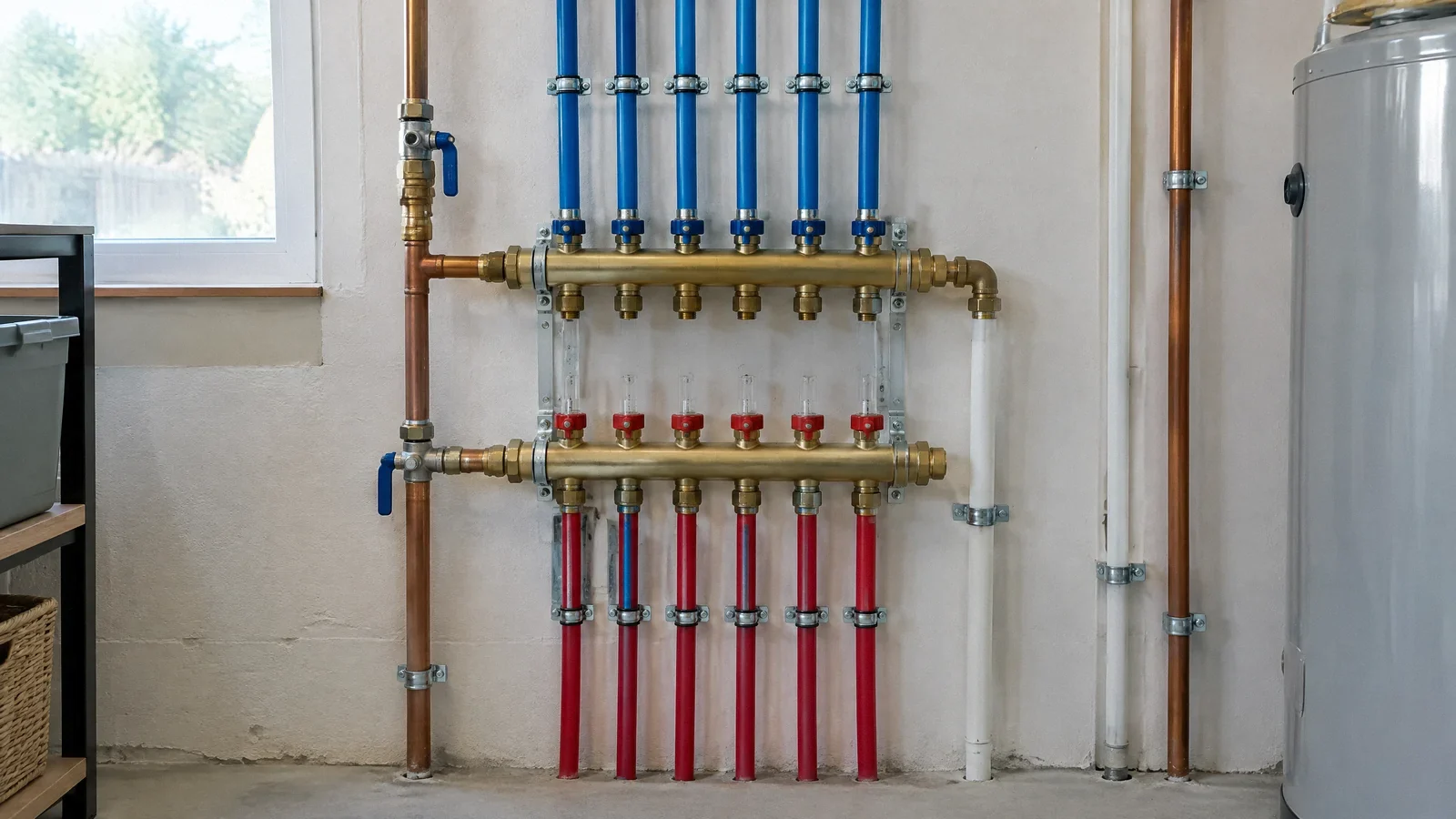
A pressure-reducing valve controls pressure rather than serving as the normal emergency shutoff. A check or backflow device is intended to limit reverse flow; its role is also different. Automatic shutoff devices may close in response to a leak sensor or flow monitor, but require suitable installation, power and maintenance. Ask a plumber to identify each device and the manual shutoff, and do not treat every fitting with a handle or adjustment screw as an isolation valve.
When the main cannot isolate a leak
A leak at the main valve itself or upstream of it may continue after the valve is closed. In a shared building, one apartment’s valve may not control a common riser. Contact the property manager or water supplier to arrange safe isolation and determine who controls the upstream equipment. Keep the area clear and do not remove a meter cover or operate a utility valve without permission. After repair, ask which areas are now isolated by each valve.
Ask for a functional check
During planned plumbing work, ask the plumber to identify the direction of flow, valve type and service area. A normal-looking handle does not show whether the internal mechanism closes fully. The professional can determine whether the installation can be checked without creating a greater risk, especially with an old or leaking valve. Keep the resulting labels visible and update them after remodeling. A water alarm can provide additional warning but does not replace a working shutoff.
Your next-step checklist
- Record the location, condition and relevant history.
- Identify the source or application before choosing a repair or product.
- Ask a qualified professional about local requirements and limitations.
- Keep the written scope, inspection findings and records.
Related questions
Is an angle stop a kind of ball valve?
Angle describes the change in direction between inlet and outlet. The internal mechanism may be quarter-turn or multi-turn; confirm the actual product.
Should I force a stuck main valve?
No. Forcing a stiff valve can damage it or make a leak worse. Contact a plumber or water supplier to arrange safe isolation and repair.
Sources & context
Public guidance supports the principles in this article. The practical questions and examples are editorial interpretation, not a site assessment or a coverage decision. State-specific rules apply only where identified.
- SFPUC: Home water shutoff valveofficial guidance
- Western Water: How to turn off waterofficial guidance