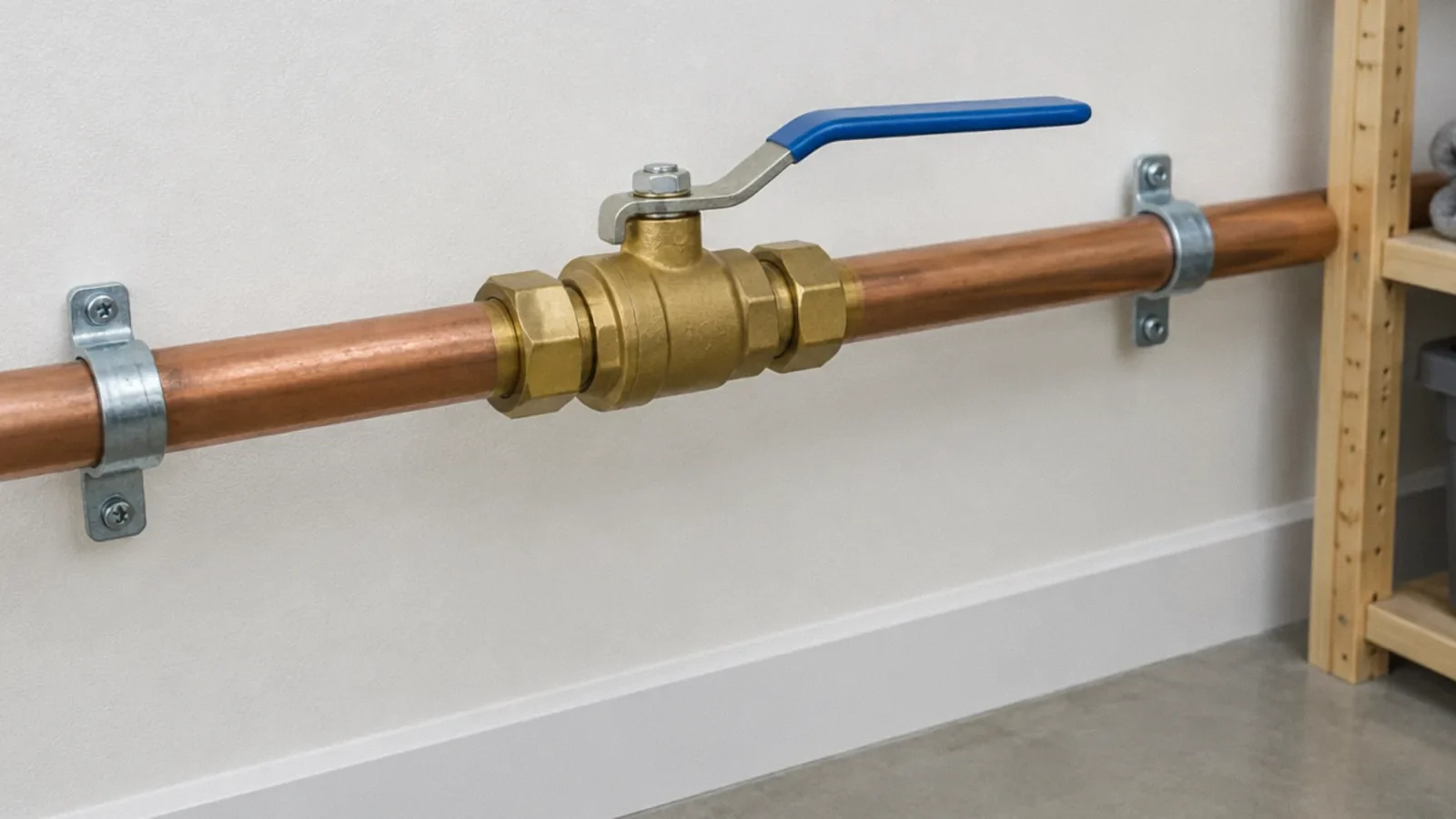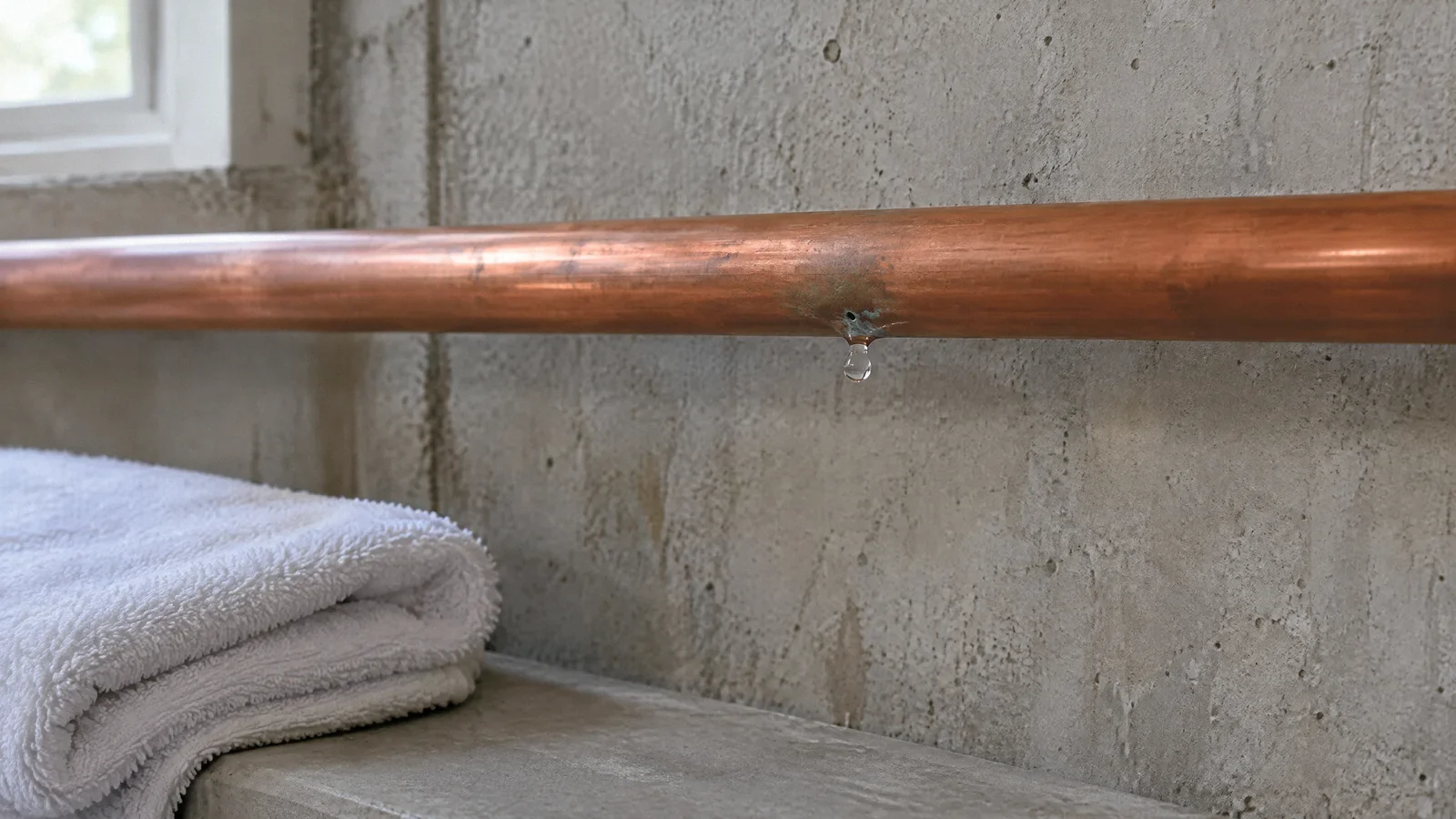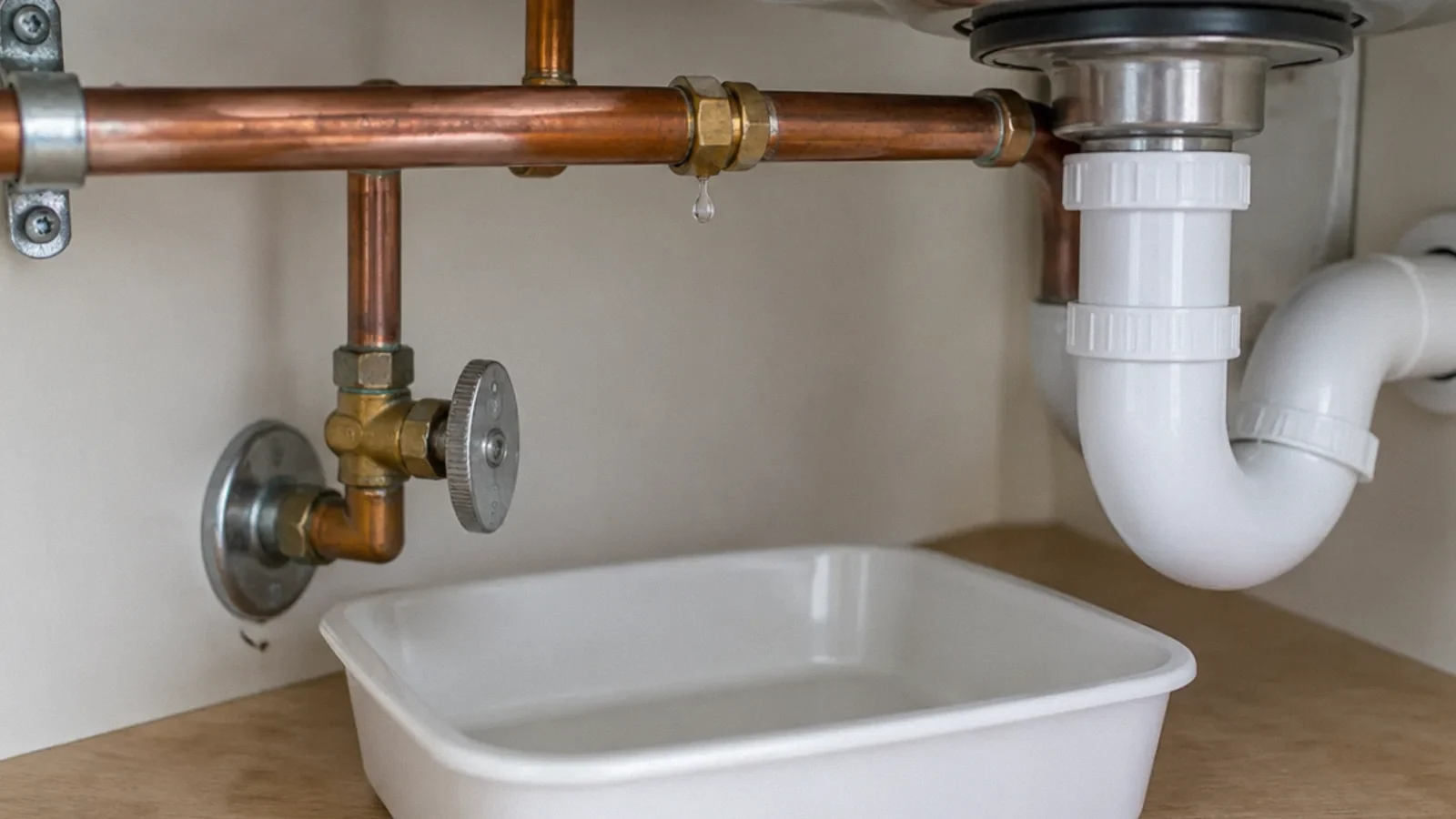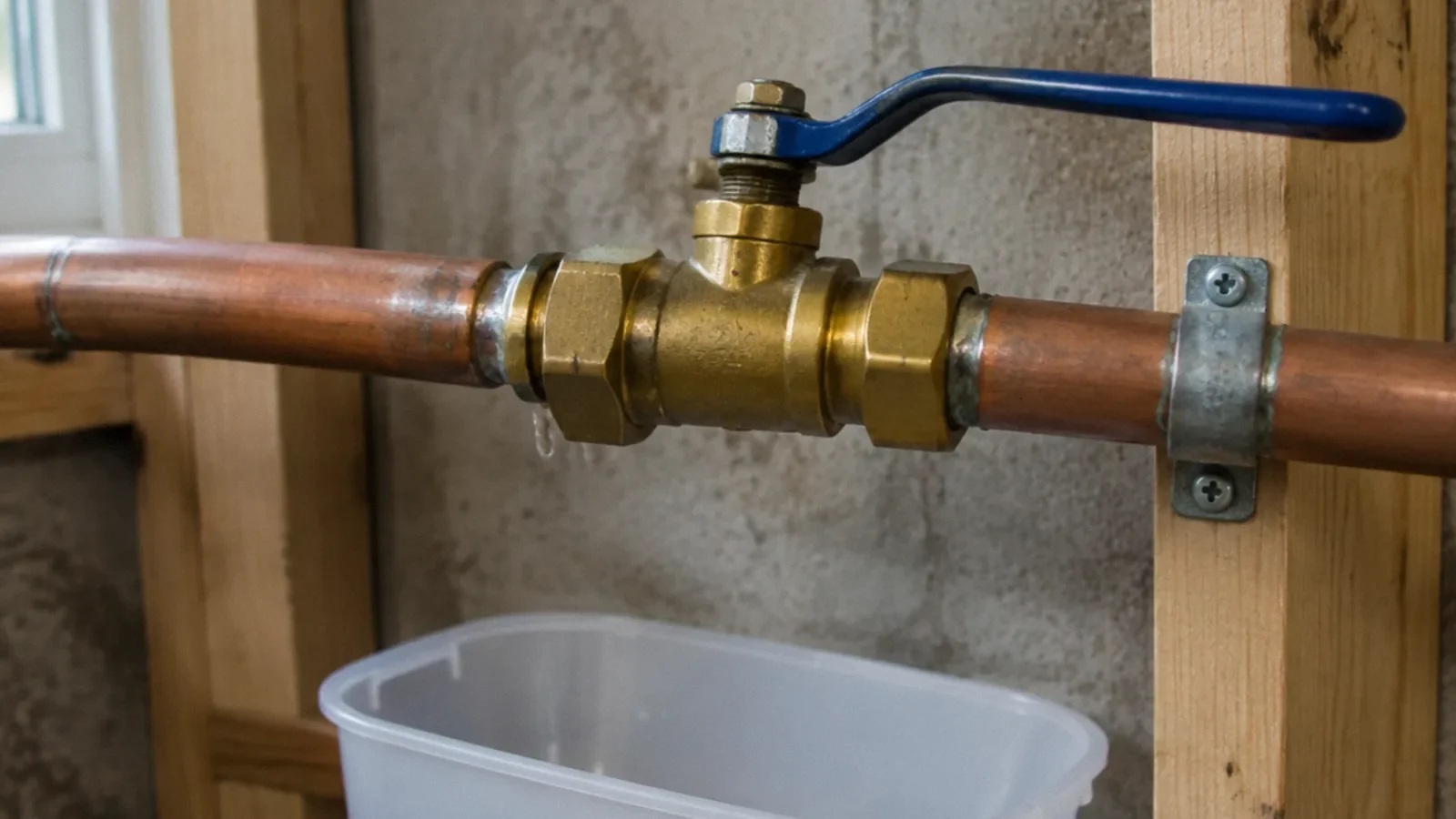
A leaking shutoff valve may drip at the handle, a connection or the valve body. Keep people clear of water near electricity, contain a minor drip if safe, and contact a plumber. If the main valve cannot stop the flow or the leak is on the utility side, contact the water utility for guidance rather than forcing its equipment.
Start with safety and the water flow
If water is spreading toward outlets, wiring or electrical equipment, stay out of the wet area and contact a qualified electrician or emergency services as the situation requires. Do not stand in water to reach a breaker or valve. For a small accessible drip away from electrical hazards, a container and towels can limit immediate damage while you arrange service.
If a fixture valve is leaking and a clearly identified main shutoff is safely accessible, closing the main may reduce water flow to the affected plumbing. The main valve itself may need a different upstream shutoff. Do not force a stuck handle or turn equipment marked as utility property.
Find where the shutoff is leaking
Look from a safe position for moisture around the handle or stem, the joint where a pipe enters the valve, or the metal valve body. Water can run along a pipe from another source, so a wet valve is not conclusive evidence of the leak location. A photo and the time the drip started can help a plumber.
Condensation can also make a cold pipe wet, especially when surrounding air is humid. A steady drip from a specific connection or moisture that returns after drying suggests a leak, but the actual cause needs inspection. Avoid wrapping or concealing an active leak as a permanent repair.
Fixture valve versus main valve
A fixture shutoff commonly serves a sink, toilet or other individual fixture. Closing the home main usually interrupts a wider part of the supply, but layout varies. In an apartment or shared building, the property manager may control access or need to coordinate a shutdown with neighbors.
A main valve near the service entry can leak even when a fixture valve is working. If the main cannot isolate its own leak, a plumber may need the utility to shut water off upstream. Never assume the location or ownership of a meter, curb stop or service line from a generic diagram.
Do not force an old or damaged valve
Corrosion, age or a damaged stem can make a valve difficult to operate. Forcing a handle, using an oversized tool or repeatedly turning it can worsen a leak or break a component. If the valve does not move normally, stop and call a plumber.
A leaking packing area or connection might be repairable, while a cracked body or unreliable valve may need replacement. The remedy depends on its condition, material, accessible isolation and local requirements. A professional can examine the actual assembly rather than relying on a photo alone.
When to call the water utility
Contact the water utility when water is escaping at a meter, curb box or other equipment that may belong to it, when the main cannot stop a serious leak, or when you do not know how to isolate the supply safely. Ask whether emergency shutoff is available and who can operate each component.
Ownership and responsibility differ by utility and location. Philadelphia Water describes one local division of responsibility for illustration; it does not establish the rules for a Bay Area address. The local utility can explain the applicable boundary and any required access or appointment.
Repair or replacement planning
A plumber can isolate and depressurize the affected section, assess whether the valve and adjacent pipe are sound, and recommend a suitable repair or replacement. Ask whether the proposed work includes restoring the water supply, testing joints under pressure and removing the old part.
Request an itemized scope and ask about local permits or inspections when applicable. If the shutoff serves a shared property, arrange the shutdown with the owner or manager. Do not use a temporary clamp, tape or bucket as a substitute for a reliable isolation valve.
Dry the surrounding materials
After the leak is controlled, remove water promptly where it is safe to do so and inspect nearby cabinets, flooring, walls and insulation for moisture. Wet materials may retain water below the visible surface. A restoration professional can assess concealed moisture and the appropriate drying plan.
If water contacted electrical components, sewage or an unknown contaminant, do not treat it as an ordinary clean-water spill. Preserve photographs and receipts for the insurer or property manager. Coverage depends on the policy, the source and the circumstances.
Prevent the next surprise
Know the location of the main shutoff and the contact details for the local water provider before an emergency. Ask a plumber how to operate the actual valves without damaging them and whether a difficult or corroded valve should be evaluated.
Inspect accessible plumbing periodically for new stains, corrosion and dampness without disturbing unsafe equipment. A small persistent drip deserves attention: the water loss and damage depend on its duration and location, not just the size of a single drop.
Your next-step checklist
- Keep clear of water near live electrical equipment.
- Contain a minor drip only when safe.
- Do not force a stuck valve or operate utility equipment without authorization.
- Contact a plumber and involve the utility when upstream isolation is needed.
- Document and dry affected materials after the leak is controlled.
Related questions
Why is my water shutoff valve leaking at the handle?
A drip at the handle can come from the stem area, but water may also run from another joint. A plumber can locate the source and decide whether repair or replacement is appropriate.
Can I use the main valve if the fixture valve leaks?
A safely accessible and correctly identified main can isolate many fixture leaks, but the layout and valve condition vary. Do not force it or enter an electrical hazard to reach it.
Who repairs a leak at the water meter?
Responsibility varies with the utility and the exact equipment. Contact the local provider to identify ownership and arrange any needed shutoff.
Does homeowners insurance cover valve leaks?
It depends on the policy, cause, timing and damage. Notify the insurer promptly and request a written coverage explanation.
What types of water shutoff valves are common?
Residential systems may use ball, gate or fixture stop valves, among others. The valve’s location, condition and function matter more than its appearance alone. Do not force a stuck valve; a plumber can identify and repair it.
Sources & context
Public guidance supports the principles in this article. The practical questions and examples are editorial interpretation, not a site assessment or a coverage decision. State-specific rules apply only where identified.
- Philadelphia Water: Customer responsibilitiesutility guidance, local example
- Philadelphia Water: Checking for leaksutility leak guidance
- California Department of Insurance: Residential property claimsstate insurance guidance