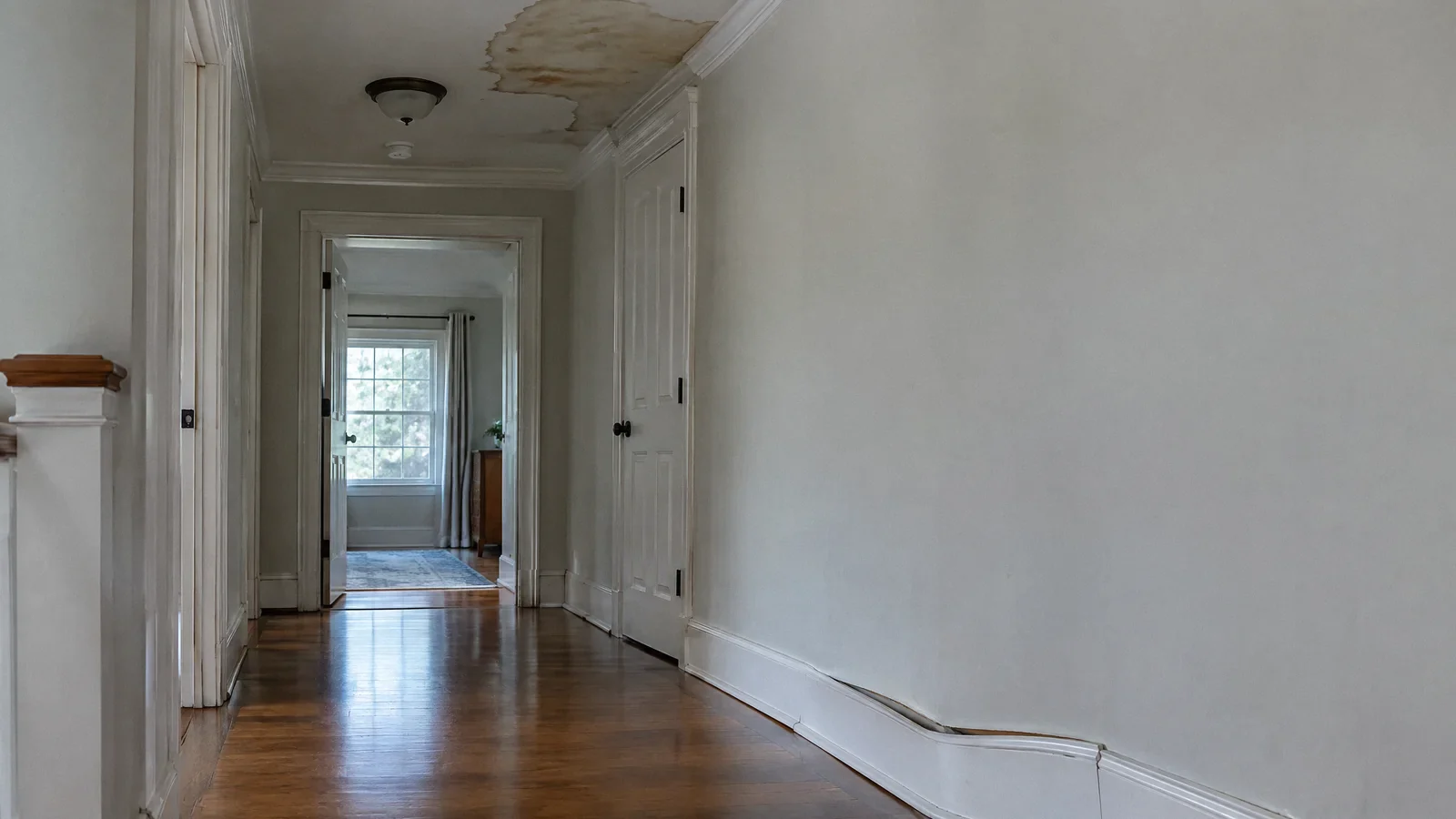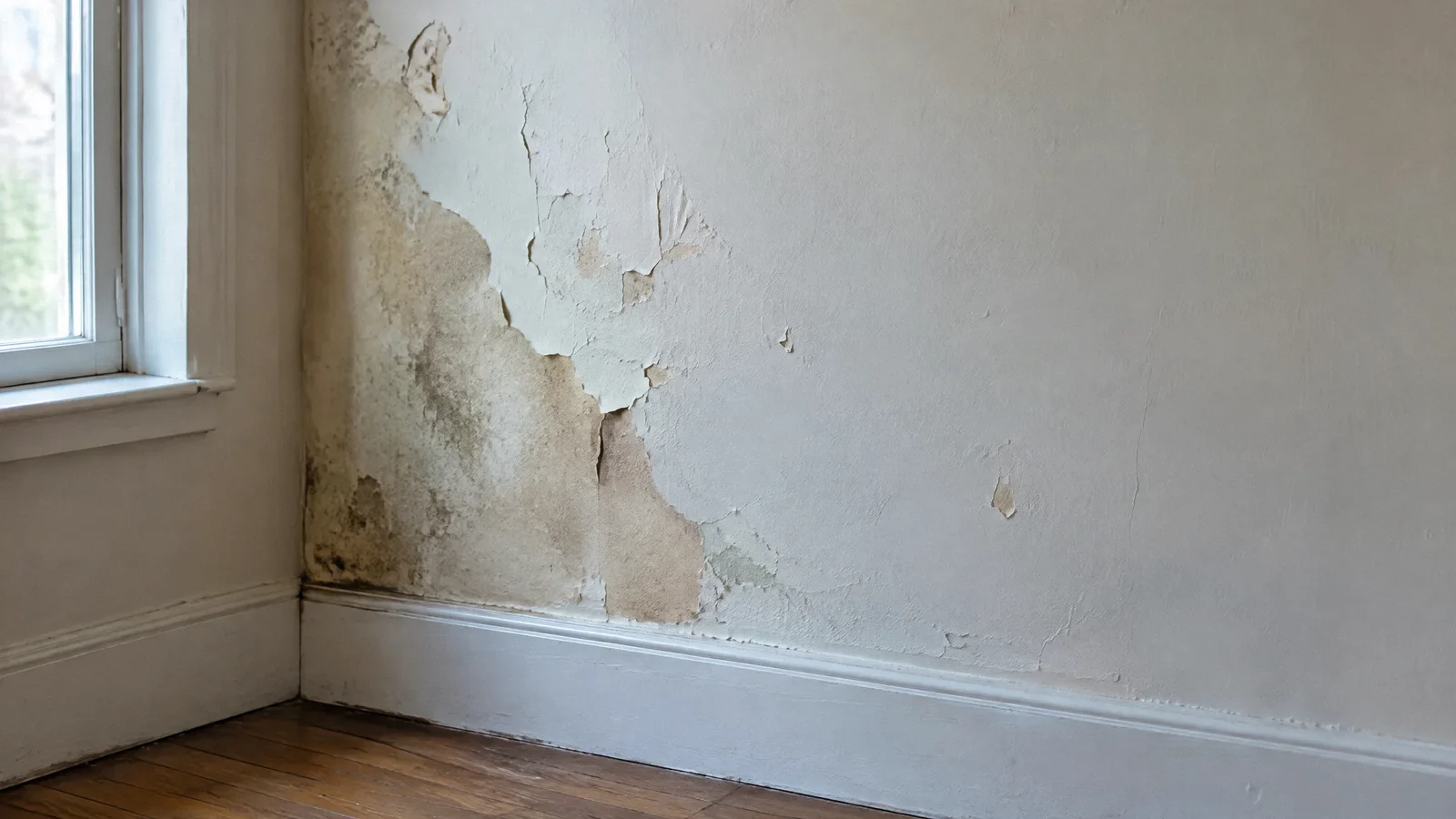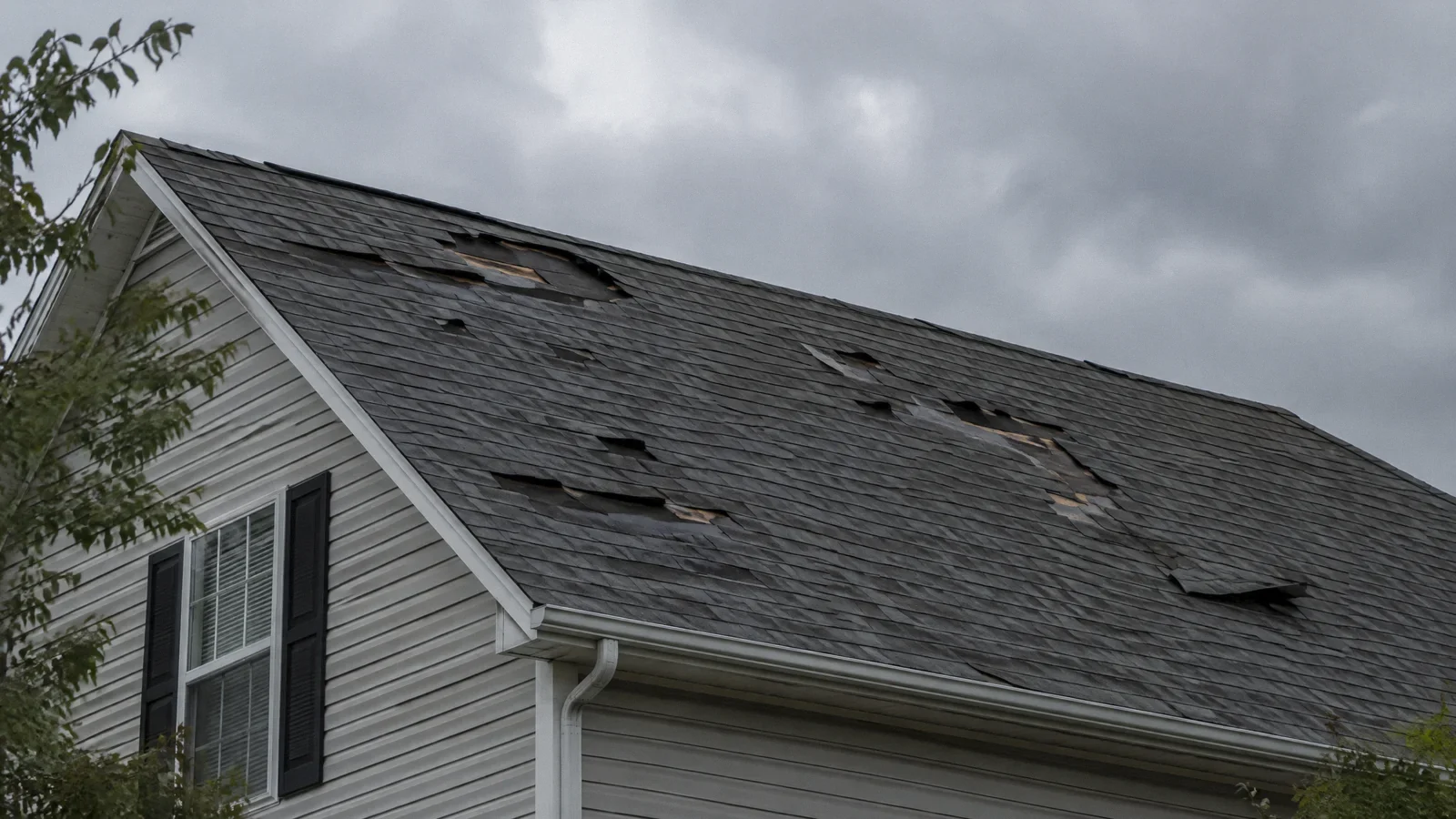
Missing or lifted shingles, debris damage, cracked tile and new interior stains can indicate a roof problem. Hail may dent, tear or displace granules on asphalt shingles. A qualified inspection is needed to establish the extent and cause.
Begin with a safe ground-level look
After a storm has passed, look from a safe location for missing or displaced roofing, fallen branches, debris and damage to gutters or vents. Binoculars may help with a distant view, but they cannot show every detail. Do not climb onto a roof or use a ladder after a storm. Wet surfaces, loose materials and overhead lines create serious hazards.
Inside, notice new stains, drips or damp insulation visible from a safe area. A stain is a reason to investigate, not proof that the roof is the source; water can travel from another opening or plumbing. If a ceiling sags, water reaches electrical equipment or structural stability is uncertain, stay clear and contact qualified help.
Wind and debris damage
Wind can lift, crease or remove shingles and dislodge other roof coverings. Debris may puncture a surface or damage flashing around a chimney, vent or roof edge. A fallen branch or scattered shingles near the house can indicate damage, but an intact view from the ground does not rule out an opening higher on the roof.
Ask a qualified roofer to inspect the covering, transitions and any suspected point of entry. A temporary covering may be needed before permanent repair, depending on weather and safety. Arrange professional installation rather than climbing onto a damaged roof or working near power lines.
What hail damage can look like
IBHS describes dents, tears and displaced granules as possible hail impacts on asphalt shingles. On tile, large hail can crack or shatter a tile; metal may dent. Damage varies with material, hail characteristics and exposure. A dent in metal does not automatically establish a loss of weather protection.
Other marks can resemble hail damage, and some effects are difficult to see from the ground. Dented soft metal vents or damaged screens may be clues that hail reached the property, not proof of roof failure. A roofer should identify the actual damage, explain its likely significance and distinguish a visible finding from an uncertain cause.
Signs that are not necessarily storm damage
Aging, wear, installation issues, foot traffic and previous repairs can also change a roof’s appearance. Granules in a gutter or a discolored patch do not by themselves establish when or why damage occurred. A professional should consider the material, pattern, condition and available history rather than date an incident from a photograph alone.
Keep prior inspection reports and photographs if available. Tell the inspector when the storm occurred, what you observed and whether the roof leaked before. Avoid claiming that a mark was definitely storm-caused until the evidence supports that conclusion. The insurer makes coverage decisions under the policy and facts.
Roof features beyond the main covering
Check safely visible gutters, downspouts, fascia, vents, skylights and flashing areas for displaced pieces or debris. An opening at a transition may allow water in even when the field of shingles looks intact. A blocked gutter can overflow, but the source of an interior stain still needs investigation.
Do not enter a damaged attic if access is unsafe, structural elements are compromised or electrical hazards are present. A qualified inspector can evaluate concealed components and explain which portions were not accessible. A ground-level view is a useful first record, not a complete roof inspection.
Document and arrange an assessment
Photograph visible conditions from the ground and record the date and location. Preserve fallen pieces only if they can be handled safely. Contact a qualified roofing contractor and ask for a written description of findings, photos, proposed temporary protection and repair options. Do not authorize work based only on an unsolicited assertion that the entire roof must be replaced.
If insurance may apply, notify the insurer and ask about inspection, deductible and documentation requirements. Keep estimates, invoices and communications. Coverage depends on the policy and the actual cause. Emergency steps to limit further water entry should be coordinated where possible without exposing anyone to danger.
Ask the contractor to identify which slopes and features were inspected and to provide photographs of the areas that were not visible from the ground. If weather or access prevented a full inspection, the report should say so and describe any recommended follow-up.
Plan repair and follow-up
A missing shingle, damaged flashing or affected roof section may have different remedies. The appropriate scope depends on material, age, extent, local requirements and the actual assembly. Ask whether the quote includes underlayment, flashing, disposal, permits where required and repair of interior water damage.
After repair, retain the contractor’s photos and written scope. If water stains expand or leaks recur, request a follow-up investigation; a roof repair does not automatically dry concealed ceilings or walls. EPA recommends addressing the water source promptly and not painting over wet or moldy material.
Your next-step checklist
- Wait until the storm has passed.
- Observe and photograph from the ground.
- Stay clear of downed lines and unstable areas.
- Arrange a qualified roof inspection.
- Keep findings, estimates and insurance communications.
Related questions
Does a metal roof dent always mean it leaks?
No. Dents can be cosmetic; a qualified assessment should determine whether the assembly or weather protection is affected.
Can a ground view rule out roof damage?
No. Some damage and roof transitions cannot be evaluated fully from the ground.
Does every roof stain prove storm damage?
No. Aging, prior damage and other sources are possible; the cause needs investigation.
Sources & context
Public guidance supports the principles in this article. The practical questions and examples are editorial interpretation, not a site assessment or a coverage decision. State-specific rules apply only where identified.
- IBHS: hail and roof damageresearch and technical guidance
- National Weather Service: hail storm safetyfederal weather safety guidance
- EPA: interactive mold house tourfederal guidance