First make sure the heat source is off and any fire is out. Burned carpet fibers may be melted or missing, so a dark mark is not always a removable stain. A carpet or rug specialist can assess whether cleaning, localized repair, patching or replacement is appropriate.
Make sure the area is safe
If there is active flame, smoke or an uncertain heat source, leave the area and call 911 when appropriate. Do not begin carpet repair during an active fire. Once the incident is over, allow the material and any nearby appliance to cool completely before looking closely.
A burn near an outlet, cord or heating device may indicate an electrical or equipment problem. Stop using the suspect device and arrange qualified assessment. A cleaned carpet spot does not establish that the original fire hazard has been corrected.
A burn is different from an ordinary stain
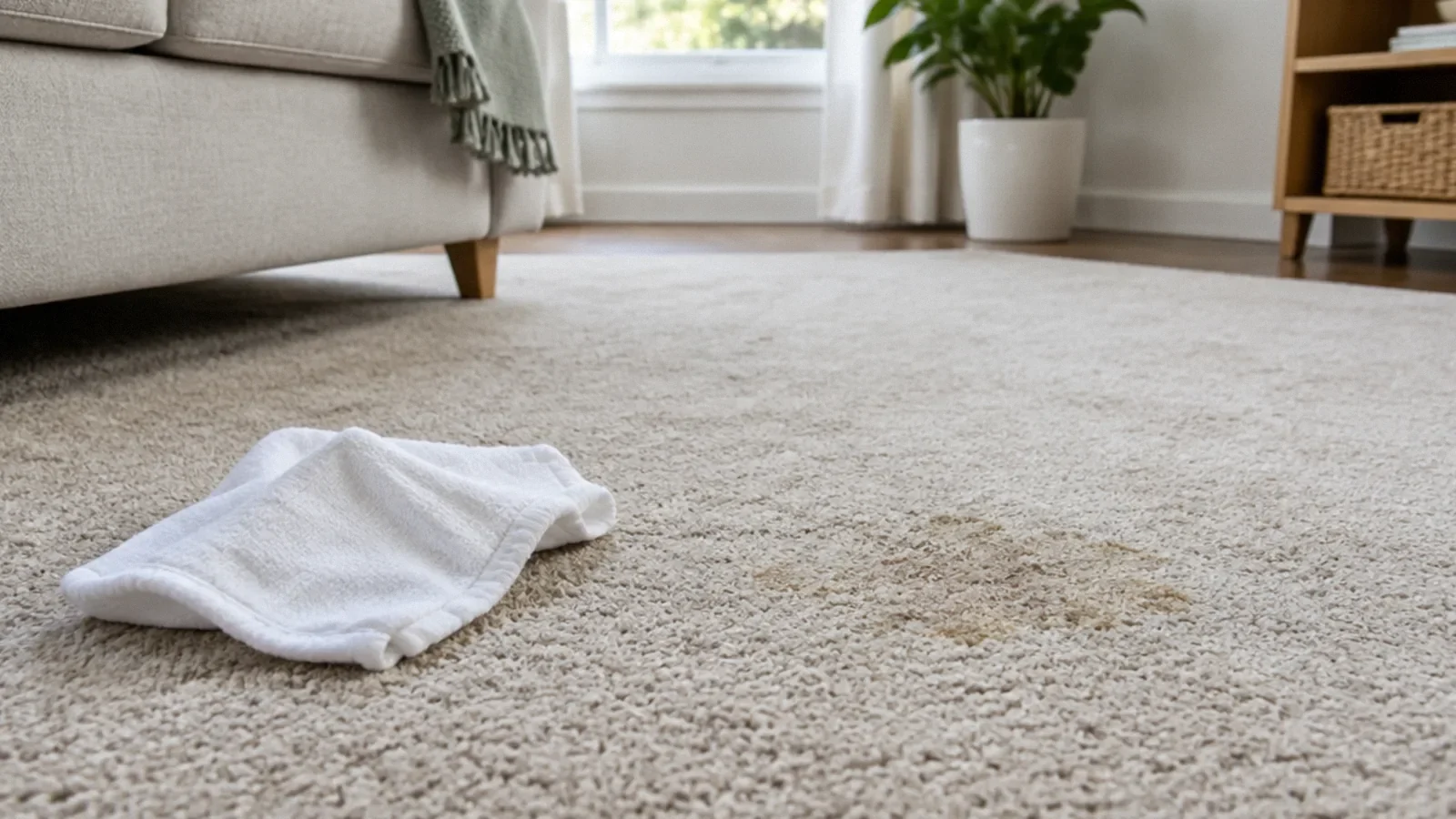
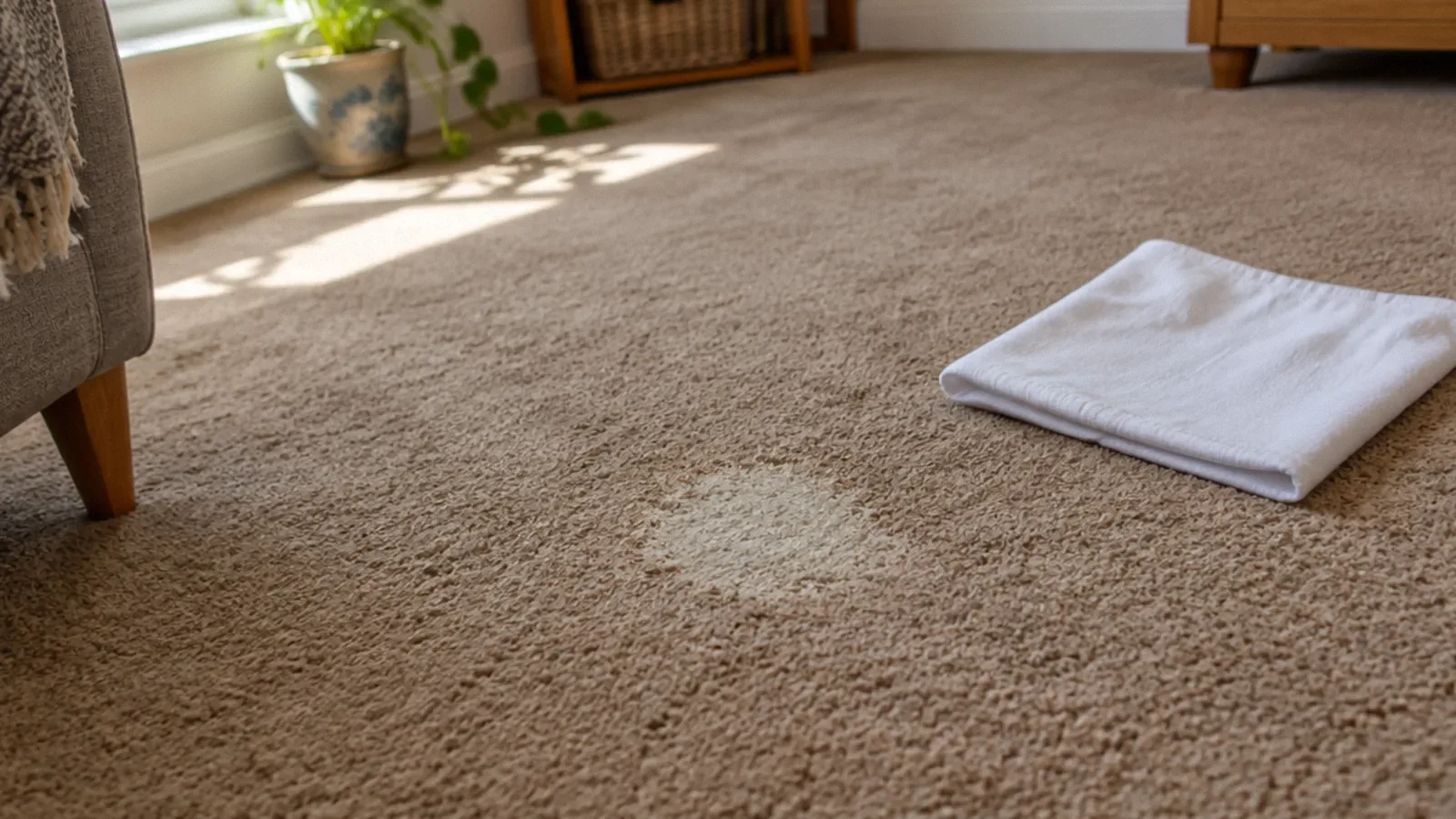
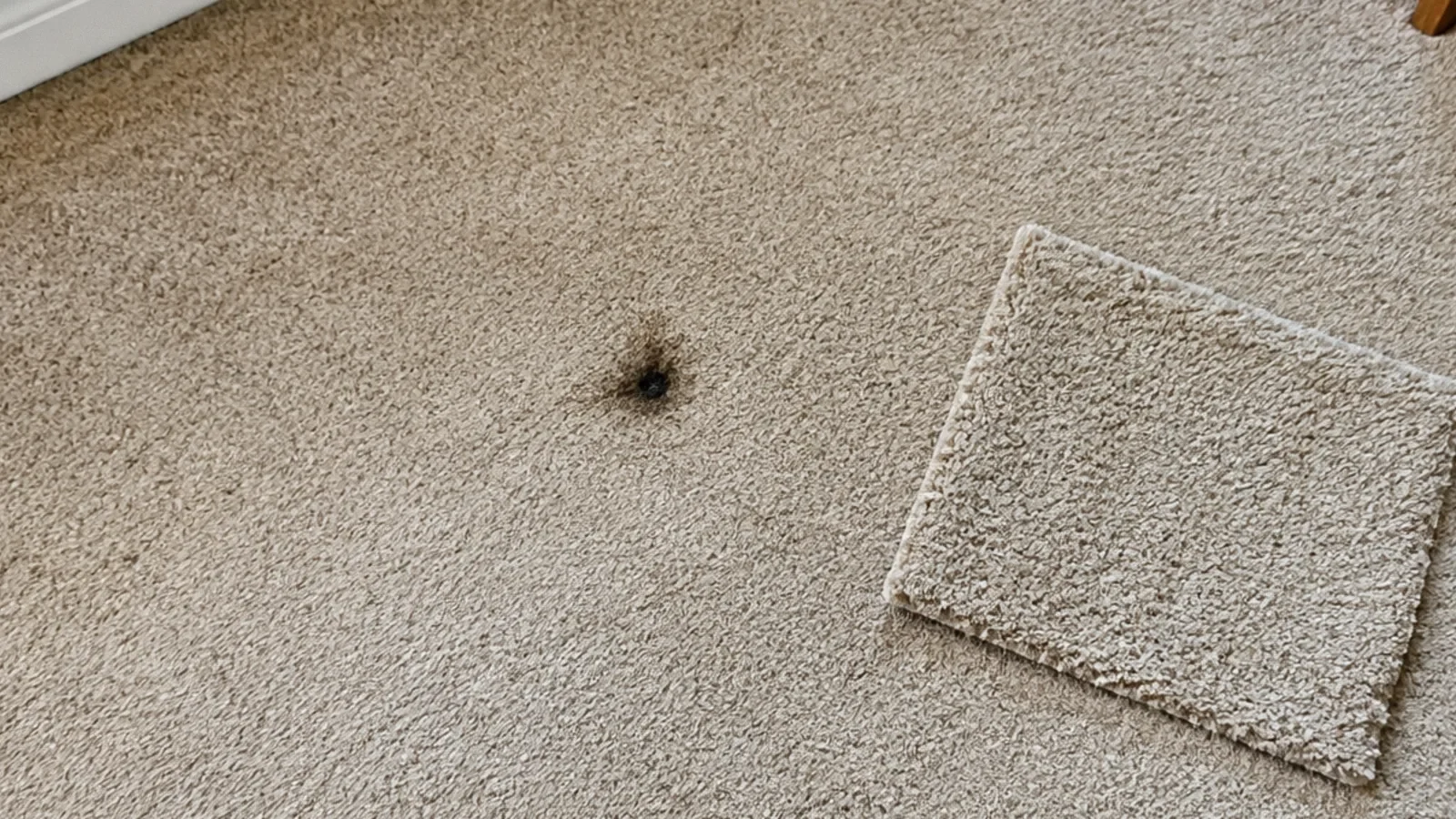
A food stain adds material to fibers; heat can instead discolor, melt, shrink or destroy them. Some surface soot may be removable, but cleaning cannot restore pile that is missing or fused. The size of the visible dark mark may not reveal whether backing or padding was affected.
Look without pulling or cutting fibers. A small superficial singe and a deep burn through several layers need different decisions. If there is smoke odor, widespread residue or possible concealed damage, ask a qualified professional to assess the larger area.
Identify the carpet or rug
Find the manufacturer’s care and warranty information if available. Installed carpet, a bound area rug, wool and synthetic pile can require different handling. A valuable hand-knotted rug may need a specialist rather than a general carpet installer.
Note the carpet’s color, pile direction, age and wear. Sun exposure can fade the existing carpet, so even a piece from the original installation may not match perfectly. Take clear photographs in natural light and measure the affected area.
What cleaning can and cannot do
For loose surface debris on a cooled area, follow the carpet maker’s instructions. Do not scrub, soak the backing or apply bleach or an untested solvent. Cleaning products can alter color and may complicate a later repair.
If the dark appearance is melted or charred fiber, more detergent is unlikely to rebuild the texture. Depending on construction and extent, a specialist may repair tufts or replace a damaged section with a matching patch. A delicate woven rug may need different work; ask a rug specialist to assess it.
Localized fiber repair
A specialist may be able to replace or repair individual tufts in a small area, depending on the construction and the availability of matching fiber. The repair may remain visible because of texture, dye, wear or pile direction. Ask to see examples and discuss realistic expectations.
Avoid pulling fibers from another part of the carpet or cutting the damaged pile flush without advice. Removing more material can enlarge the defect and make matching more difficult. For a delicate rug, consult a rug conservator or repair specialist.
Patching a carpet
A carpet installer can assess whether the damaged section can be cut out and replaced with a matching remnant or suitable donor piece. The replacement must align with the pile and any pattern, and seams may still show. A patch does not fix damaged backing, pad or subfloor unless those layers are included in the work.
Ask where a donor piece would come from, whether its removal creates another visible gap and how the seam will be secured. Obtain a written scope and price, especially when furniture needs moving or a larger area must be replaced. Do not use adhesives that the carpet maker prohibits.
When replacement or wider inspection makes sense
Multiple burns, melted backing, a damaged pad or a large area may make replacement more practical than a small repair. If the burn resulted from a broader fire, smoke and water damage may extend beyond the visible spot. Do not assume the remaining assembly is safe simply because the room no longer smells smoky.
A restoration professional can assess the extent once authorities say the area is safe. Document the damage and retain records for a property manager or insurer when relevant. Coverage depends on the policy and circumstances; ask the insurer rather than assuming a particular result.
Prevent a recurrence
Keep heat-producing appliances on suitable stable surfaces and follow the manufacturer’s clearance instructions. Do not place hot cookware, irons or space heaters on carpet. Inspect cords and stop using a device that sparks or smells unusually hot.
Discuss the cause with household members and keep matches, lighters and hot objects away from children. A repaired patch improves appearance but does not address an unsafe appliance or behavior. Maintain smoke alarms and an escape plan.
Your next-step checklist
- Confirm the heat source is off and the area has cooled.
- Check whether fibers, backing or padding appear affected.
- Avoid untested chemicals and aggressive cutting.
- Ask a specialist about a repair, patch or replacement.
Related questions
Can a burn mark be cleaned out of carpet?
Loose residue may be cleanable, but melted or missing fibers cannot be restored by cleaning alone.
Can a small carpet burn be patched?
A professional can assess whether a matching remnant or donor piece is suitable. Texture and color differences may remain visible.
Should I cut burnt carpet fibers myself?
Avoid cutting or pulling fibers before an assessment; it can enlarge the damage or complicate a repair.
Does a burn in a rug require the same repair as installed carpet?
Not always. A valuable or delicate rug may require a rug repair specialist and different methods.
Sources & context
Public guidance supports the principles in this article. The practical questions and examples are editorial interpretation, not a site assessment or a coverage decision. State-specific rules apply only where identified.
- U.S. Fire Administration: Home fire safetyfederal fire safety guidance
- Carpet and Rug Institute: Cleaning and maintenanceindustry care guidance
- Causeway Carpets: Maintenance advice and retuftingcarpet manufacturer guidance
- Tapi Carpets: Carpet repair and patchingcarpet retailer and installer guidance