Some compatible removable covers may be treated, but there is no safe universal way to lighten upholstered fabric. Check the exact material and care label; cleaning, dye removal and covering the furniture are different options.
Can upholstery be made lighter?
Sometimes a removable, compatible cover can be professionally treated or replaced, but there is no reliable method that safely lightens every upholstered piece. Cleaning removes soil; it does not necessarily remove the fabric’s original dye. Removing or altering dye is a separate, potentially irreversible process. The fiber, dye, finish, backing, seams and cushion construction all matter. Before applying any product, decide whether the fabric looks darker because it is dirty or whether you want to change its actual color. A cleaning label does not automatically authorize bleaching or dye removal.
Identify the material and care instructions
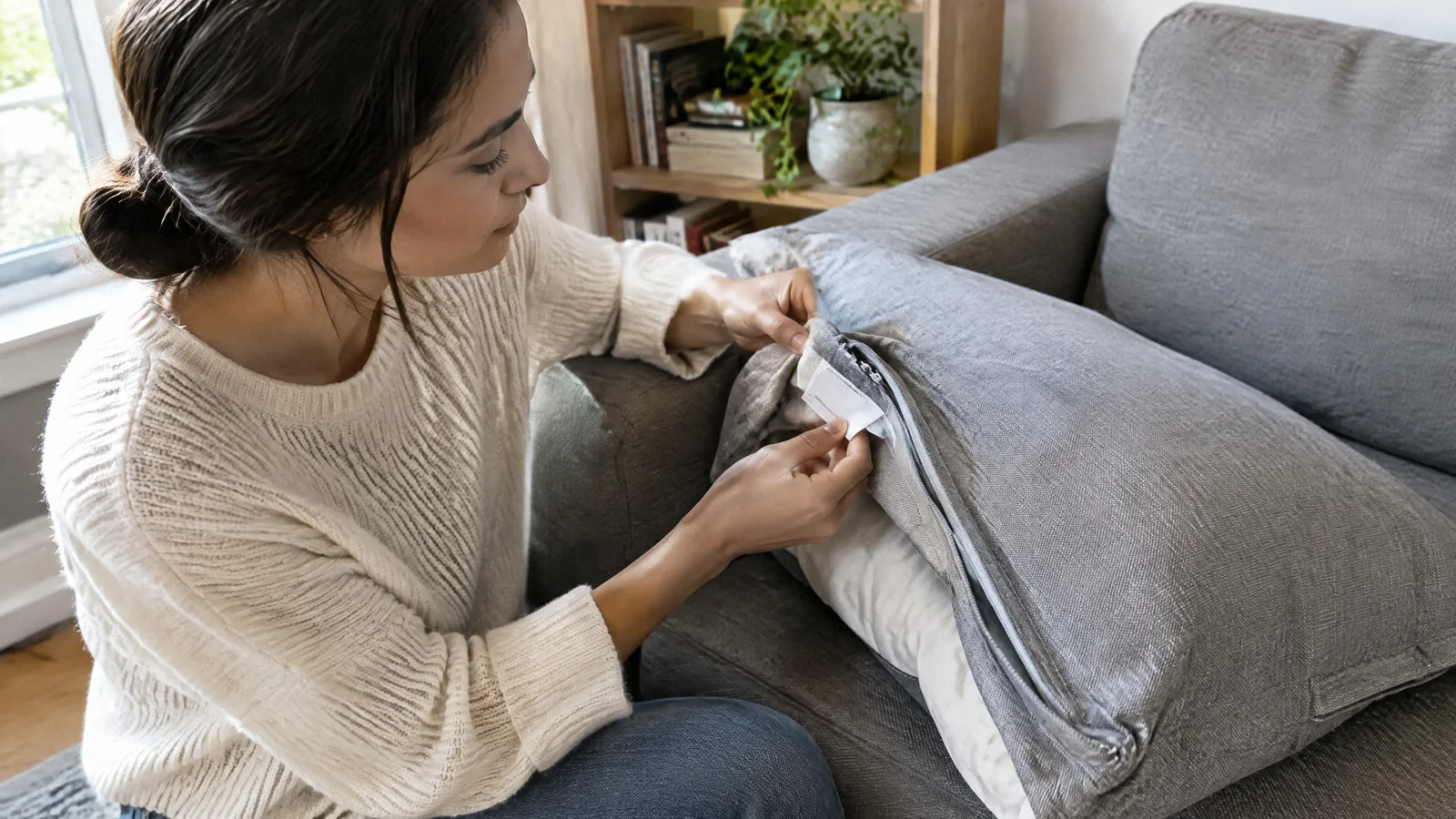
Find the furniture manufacturer’s label and documentation. A fiber name such as polyester or cotton alone does not describe the dye, backing or finish. Common upholstery cleaning codes provide guidance about cleaning methods, not permission to change color. Contact the maker with the model and fabric information if the label is unclear. Do not assume a removable cushion cover is washable simply because it has a zipper. Sunbrella, for example, advises consulting the furniture manufacturer before removing a casing because cushion construction varies.
Clean first if the issue is soil
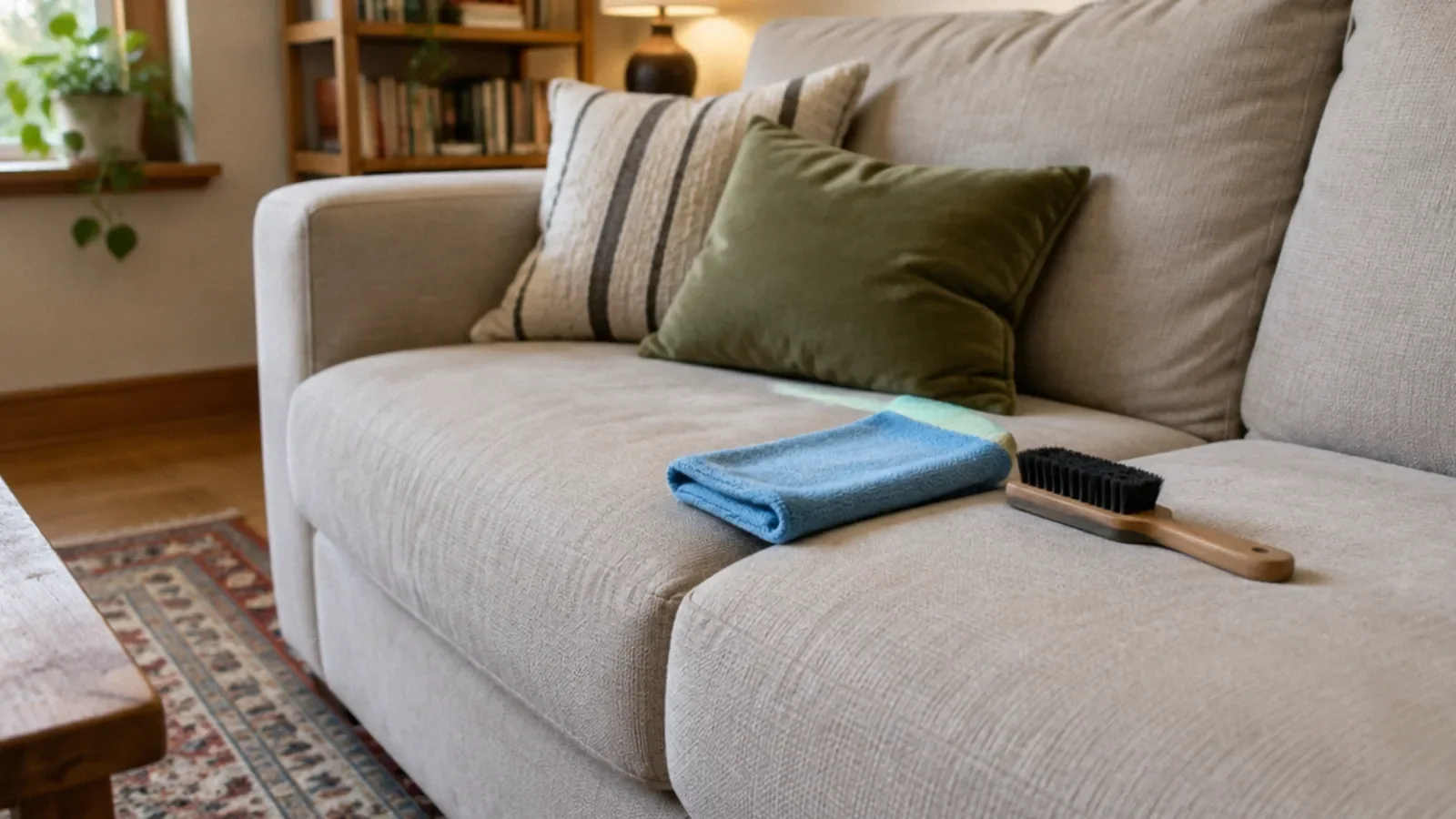
A fabric can look dull or uneven because of ordinary soil, but cleaning may not return a worn or faded area to its original color. Follow the furniture maker’s approved method, test a cleaner in a hidden area and avoid soaking the cushion. University of Georgia Extension cautions that overwetting upholstery can leave a ring. If the fabric is delicate or the cleaning code is unknown, ask an upholstery professional to assess it. Let the treated fabric dry before judging the result. A clean patch next to an unclean section can make an overall color difference more visible.
Dye and existing color
Adding a lighter dye does not function like applying an opaque coat of white paint. The existing color influences the result. Rit explains that an added dye combines with existing fabric color and that its color-removal guidance differs between natural and synthetic materials. Its garment directions are not a general recipe for a sofa. Blends, patterned cloth, thread and backing may respond differently, and a sample that looks acceptable may not predict a uniform result across a large piece. Ask a textile specialist whether the actual fabric can be treated before attempting a color change.
Bleach and color removers
Bleach or a color remover can alter color unevenly, weaken or discolor incompatible material, and affect adjacent fabric, seams or foam. The label on a household laundry product does not establish that it is suitable for a fixed upholstered sofa. Some manufacturers allow specific bleach solutions for certain fabrics and cleaning purposes, but that exception cannot be generalized to other fabrics or used as a promise of even lightening. Follow the furniture maker’s instructions and never mix bleach with other cleaners. Do not spray a solution into a cushion or assume a hidden test guarantees a whole sofa will match.
Removable covers versus fixed upholstery
A cover explicitly approved for removal and laundering can be handled separately from the frame and filling. Even then, its care label may prohibit bleach, heat or a proposed dye process, and shrinkage or uneven color can make it unusable. A professional should evaluate whether it can be safely treated. Fixed upholstery presents additional obstacles: liquid can reach padding, wood, metal and adhesive, and it can be difficult to rinse and dry evenly. Repeated wetting may leave rings or hidden moisture. Do not saturate a sofa in an attempt to change its color.
Consider reversible alternatives
If the aim is a lighter room, a fitted slipcover, washable throw or replacement cushion cover may achieve the visual change without altering the original fabric. Check fit, care instructions and whether the covering can be removed for cleaning. Reupholstery offers a broader choice of fabric but involves labor and should be quoted for the actual furniture. Ask whether new material, foam, trim and repairs are included. Keep a sample in the room and view it in different light before committing. A sample’s appearance can differ from a large upholstered surface.
Discuss a professional assessment
Bring the model information, fiber and care label, photographs and a description of the desired color. Ask a qualified upholstery or textile specialist whether the existing material can be cleaned, whether a removable cover can be treated and what unevenness or damage is possible. Request a written scope and avoid any promise that a dark fabric can become uniformly white. If a test is proposed, agree on the location and what will happen if the result is unacceptable. A successful test is evidence about that small area, not a guarantee for every seam and panel.
If a lightening attempt has already gone wrong
Stop applying products, keep people and pets away while the fabric dries and follow the product’s safety directions. Do not add another chemical to neutralize or conceal a mark. If the cushion is saturated, arrange an upholstery assessment; a dry surface does not prove the filling is dry. Record the product and time used for the professional. Color loss from an oxidizer may be permanent, and replacement fabric or a cover may be more practical than repeated treatment. For routine soil and spot cleaning, the related fabric-couch guide addresses care codes and moisture limits.
Your next-step checklist
- Identify the fabric and furniture care instructions.
- Determine whether the issue is soil or the original color.
- Do not assume a removable cover is washable or bleach-safe.
- Ask a specialist about the actual fabric and risks.
- Compare a slipcover or reupholstery with chemical treatment.
Related questions
Can I dye a dark sofa a lighter color?
Adding lighter dye does not reliably cover the original color. The fabric, existing dye and construction affect whether any color change is possible.
Can I bleach a sofa to make it white?
Do not assume bleach is suitable. It can produce uneven, irreversible changes and damage other components; follow the exact furniture instructions.
Is a zippered cushion cover machine washable?
Not necessarily. Check the furniture and cover labels before removing or washing it.
What is a reversible way to make a sofa look lighter?
A suitable removable slipcover or throw can change its appearance without altering the original upholstery.
Sources & context
Public guidance supports the principles in this article. The practical questions and examples are editorial interpretation, not a site assessment or a coverage decision. State-specific rules apply only where identified.