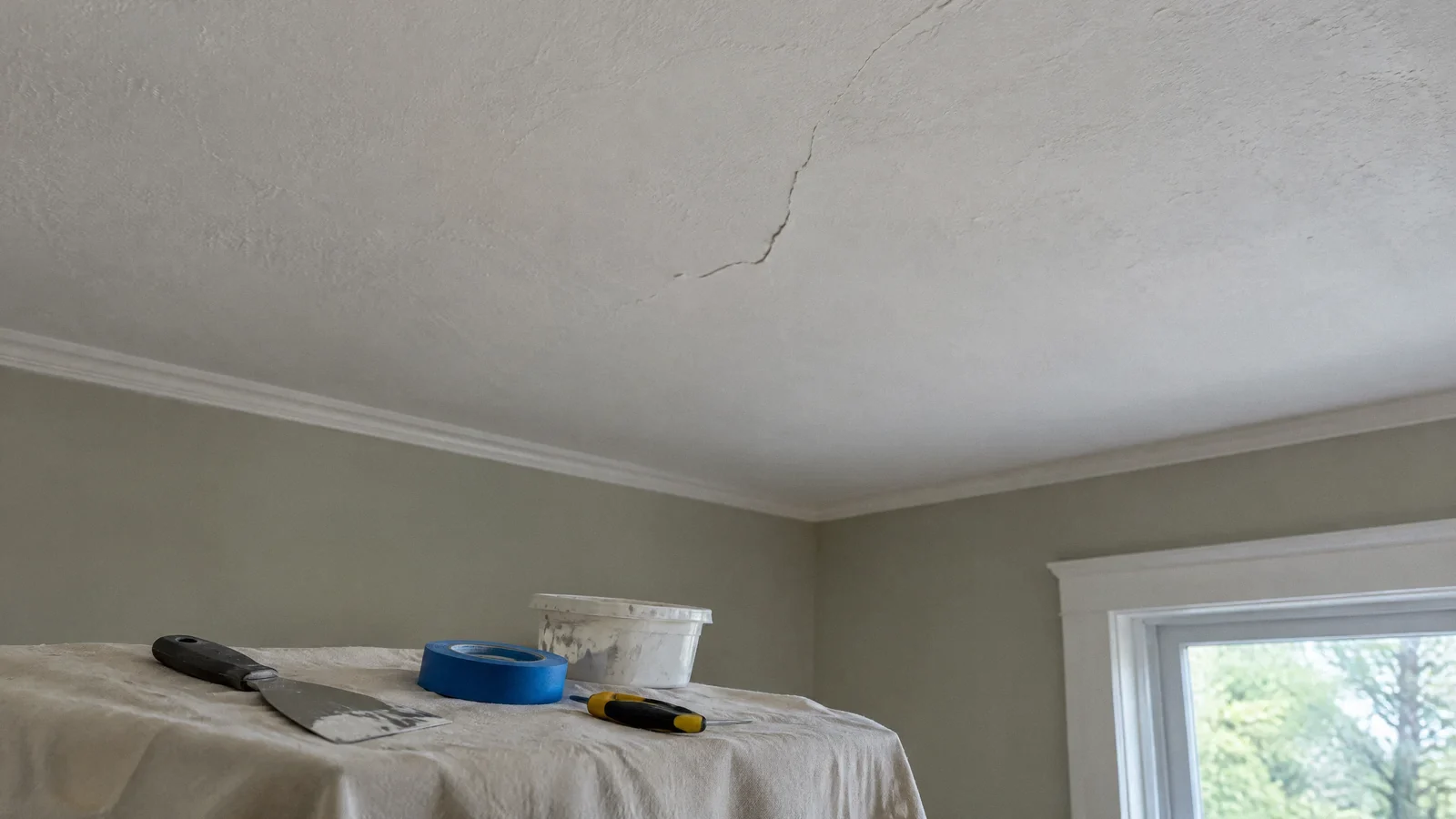
The cost depends on the cause, ceiling material, size and accessibility of the repair, and the finish needed. Obtain written local estimates with the same scope; a small cosmetic patch and a ceiling requiring structural or moisture repairs are different jobs.
Start with the cause and condition
A ceiling repair estimate is built around what needs to be fixed. A small isolated crack in sound drywall may require a local patch and finish. A damaged plaster ceiling, a loose area, or a ceiling affected by a leak may require investigation and additional work before cosmetic finishing. The visible mark alone does not establish the full scope.
Keep away from a sagging, bulging, or actively leaking ceiling and request an assessment. If water is near a light or other electrical equipment, avoid the area and contact a qualified electrician. Ask the contractor to identify the cause and explain which work is included and which work needs another trade.
A published national benchmark
Angi’s October 30, 2026 ceiling-repair guide reports a national average of $1,075 and a typical range of $439 to $1,718 for projects in its data. This is a broad ceiling-repair benchmark, not a quote for a particular home. Damage type, local labor, access, finishing, and separate source repairs can change the total. Ask local contractors for a written scope and price before relying on an estimate.
Compare materials and finishes
Drywall, plaster, suspended ceiling tiles, wood, and decorative finishes require different methods and labor. A replacement tile may be straightforward if a matching product is available, but staining above it may require investigation. Older plaster or decorative details may need specialist repair. High ceilings and restricted access can add setup and protection work.
Texture and paint matching also affect the estimate. A patch may remain visible if only a small area is painted; painting the full ceiling can produce a more consistent finish but increases the scope. Ask for both options if appearance matters, and confirm whether primer, texture, paint, and cleanup are included.
Understand the components of a quote
Ask each contractor to separate inspection, access and protection, removal, disposal, material, installation, finishing, and painting. If the cause is a roof leak or plumbing problem, obtain a separate price for finding and correcting it. Drying, testing, or specialist work may be priced separately when conditions require it.
A small job can carry a minimum service charge, while a larger area may require multiple visits as materials dry between stages. Local labor rates, travel, scheduling, and the difficulty of matching existing work also affect the price. There is no reliable universal price without a measured scope and local quotes.
Plan for concealed conditions
The contractor may not know the condition above a ceiling until an authorized opening is made. Ask what discovery would trigger a change order, how it will be priced, and who must approve it. Examples include damaged framing, wet insulation, inaccessible pipes, or a larger affected area than was visible initially.
For older properties, raise questions about lead paint and possible asbestos-containing materials before disturbance. EPA provides lead-safe renovation guidance for pre-1978 housing and child-occupied facilities. A qualified professional can advise on testing and applicable rules; do not sand or demolish suspect material to make the estimate easier.
Compare written estimates fairly
The FTC recommends a written estimate describing the work, materials, completion date, and price. Give bidders the same description and ask each to identify exclusions. Check qualifications, insurance, and any licenses required locally. Ask whether the quoted price covers protection of furnishings and disposal as well as the final coat.
A lower bid is not necessarily a lower total if it omits painting or leaves the cause unresolved. Review payment terms, change orders, scheduling, and warranty language before signing. If an estimate is an allowance rather than a fixed price, ask what determines the final charge.
Insurance and next steps
If the damage followed a sudden event, ask the insurer about documentation and policy terms. Coverage depends on the policy and the cause; routine wear or maintenance may be treated differently. Photograph damage when safe and keep estimates and receipts, but do not assume an insurer will pay a particular amount.
Once the cause and repair scope are understood, choose the contractor and agree in writing on what completion means. After the work, check the finish in normal light and review any remaining recommendations. If staining or cracking returns, record the date and contact the contractor to investigate rather than repeatedly covering the symptom.
Choose between patching and replacement
Ask the contractor what makes the existing material suitable for repair. A sound ceiling with a localized defect can often be evaluated for a patch, while loose material or a recurring defect calls for investigation before deciding how much to remove. The contractor should explain the condition observed, the proposed boundary of the work, and whether any structural professional is needed. If you receive two different recommendations, ask each bidder which facts support their choice and what each proposal excludes. Do not assume the largest scope is always necessary or that the smallest visible patch will resolve the underlying cause. A second qualified assessment can be useful when the cause or extent remains uncertain.
Your next-step checklist
- Identify the cause and ceiling material.
- Compare written estimates for the same repair and finish.
- Ask about concealed damage and change orders.
- Check whether older materials require specialist assessment.
Related questions
How much does ceiling repair cost?
The cost depends on the cause, ceiling material, size and accessibility of the repair, and the finish needed. Obtain written local estimates with the same scope; a small cosmetic patch and a ceiling requiring structural or moisture repairs are different jobs.
Sources & context
Public guidance supports the principles in this article. The practical questions and examples are editorial interpretation, not a site assessment or a coverage decision. State-specific rules apply only where identified.