The total may include finding and repairing the leak, drying, removing damaged material, and restoring the ceiling. The cost varies with the water source and hidden damage, so request a local itemized estimate rather than relying on a universal price.
Treat the leak and ceiling as separate costs
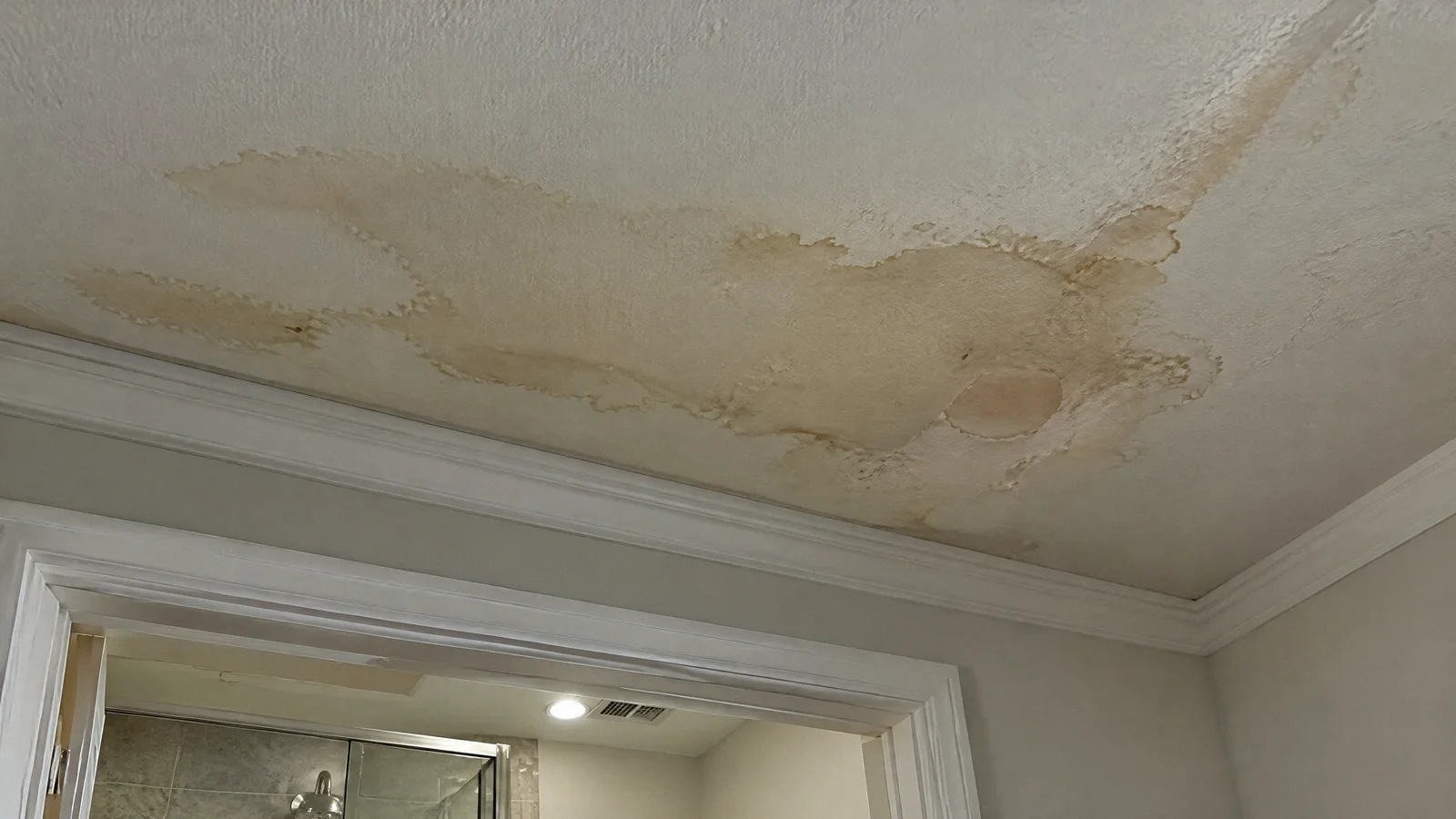
A water stain can be the first visible sign of a roof, plumbing, appliance, or condensation problem. The ceiling repair is only one part of the job. A plumber or roofer may need to locate and repair the source, while a restoration contractor evaluates moisture and a finisher restores the surface. Ask who coordinates the trades and which tasks each quote includes.
A leaking pipe above the ceiling may require access, pipe repair, and later ceiling restoration. The price depends on accessibility, the pipe and repair needed, and whether surrounding materials are damaged. A stain does not reveal the exact failure, so a precise total requires inspection.
A published ceiling repair benchmark
Angi’s 2026 water-damage cost guide lists $450 to $1,600 for ceiling repair. Treat this as a broad published benchmark, not a guaranteed total for a leaking ceiling. The price of locating and fixing a pipe or roof, drying concealed materials, managing contamination, and restoring finishes can be additional and depends on the actual scope. Obtain separate local estimates and ask each provider what the price includes.
Make the area safe
Keep people away from a bulging, sagging, or dripping ceiling. Do not stand underneath or puncture it. If water is near a light, outlet, or electrical equipment, stay clear and contact a qualified electrician or utility. Do not enter standing water to reach a switch.
If you can safely stop an accessible water supply, follow the building’s established shutoff procedure; otherwise ask a plumber or building manager for help. Photograph the area from a safe position and note when the leak occurred. Temporary containment does not replace repair of the source.
What determines the repair scope
A small, dry stain on sound material may need a different repair from saturated drywall, wet insulation, or water trapped above a ceiling. A professional can check the material and adjacent spaces, determine what can be dried, and identify damaged material that needs removal. Contaminated water or suspected mold requires a different assessment from a clean, promptly stopped supply leak.
Ceiling height, access, drywall versus plaster, texture, and the need to protect furniture affect labor. A repair may require several visits for drying and finishing. If a large section or an entire ceiling must be painted for a consistent appearance, that should be described separately.
Read the estimate line by line
Ask for separate amounts or clear allowances for diagnosis, source repair, containment, drying, removal and disposal, replacement, texture, primer, painting, and cleanup. Ask whether moisture checks and equipment rental are included and when the equipment can be removed. A quote for painting a stain is not equivalent to one that includes finding the leak.
The FTC advises obtaining a written estimate describing the work, materials, completion date, and price. Compare bids for the same scope and ask how additional damage discovered after opening will be approved. If a contractor cannot see a concealed pipe, the initial estimate may necessarily include uncertainty.
Avoid covering an unresolved problem
EPA advises fixing leaks and drying water-damaged areas. Moldy porous ceiling tiles or similar materials may need removal, and paint should not be applied over mold. A stain-blocking primer can address a remaining cosmetic mark only after the source and moisture have been dealt with; it cannot dry the cavity above the ceiling.
Older homes may contain lead-based paint or materials requiring specialist assessment before disturbance. Ask the contractor how age and material affect the work and any testing or containment. Do not scrape, sand, or open suspect materials without a suitable assessment.
Insurance and the final price
Contact the insurer promptly if you intend to make a claim. Ask about the deductible, covered cause, documentation, and authorization for urgent mitigation. A sudden plumbing failure and long-term leakage may be treated differently under the policy. The adjuster, policy, and circumstances determine coverage; no general rule guarantees payment.
Keep photographs, moisture records where available, estimates, invoices, and change orders. Before the ceiling is closed, ask how the source repair and drying were verified. Then confirm the agreed finish and any follow-up if discoloration returns. Request local prices for your actual work; the published benchmark above is not a complete project quote.
Questions to ask before work begins
Ask where the water entered, how the provider will check adjacent materials, and whether the quote includes repairing the source. Confirm who is responsible for protecting furniture and floors, moving contents, and disposing of removed material. Ask how moisture will be checked before replacement material is installed and how long equipment will remain. If another contractor must restore a pipe or roof, agree who will coordinate access and verify that work. These questions turn a single headline number into a scope that can be compared with another estimate. Keep the responses with your photographs and any claim documents.
Your next-step checklist
- Keep clear of sagging ceilings and wet electrical equipment.
- Arrange diagnosis and repair of the water source.
- Request separate drying and ceiling restoration costs.
- Document the loss and confirm coverage with the insurer.
Related questions
How much does it cost to repair water damage to a ceiling?
The total may include finding and repairing the leak, drying, removing damaged material, and restoring the ceiling. The cost varies with the water source and hidden damage, so request a local itemized estimate rather than relying on a universal price.
Sources & context
Public guidance supports the principles in this article. The practical questions and examples are editorial interpretation, not a site assessment or a coverage decision. State-specific rules apply only where identified.