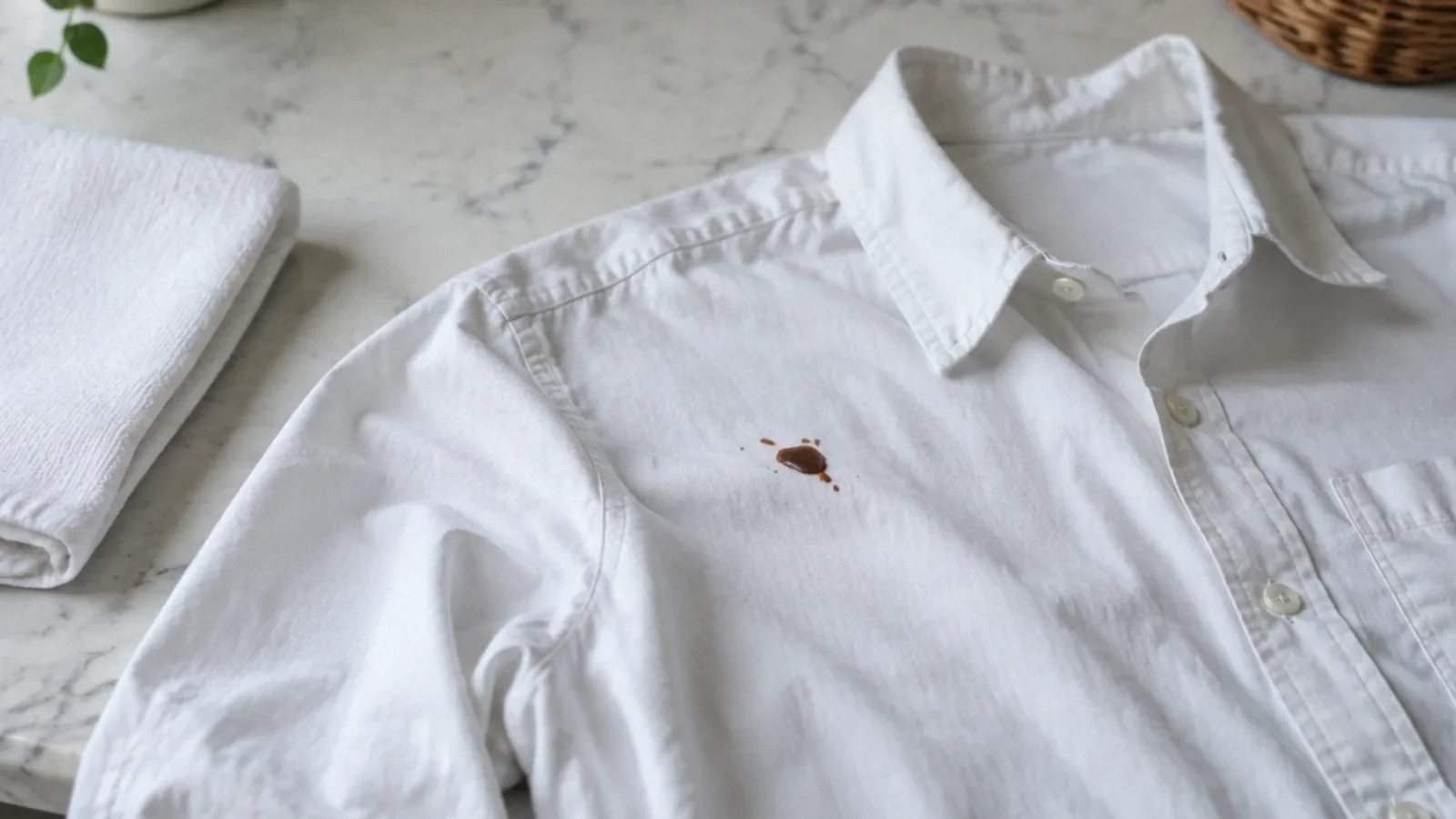
Lift excess chocolate gently, check the fabric care label and use a compatible stain treatment before laundering. Chocolate contains both oily and colored components, and heat can make a remaining mark harder to remove. Delicate or dry-clean-only items may need professional care.
Check the care label first
A washable cotton shirt, wool sweater and dry-clean-only garment do not have identical treatment options. Read the item’s care label and test any stain product on a hidden seam or inconspicuous area before applying it to the mark. Check for color transfer or a change in texture.
For silk, leather, a valuable garment or an unknown material, contact a professional cleaner. Describe the spill and any product already applied. Do not assume that a method used on carpet or a couch is suitable for an item that will be laundered.
Lift excess chocolate
For solid chocolate, gently lift loose material with a spoon or the dull edge of a plastic card. If it is soft, cooling the item or using a sealed bag of ice can help firm it without rubbing the chocolate across a larger area. Do not scrape aggressively or damage the fabric.
For sauce or melted chocolate, blot with a clean white cloth or plain paper towel. Work from the outside toward the center and switch to a clean area of cloth as material transfers. Avoid pushing the spill through multiple layers of the garment.
Treat color and oil together
Chocolate is a combination stain: cocoa color and fat can remain after the visible solid is gone. The University of Georgia Extension recommends a compatible prewash or detergent treatment for suitable washable fabrics, while emphasizing the care label and product directions.
Apply a product intended for the item and follow its label. Some enzyme products are unsuitable for particular fibers or finishes, so check both labels first. Do not mix cleaners or apply a solvent that the fabric maker prohibits.
Rinse and launder appropriately
For a washable garment, follow the care label and stain product’s instructions for rinsing and washing. Use the temperature specified for the fabric rather than assuming that the hottest water is always safe. Wash separately if color transfer is a concern.
Inspect the area after washing and before using a dryer. If a mark remains, air-dry while deciding whether another compatible treatment or professional cleaning is appropriate. A hot dryer can make some stains more difficult to remove.
Older or dried chocolate
Dried chocolate may need a longer compatible pretreatment, but scraping hard can break fibers or spread crumbs. Lift only loose material and follow the product’s directions for any soak. A garment’s dyes and finish can limit how long it should remain wet.
Do not keep layering different stain removers without rinsing and following their instructions. If a mark persists after a reasonable attempt, ask a professional cleaner. Some stains or dye changes may be permanent.
Chocolate on upholstery or carpet
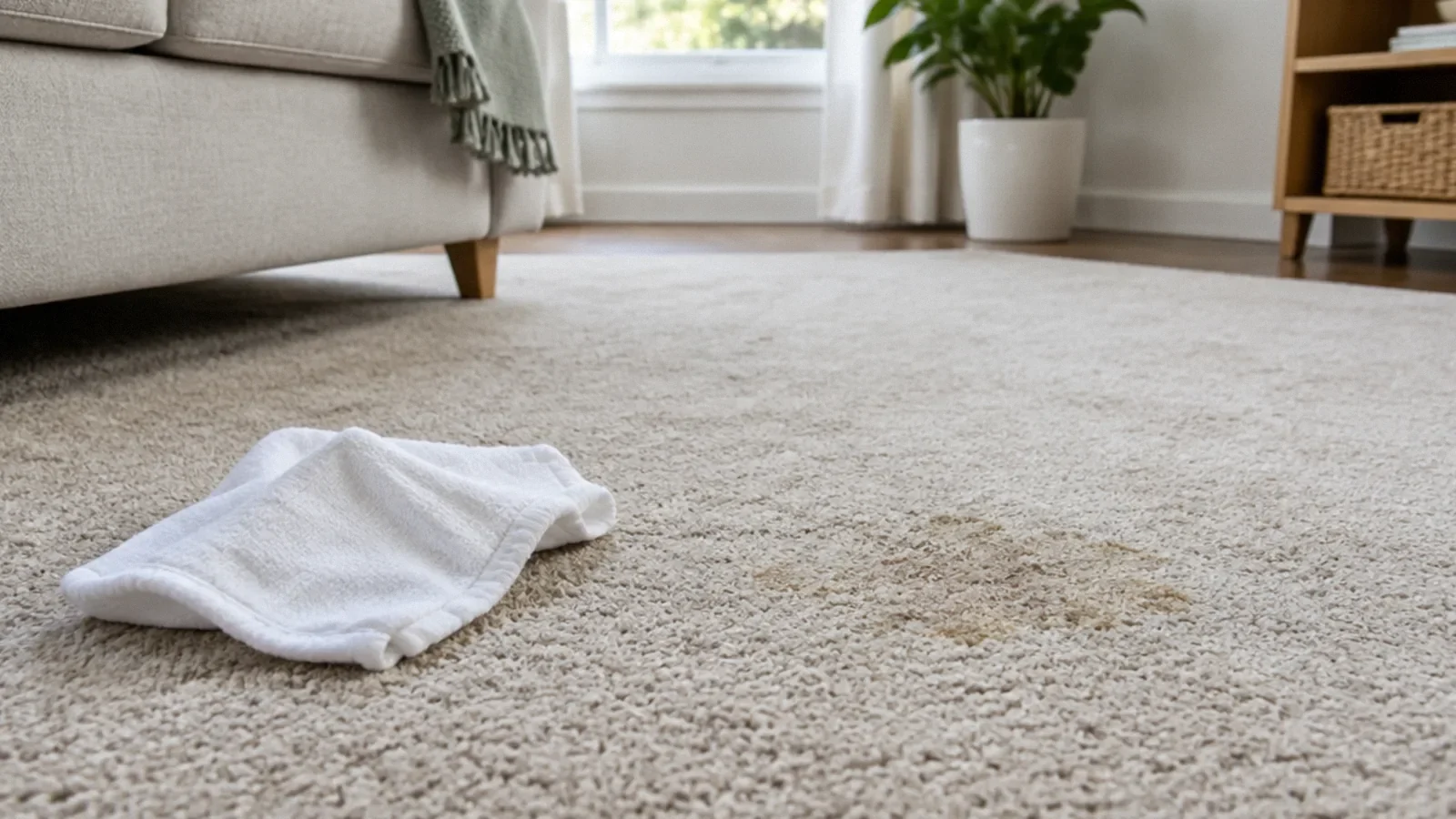
A couch cushion or carpet has backing and padding that should not be soaked like a washable shirt. Check the upholstery cleaning code or carpet instructions and blot without spreading the spill. Use a product specifically compatible with that surface after a hidden-area test.
If chocolate has penetrated a cushion or a delicate rug, contact a specialist. An unapproved solvent can affect color, adhesive or foam. A separate upholstery or carpet guide can help with the material-specific steps.
Avoid common mistakes
Do not scrub hard, apply chlorine bleach to an incompatible fabric or mix household chemicals. More detergent is not always better: residue can attract soil and make a mark appear to return. Follow the product’s rinse instructions.
Do not use hot water or a dryer simply to speed the process before checking the fabric and stain. If you have already used a product, keep its label so a cleaner can avoid an incompatible follow-up treatment.
Prevent and document damage
Use a washable napkin or protective cloth when appropriate, and treat a spill promptly. Store stain products in original containers away from children and pets. Keep delicate garments away from food preparation and follow their routine care instructions.
For an expensive item, photograph the mark and obtain a professional cleaning estimate before further treatment. Explain whether the chocolate contained dye, nuts or another ingredient, because a mixed spill may require a different approach.
Your next-step checklist
- Check the fabric care label.
- Lift excess and blot without scrubbing.
- Test a compatible stain product in a hidden area.
- Inspect before using a hot dryer.
Related questions
Can chocolate stains come out of clothing?
Often, a compatible pretreatment and laundering can help, but results depend on the fabric, stain age and ingredients.
Should I use hot water on a chocolate stain?
Follow the garment and stain-product instructions. Do not assume high heat is safe for the fabric or a remaining mark.
Can I put a stained garment in the dryer?
Inspect it first. If the stain remains, avoid hot drying while considering a compatible further treatment or professional cleaning.
Is the method the same for a couch?
No. Upholstery has its own cleaning code and may contain padding that should not be soaked.
Sources & context
Public guidance supports the principles in this article. The practical questions and examples are editorial interpretation, not a site assessment or a coverage decision. State-specific rules apply only where identified.
- University of Georgia Extension: Chocolate and cocoa stainsuniversity extension guidance
- Carpet and Rug Institute: Cleaning and maintenanceindustry care guidance
- Poison Control: Safe cleaning practicespoison center guidance