Choose a pump that fits the basin and meets expected inflow at the installed total head, with suitable controls, power and discharge. There is no universally best model; a qualified installer can assess the system.
There is no universal best model
The best sump pump for a French drain is the pump that fits the actual basin and moves the expected inflow through the installed discharge route at its operating head. Horsepower or a large advertised maximum flow alone cannot establish that match. The water pathway, available power, controls, backup and lawful discharge matter as well.
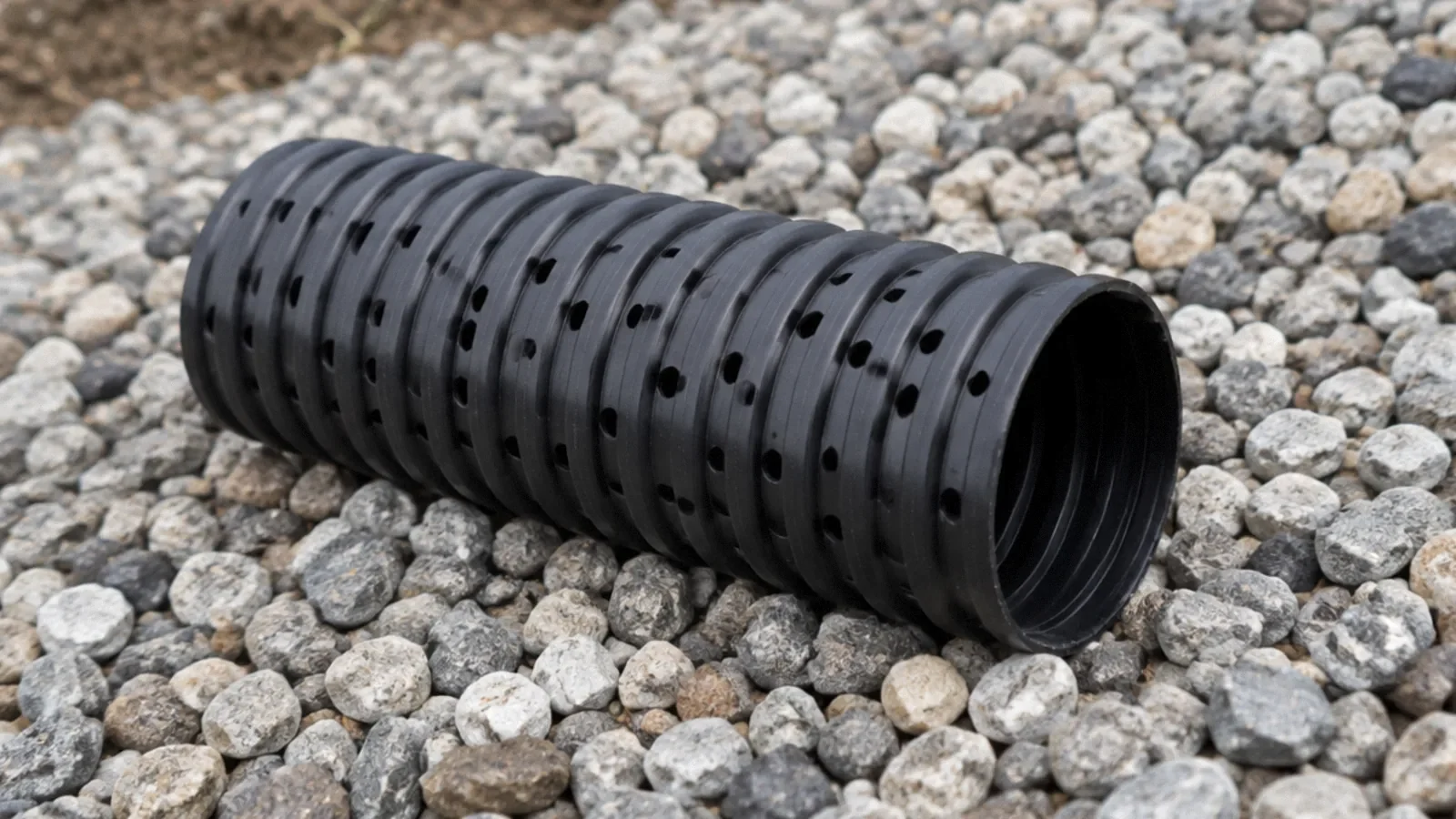
A French drain may lead by gravity to an appropriate outlet and need no pump. In another installation it carries water to a sump basin, where a pump lifts it to a suitable destination. First establish how this particular system is designed and whether pumping is necessary.
Start with water collection and inflow
Identify where the drain collects water, how it reaches the basin and whether other sources enter the pit. Ask a drainage professional to evaluate expected inflow during relevant conditions, not just the small flow seen on a dry day. Existing pump cycling and basin observations can help, but a short observation may miss a severe event.
A pump cannot remove water that never reaches its basin. A blocked collection pipe or water entering elsewhere needs its own investigation. For a new system, the designer should explain the assumptions behind the expected inflow and what happens if conditions exceed capacity.
Compare flow at working head
Pump flow changes with the resistance the system imposes. Vertical lift is one part of head; pipe length, diameter, bends, valves and outlet conditions add losses. The manufacturer’s pump curve shows flow at different heads. Compare the required flow with the curve at the estimated total dynamic head rather than the rating at zero lift.
For example, a pump advertised at a high maximum flow may deliver much less at the installed lift. NC State Extension’s pump-selection guidance explains that a target flow and head above the pump curve cannot be met. Its example is for rainwater systems, but the flow-and-head principle also applies when assessing a sump pump. Have an installer calculate the actual system.
Fit the basin and controls
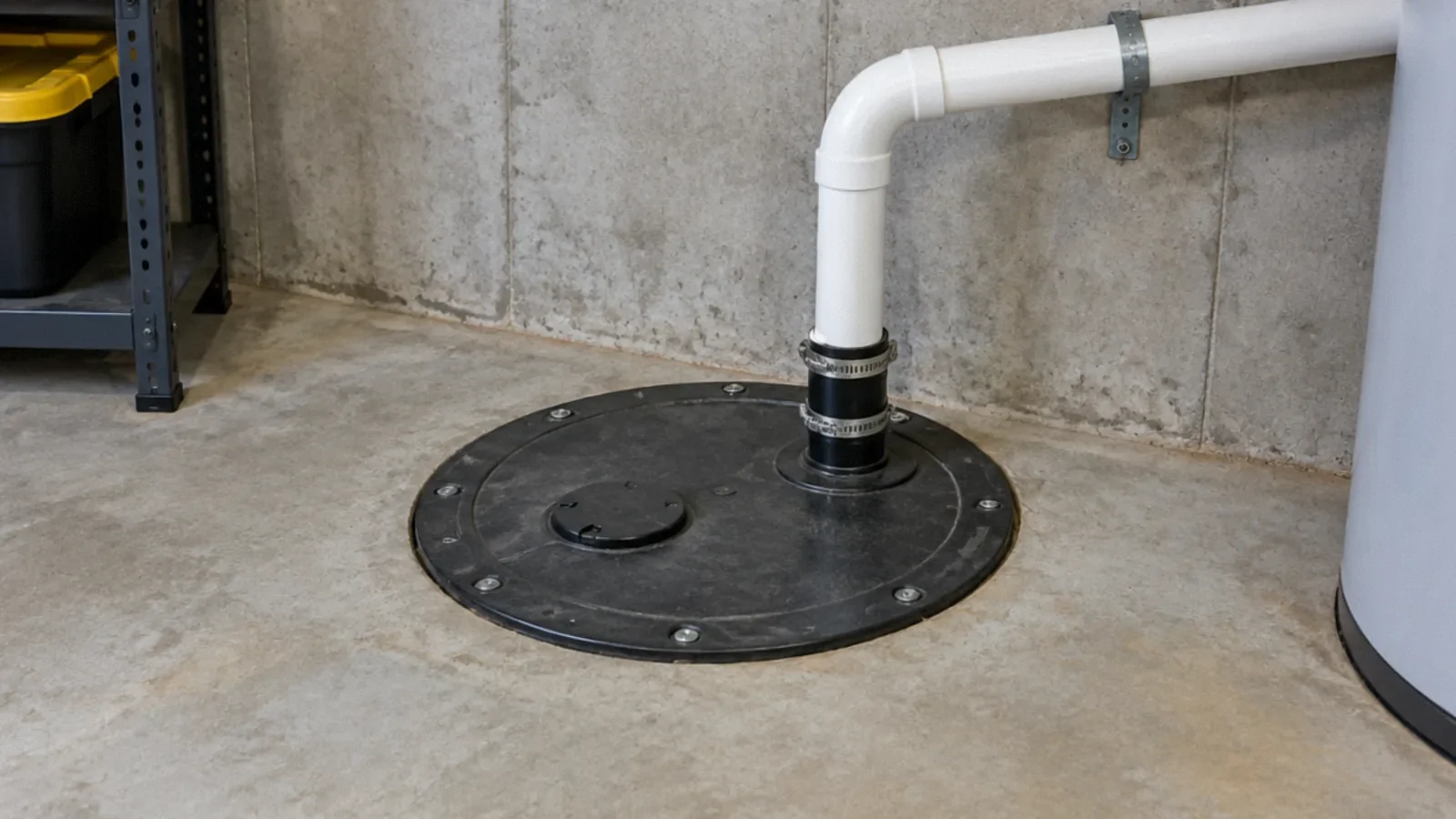
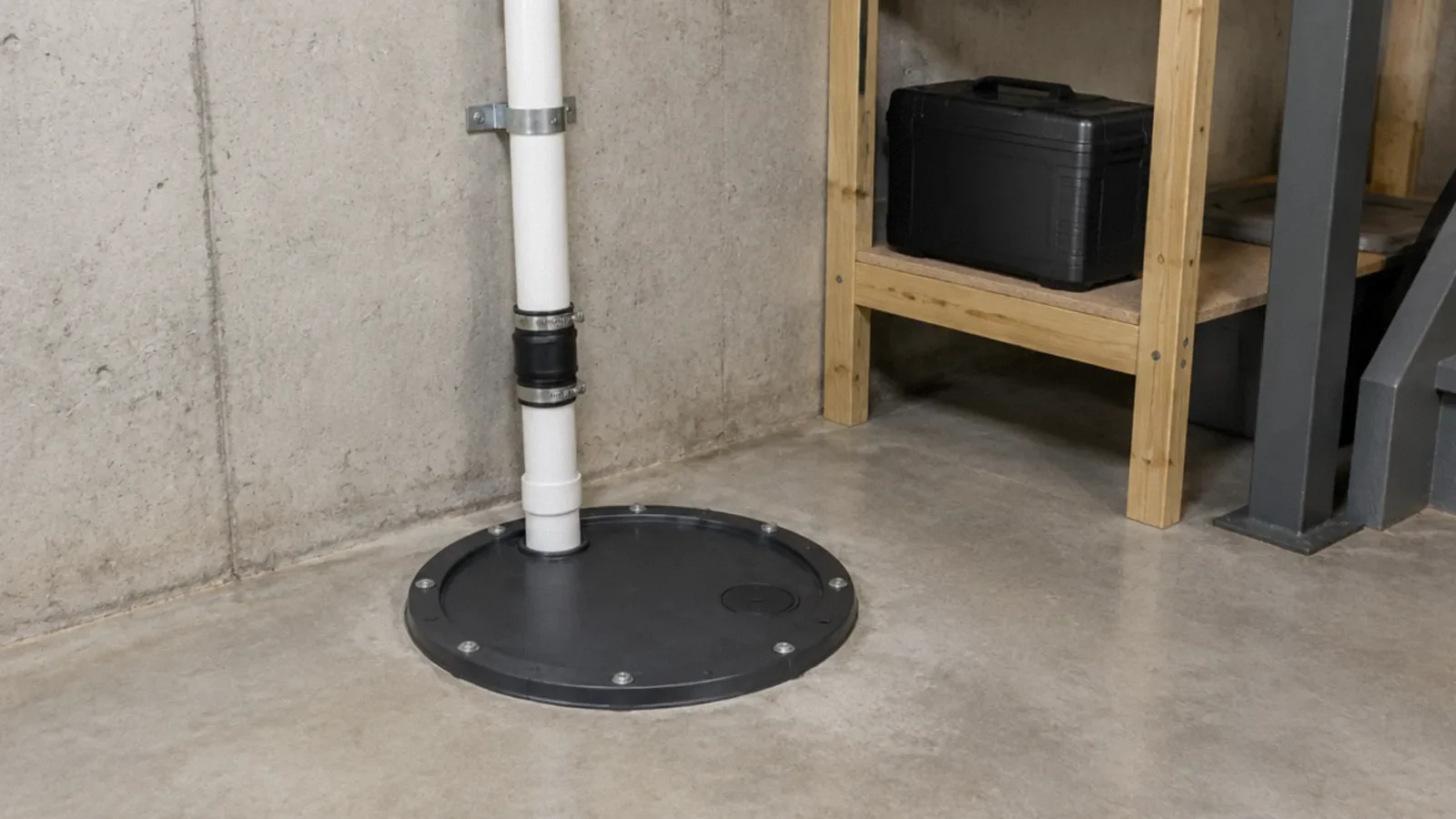
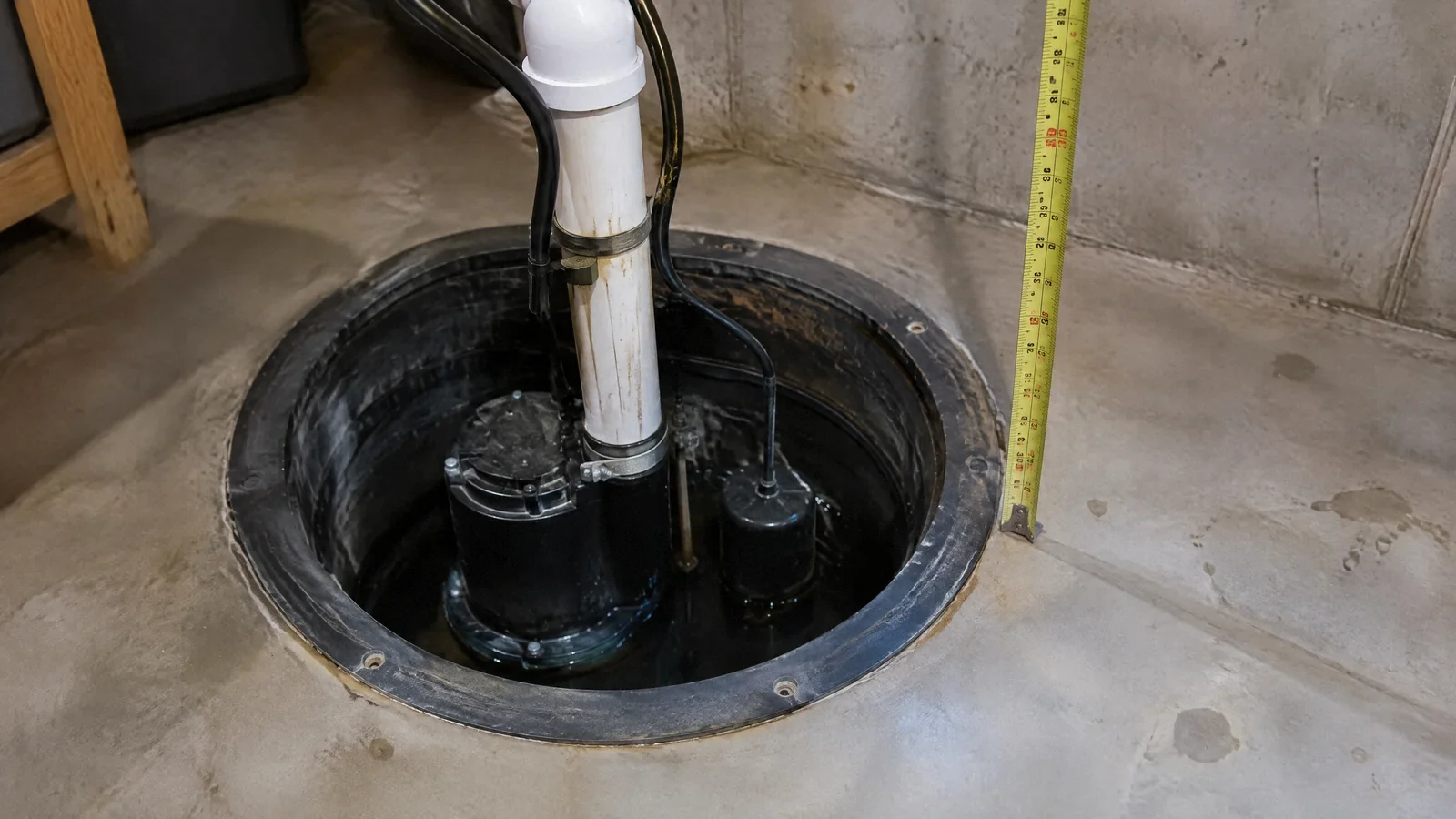
Check basin dimensions, inlet locations, cover and access, and the space needed for the pump and its float or sensor to move freely. A submersible pump sits in the basin; a pedestal design has a motor above it. The choice depends on the available space, equipment requirements and maintenance access.
Ask about minimum water depth, start and stop levels, solids handling appropriate to the expected water, and the manufacturer’s installation requirements. Do not choose a sewage pump simply because it is larger, or connect drainage containing sewage to a system intended for clean groundwater without professional design.
Check the discharge and power
A pump needs a suitable check valve and discharge route where specified, with an outlet that will not return water to the foundation or create a hazard. Freezing, blockage and a submerged outlet can affect performance. Local rules determine where water may be discharged; do not assume a sanitary sewer or neighboring property is an acceptable destination.
Use the electrical supply and protection required by the equipment and local rules. A qualified electrician should assess uncertain wiring or wet equipment. Do not use extension cords or reach into a wet basin to improvise a connection. The full system, not just the pump, determines reliability.
Plan for failure and backup
Consider the consequences of a power outage, primary pump failure, stuck float, blocked discharge or inflow above capacity. A separate backup pump, backup power and high-water alarm address different failures. A backup sharing the same obstructed outlet can still fail to move water; ask the installer about common points of failure.
Battery runtime depends on actual load, cycling, battery condition and inflow. An alarm is useful only if someone can receive it and respond safely. No pump or backup guarantees a dry basement in every storm. Keep a response plan that does not require entering water near electrical equipment.
Compare proposals and maintain the system
Request the assumed inflow, calculated lift and friction, pump model and curve, basin and control arrangement, discharge destination, backup and service access. Ask what is included in installation and what conditions could require a change. Compare these facts before comparing price or horsepower.
Keep manuals and record model, installation date and service. Follow the manufacturer’s instructions for supervised testing and maintenance. Check accessible discharge conditions and investigate unusual noise, continuous operation or alarms. A functioning pump does not establish that the drain is collecting every source of water.
When to seek an assessment
Get qualified help when water recurs, the basin overflows, the pump runs continuously, the outlet is blocked, or the water source and capacity are unknown. A drainage designer can evaluate collection and outlet options; a plumber or pump installer can assess the equipment, and an electrician can address power safety.
If the basement is flooded near outlets or appliances, stay out and seek qualified help. If sewage is suspected, avoid contact and tell the responder. After water is controlled, assess wet building materials separately; a new pump does not dry or remediate concealed layers by itself.
Your next-step checklist
- Confirm that the drain needs a pump and reaches the basin.
- Estimate expected inflow and total dynamic head.
- Compare the pump curve at the required operating point.
- Check basin, controls, power and lawful outlet.
- Plan backup, alarm and maintenance.
Related questions
Is the highest horsepower pump always best?
No. Compare expected flow at the installed head, basin fit, controls and reliability; horsepower alone is insufficient.
Does every French drain need a sump pump?
No. Some drain by gravity to an appropriate outlet; the site and design determine whether pumping is needed.
What is total dynamic head?
It represents the head the pump must overcome, including lift and flow-related losses in the installed system.
Does a backup battery protect against a blocked outlet?
No. Backup power addresses power loss but cannot clear a shared blocked discharge.
Sources & context
Public guidance supports the principles in this article. The practical questions and examples are editorial interpretation, not a site assessment or a coverage decision. State-specific rules apply only where identified.
- NC State Extension: Choosing a pumpuniversity pump selection guidance
- University of Illinois: Subsurface drainageuniversity engineering guidance
- University of Minnesota: Basement moistureuniversity extension guidance