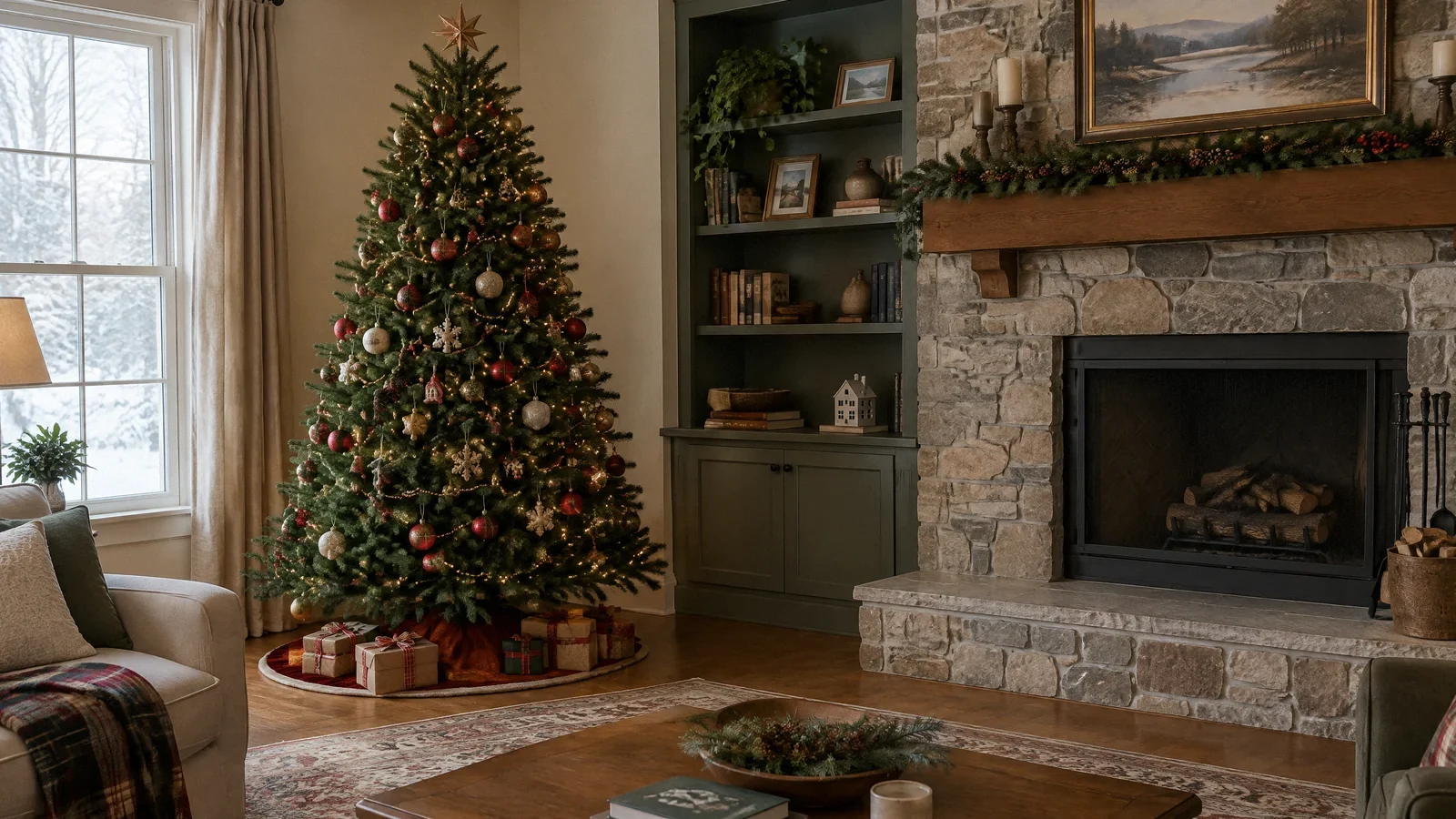
A watered tree, safe clearance from heat, undamaged lights, and an escape plan all help reduce holiday fire risks. Turn decorative lights off before sleeping or leaving, and never leave burning candles unattended.
Choose a safe place for the tree
Place a Christmas tree at least three feet from fireplaces, radiators, space heaters, candles, and heat vents. Keep it clear of the door and the route people would use to escape. A tree can look attractive in a corner, but that location is unsuitable if it blocks the only way out or forces branches close to a heater. Measure the available space before bringing the tree inside.
A fresh tree needs water every day. Check its stand frequently and follow the seller’s care instructions. USFA warns that a dry tree can burn very quickly. Remove the tree after Christmas or when it becomes dry; do not leave it indoors because its decorations still look good. Check the local collection rules for disposal.
Inspect and use lights carefully
Before decorating, look over each light strand. Discard strands with frayed or pinched wires and follow the product’s instructions about how many strands may be connected. Use lights intended for their location: outdoor conditions require equipment rated for outdoor use. Keep cords where they will not be pinched by a door or damaged under furniture.
Unplug Christmas tree lights before going to bed or leaving home. Do not rely on a timer to make a damaged strand safe. If a plug, outlet, or cord feels hot, stop using it and seek qualified electrical help. Do not attempt improvised repairs to damaged wiring. Keep decorations away from outlets and avoid arrangements that pull on a plug.
Keep flames away from decorations
USFA recommends keeping candles at least 12 inches from anything that can burn. Put them in stable holders where people and pets cannot knock them over. Never leave a burning candle unattended, and extinguish it before leaving the room or going to sleep. Battery-operated flameless candles offer a way to create a similar atmosphere without an open flame.
Stockings, paper decorations, wrapping, and greenery can end up closer to a fireplace or heater as a room fills with gifts. Recheck clearance after decorating and again when guests arrive. Use the fireplace and its screen according to their instructions, and do not burn wrapping paper or tree branches in it.
Plan for cooking and guests
Holiday cooking often adds distractions to an already busy kitchen. Stay attentive when food is cooking and keep towels, packaging, and decorations away from the cooking area. Give children a clear area away from hot surfaces and handles. If a fire starts, leave and call emergency services from outside; do not put yourself at risk trying to save decorations or possessions.
Tell overnight guests the exits and meeting place. Avoid blocking doors with gifts, furniture, or a tree stand. If someone needs assistance escaping, decide who will help and identify an alternative if that person is away. An escape route is useful only when everyone can reach and use it.
Check alarms and make a simple routine
Check smoke alarms using their test buttons and follow their manufacturer’s maintenance instructions. Replace batteries and alarms as required by their instructions. A working alarm supports early warning, but it does not replace attention to lights, heat sources, and exits.
Make a short end-of-day check: extinguish candles, unplug tree lights, check that heating equipment has clear space, and make sure doors remain usable. In the morning, check the water level in a natural tree stand. Assign these tasks to a household member so they do not depend on someone remembering after guests leave.
Store decorations for next year
After the holidays, allow lights to cool and pack them without crushing wires. Store instructions with the strands so the next user can confirm their intended location and connection limits. Discard damaged items instead of returning them to the box. Keep flammable decorations away from heaters while they wait for storage.
Inspect again when unpacking next year: a strand that worked last season may have been damaged in storage. If an outlet sparks, trips repeatedly, or shows heat damage, stop using it and call a qualified electrician. A new light strand cannot correct an unsafe outlet.
Check decorations throughout the season
A safe arrangement can change as gifts accumulate or furniture is moved for guests. Check that wrapping, gift bags, and ornaments have not reduced clearance from a heater or covered a vent. Keep routes to exterior doors open after a gathering as well as before it. If a light strand is damaged during decorating, unplug it and replace it; do not conceal the damage under ribbon or tape. Give the person responsible for closing the home a simple list covering candles, tree lights, and heating clearances. Repeat the inspection after decorations are moved, not just on the first day they are installed.
Your next-step checklist
- Keep the tree three feet from heat and clear of exits.
- Water a natural tree daily and discard it when dry.
- Discard damaged lights and unplug tree lights when leaving or sleeping.
- Extinguish candles and test smoke alarms.
Related questions
How can families reduce common fire hazards during Christmas?
A watered tree, safe clearance from heat, undamaged lights, and an escape plan all help reduce holiday fire risks. Turn decorative lights off before sleeping or leaving, and never leave burning candles unattended.
Sources & context
Public guidance supports the principles in this article. The practical questions and examples are editorial interpretation, not a site assessment or a coverage decision. State-specific rules apply only where identified.