Stop smoking in the vehicle, remove accessible waste and clean affected surfaces according to the vehicle and upholstery manufacturers’ instructions. Odor can remain in soft materials and ventilation components. Airing out or masking the smell does not guarantee that all smoke chemicals are gone.
Start with the source of smoke
EPA says the only way to eliminate secondhand smoke exposure is to prohibit smoking in enclosed spaces, including vehicles. Opening windows and operating ventilation can reduce exposure but do not eliminate it while smoking continues. Ask everyone using the vehicle to keep it smoke-free.
Remove cigarette butts, ash and other accessible waste after the vehicle is parked in a safe place. Check removable compartments and mats without dismantling safety equipment. Wear appropriate gloves if needed and dispose of waste in accordance with local rules.
Why odors linger in a vehicle
Tobacco chemicals can deposit on hard surfaces and become embedded in upholstery, carpets and other porous materials. EPA notes that some chemicals can later be released from surfaces back into air, creating a form of thirdhand exposure. A pleasant smell alone cannot establish that all residues have been removed.
The amount of prior smoking, interior materials, ventilation and cleaning history affect how long odor remains. There is no dependable number of hours or days for every car. Work systematically and reassess the source instead of relying on repeated fragrance treatments.
Clean hard interior surfaces
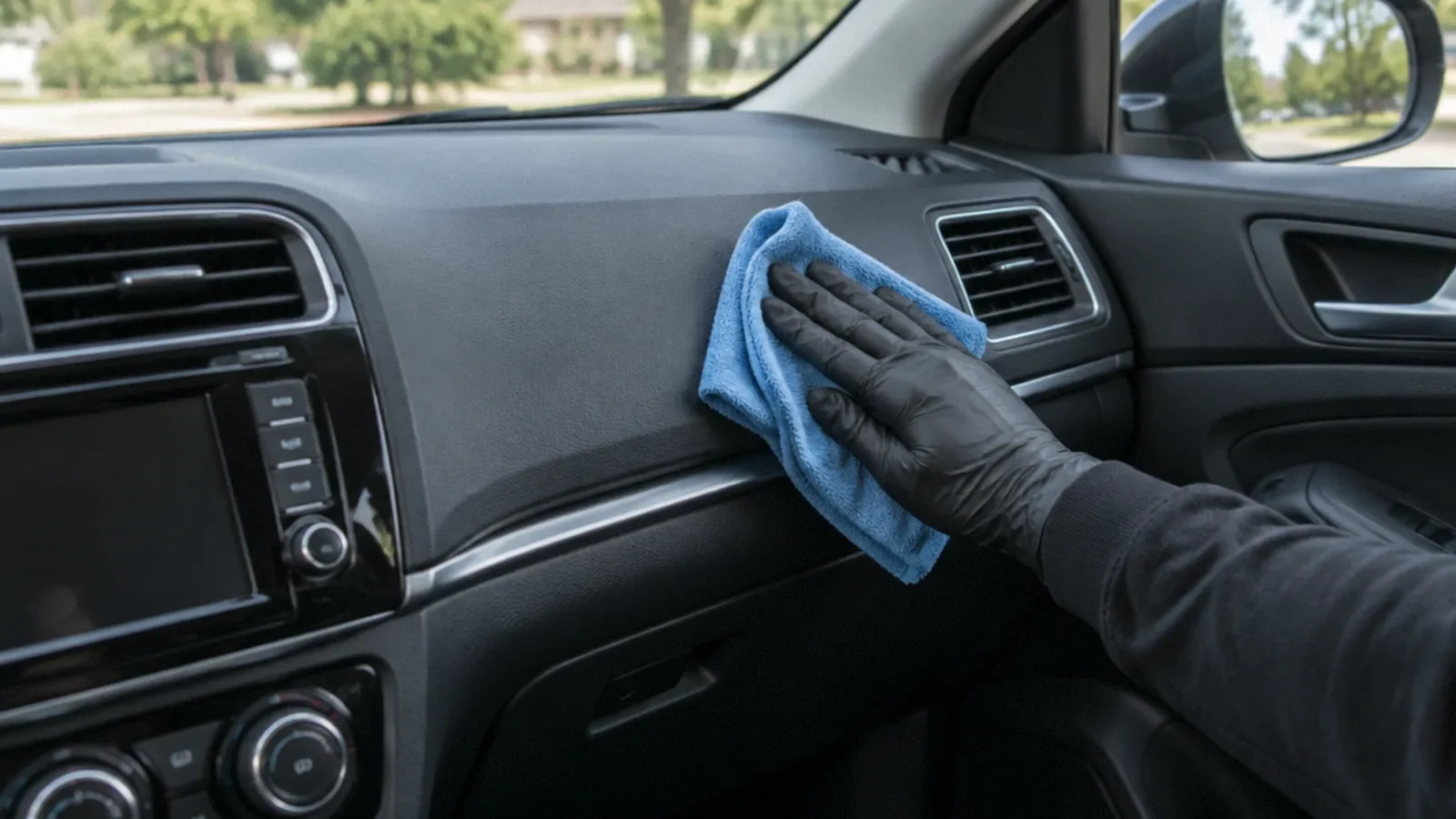
Use the car manufacturer’s instructions to choose a compatible cleaner for plastic, glass and other interior finishes. Apply a small amount to a cloth as directed rather than spraying into controls, speakers or vents. Test an approved product in an inconspicuous place first.
Wipe reachable surfaces such as door panels and console areas, changing cloths when soiled. Keep liquid away from electrical controls, screens, airbag covers and seat-belt mechanisms. Never mix cleaning chemicals; incompatible products can produce harmful vapors or damage finishes.
Seats, carpet and headliner
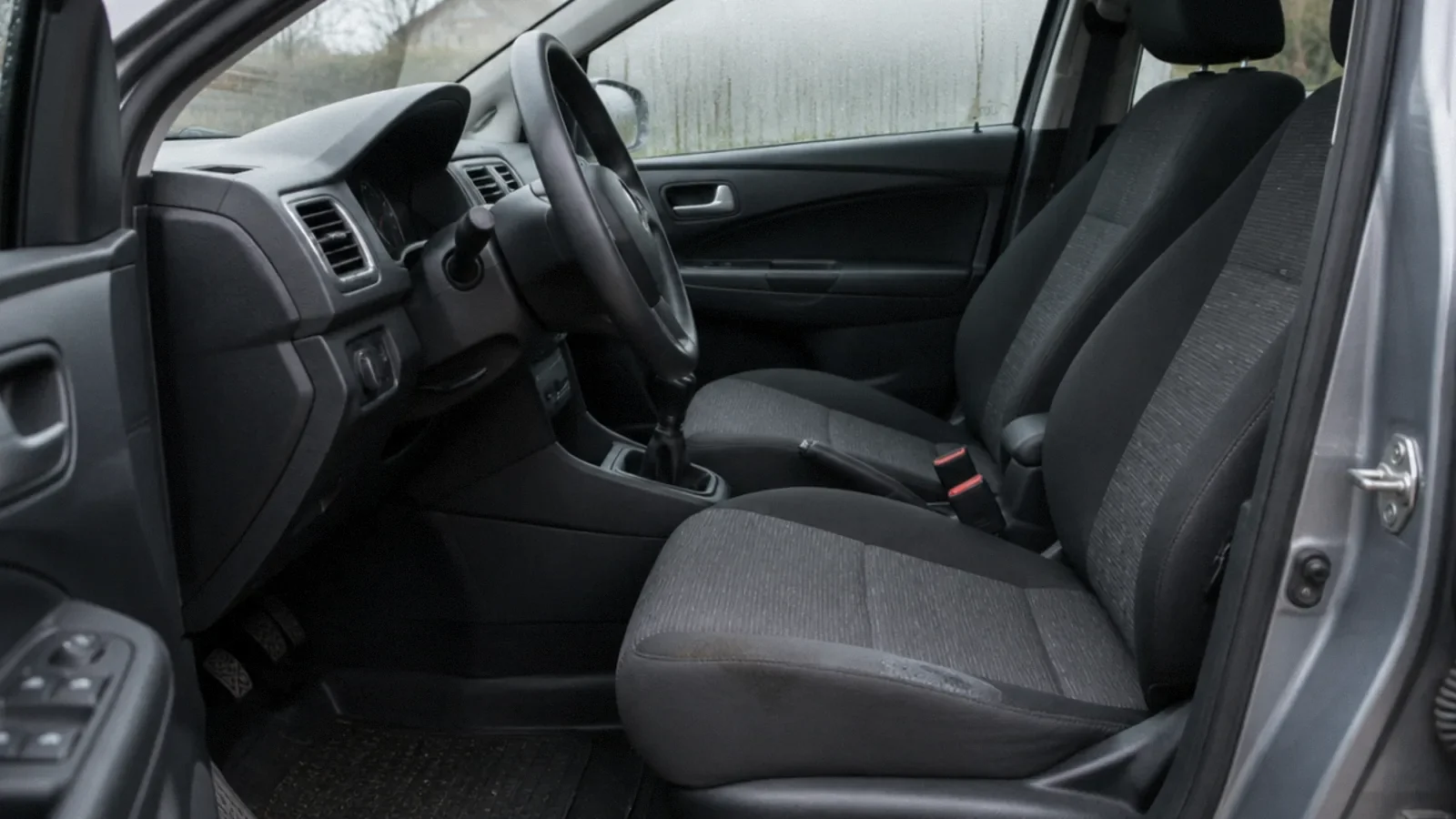
Vacuum accessible fabric and carpet using an attachment appropriate for the material. Follow the upholstery care instructions for a suitable cleaner. Avoid soaking foam, carpet backing or padding: trapped moisture can create a separate odor or mold problem.
A headliner is often adhered to the roof and may be damaged by excess moisture or aggressive scrubbing. Ask an experienced detailer about sensitive materials. Leather and synthetic finishes also need product-specific care; a treatment that suits one material can stain another.
Ventilation and the cabin filter
The cabin air filter and ventilation system may retain odors, but their design and service intervals differ by model. Consult the owner’s manual or a qualified technician about inspection and replacement of the correct filter. A new filter alone does not clean every duct or interior surface.
Air the vehicle only where it is safe to do so and outdoor air is suitable. Never run an engine in an enclosed garage. Do not spray fragrance or liquid disinfectant into air intakes without a manufacturer-approved method, and do not dismantle an airbag or dashboard to reach a vent.
Avoid ozone and quick fixes
EPA cautions that ozone can irritate and damage the lungs and that ozone generators are generally ineffective against indoor pollution at concentrations within public health standards. Do not operate an ozone generator in an occupied vehicle or assume such treatment is harmless.
Air fresheners, scent bombs and fragranced cleaners can mask odors without proving that residues are gone. Baking soda or other home remedies may be incompatible with a specific material and can be difficult to remove. Follow the vehicle maker’s instructions rather than applying an untested mixture.
When professional detailing helps
An experienced automotive detailer can evaluate accessible upholstery, carpet, hard surfaces and the cabin-filter area, then propose a material-specific cleaning plan. Ask which products and methods will be used, how moisture will be controlled and whether any parts must be replaced.
Request a written scope and realistic limitations. Severe or long-standing contamination can require more extensive work or replacement of affected materials, but no estimate is reliable without inspection. Avoid a provider promising a medical result or complete elimination of all residues based solely on a smell test.
If the odor may not be tobacco
A burning smell, visible smoke or an electrical odor while driving may indicate an active vehicle problem rather than old cigarette residue. Stop in a safe place, turn off the vehicle and seek qualified assistance; if there is fire or immediate danger, move away and call 911.
A musty smell can indicate moisture or another source and needs its own investigation. Before buying a used vehicle, inspect the interior and ask about the service history. A pre-purchase inspection can identify problems, but it cannot guarantee detection of every past exposure.
Your next-step checklist
- Keep the vehicle smoke-free.
- Remove accessible ash and waste.
- Follow vehicle and upholstery care instructions.
- Avoid saturating fabric and electrical controls.
- Investigate active burning odors immediately.
Related questions
Does opening a car window eliminate secondhand smoke?
No. Ventilation may reduce exposure but does not eliminate it while smoking occurs.
Will a cabin filter remove all cigarette odor?
No. A filter may be one part of the system; residues on other surfaces can remain.
Is a scented spray enough?
A fragrance can mask an odor without proving that smoke residues have been removed.
Should I use an ozone generator in an occupied car?
No. EPA warns against ozone generators in occupied spaces because ozone can harm the lungs.
Sources & context
Public guidance supports the principles in this article. The practical questions and examples are editorial interpretation, not a site assessment or a coverage decision. State-specific rules apply only where identified.
- EPA: Secondhand smoke and electronic-cigarette aerosolsfederal indoor air guidance
- CDC: Secondhand smokefederal health guidance
- EPA: Ozone generators sold as air cleanersfederal indoor air guidance