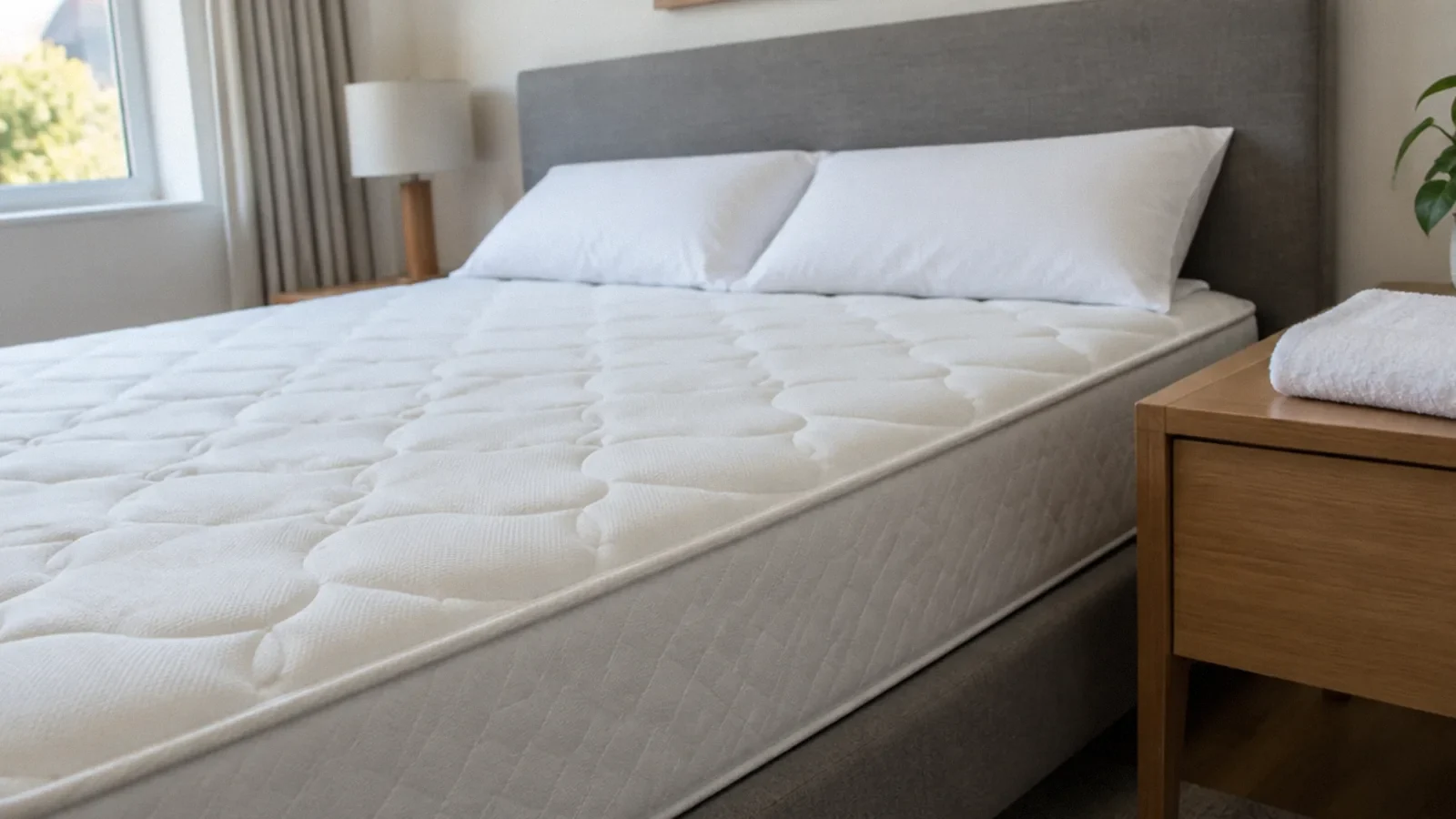
Remove and launder bedding according to its care label, wear suitable gloves and blot the mattress with a dry absorbent towel. Follow the mattress manufacturer’s cleaning instructions: some makers advise against liquids. Do not soak the filling or use bleach on urine. If contamination is extensive, the mattress cannot dry fully or an infection risk is uncertain, seek appropriate advice about replacement.
Start with bedding and basic protection
Keep children and pets away from the affected area while handling the accident. Wear suitable gloves, remove the sheets and mattress protector, and launder washable items according to their labels. Wash hands after removing gloves. If the accident involves a person or animal who is ill, ask a healthcare professional or veterinarian about additional precautions.
Absorb fresh liquid with clean dry towels, applying gentle pressure rather than rubbing the urine deeper. Replace saturated towels. A regular dry vacuum is not intended to pick up liquid. Do not place clean bedding over a wet mattress to conceal the spot.
Read the mattress instructions
Mattresses differ in fabric, foam, pillow-top layers and moisture tolerance. Check the care guide for the exact model before using water or a cleaning product. For example, Sealy cautions that most mattresses are not waterproof and advises against liquids when cleaning. Another manufacturer may provide different instructions for its own products.
If the label does not permit a wet method, do not follow a generic online spray recipe. Contact the maker or an experienced upholstery or mattress cleaner. A product suitable for carpet is not automatically suitable for a sleeping surface or a particular foam.
Fresh urine and limited spot treatment
After blotting, use only a method explicitly allowed by the mattress and product instructions. Test an inconspicuous area where appropriate and avoid saturating the layers. A small visible stain may not show how far liquid has traveled into the filling.
Never mix cleaning products. Do not apply chlorine bleach to a urine spill: CDC cautions against chlorine-based disinfectants on urine in its environmental-cleaning guidance. Keep products away from children and pets and follow all label precautions.
Dried stains and lingering odor
An older yellow mark or odor can be difficult to remove, particularly if liquid penetrated foam or a pillow top. Adding more water or applying multiple chemicals may worsen the problem. Ask the manufacturer or a qualified cleaner about the specific material and whether the affected layer can be treated.
A product that masks odor does not establish that a porous mattress is clean or disinfected. Hydrogen peroxide, bleach and strong cleaners can damage fabric and leave residues. Do not promise that any home mixture will remove every old stain or make the interior sterile.
Dry the mattress completely
Allow the mattress to dry fully according to its care instructions before replacing bedding or using it. A dry surface is not proof that deep filling is dry; extensive soaking can be difficult to assess and dry. Use an alternate sleeping surface while the item is wet.
Avoid placing electrical heaters against bedding or applying excessive heat. If moisture persists, odor returns or the interior cannot be dried, ask about professional assessment or replacement. A waterproof protector helps prevent future penetration but should be added only after the mattress is fully dry.
Should you steam clean urine?
Do not assume a steam cleaner is safe for a mattress. Heat and added moisture can affect foam, adhesives, fabric and drying time, and the manufacturer may prohibit the method. Check the exact care instructions and discuss stubborn contamination with a specialist.
A steam setting is not a blanket guarantee that a porous interior has been disinfected. Healthcare-specific procedures and products are designed for that setting and surface; do not apply them to a household mattress without suitable instructions.
Pet accidents and air mattresses
For dog or cat urine, follow the same material-specific approach: keep the animal away, blot and use only an approved method. Consult a veterinarian if accidents are recurrent or accompanied by a change in behavior. Do not use a disinfectant intended for surfaces on the animal.
An inflatable air mattress has different seams, valves and surface materials from a foam mattress. Follow its maker’s cleaning and drying instructions, keeping liquid out of the valve. Do not apply a solvent or abrasive product that could damage the surface or seams.
When replacement or specialist help is appropriate
Consider replacement or qualified assessment if a mattress is heavily soaked, remains wet, has recurrent odor, contains visible growth or may be contaminated by an infectious body fluid. A healthcare setting can have stricter rules than a household; CDC notes that wet and contaminated mattresses create particular concerns in patient care.
Record the type of mattress, extent of wetting and any products used before asking a professional. A cleaner should explain what can be treated, how the interior will dry and the limits of any disinfection claim. For recurring accidents, a suitable waterproof protector can make future cleanup easier.
Your next-step checklist
- Remove and launder bedding according to its label.
- Wear gloves and blot fresh liquid with dry towels.
- Follow the mattress maker’s instructions for that model.
- Avoid bleach on urine and never mix cleaning chemicals.
- Do not use the mattress again until fully dry.
Related questions
How do I remove fresh urine from a mattress?
Remove the bedding, blot with dry absorbent towels and follow the mattress manufacturer’s care instructions. Avoid soaking the filling.
Can I use bleach on a urine stain?
Do not apply chlorine bleach to urine. CDC cautions against chlorine-based disinfectants on urine spills.
Can I steam clean a urine-soaked mattress?
Only if the mattress maker permits the method. Added heat and moisture can damage materials or make drying difficult.
When should a mattress be replaced?
Consider replacement when it is heavily contaminated, cannot be dried fully, has visible growth or presents an unresolved infection concern.
Can urine lead to mold on a mattress?
Moisture left in a porous mattress can support microbial growth under suitable conditions, but a stain alone does not prove mold. Dry and assess the item promptly and seek help if it cannot be cleaned and dried throughout.
Sources & context
Public guidance supports the principles in this article. The practical questions and examples are editorial interpretation, not a site assessment or a coverage decision. State-specific rules apply only where identified.
- Sealy: Mattress cleaning and moisturemanufacturer guidance
- CDC: Environmental cleaning procedureshealthcare guidance
- CDC: Mattresses and patient-care contaminationhealthcare guidance