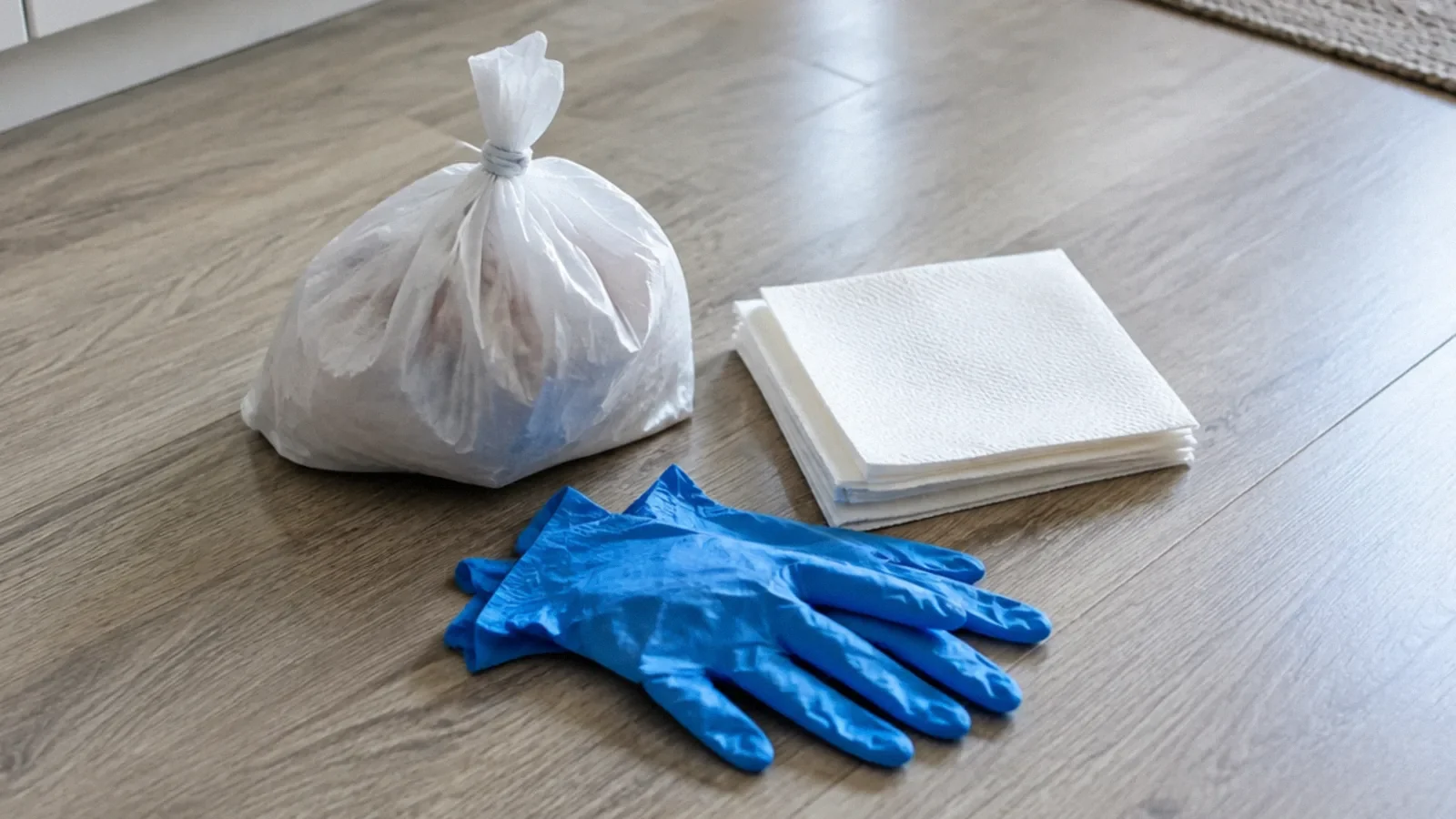
Keep others away, wear disposable gloves and remove visible material with disposable towels without spreading it. Clean the surface, then disinfect when appropriate using a product labeled for the surface and situation. If norovirus is suspected, follow current CDC guidance; never mix cleaning chemicals.
Attend to the person first
Help the person who is ill and seek medical care when symptoms or their condition warrant it. Keep children, pets and other household members away from the affected area. If there is a large spill, sharps or an unknown hazardous material, seek specialized help.
Vomiting can spread contamination beyond the visible spot, particularly with an infectious illness. Do not allow anyone to walk through the area or prepare food nearby until it has been appropriately cleaned. A cleanup guide cannot diagnose the cause of illness.
Put on protection
Use disposable gloves and follow the cleaning or disinfectant product’s instructions for any additional protection. Gather disposable towels, a waste bag and a product appropriate for the floor. Avoid touching your face while cleaning.
CDC recommends gloves and disposable towels when cleaning vomit in its norovirus guidance. Remove gloves carefully after the task and wash hands thoroughly with soap and water. Alcohol-based hand sanitizer alone is not a substitute for handwashing against norovirus.
Remove the visible material
Gently cover and lift visible material with disposable towels, working in a way that minimizes splashing or spreading. Place used towels in a plastic bag and close it. Do not use a household vacuum on wet vomit or shake contaminated materials.
Clean the affected hard floor with a surface-compatible cleaner as directed. The area around the visible spot and frequently touched surfaces may also need attention. Avoid forcing liquid into flooring seams, outlets or inaccessible gaps.
Disinfect when appropriate
If a contagious illness such as norovirus is suspected, CDC advises prompt cleaning and disinfection of the affected area. Use an EPA-registered product with an appropriate norovirus claim and labeled for the surface, or follow CDC’s current guidance for a bleach solution when suitable.
Read the label for dilution, ventilation, protective equipment, contact time and any required rinse. Keep the surface wet for the specified time. A product safe for one floor may damage another, and cleaning visible soil alone is not the same as disinfection.
Never mix chemicals
Do not combine bleach with ammonia, vinegar, toilet cleaner or another cleaning product. Dangerous gases can result. If a cleaner has already been used, follow its label and seek guidance before applying a different product.
If irritating fumes develop, leave the area for fresh air and contact Poison Control at 1-800-222-1222. Call 911 for trouble breathing, collapse or another emergency. Keep all products in their original containers and away from children and pets.
Wood, grout and porous flooring
Sealed tile and an intact hard surface may be easier to clean than unsealed wood, damaged grout or a gap beneath flooring. Follow the floor manufacturer’s instructions and do not soak a moisture-sensitive surface. A disinfectant must be labeled for the material.
If contamination entered porous material, subflooring or a large inaccessible area, an appropriately qualified cleaner can assess it. Do not assume fragrance, steam or a visible dry surface establishes complete disinfection. Some affected items may need replacement.
Nearby laundry and objects
Handle contaminated clothing, towels or bath mats without shaking them. Wear gloves and follow CDC guidance and the item’s care label for laundering. Clean laundry baskets and touched hard surfaces as appropriate.
If food may have been contaminated by a vomiting incident, follow CDC guidance on discarding it. Keep cleaning tools and waste away from food preparation areas. Wash hands with soap and water after handling soiled materials and before eating.
Finish and prevent spread
Allow the floor to dry completely and keep the area closed until it is safe to walk on. Dispose of used materials according to local guidance and store chemicals securely. Check whether contamination reached adjacent carpet or furniture, which require different methods.
If symptoms continue or the affected person cannot keep fluids down, consult a healthcare professional. Follow current public-health guidance on limiting spread. A clean floor is one step and does not replace hand hygiene or medical care.
Quick sequence for hard floors
Keep others away and put on disposable gloves. Gently lift larger pieces with disposable towels or a disposable scraper into a bag; avoid splashing, aerosolizing material or using an ordinary vacuum. For dried residue, moisten with a cleaner compatible with the surface and let it soften before gently lifting it. Avoid dry scraping and do not saturate seams or grout.
Clean remaining soil with detergent and water, then disinfect when appropriate. If norovirus is suspected, CDC recommends an EPA-registered product effective against norovirus or its specified bleach solution, with the required contact time; check that the product is compatible with the floor. Follow the label, ventilate as directed and never mix chemicals. Bag waste and wash hands with soap and water.
On sealed tile, clean the tile and grout without flooding joints. Porous or damaged grout, unsealed wood, carpet and padding may absorb contamination and need a material-specific evaluation or replacement; hard-floor directions cannot guarantee disinfection inside them. For fabric or a vehicle use material-specific cleaning guidance, and for persistent odor consult the separate vomit odor guide. If nausea prevents cleanup, step away and ask another equipped person to help.
Your next-step checklist
- Keep people and pets away from the area.
- Wear disposable gloves and remove visible material gently.
- Clean and disinfect as appropriate for the floor and illness.
- Wash hands with soap and water after cleanup.
Related questions
How do I clean vomit off a hard floor?
Wear gloves, remove visible material with disposable towels, clean the surface and disinfect when appropriate using a labeled product.
Should I vacuum vomit from the floor?
No. Do not use an ordinary household vacuum on wet vomit; use disposable towels and appropriate cleaning methods.
Does cleaning remove norovirus?
Cleaning removes soil, but CDC recommends cleaning and then appropriate disinfection after a suspected norovirus incident.
Can I mix bleach and vinegar?
No. The mixture can release dangerous chlorine gas.
How can I clean vomit if the smell makes me nauseated?
Step away and ask another appropriately equipped person for help if needed. Ventilate safely, avoid disturbing material unnecessarily, use suitable protection and follow the surface and product instructions. Do not mix cleaners; medical or workplace situations may require additional procedures.
Sources & context
Public guidance supports the principles in this article. The practical questions and examples are editorial interpretation, not a site assessment or a coverage decision. State-specific rules apply only where identified.
- CDC: Preventing norovirusfederal public health guidance
- CDC: Cleaning and disinfecting the homefederal public health guidance
- Poison Control: Chlorine gaspoison center guidance
- CDC: Preventing norovirusofficial