Stop running water when a shower or tub is backing up. Hair and soap buildup near the drain can be one cause, but a deeper blockage or shared sewer problem is also possible. Never mix drain chemicals; if a product is already in the drain, tell the plumber and avoid plunging or opening the line.
First, stop adding water
A blocked bathtub or shower drain can overflow if the faucet is left running. Keep people and pets away from standing water, especially when a cleaning chemical may be present. Do not run more water just to see whether the blockage has cleared.
If other fixtures also back up, or wastewater appears in the tub, stop using affected plumbing and contact a plumber or the relevant property manager. Contaminated water requires a different safety and cleanup plan from a slow drain containing ordinary bath water.
What can cause the clog?
Hair, soap residue and debris can accumulate near the drain opening or in the trap. A blockage farther along a branch line, a venting issue or a main sewer problem can produce symptoms that look similar. A single slow shower is a clue, not proof of the precise location.
Note whether the problem is new, whether the tub drains slowly every time and whether other fixtures gurgle or back up. Tell the plumber about repeated blockages and any previous cleaning. These details help determine which section needs inspection.
Inspect only what is safely accessible
If the drain cover can be removed according to the fixture instructions without force, visible hair or debris at the opening may be removable with a suitable tool and gloves. Protect the finish and do not push material deeper into the drain. Replace the cover correctly afterward.
Do not reach into a drain containing unknown water or chemicals. A damaged cover, inaccessible stopper or suspected deeper obstruction may require a plumber. If removing the cover risks breaking a sealed component, stop and ask for help rather than prying harder.
Using a drain snake
A small manual drain-cleaning tool can sometimes reach hair near a shower drain, but tools vary and can damage a stopper or fixture if forced. Follow the tool and fixture instructions and stop if it meets resistance. A professional may need different equipment for a deeper obstruction.
Never use a snake, plunger or other tool where corrosive cleaner may still be present: splashes can cause severe chemical burns. Tell the plumber the product name, amount and time used if known. Keep the original container safely away from children and pets.
Chemical drain cleaners and mixtures
Some commercial drain openers contain strongly corrosive substances. Poison Control warns that splashes can injure skin and eyes and that chemicals can be especially hazardous in a completely blocked drain. Do not mix drain products, bleach, acids or other cleaners.
If a person is exposed, contact Poison Control at 1-800-222-1222 for specific guidance; call 911 for severe symptoms or an immediate emergency. Do not assume a homemade mixture will clear a difficult blockage. Baking soda and vinegar are unlikely to remove a tough grease obstruction, according to Poison Control.
Standing water and an overflow
If water remains in the tub, do not add another product on top of it. If the water could contain drain cleaner, leave it undisturbed, keep others away and seek advice from a plumber or Poison Control as appropriate. Explain the hazard before anyone begins work.
For sewage or wastewater from another fixture, avoid contact and arrange professional help. Shut off a known water source only when it is safe and necessary. Drying a surface later does not itself establish that contaminated materials have been cleaned.
When to call a plumber
Call for recurring clogs, multiple affected fixtures, suspected damage, sewage backup or an obstruction that cannot be reached without force. A plumber can identify access points and choose equipment suited to the fixture and pipe. Ask how the work and cleanup will be priced.
If a main line problem is suspected, the plumber may recommend further inspection after restoring access. Ask what was actually observed and whether a camera or other test can reach the relevant section. Cleaning a branch line does not repair a broken sewer pipe.
Preventing the next clog
A suitable hair catcher can reduce material entering the drain if it fits the fixture and is maintained. Remove collected debris routinely and follow the manufacturer’s cleaning instructions for the stopper and finish. Avoid disposing of unsuitable material down the drain.
Keep a record of recurring slow drainage and service visits. If a problem returns quickly, investigate the underlying pipe or shared line instead of repeatedly adding chemicals. A prevention plan should match the cause found at your property.
Manual tool: shower and tub access
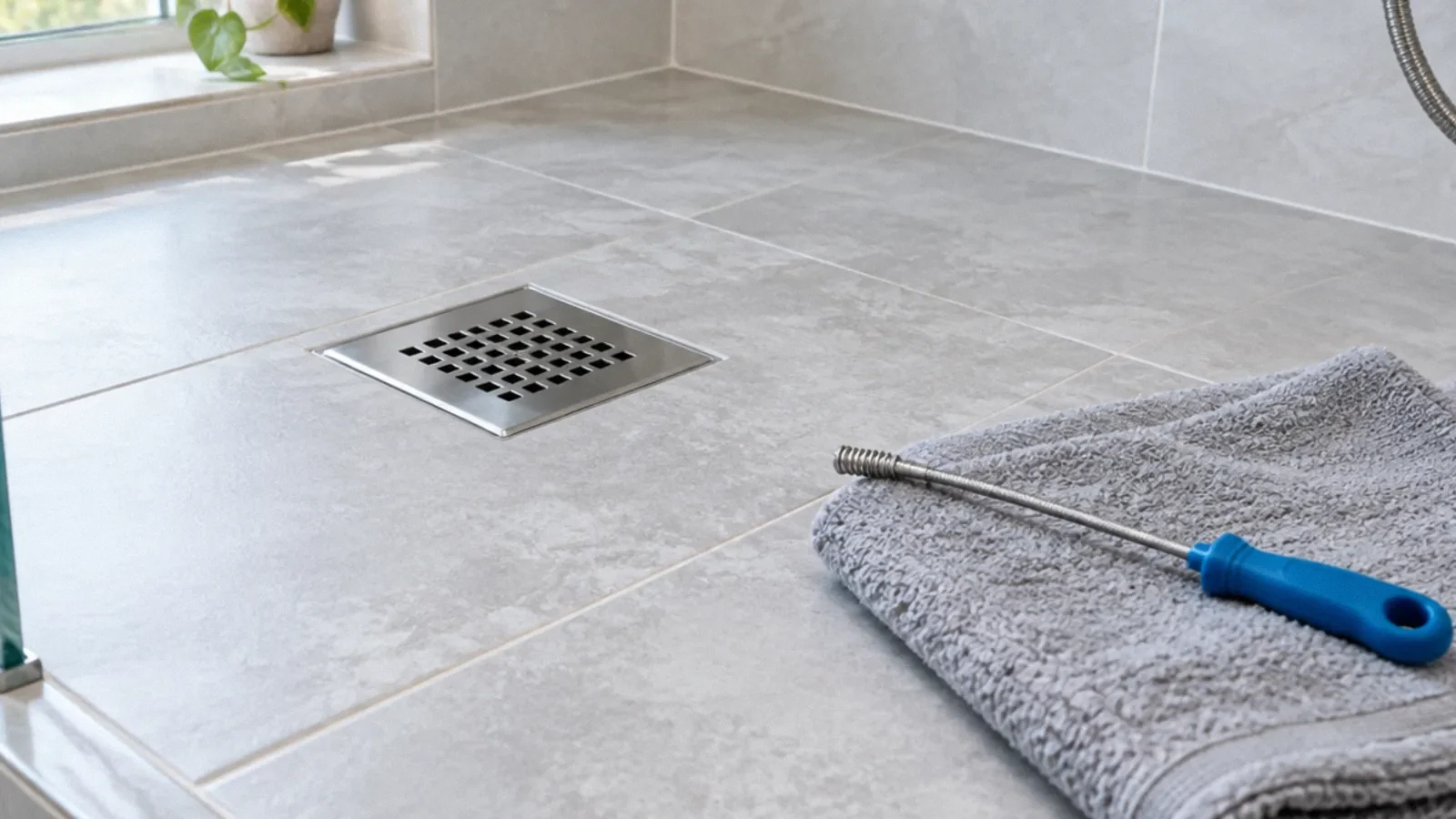
Only consider a small hand auger for a known ordinary clog when no chemical opener is present. Check the fixture and tool instructions, wear gloves and protect the finish. Remove a shower strainer only if designed to come off; remove reachable hair, then gently feed the tool into the accessible opening, turning as its instructions specify. Withdraw slowly and remove debris without splashing. Replace the strainer and check drainage with a small amount of water only when no chemical hazard exists.
For a tub, the stopper and overflow arrangement vary. Follow the specific manufacturer's directions to access a removable stopper or overflow; do not pry, force a cable through a narrow fitting or dismantle a sealed assembly. Stop at resistance, damaged parts, sewage, recurring backup or uncertainty and call a plumber. If a plunger made the backup worse, stop adding water and report what happened.
Water visible down inside a trap can be its normal water seal; water standing in the tub or rising from the drain is different and can indicate poor drainage or backup, not prove the cause. Clean a removable grate gently using the finish instructions and reinstall it securely. Never snake, plunge or handle standing water after chemical drain cleaner: advise the plumber what was used.
Your next-step checklist
- Stop running water into a backed-up fixture.
- Keep others away from unknown chemicals or sewage.
- Remove visible debris only when safely accessible.
- Tell the plumber about any product already used.
- Investigate recurring or multi-fixture backups.
Related questions
Can I use a drain snake after a chemical cleaner?
Avoid using a snake or plunger when corrosive cleaner may remain. It can splash. Tell the plumber which product was used.
Why is my bathtub drain clogged?
Hair and soap buildup are common possibilities, but a deeper or shared-line blockage can look similar. The symptoms alone do not locate it.
Can I mix two drain cleaners?
No. Mixing products can create dangerous reactions or fumes. Follow product instructions and seek expert advice after exposure.
What if sewage comes up in the shower?
Stop using affected fixtures, avoid contact with the water and contact a plumber or property manager for urgent assessment.
Can I snake a clogged shower drain?
A suitable tool may reach accessible hair, but do not use a snake if corrosive chemicals may remain. A plumber can assess a deeper obstruction.
Why did plunging a shower drain make it worse?
A blockage may be farther along the line or involve another issue; splashing may also expose you to drain chemicals. Stop if water is backing up, do not mix cleaners, and tell a plumber about any product already used.
Sources & context
Public guidance supports the principles in this article. The practical questions and examples are editorial interpretation, not a site assessment or a coverage decision. State-specific rules apply only where identified.
- Poison Control: Drain cleaner hazardspoison safety guidance
- U.S. EPA: Biological contaminants and indoor air qualityfederal guidance
- CDC: Mold cleanup and contaminated waterfederal health guidance
- Kohler: Freestanding bath service accessmanufacturer guidance
- Poison Control: Drain cleaner hazardspoison center guidance