Hydro jetting uses a hose and a specialized nozzle to direct high-pressure water into a drain or sewer line. It can remove certain deposits, but it does not repair a broken or collapsed pipe. An experienced contractor should assess the obstruction and pipe condition, explain the risks and choose a method suitable for the line.
How a sewer jetter works
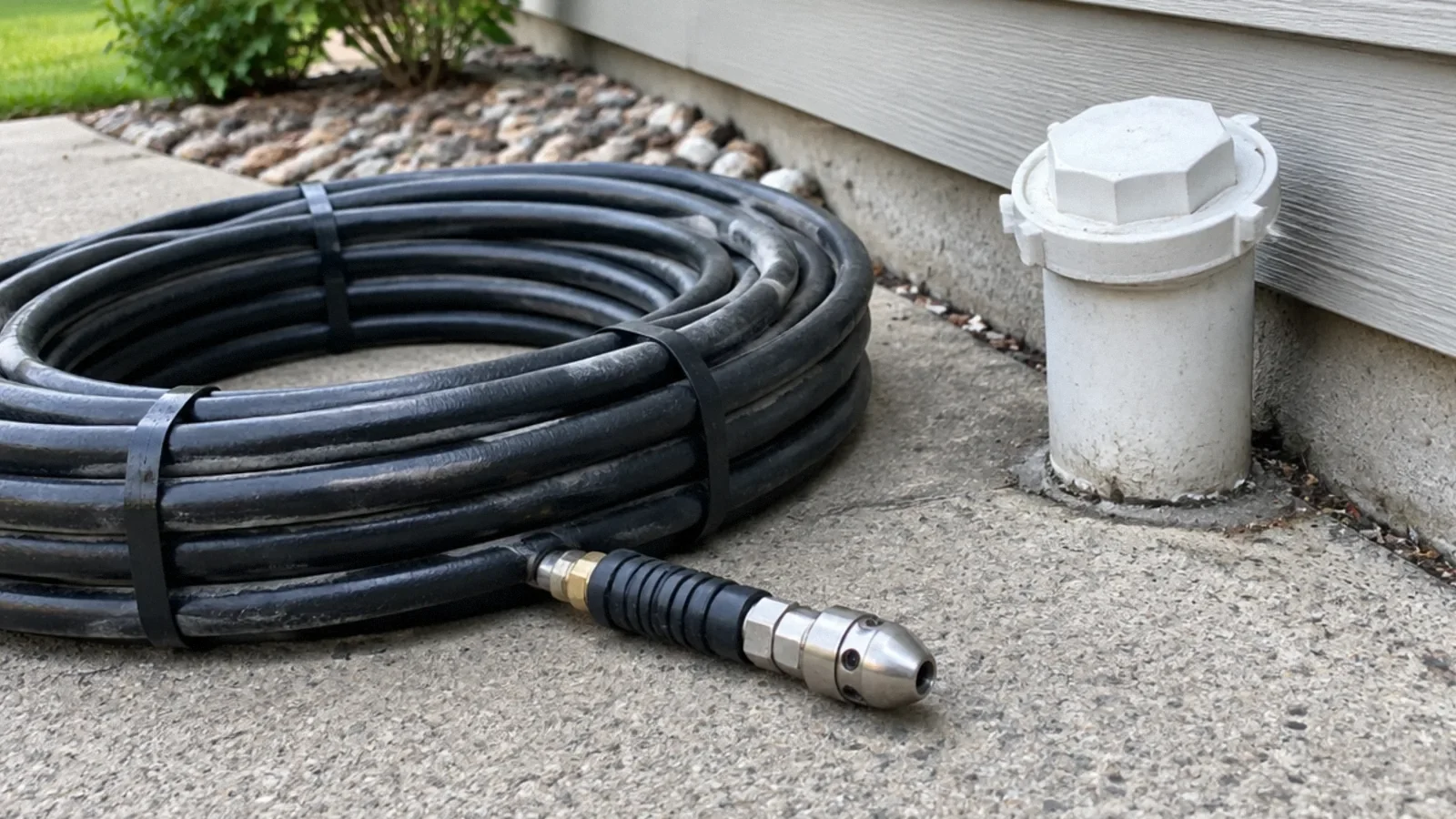
A jetter sends pressurized water through a flexible hose to a nozzle designed for pipe cleaning. The water can loosen accumulated grease, sediment and other deposits. A municipal wastewater utility describes using high-pressure water to scour sewer pipes before sending a camera through the cleaned line. Residential equipment and procedures vary by pipe and blockage.
Hydro jetting, water jetting and sewer jetting generally describe this water-based cleaning approach. A drain snake uses a mechanical cable or cutting attachment instead. Neither term guarantees a particular result: the useful question is what is blocking the line and whether the method can reach it safely.
When jetting may be useful
A plumber may consider jetting for recurring buildup or material lining a drain when access, flow and pipe condition make it appropriate. Deposits can narrow a pipe without making it immediately obvious which section is affected. Ask the contractor to describe the suspected obstruction and the basis for choosing jetting over another method.
Jetting is not automatically necessary for every slow sink or toilet. A fixture-specific trap, a blocked branch and a damaged sewer lateral have different causes. Identify which fixtures are affected, when backups occur and whether a previous cleaning provided lasting relief. Those details help a professional plan the investigation.
The condition of the pipe matters
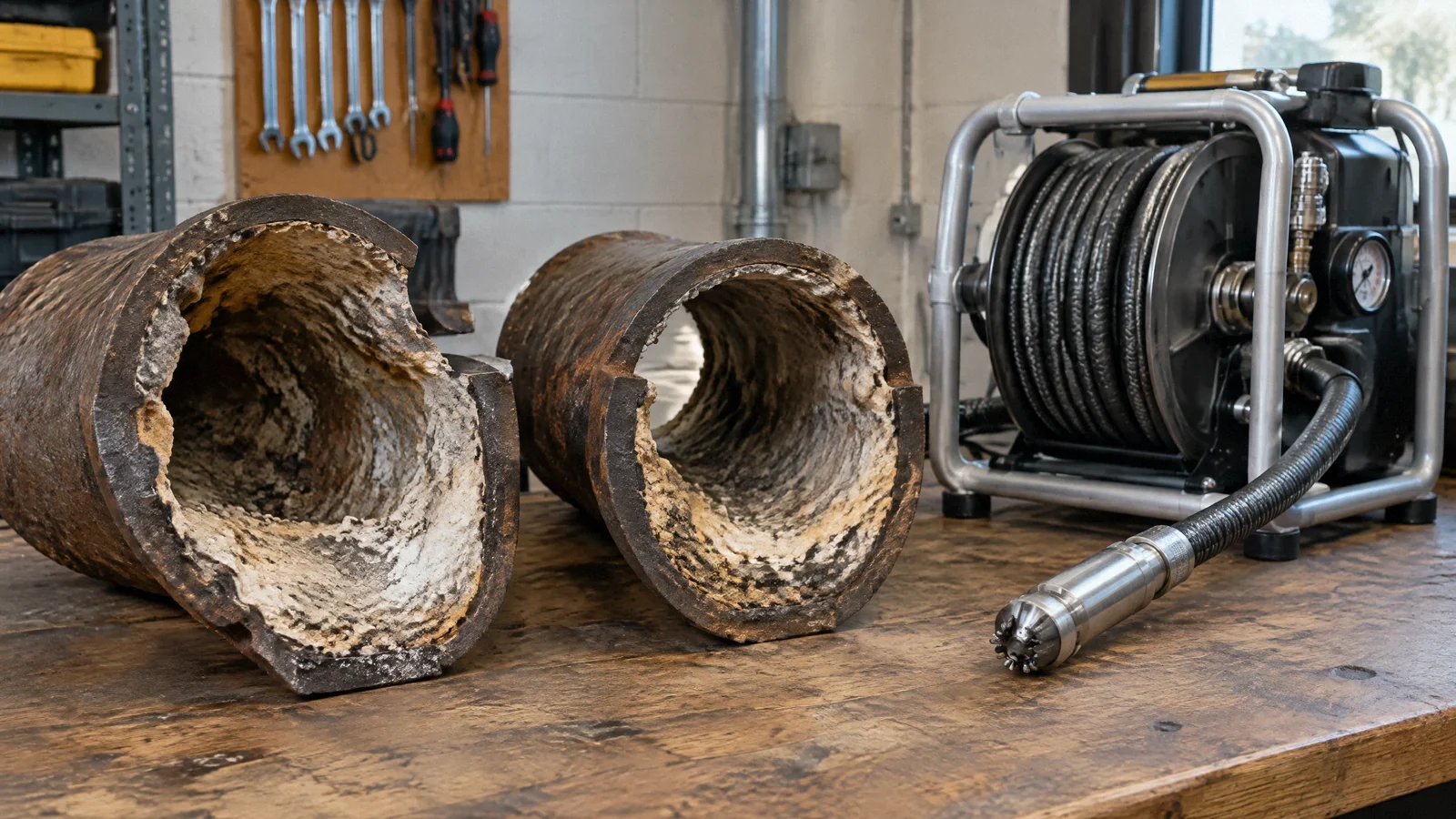
High-pressure cleaning can worsen an already compromised pipe. Seattle Public Utilities advises caution with high-pressure tools because they can further damage pipes. Older material, displaced joints, a severe blockage or an uncertain route may change the recommended approach. A professional should choose equipment and pressure for the specific circumstances rather than promise that one setting fits every line.
Tell the contractor about known repairs, previous camera footage, root intrusion and recurring sewage backups. If the pipe is collapsed or a section is missing, removing debris will not restore its structure. Repair decisions should follow an assessment of the location and condition, not the appearance of the water alone.
What happens before and during the service
The contractor should locate an appropriate access point, explain where water and debris will go, and establish a safe work area. Do not open a sewage cleanout or operate high-pressure equipment yourself. Pressurized water and contaminated material can injure people and create exposure hazards; keep children and pets away from the work.
Ask whether the quoted work includes clearing access, the cleaning itself, cleanup and a follow-up inspection. If a blockage prevents normal drainage, an initial clearing step may be needed before a camera can see much of the pipe. The order depends on the actual conditions and equipment.
Can a camera show the result?
A sewer camera can help document accessible sections after deposits are removed. Ask for a recording and a report that identifies the access point, direction, distances and observations. A before-and-after record can be useful, but a camera cannot assess portions it cannot reach or see through opaque water.
A video is evidence for a discussion, not an automatic diagnosis of every defect. Ask which findings are visible, which areas remain obscured and whether another method is needed to locate a concern. If a repair is proposed, request an explanation of the defect and the available options.
What hydro jetting cannot promise
Jetting cannot guarantee that roots will never return, that a pipe is structurally sound or that future backups are impossible. An underlying break, ground movement or a poorly aligned joint may continue to cause problems. The contractor should distinguish the temporary effect of clearing material from a repair to the pipe itself.
Never accept a promise of a permanent cure without understanding what was found and what work is actually included. A written explanation of maintenance, repair recommendations and any limitations is more useful than a claim that a line has been made like new.
After the line is flowing
Keep the service report, photographs or video, and a record of any location marks or measured distances. Note whether all affected fixtures now drain normally. If wastewater returns, do not repeatedly run water to test it; arrange further assessment and document the time and location of the recurrence.
A clean pipe today can still have a separate structural problem or an upstream issue. Follow the contractor’s maintenance advice only after understanding the basis for it. For contaminated water in a living space, the separate sewage-backup guide covers occupant safety and cleanup considerations.
Your next-step checklist
- Describe which fixtures back up and when.
- Ask why jetting is appropriate for this pipe and blockage.
- Confirm the written scope, access, cleanup and inspection.
- Request footage and note any sections that could not be seen.
- Investigate recurring backups or visible structural defects.
Related questions
Is hydro jetting the same as a drain snake?
No. Jetting uses pressurized water; a snake uses a mechanical cable or attachment. A plumber chooses based on the obstruction, access and pipe condition.
Can jetting repair a broken sewer pipe?
No. Cleaning can remove material, but a break or collapsed section requires its own assessment and possible repair.
Should every pipe be camera inspected before jetting?
Not necessarily. The appropriate sequence depends on access, flow and visibility; a fully blocked line may need initial clearing before the camera can see.
Will hydro jetting prevent every future backup?
No. The result depends on the cause. Structural defects, roots or new deposits may require further work.
Sources & context
Public guidance supports the principles in this article. The practical questions and examples are editorial interpretation, not a site assessment or a coverage decision. State-specific rules apply only where identified.
- Seattle Public Utilities: Side sewer repair methodsmunicipal guidance
- Beaumont-Cherry Valley Water District: Sewer cleaning and inspectionutility guidance
- US EPA: Sewer line cleaning and inspectionofficial guidance
- EPA: Sewer cleaning and inspection methodsfederal infrastructure guidance
- EPA: Sewer cleaning methods in Report to Congressreference