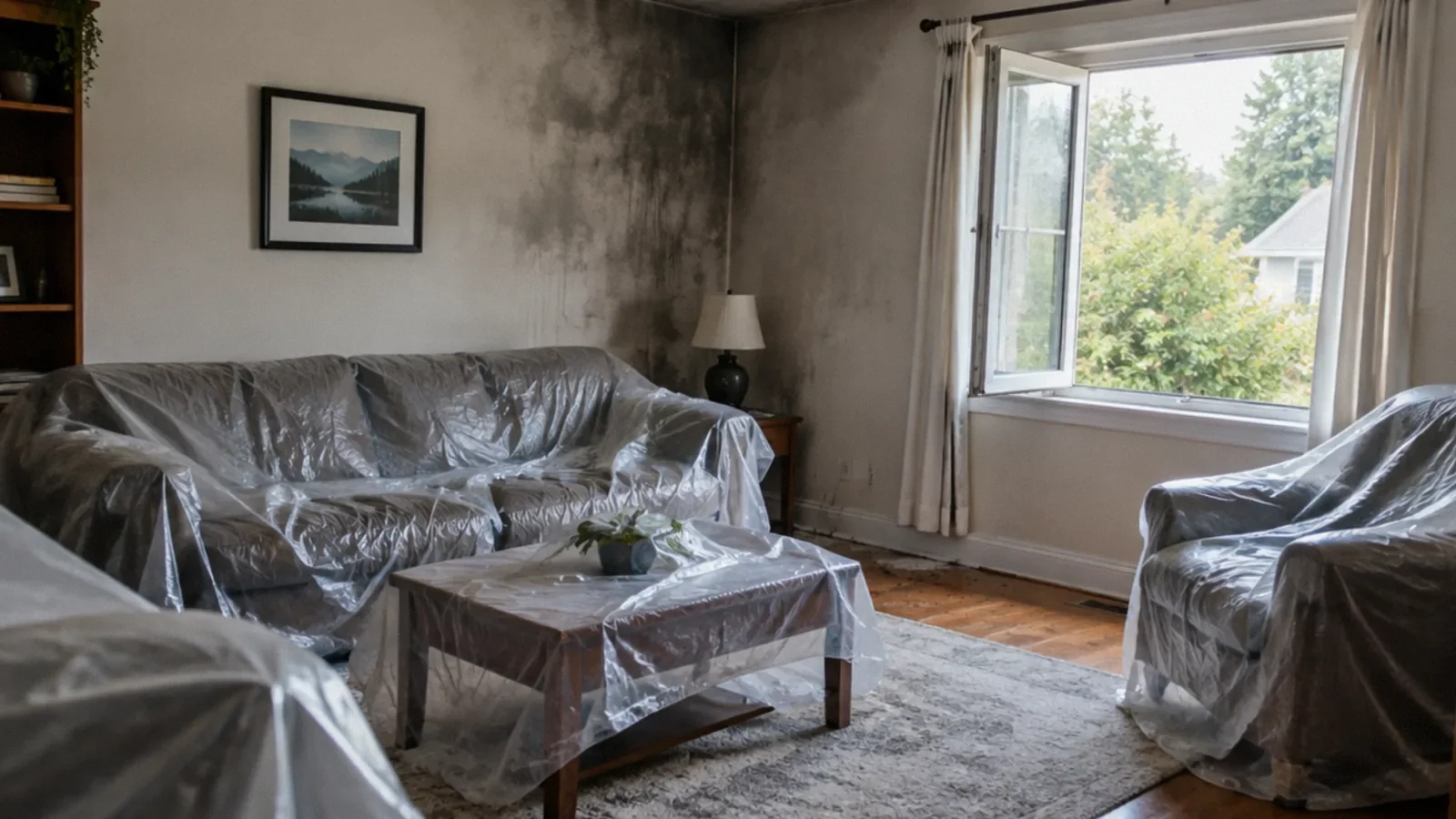
After a commercial fire, protect people, wait for authorization to enter and notify the insurer or broker promptly. Commercial property and business interruption coverage address different types of loss. Whether either applies depends on the policy, the event, exclusions, limits and the insurer’s investigation.
Start with people and site safety
If fire or smoke is present, evacuate, call 911 from a safe location and follow responders’ instructions. Do not reenter until authorized. Fire damage, unstable structures, electrical equipment, gas and contaminated water can remain hazardous after flames are extinguished.
Notify the building owner or property manager and coordinate access for employees, tenants and service providers. Do not restart damaged equipment or utilities until qualified professionals say it is safe. Protect the site from additional loss only when the work can be done safely.
Notify the relevant insurers
Contact the commercial property insurer or broker promptly, provide the location and known facts, and ask how to report damage and arrange inspection. A business tenant and building owner may have separate policies and responsibilities. A lease can also affect who reports damage to the building or improvements.
Record the claim number, contact details, instructions and communication dates. Notify any other potentially relevant insurer or service provider according to its contract. An initial report does not establish coverage or the cause of the fire.
Separate property and business income losses
Commercial property coverage can address physical damage to covered buildings, equipment, inventory and other property when caused by a covered peril. Business interruption or business income coverage, if purchased and applicable, can address certain financial losses during a covered suspension of operations.
California’s Department of Insurance explains that business interruption coverage generally requires direct physical loss or damage from a covered peril. Waiting periods, covered expenses, limits and the restoration period depend on the contract. Do not assume every closure or expense qualifies.
For example, a fire may damage a tenant’s equipment while the business also loses revenue during repairs. Ask the adjuster to identify the relevant property and business income forms separately, including any waiting period and limit. Gather evidence of both losses; payment under one part does not establish payment under the other.
Document the physical damage
When responders permit safe entry, photograph rooms, equipment and inventory before necessary removal where practicable. Keep purchase records, serial numbers, lease information, repair proposals and the fire incident report when available. Record damage by location and item without disturbing evidence unnecessarily.
Ask the insurer how to document debris removal and emergency protection. Separate immediate mitigation, contents cleaning and permanent reconstruction in estimates and invoices. Do not delay urgent safety work solely to create documentation.
Keep business interruption records
Ask the insurer what financial records it needs and the period it will evaluate. Relevant documents can include sales records, payroll, rent, ongoing fixed expenses, canceled orders and receipts for temporary operations, depending on the policy and circumstances. Preserve ordinary records and identify estimates as estimates.
Extra expenses and loss of income may have different provisions, limits or conditions. A bookkeeper, accountant or other qualified adviser can help organize the information. Provide the insurer with support for the actual business interruption rather than treating a general percentage as the loss.
Review the restoration scope
A qualified team may need to assess structural damage, smoke and soot, water used to fight the fire, affected machinery and contents. Ask which rooms and materials are included, what remains inaccessible, how work areas will be protected and how drying or cleaning will be verified.
Obtain an itemized written scope and clarify who authorizes work and payments. The lowest initial estimate may omit demolition, contents, disposal or rebuilding. An inspector’s recommendation and a coverage decision are separate questions.
Read deductibles, limits and exclusions
Review the declarations, coverage forms and endorsements for the covered property, causes of loss, deductibles, applicable limits, exclusions and any reporting obligations. Coverage for a leased space, equipment owned by another party or operations at a temporary location may require particular attention.
Ask for a written explanation of how the policy applies to each disputed item. Do not assume a homeowner policy, a liability policy or a landlord’s policy covers the business’s inventory or lost income. The contract and actual facts control.
Resolve disagreements and plan reopening
If the insurer limits a claim, request the factual and contractual basis in writing and submit relevant supporting records. Keep a dated log and ask about deadlines or dispute procedures. A licensed insurance professional, accountant or lawyer can advise on the particular policy and situation.
Before reopening, coordinate building access, utility checks, health or fire approvals and employee safety with the responsible authorities and professionals. Keep final repair records and any limitations. A completed cleanup invoice alone does not establish that all systems are ready for use.
Your next-step checklist
- Evacuate and wait for permission to enter.
- Notify the commercial insurer, broker and building owner as appropriate.
- Document property and business income records separately.
- Compare written mitigation and rebuilding scopes.
- Review policy terms and keep claim communications.
Related questions
Does commercial property insurance cover fire damage?
It may cover damage from a covered fire, subject to the policy’s terms, exclusions, deductible and limits.
Does business interruption insurance pay for every closure?
No. Coverage depends on the policy and circumstances; California’s insurance department says direct physical loss from a covered peril is generally required.
What records help with a business interruption claim?
Ask the insurer for its requirements. Sales, payroll, ongoing expense and temporary-operation records may be relevant to the actual claim.
Should a tenant or landlord file the claim?
Each may have different property and policies. Notify the relevant insurer and building owner, then review the lease and contract responsibilities.
Sources & context
Public guidance supports the principles in this article. The practical questions and examples are editorial interpretation, not a site assessment or a coverage decision. State-specific rules apply only where identified.
- NAIC: Business interruption and business owner policiesinsurance regulator guidance
- California Department of Insurance: Business interruption FAQstate insurance guidance
- NAIC: Small business insuranceinsurance regulator guidance
- U.S. Fire Administration: After a firefire safety guidance
- California Department of Insurance: Commercial insurance guidestate insurance guidance