Wait for authorities to permit access, protect people and essential operations, notify the insurer and building owner, and arrange a documented assessment of fire, smoke, water, equipment, and building systems before reopening.
Protect people and secure access
After a commercial building fire, follow the fire department’s instructions and keep employees, tenants, and visitors out until the responsible authority permits entry. A building can have structural, electrical, air-quality, and other hazards after flames are extinguished. Do not restart equipment or utilities without qualified assessment.
Identify one person to coordinate with the building owner, tenants, insurer, emergency responders, and restoration providers. Establish a safe communication channel for employees and provide clear instructions about where to report. Access permission, lease obligations, and operational decisions may involve different parties.
Document the loss and notify the insurer
Notify the commercial property insurer and other relevant carriers promptly. Ask what documentation, access, and authorization they require, including for urgent stabilization. Photograph accessible damage only when authorities permit and it is safe. Preserve inventories, purchase records, contracts, and receipts; record interrupted operations and decisions as they occur.
Coverage for the building, contents, equipment, and business interruption depends on the actual policies, deductibles, exclusions, and circumstances. Ask the insurer or broker how to document lost income and extra operating expenses. Do not assume a restoration estimate represents an approved claim.
Assess more than the burned area
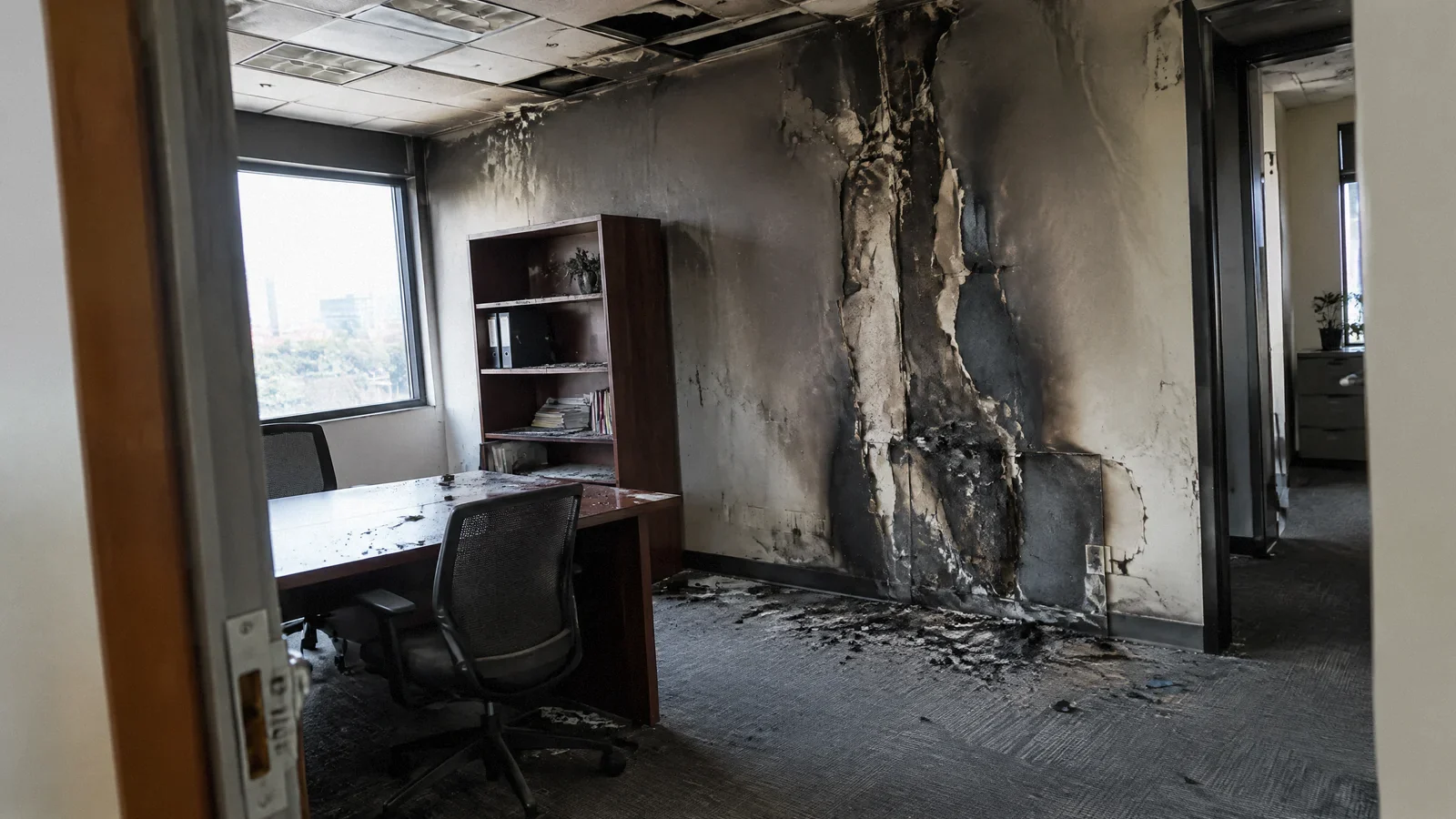
Fire damage can include heat and damaged building materials, while smoke and soot may affect rooms beyond the point of ignition. Firefighting water can wet ceilings, partitions, stock, and equipment. A qualified team should evaluate the building and its contents, then propose separate scopes for stabilization, cleaning, drying, repair, and replacement.
Ask how concealed spaces and ventilation equipment will be assessed. If water damage or suspected mold affects a ventilation system, seek qualified advice before operating it; EPA cautions that contaminated systems can distribute mold. Keep inspection findings and the limits of the initial assessment in writing.
Plan for equipment and sensitive contents
Separate business records and critical equipment in the recovery inventory, but do not handle damaged electrical devices or potentially hazardous materials without specialist advice. Manufacturers, equipment vendors, and qualified technicians can assess whether machinery, electronics, food stock, or documents can be recovered. The appropriate decision depends on exposure and the item’s function.
Ask the restoration provider how it will label, track, store, and return contents. Identify sensitive records and confidentiality requirements. Agree who may authorize disposal and how items will be documented for the insurer. A clean appearance alone is not proof that equipment is safe to energize or use.
Maintain essential operations
List essential services, staff, suppliers, data, equipment, and premises needed to continue serving customers. The Ready Business continuity worksheet can help identify these dependencies. Consider temporary premises, remote work, alternative suppliers, and arrangements with tenants where practical. A continuity plan should identify who can make decisions and communicate updates.
Track the extra expenses and operational impacts separately. Coordinate access for restoration crews with security and tenant requirements. Set realistic milestones, but allow for concealed damage, specialist evaluations, permits, and inspection schedules. Do not promise a reopening date before the necessary parties have confirmed the work.
Reopen in stages
Agree on the work and approvals required for each area: repairs, cleaning, utility checks, ventilation assessment, required inspections, and any permissions to occupy or operate. Responsibilities depend on the property and jurisdiction. Ask providers for written completion records and unresolved limitations before staff return.
Review the incident after reopening. Update emergency contacts, vendor agreements, data recovery arrangements, and the continuity plan using what was learned. Schedule outstanding repairs and follow-up checks rather than treating the first day of operation as proof that every issue is resolved.
Keep tenants and employees informed
Give occupants a reliable contact and explain which areas are closed, when further information is expected, and how to retrieve essential belongings if access is eventually permitted. Coordinate any escorted visits with the authorities, owner, and restoration team. Avoid sharing uncertain reopening dates as commitments. If several tenants share ventilation, utilities, or access routes, a repair in one suite can affect another, so include those dependencies in the recovery plan. Keep a record of decisions about access and temporary relocation. Sensitive personnel and customer information should remain protected when documents or equipment are inventoried, moved, or stored by outside providers.
Ask the owner and tenants to confirm the responsibilities for shared systems and common areas. Keep written records of who approved re-entry, which inspections remain outstanding, and how concerns should be reported after staff return.
Your next-step checklist
- Follow authority instructions and restrict access.
- Notify the insurer, property owner and tenants.
- Assess smoke, water, equipment and ventilation.
- Document restoration and approvals before reopening.
Related questions
How does a business recover after a commercial building fire?
Wait for authorities to permit access, protect people and essential operations, notify the insurer and building owner, and arrange a documented assessment of fire, smoke, water, equipment, and building systems before reopening.
Sources & context
Public guidance supports the principles in this article. The practical questions and examples are editorial interpretation, not a site assessment or a coverage decision. State-specific rules apply only where identified.