Take an overflowing or malfunctioning fixture out of service, prevent contact with wastewater and notify the responsible property manager or plumber. Slow urinal drainage and commercial toilet problems can have several causes; the fixture type, shared piping and building conditions determine the repair.
Start with safety and service continuity
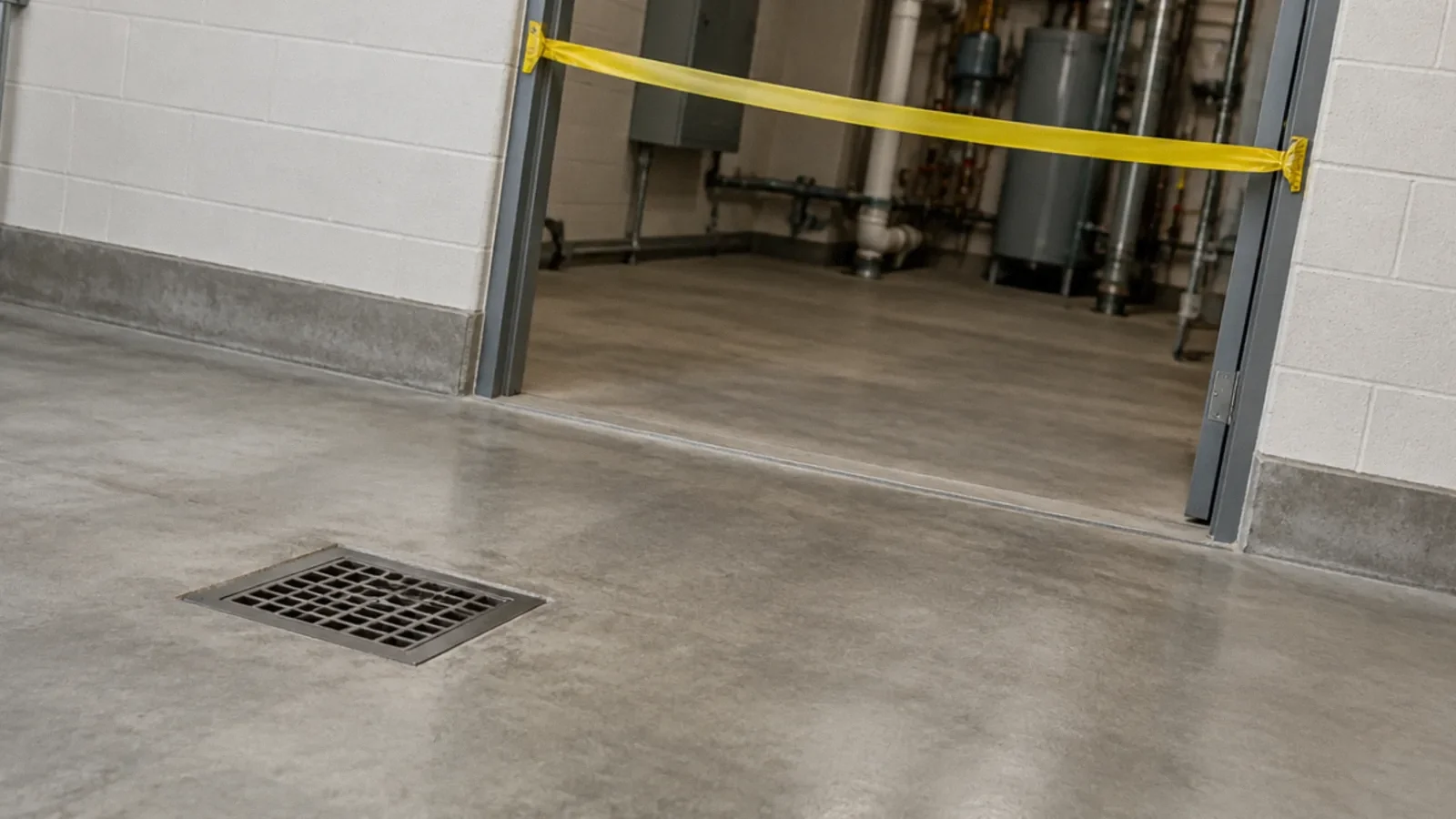
An overflowing urinal, leaking toilet or sewage backup can make a commercial restroom unsafe. Keep occupants away from contaminated water, mark or close the affected area and contact the person responsible for building maintenance. If water is near electricity, do not touch wet switches, equipment or wiring.
Stop using the affected fixture and avoid repeated flushing while the water is rising. If several fixtures are backing up, a shared line may be involved. The appropriate response depends on the building and the extent of the problem; a single online symptom cannot identify the blockage.
Why a urinal may drain slowly
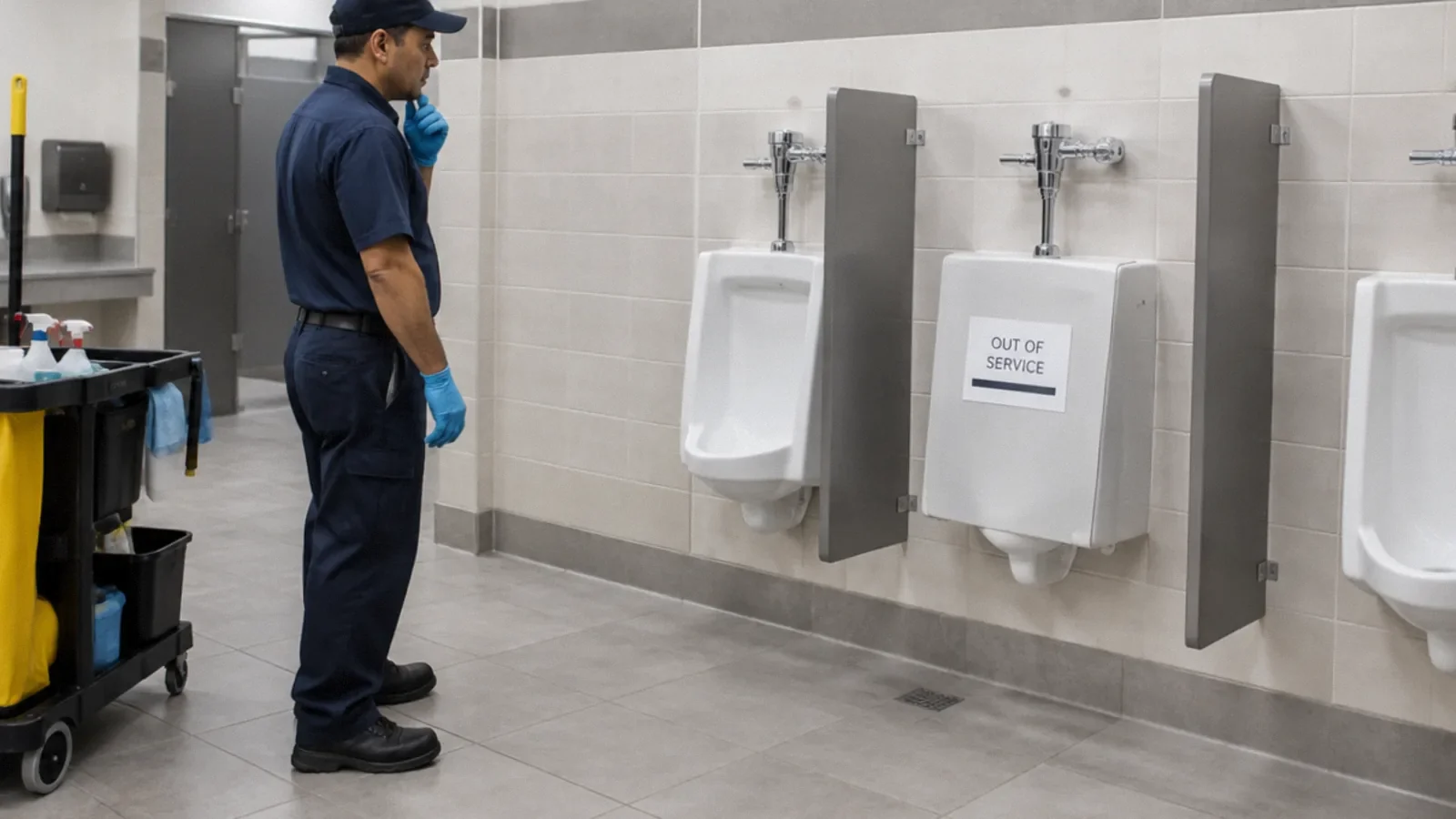
A slow urinal can result from an obstruction, deposits, a fixture issue or a restriction farther down the line. Different urinals, including waterless and flush-valve models, use different components. Record whether the problem affects one fixture or several and whether it recurs.
Do not assume a cartridge or a particular pipe is the cause without inspection. A qualified plumber can evaluate the fixture and accessible drain, then explain the proposed repair and what could not be seen. Avoid damaging porcelain or specialty components with inappropriate tools.
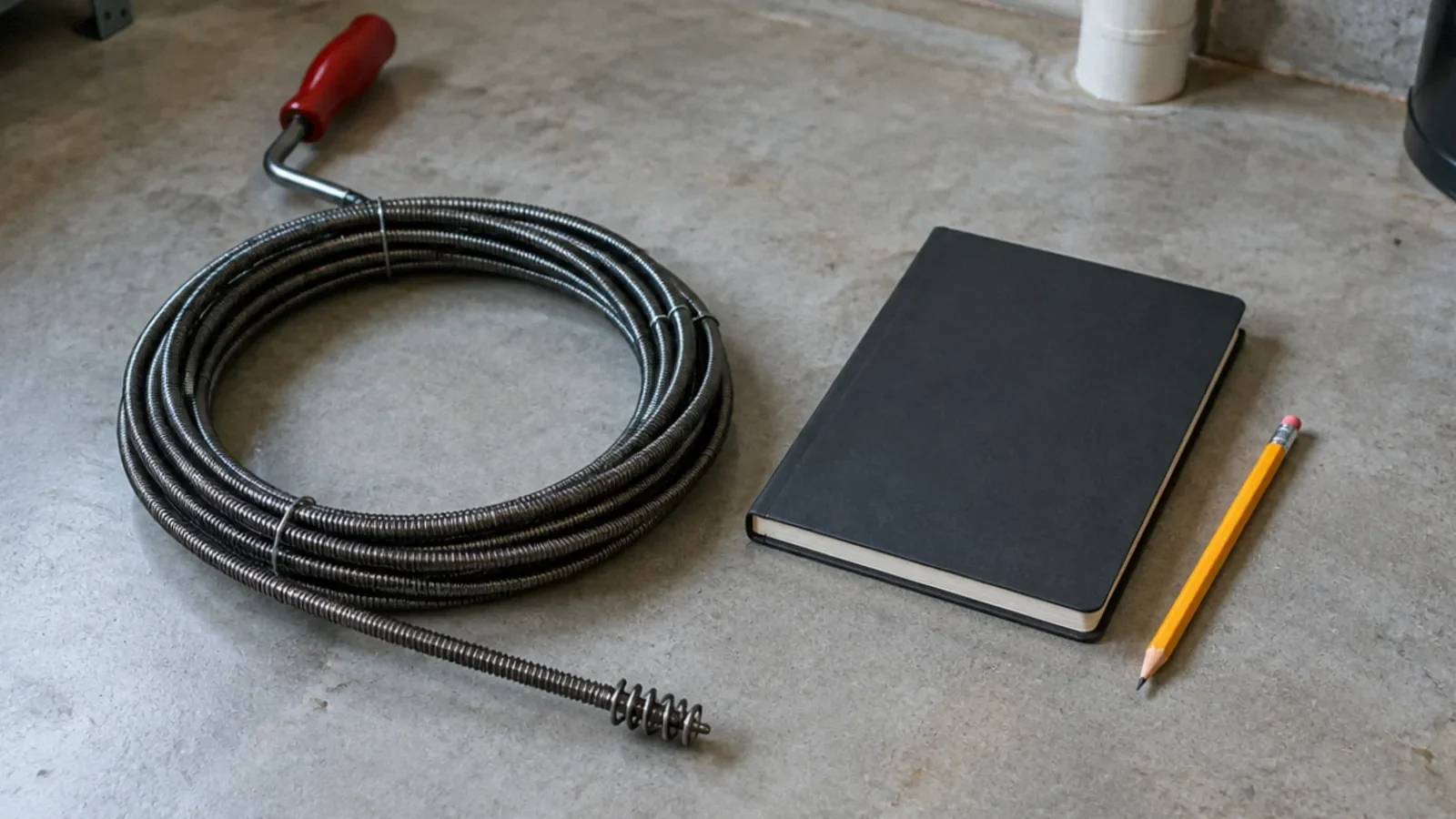
Without opening the fixture, record whether water rises during normal use, whether a single urinal or neighboring fixtures drain slowly, and whether a floor drain backs up. Stop using it when water rises; do not repeatedly flush to test a suspected blockage. One affected fixture suggests a local issue but does not prove it; several affected fixtures increase concern about a shared line. Tell the plumber the model, symptoms and any products used. Do not remove a waterless cartridge or use an auger or chemicals without the manufacturer’s instructions and appropriate training.
Commercial toilets and flush valves
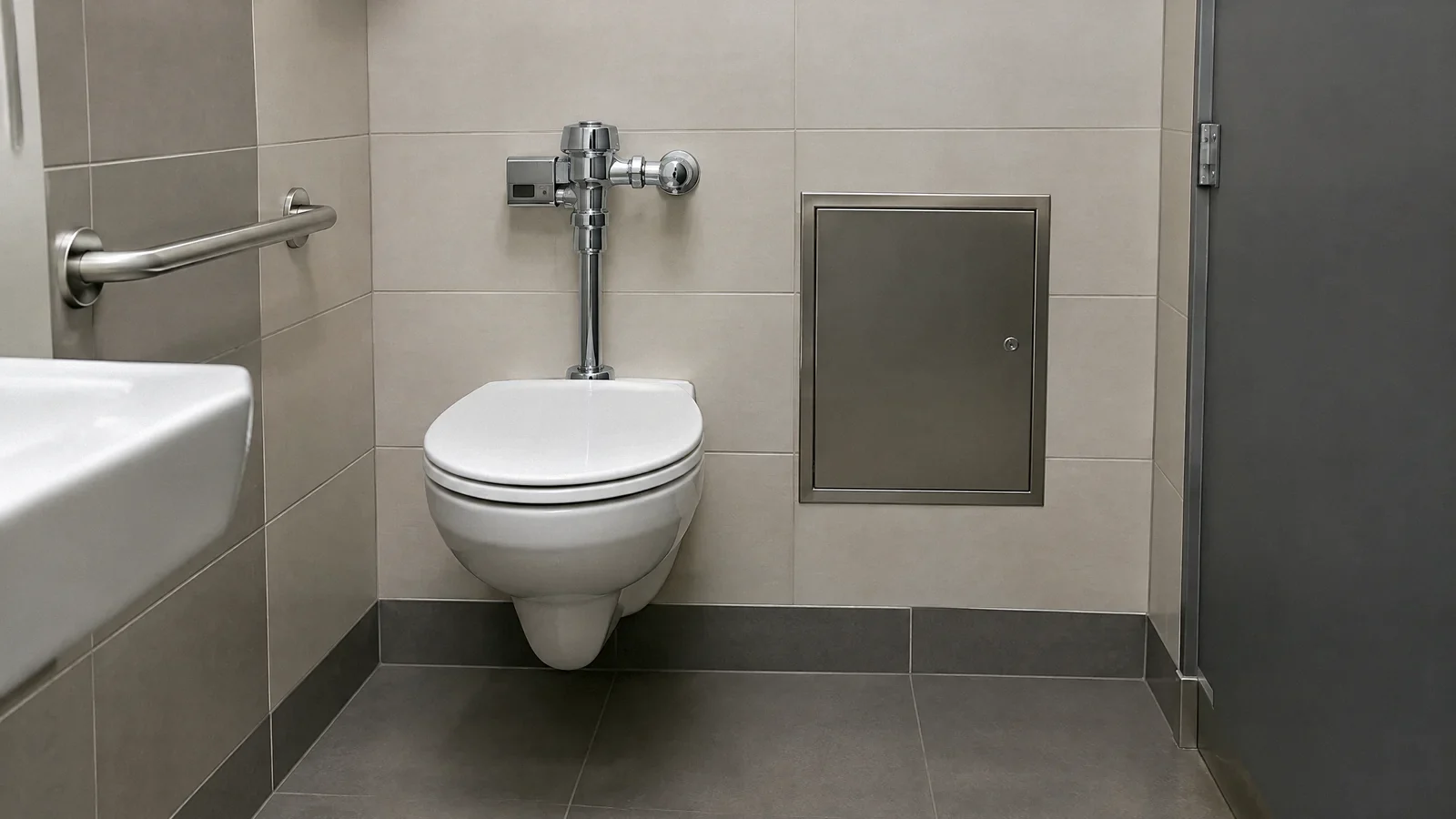
Different commercial toilets use different flush systems. Running water or a leak needs assessment by qualified personnel; do not disassemble a pressurized valve. For a focused discussion, see the guide to fixing a commercial toilet.
Avoid chemical and electrical hazards
Do not mix drain cleaners or add a second product to a blocked fixture. If a chemical has already been used, tell the plumber its name and approximate amount so appropriate precautions can be taken. Do not use boiling water or an unapproved tool on a fixture without checking the material and manufacturer’s instructions.
Keep cleaning chemicals away from occupants and follow workplace labels and safety procedures. Electrical equipment, automatic flush sensors and nearby outlets need particular care in a wet area. A flooded electrical component should be evaluated by qualified personnel before use.
When several fixtures are affected
Multiple slow or overflowing fixtures, a floor drain backup or sewage odor can point to a shared drainage issue, but inspection is needed to determine the cause. Reduce water use in affected areas and contact the property manager, plumber or utility as appropriate.
The Town of Plymouth, Connecticut, describes a process in which its utility investigates whether a blockage lies in the public main or a private line. Other jurisdictions have their own contacts and boundaries. Contact the local utility, property manager or plumber as appropriate; a business may need to restrict use until the condition is corrected.
Protect people during cleanup
Wastewater can contain contaminants. Keep employees and visitors out of the affected area and use trained personnel with a cleaning plan suitable for the water and surfaces. Do not treat a sewage overflow like an ordinary clean-water spill.
The facility should follow applicable worker-safety, health and food-service procedures. If the restroom serves a restaurant or another regulated business, contact the appropriate local authority about operating restrictions where needed. Do not reopen the area until the cause, cleanup and safety concerns have been addressed.
What to request in a service estimate
Ask whether the visit includes diagnosis, fixture access, drain cleaning, parts, camera inspection, cleanup and restoration. A written estimate should identify possible extra work and the process for approval. A camera can be useful in some lines, but it cannot see through every obstruction.
For repeated problems, request a description of the findings, what was removed or replaced, testing performed and any recommended follow-up. Separate the cost of clearing a blockage from repairs to damaged pipe or water-affected walls and flooring.
Maintenance and prevention
Provide accessible waste bins and post appropriate disposal guidance. Follow the fixture manufacturer’s maintenance instructions, including the correct process for any waterless-urinal cartridge. Review recurrent leaks and slow drainage rather than repeatedly masking odors or relying on chemical products.
Keep a record of fixture models, service dates and problems by location. Make sure staff know whom to notify and how to restrict access. For commercial buildings, coordinate any planned water shutdown with management and affected tenants; a fire-protection system must be handled separately.
Your next-step checklist
- Take overflowing fixtures out of service.
- Keep occupants away from wastewater and wet electricity.
- Do not mix drain chemicals.
- Notify building management and a qualified plumber.
- Document findings and restoration work.
Related questions
Why is a urinal draining slowly?
A restriction, deposits or another fixture or drain issue may be responsible. A plumber can identify the cause.
Can I keep flushing an overflowing commercial toilet?
No. Stop using the fixture and prevent contact with wastewater while arranging help.
Should I pour another drain cleaner into a blocked urinal?
Do not mix products. Tell the service provider about any chemicals already applied.
Who handles a business sewer blockage?
Responsibility depends on where the blockage is located and local rules; contact the property manager, plumber or local utility.
Sources & context
Public guidance supports the principles in this article. The practical questions and examples are editorial interpretation, not a site assessment or a coverage decision. State-specific rules apply only where identified.
- Town of Plymouth: Sanitary sewer backup proceduremunicipal wastewater guidance
- EPA: Septic systems frequently asked questionsfederal wastewater guidance
- EPA: Flood cleanup and indoor airfederal cleanup guidance
- City of Salinas: Sewer laterals and blockagesmunicipal guidance