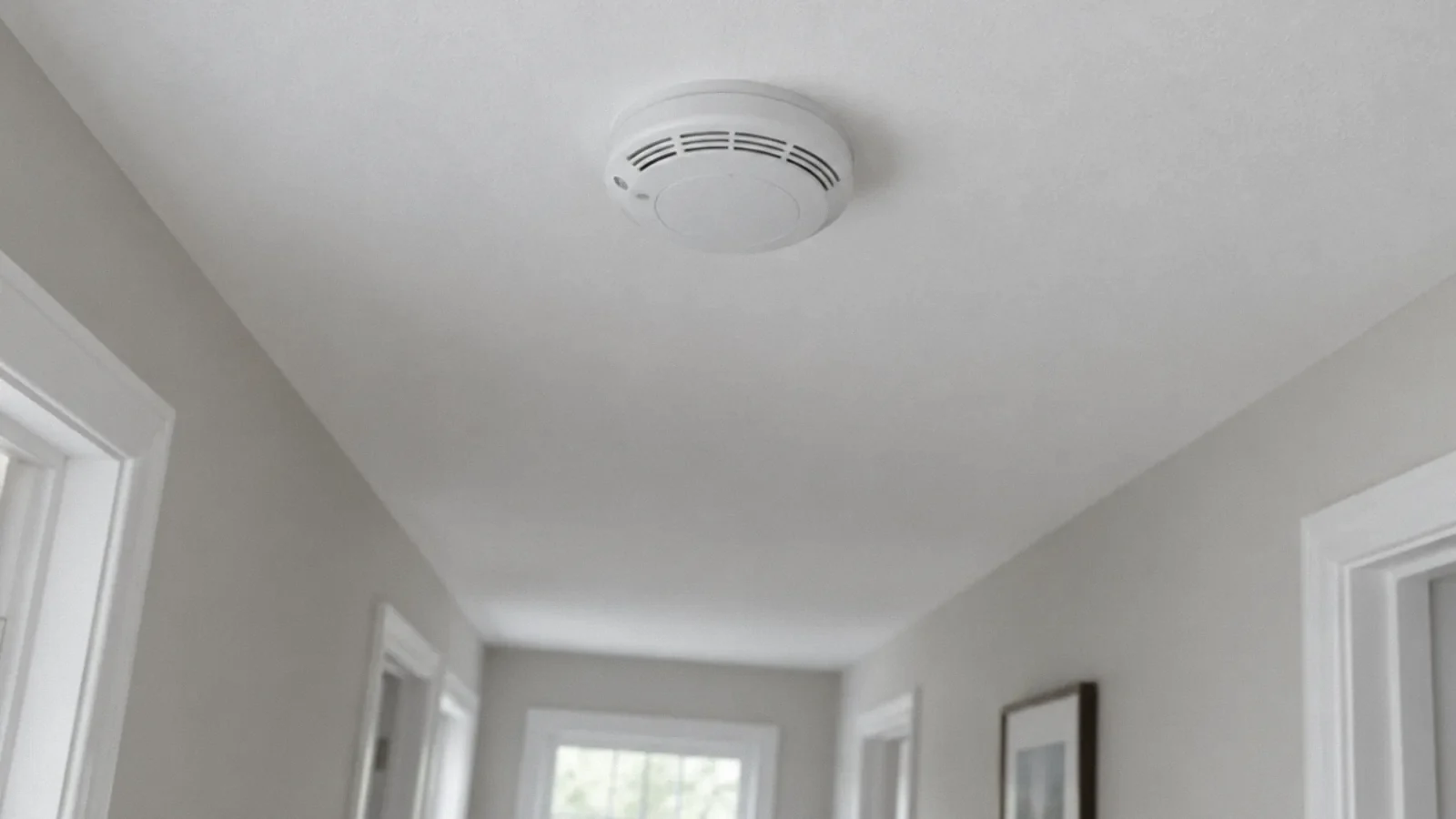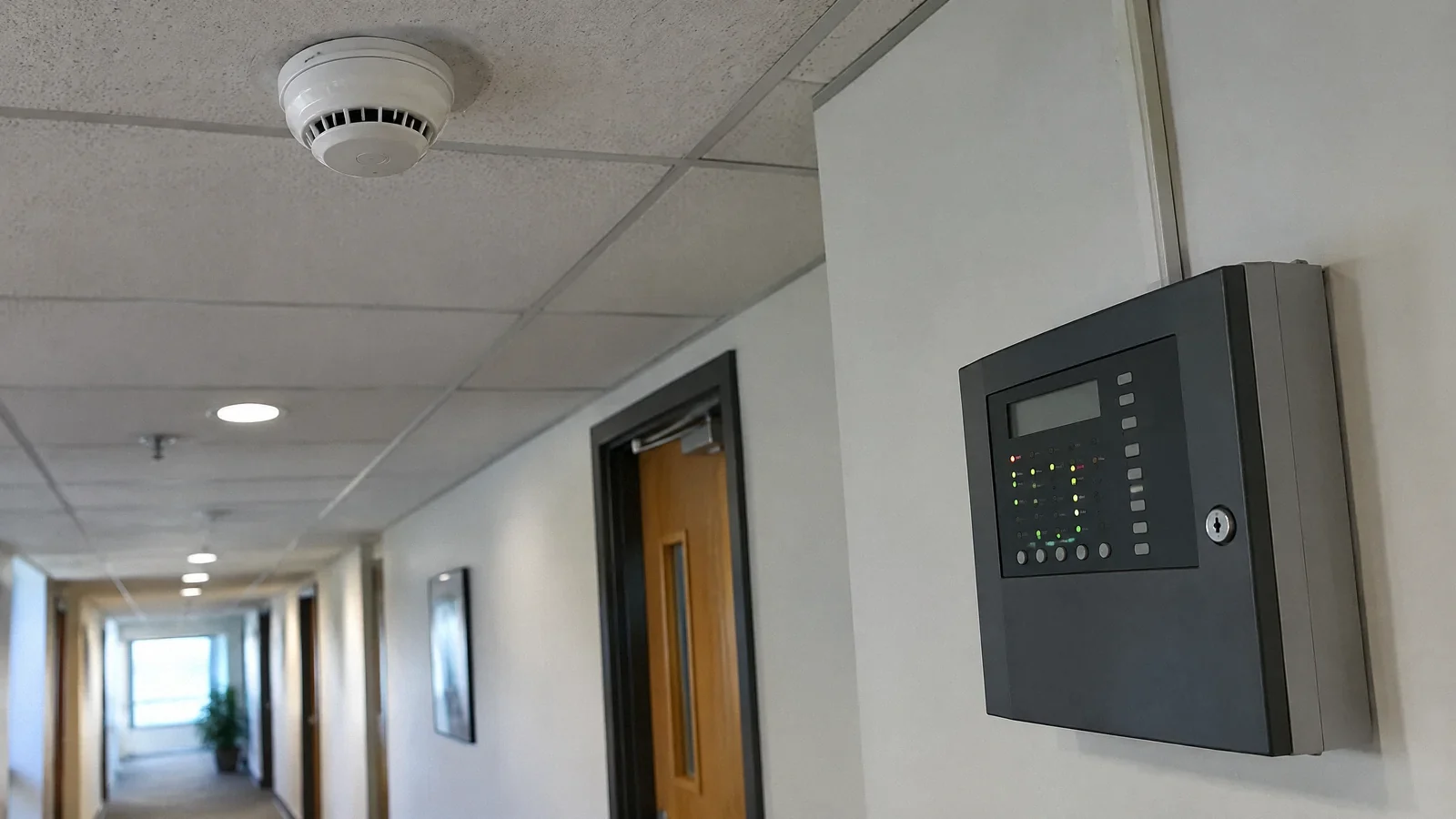
Commercial fire systems may use photoelectric, ionization or other listed detection technologies connected to a control unit. Addressable systems identify individual devices; conventional systems commonly identify a circuit or zone. Selection and placement depend on the building and applicable requirements.
A detector is one part of a system
A commercial smoke detector senses smoke and communicates with a fire alarm control unit. The system may also include manual pull stations, heat detectors, sprinkler water-flow switches and notification appliances such as horns, strobes or speakers. The detector alone does not necessarily provide all occupant notification or summon the fire department.
A standalone smoke alarm combines sensing and local notification in one unit; it should not be assumed interchangeable with a detector designed for a listed building fire alarm system. The required arrangement depends on occupancy, building design, adopted codes and the authority having jurisdiction. Ask a qualified fire alarm designer and the local fire authority about the actual building.
Photoelectric and ionization sensing
Photoelectric detectors use light and a sensing chamber to detect smoke particles; ionization detectors respond to changes in an electrically charged sensing chamber. The U.S. Fire Administration describes both as fundamental smoke-sensing methods. Their response can differ with the characteristics of a fire and the detector design, so a label alone is not a complete basis for selecting or locating a device.
Some listed devices combine sensing methods or use multiple criteria. Product listings, manufacturer instructions and the approved system design govern compatibility and placement. A commercial kitchen, dusty workspace or high-ceilinged area may present conditions that require a different design approach; do not disable a detector to deal with nuisance signals.
Addressable and conventional systems
In an addressable system, each compatible device has an identifier that the control unit can translate into a specific location. This can help responders and service personnel find an initiating device or trouble condition, provided the system is programmed and documented accurately. The U.S. Fire Administration illustrates an address identifying a particular room.
A conventional arrangement commonly groups devices on circuits associated with zones. The control unit can identify the affected zone, while the exact device may need further investigation. A zone need not be an entire floor; designers can divide the building differently. Neither architecture automatically makes a building compliant or guarantees a faster evacuation.
Other detection approaches
Depending on the occupancy and approved design, a system may use beam detectors across a large space, aspirating systems that draw air to a detector, or other listed devices suited to a specific environment. A heat detector responds to temperature conditions rather than smoke and may be appropriate for particular applications, but it is not automatically a substitute wherever smoke detection is required.
Duct smoke detectors serve a specific role in an HVAC system and should not be assumed to replace required open-area detection. The designer must consider ceiling height, airflow, obstructions, expected hazards and the manufacturer’s installation instructions. Ask how the selected devices are integrated with notification, monitoring and any building controls.
Choose for the actual occupancy
A small office, warehouse, hotel and industrial process can have very different hazards and regulatory requirements. Review the occupancy classification, floor plan, ceiling configuration, normal dust or vapor, sleeping occupants and any proposed changes to the space. A tenant improvement can affect an existing system even if the control panel remains in place.
The adopted fire and building codes, referenced standards and local amendments vary by jurisdiction. The authority having jurisdiction may review plans and acceptance tests. Do not assume that a detector count, spacing rule or brand choice from another building is sufficient for yours. Obtain a documented design from qualified professionals.
Compatibility, power and notification
A detector must be compatible with the control unit and the approved system. A replacement with the same physical shape is not necessarily an approved substitute. Discuss primary and standby power, supervision of faults, monitoring arrangements and how a signal reaches occupants and responders. The answer depends on the design and applicable requirements.
Notification must serve the people who use the building, including occupants who may need visual or other accessible alerts. Fire alarm components and building functions can interact, so changes should be coordinated with the responsible system professional and local authority. Never disconnect a device simply to silence a trouble signal.
Inspection, testing and nuisance signals
Keep the system operating and arrange inspection, testing, maintenance and cleaning by trained personnel under the applicable requirements and manufacturer instructions. OSHA’s fire detection guidance describes maintaining applicable workplace systems in working condition and using trained people for servicing and testing. Keep records and correct deficiencies promptly.
Repeated unwanted alarms need investigation. Dust, steam, airflow, device location, maintenance or equipment faults may be involved, but the cause cannot be determined from a chirp alone. Follow the building’s emergency procedure for an alarm; a qualified technician can investigate trouble or supervisory signals without leaving occupants unprotected.
Questions for the designer or service company
Ask which code edition and local amendments apply, which spaces require detection, what each device is listed to do and how its location will be shown at the panel. Request the plans, device schedule, compatibility information, testing records and instructions for reporting an impairment. Clarify responsibilities among owner, tenant, monitoring provider and service company.
For a beeping standalone alarm in a home, the separate smoke-alarm beeping guide covers common signal categories and immediate steps. A commercial panel can show alarm, supervisory or trouble conditions; use the site procedure and trained service provider rather than guessing that all beeps mean a low battery.
Your next-step checklist
- Identify the occupancy and authority having jurisdiction.
- Review approved plans, device listings and panel compatibility.
- Compare detection methods with site conditions.
- Confirm occupant notification, power and monitoring.
- Maintain inspection, testing and impairment records.
Related questions
What is the difference between addressable and conventional systems?
An addressable system can identify an individual compatible device; a conventional system commonly identifies the circuit or zone. The approved design determines the information available.
Is a smoke detector the same as a smoke alarm?
A system detector communicates with a control unit; a standalone smoke alarm combines a sensor and local notification. They are not automatically interchangeable.
Can a heat detector replace a required smoke detector?
Not automatically. The applicable code, approved design, listing and local authority determine what is permitted.
Who should service a commercial fire detection system?
Use trained personnel familiar with the system, applicable requirements and manufacturer instructions. Coordinate impairments under the building’s procedure.
Sources & context
Public guidance supports the principles in this article. The practical questions and examples are editorial interpretation, not a site assessment or a coverage decision. State-specific rules apply only where identified.
- U.S. Fire Administration: Fire Inspection Principlesfederal fire service training
- U.S. Fire Administration: Fire Protection Systemsfederal fire service training
- OSHA: Fire Detection Systemsfederal workplace safety guidance
- NFPA: Smoke Alarmsstandards organization guidance