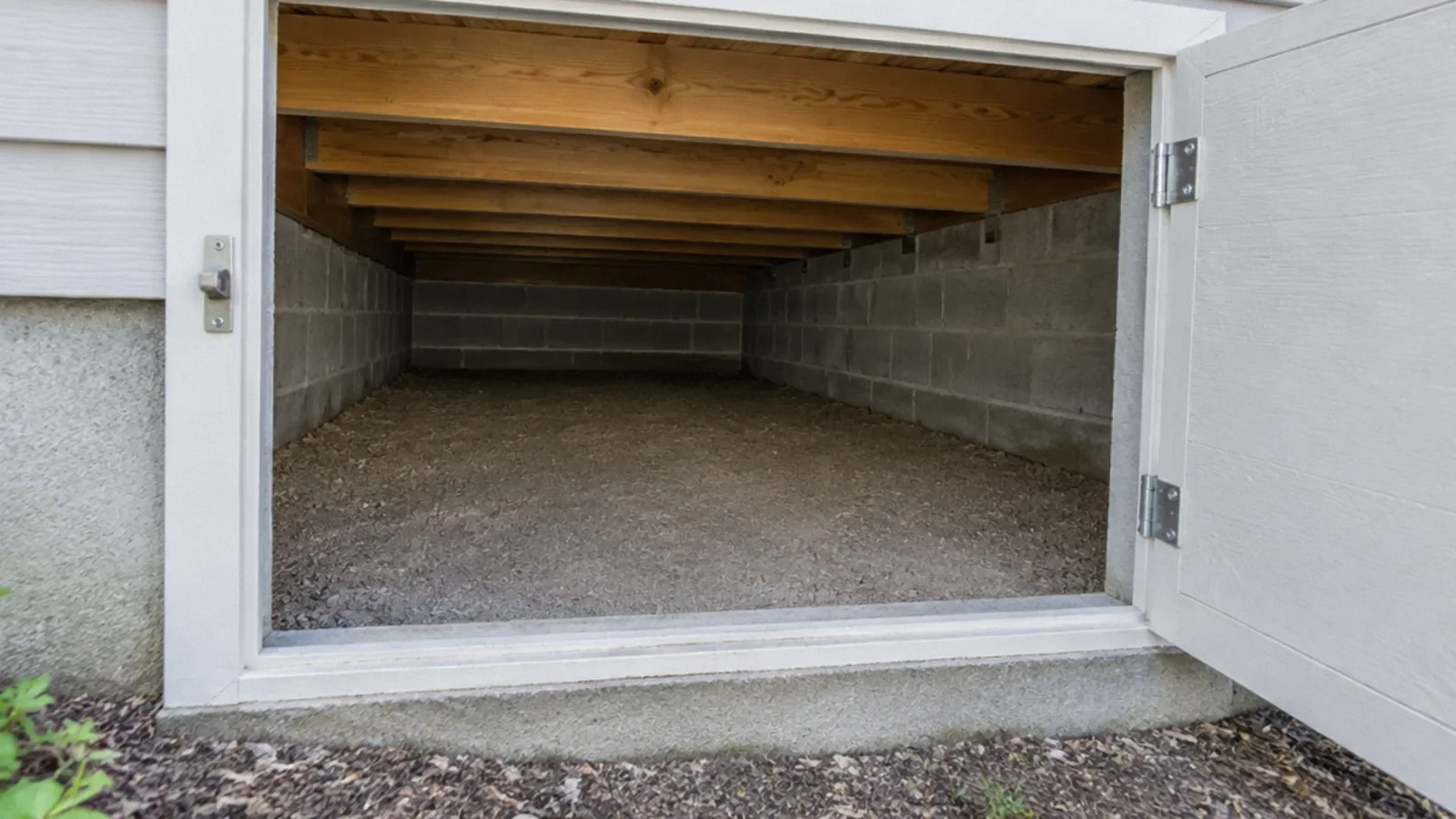
Do not enter a crawl space with standing water, electrical hazards, unstable framing or suspected contamination. An experienced professional can identify the moisture source, assess affected materials and propose a cleanup plan. Mold color alone does not establish the species or the safety of the space; correcting the moisture problem is essential.
Start with safety and access
A crawl space can contain exposed wiring, sewage, pests, low overhead clearance and structural hazards in addition to mold. Standing water or damaged framing makes entry especially risky. Keep people and pets away and do not crawl into an uncertain space just to take a closer photograph.
According to CDC guidance, people with mold allergies, asthma, chronic lung disease or weakened immune systems should not perform mold cleanup. Children should not take part in disaster cleanup. If anyone has health concerns about exposure, seek medical advice rather than trying to diagnose the risk from a photograph.
Find the source of moisture
Water can enter from a plumbing leak, surface runoff, groundwater or a humid environment that allows condensation on cooler materials. Bare soil can add moisture to the air. An inspector should investigate the actual pathway and determine whether water is still entering.
Note whether the problem follows rain, fixture use or a change in equipment. A contractor can assess drainage, pipe connections, soil coverings and building materials as appropriate. Treating visible growth without stopping the moisture source leaves the conditions for growth to return.
What white growth may mean
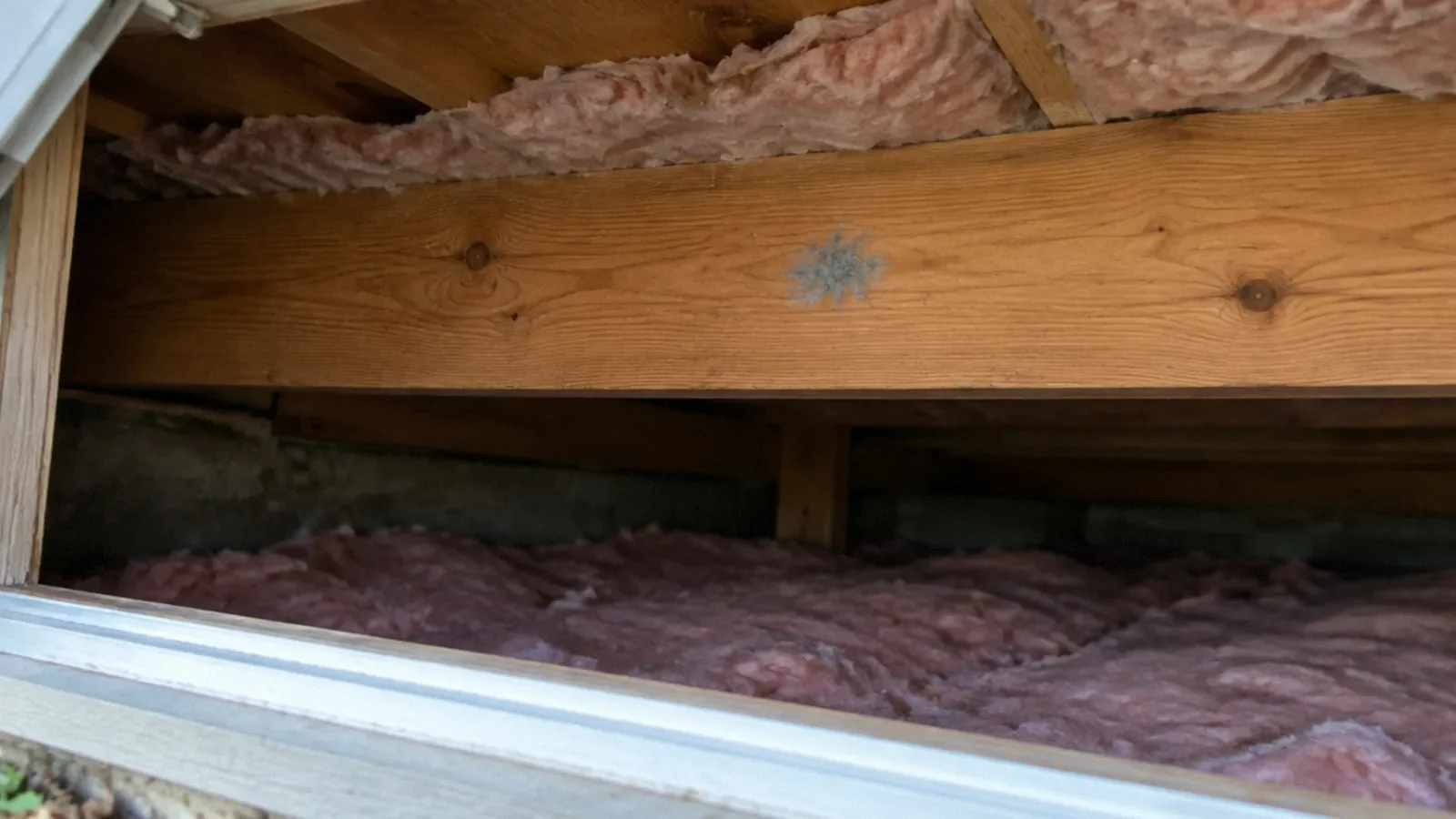
White or pale material on wood, soil coverings or masonry is not automatically a particular mold. Mineral deposits, dust and other materials can look similar. Color by itself does not identify a species or establish how much material is affected.
If visible growth or a musty odor accompanies a moisture problem, arrange an assessment. EPA notes that sampling is usually unnecessary when mold is visible; a qualified investigator can explain whether a specific test would answer a useful question. Do not disturb a suspect patch to collect a sample.
Evaluate the affected materials
Wood framing, insulation, soil coverings and masonry have different properties and require different decisions. Wet or damaged porous material may not be recoverable through surface cleaning. A structural member that appears deteriorated needs evaluation by someone qualified to assess its strength and support.
Ask how the contractor determined the boundaries of the affected area and whether concealed or inaccessible spaces remain. Photographs and a written scope are more useful than a promise to spray the entire space. The plan should explain cleanup, removal, moisture correction and verification.
How professional cleanup is planned
A remediation plan should address safe access, worker protection, containment where appropriate, cleaning or removal of affected material and control of dust. The method depends on the material, extent, access and whether the water is contaminated. A crawl space may need a more cautious plan than a small visible patch on a hard surface.
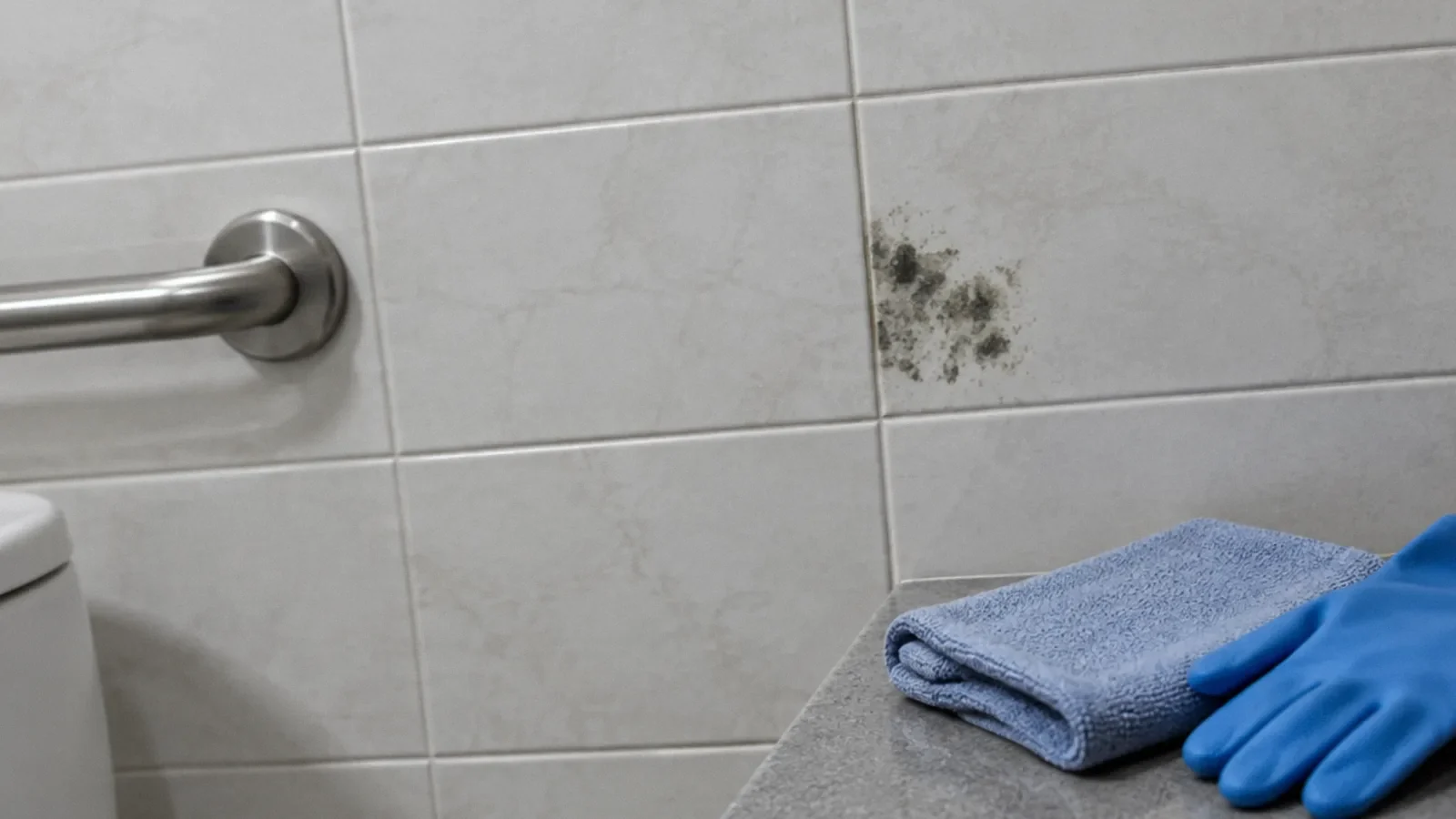
The CDC recommends protective equipment for mold cleanup, including at least a NIOSH-approved N95 respirator, gloves and appropriate eye protection. Protective equipment alone does not make a hazardous crawl space safe to enter. Do not mix bleach with other cleaners or use a chemical fog as a substitute for removing contamination.
Drying and long-term moisture control
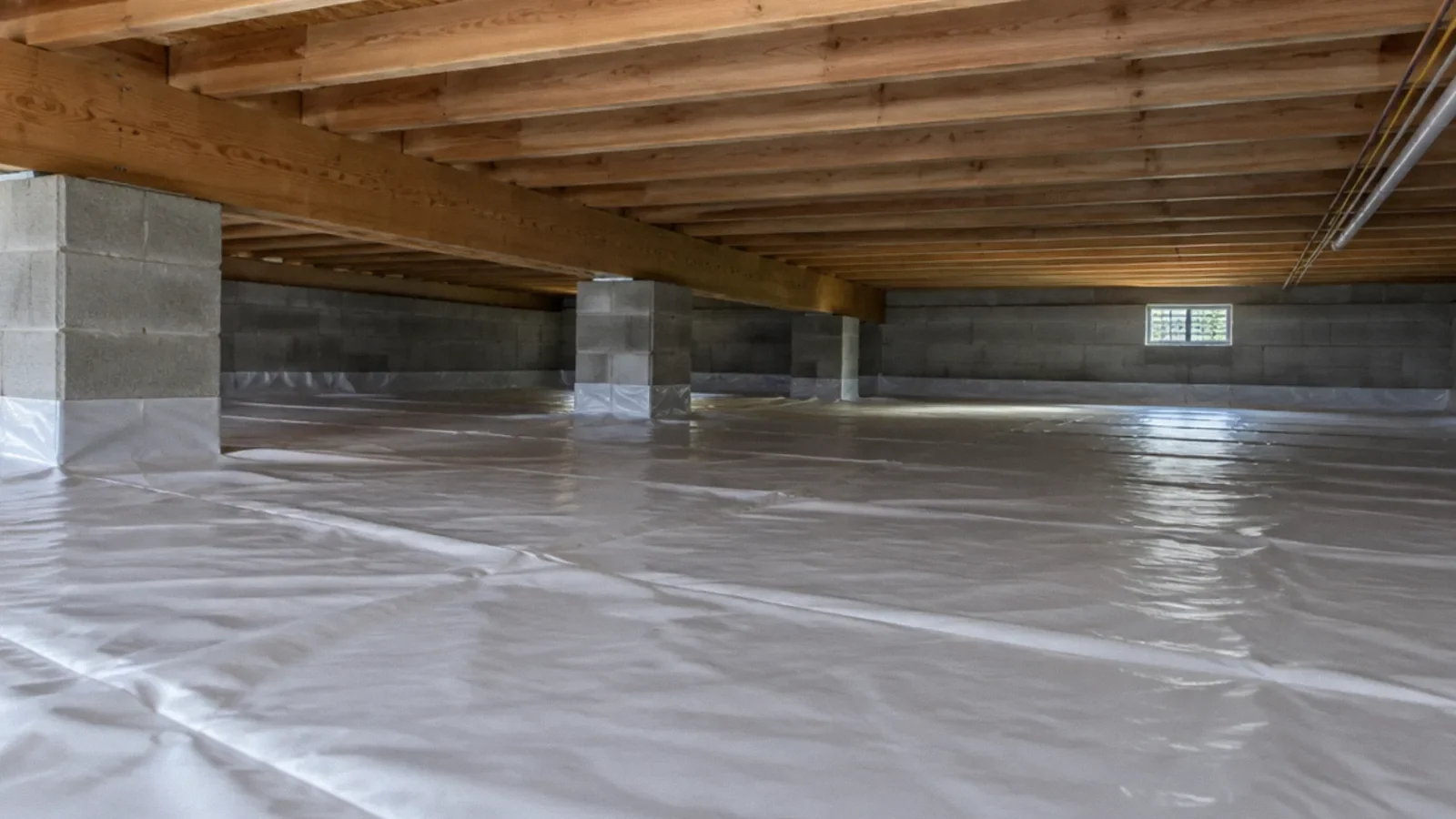
After the water source is addressed, affected materials and the space need an appropriate drying plan. Drainage changes, soil covering, air sealing or equipment may be considered depending on the building and climate. No single fan, coating or encapsulation product solves every cause of moisture.
Ask how the work will be checked and what locations will be measured. A reading at the hatch cannot describe every concealed area. A qualified professional should explain the limits of access, the basis for their drying assessment and any remaining uncertainty.
Questions before signing a contract
Request a written scope identifying the suspected source, affected materials, protection measures, work sequence and cleanup. Ask who will repair the leak or drainage problem, whether that work is included and how changes will be authorized. Find out whether structural evaluation or another specialist is needed.
Ask for photographs before and after, a clear explanation of any sampling and the conditions that would justify additional work. Compare the scope of proposals instead of relying on a claim that a treatment kills every spore. Mold spores are common in the environment; the practical goal is to correct growth and moisture.
Preventing a recurrence
Maintain gutters, drainage and plumbing where safely accessible, and investigate new odors, leaks or water after rain. Keep a record of repairs and inspections. A vapor barrier or other improvement should be designed for the particular construction, not installed over active pooled water without an assessment.
If the space floods again, keep clear of electrical and sewage hazards and arrange qualified drying and cleanup. Review how water reached the area before rebuilding or replacing insulation. Prevention is a continuing building maintenance task rather than a one-time chemical application.
Joists, decay and ventilation choices
Surface discoloration on a joist does not establish its strength or prove decay. Softness, crumbling wood, sagging, deformation or suspected damage to a load-bearing member warrants an assessment by a qualified structural professional. Do not probe or enter an unsafe space to test it.
A moisture-control plan must consider the water pathway, climate and whether the crawl space is vented or conditioned. In humid climates outside air introduced through vents can add moisture rather than dry the space. Drainage, soil vapor control, air sealing and conditioning require a design appropriate to the building and local requirements; none replaces repair of active water entry.
Your next-step checklist
- Stay out of an unsafe or flooded crawl space.
- Identify and stop the source of moisture.
- Ask which materials need cleaning, removal or structural assessment.
- Review containment, drying and verification in the written scope.
- Keep repair and inspection records.
Related questions
Is white mold in a crawl space harmless?
Color does not establish what a growth is or whether it is harmless. Have the moisture and affected materials assessed.
Will bleach permanently solve crawl space mold?
No product can compensate for an ongoing moisture source, and a crawl space may contain materials that need different treatment. Never mix cleaners.
Can mold return after cleanup?
Yes. Growth can recur if materials remain damp or water entry continues.
Do I need to test every visible patch?
EPA says sampling is unnecessary in most cases when mold is visible. Ask a qualified investigator whether a test would change a specific decision.
Sources & context
Public guidance supports the principles in this article. The practical questions and examples are editorial interpretation, not a site assessment or a coverage decision. State-specific rules apply only where identified.
- U.S. EPA: Mold and crawl spacesfederal guidance
- U.S. EPA: Is mold sampling necessary?federal guidance
- CDC: Mold cleanup guidelinesfederal health guidance
- Department of Energy: Unvented crawlspacesofficial guidance
- DOE: Crawlspace moistureofficial guidance