Vinegar may be suggested for some small surface-cleaning situations, but its effect depends on the organism, concentration, surface and contact conditions. It is not a reliable way to sterilize a home or fix a moisture problem. EPA recommends removing mold from suitable hard surfaces with detergent and water and drying them; never mix vinegar with bleach.
What vinegar can and cannot tell you
Household white vinegar contains acetic acid, but a bottle’s acidity and the material being cleaned vary. Some extension guidance describes using diluted vinegar for limited household mold cleanup. That does not establish a universal kill rate for every mold, surface or product, nor does it prove that liquid has reached contamination inside porous material.
The claim that vinegar kills all mold spores or permanently solves mold is too broad. Even if a product kills some organisms under particular conditions, the residue and underlying moisture can remain. EPA notes that dead mold can still cause allergic reactions, so affected material must be addressed rather than merely treated with a chemical.
Apple cider vinegar is not a proven universal treatment for household mold, and switching vinegar types does not address hidden moisture or make a porous material cleanable. Follow the surface guidance and focus on removal and drying.
Start with the moisture source
Find and address the leak, condensation or other moisture source before expecting a lasting result. A damp shower joint, a wet wall cavity and a water-damaged carpet require different decisions. Record where the material became wet and whether the problem is still active; a surface treatment cannot repair a leaking pipe.
If the area is extensive, concealed, repeatedly wet or affected by sewage, seek experienced assistance. Avoid opening a suspect wall or disturbing a large area without an appropriate plan. If water is near electrical equipment, stay clear and arrange qualified help before attempting cleanup.
For a small area on a suitable hard surface
EPA recommends scrubbing mold from hard surfaces with detergent and water, followed by thorough drying. Check the material’s care instructions first and use an appropriate cloth or brush. Porous items can be difficult or impossible to clean completely and may need to be removed; adding more liquid may increase moisture inside them.
Choose a method appropriate to the surface and the person doing the work. CDC recommends gloves, eye protection and an N95 respirator or better for mold cleanup. It advises people with asthma, mold allergies, chronic lung disease or weakened immune systems not to take part in cleanup.
Never mix vinegar and bleach
Vinegar is an acid. Mixing it with chlorine bleach can release dangerous chlorine gas. Do not combine the products in a bottle, bucket or on a surface, and do not add another cleaning product to a mixture. Follow the product label and provide ventilation when using a cleaner.
If fumes are present, leave the area and get to fresh air. For significant symptoms or a medical emergency, contact emergency services; contact poison control for advice about a specific exposure. Do not stay in the room to experiment with another chemical.
Vinegar versus bleach: what matters
Vinegar and chlorine bleach are different chemicals and must never be mixed. Evidence and product labels do not support a universal claim that one household liquid is the best solution for every mold problem. EPA emphasizes physically cleaning mold from suitable hard surfaces and fixing the water problem; some porous materials may need removal.
Bleach is not routinely recommended by EPA as a mold cleanup practice, and a product’s suitability depends on the material, label and conditions. Do not use either chemical to cover an active leak or assume a color change proves the material is clean. Extensive or concealed contamination needs experienced assessment.
Does vinegar work on black mold?
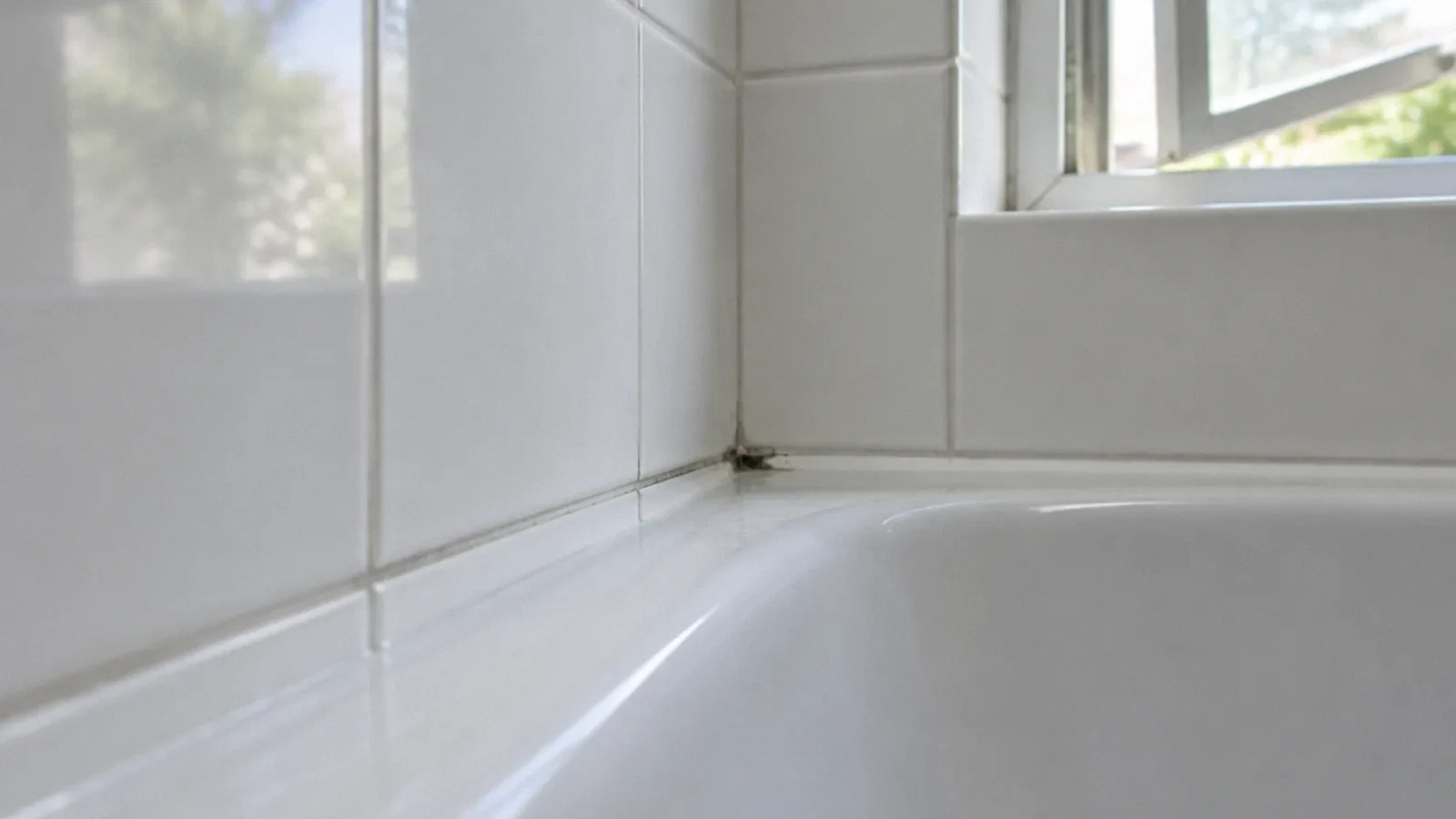
A dark patch cannot be identified as a particular species or rated for toxicity by color. The same practical questions apply regardless of color: what is wet, how extensive is the affected area, which materials are involved and who might be exposed? A photograph cannot answer all of them.
Do not depend on vinegar, bleach or a home test kit to determine whether a shower or wall is safe. Visible growth and the water source need attention. The separate article on shower mold explains how to think about symptoms and when to seek help.
Wood, grout and other materials
Vinegar can damage or dull certain finishes and acid-sensitive surfaces, including some natural stone. Check the surface manufacturer’s instructions and avoid assuming that a household ingredient is safe for every material. If a cleaner is appropriate, use it only as directed and dry the area afterward.
A porous or water-damaged material may have growth beyond the visible surface. Do not soak wood, drywall or insulation in an attempt to reach it. A material that remains wet, soft or visibly affected after appropriate cleaning may need professional assessment or removal.
How long should vinegar stay on mold?
There is no evidence-based universal contact time that guarantees all household mold will be killed or removed. Concentration, organism, surface and access all affect results. Leaving a surface wet overnight can also prolong moisture exposure; avoid treating a longer soak as a substitute for removal and drying.
If you use a product labeled for the job, follow its label and the surface manufacturer’s directions, including any contact and rinse instructions. EPA’s basic approach to suitable hard surfaces is physical cleaning with detergent and water followed by drying, not a promise of sterilization.
What to do if the problem returns
Recurring staining or a persistent musty smell after cleaning can indicate that the moisture source persists or that affected material was missed. Keep photos and repair records and arrange an inspection rather than repeatedly applying increasingly strong chemicals. Color or odor alone does not establish how far hidden damage extends.
Ask any professional to explain the likely water source, the scope of cleaning or removal and how the area will be dried and checked. The broader mold-remediation guide explains those steps and questions to ask before approving work.
What counts as a successful cleanup
The relevant result is removal of growth and correction of the water problem, not merely a claim that a product kills mold. Even dead mold can cause allergic reactions. EPA does not recommend routine bleach use for mold cleanup; never mix bleach and vinegar because the combination can release dangerous gas.
Material matters: a hard, cleanable surface is different from wet porous drywall or insulation. For extensive growth, sewage, recurring moisture or a health concern, arrange an appropriate assessment rather than extending a household cleaning experiment.
Your next-step checklist
- Identify and correct the moisture source.
- Use a suitable cleaning method for the material; dry thoroughly.
- Never mix vinegar with bleach or other cleaning products.
- Keep people in CDC risk groups out of mold cleanup.
- Seek experienced help for extensive, concealed or recurring damage.
Related questions
Does vinegar kill all mold spores?
No universal claim is supported for all organisms and surfaces. Removing affected material and correcting moisture are more useful than attempting to sterilize the home.
Can I leave vinegar on mold overnight?
A longer soak does not guarantee removal and can leave the material wet. Follow product and surface instructions and dry the area promptly.
Can I mix bleach and vinegar to kill mold?
No. Bleach and vinegar can release dangerous chlorine gas. Never mix them.
Does vinegar work on dark mold?
Color cannot identify the species or determine whether any product will work. Address visible growth and moisture using a method suitable for the material.
Does apple cider vinegar remove mold?
Its effect depends on the product, surface and organism; there is no universal guarantee. EPA recommends physically cleaning suitable hard surfaces with detergent and water and drying them.
Is bleach or vinegar better for mold?
There is no universal winner for every material or situation. Never mix them; follow applicable product instructions, physically address growth and correct the moisture source.
Should I spray vinegar on a moldy bathroom ceiling?
Do not spray overhead or mix vinegar with bleach. Check the material and moisture source; follow EPA guidance for small suitable hard surfaces and seek help for damaged porous or hidden material.
Sources & context
Public guidance supports the principles in this article. The practical questions and examples are editorial interpretation, not a site assessment or a coverage decision. State-specific rules apply only where identified.
- US EPA: Should I use bleach to clean up mold?official guidance
- US EPA: Mold cleanup in your homeofficial guidance
- Oregon State University Extension: Mold cleanupuniversity extension guidance
- University of Georgia Extension: Removing mold in your homeuniversity extension guidance
- CDC: Mold cleanuppublic health guidance