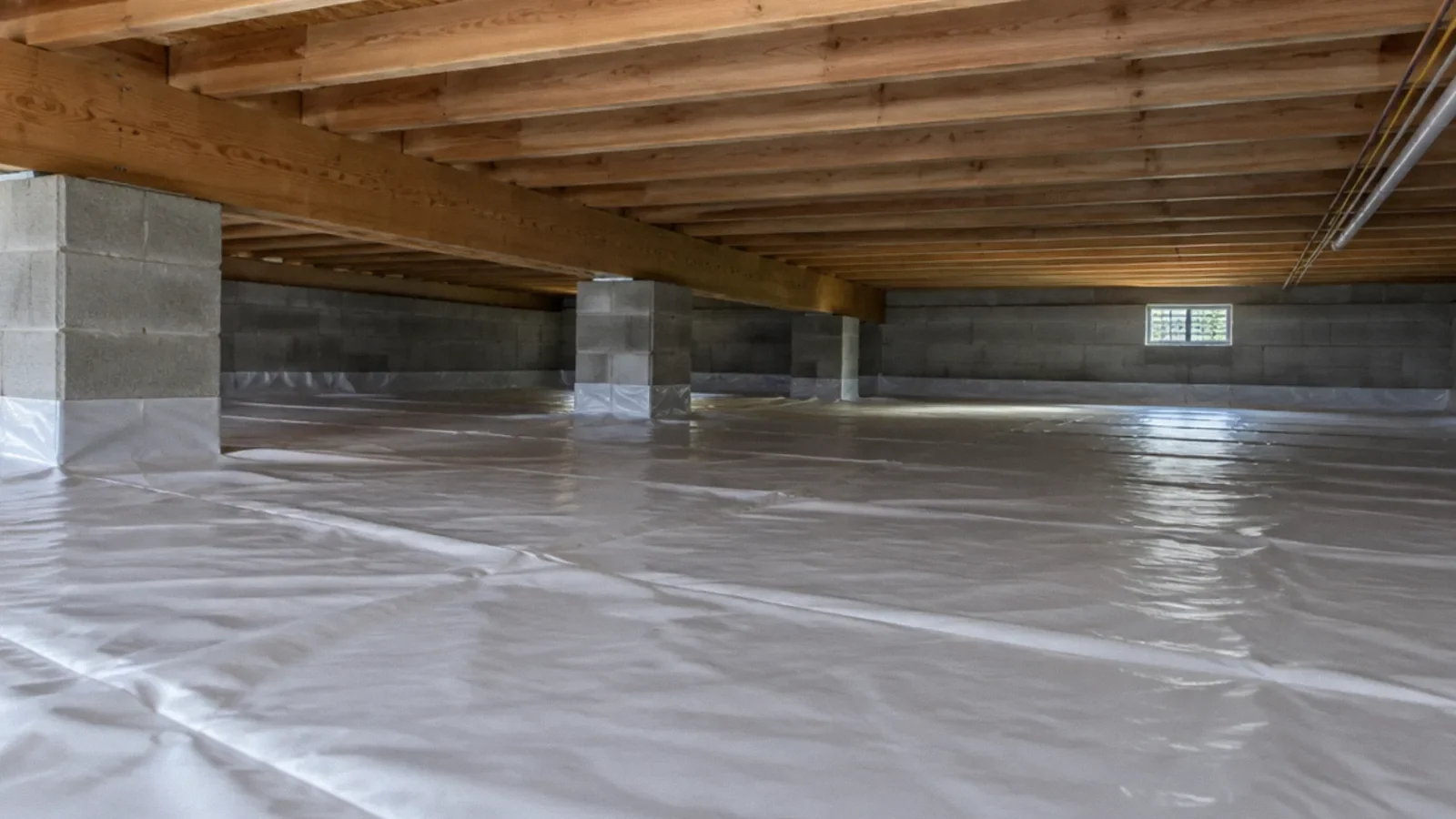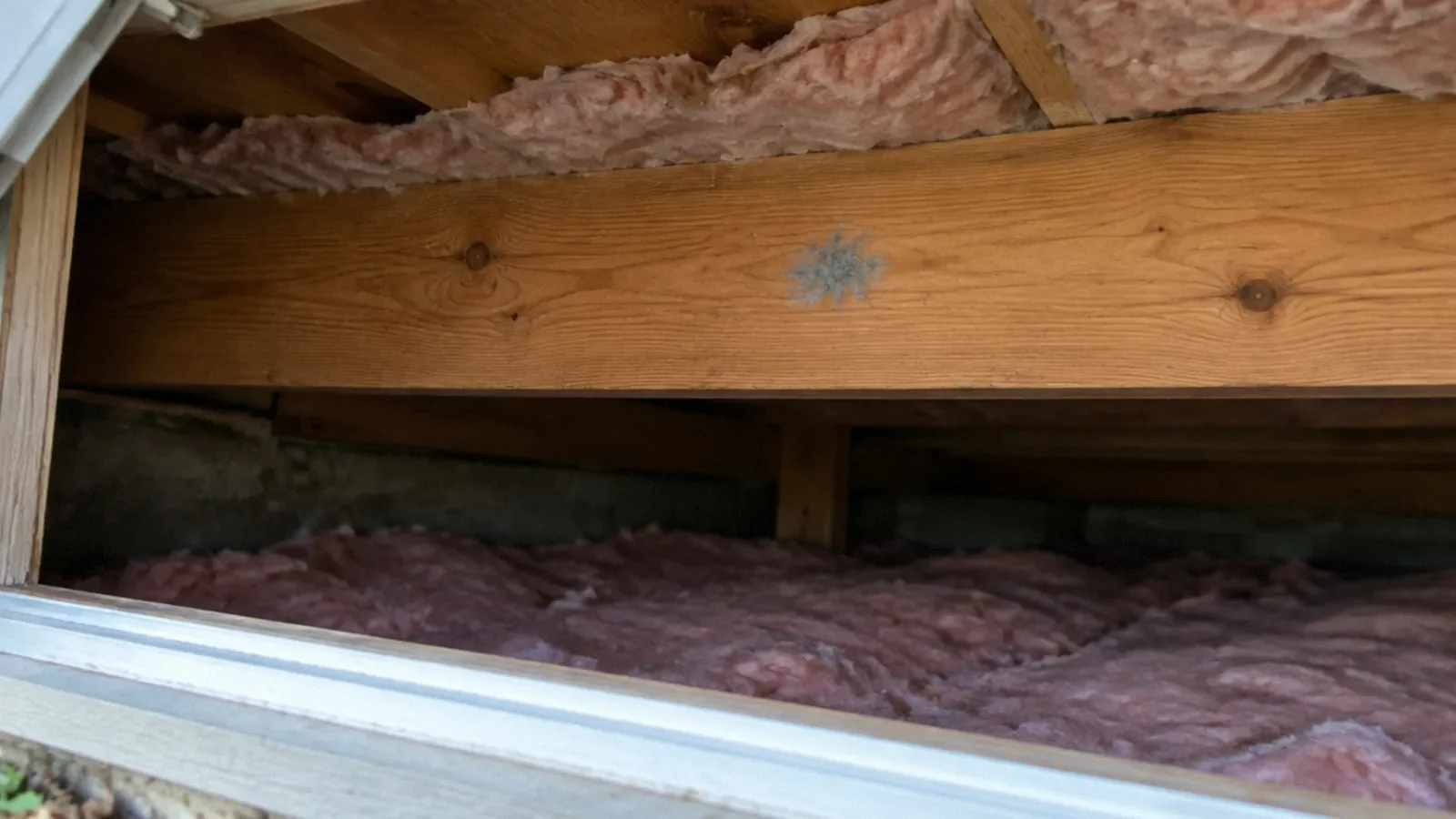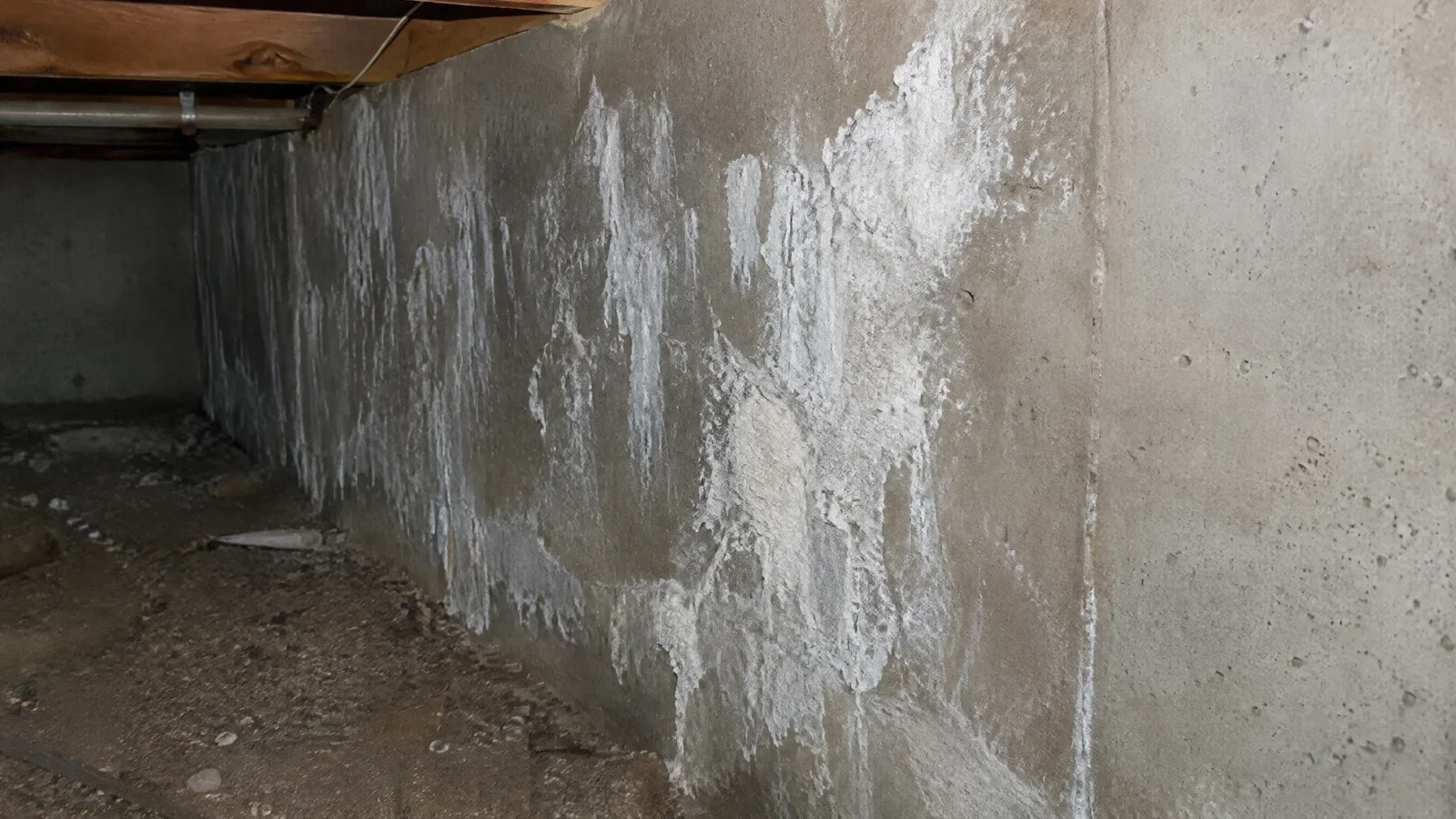
White powdery deposits on masonry may be efflorescence: mineral salts left when moisture moves through concrete or masonry and evaporates. The deposit is a clue to moisture movement, not proof of mold or a structural diagnosis.
How deposits form
Water moving through concrete, mortar or masonry can carry soluble salts to the surface. As the water evaporates, it can leave a pale powder or crystalline residue. The residue itself is not the whole problem: it points to a moisture pathway that may still be active or may reflect an earlier event.
The Department of Energy lists efflorescence among signs of moisture in a crawl space or basement. Its presence does not identify the precise source, tell you how much water entered, or establish whether there is concealed damage. Deposits can recur after cleaning if water continues to move through the wall.
Do not identify mold by color
White material on a wall is not automatically efflorescence. Dust, construction residue and microbial growth can look similar, and more than one material may be present. A picture or color alone cannot reliably distinguish them. Avoid disturbing an uncertain deposit to make a diagnosis, especially if the area is damp or there is an odor.
If there is visible suspected mold, focus on moisture correction and appropriate cleanup. If the material is extensive, inaccessible, recurring or associated with deteriorating wood or insulation, arrange an assessment. A professional can examine the context and recommend whether further investigation is needed; sampling is not automatically necessary for every mark.
Look for the water route
From safe, accessible locations, note the deposit’s position relative to the grade, downspouts, wall cracks and plumbing. A band low on a wall, for example, tells an inspector where to look but does not establish a cause. Water may enter from roof runoff, poor surface drainage, groundwater, a plumbing leak or another pathway.
Keep a dated photograph and note whether the mark grows after rain or appears when an appliance is used. Look outdoors for overflowing gutters, blocked downspouts, low spots and water directed toward the house. The Department of Energy recommends managing roof water and surface drainage away from foundations. A contractor should identify an appropriate discharge point for the site and local requirements.
Crawl spaces have access hazards
Do not enter a cramped or unassessed crawl space to inspect a stain. Standing water, exposed wiring, damaged framing, sharp objects, pests, contaminated material and limited exits can make entry dangerous. If there is water near electrical equipment, stay away and arrange for a qualified electrician or utility to make the area safe.
A building or moisture professional can inspect accessible areas and explain access limitations. Ask whether the assessment includes plumbing, ground cover, drainage, wood and insulation, and request photographs where safe. If destructive opening is proposed, establish who will do it, how the opening will be restored and how unexpected conditions will be handled.
Cleaning versus correcting the cause
Removing a mineral deposit can improve appearance but does not stop the water that brought salts to the surface. Cleaning choices depend on the masonry and its condition. Avoid applying acid, bleach, a pressure washer or a coating to an unidentified deposit as a first response: those actions can damage surfaces, create exposure or conceal evidence of continuing moisture.
A professional may recommend cleaning after the moisture source has been addressed and the material has dried appropriately. Ask whether loose or damaged masonry needs separate repair. If a coating or membrane is proposed, request an explanation of the entire drainage and drying strategy, not simply a promise that the wall will never become wet.
When the wall needs closer attention
Escalate the inspection if you see active seepage, standing water, crumbling masonry, displaced or widening cracks, bowing, damaged framing or recurring deposits. A structural engineer can evaluate movement or material deterioration; a waterproofing or drainage contractor can evaluate water management. One observation alone does not establish that a foundation is failing.
Keep the scopes separate when requesting estimates. A written proposal should identify the suspected source, what is known and unknown, access requirements, repair method, drainage destination and how performance will be checked. A dry surface on one visit does not prove the issue is resolved during wet weather.
Check after the repair
After correcting the identified source, document the original area and recheck it through relevant weather or plumbing use. Some existing salts may remain even after the source is controlled; new or expanding deposits, dampness and odors deserve follow-up. Do not judge the outcome only by whether a fresh coating looks clean.
Maintain gutters and surface drainage as part of routine upkeep, and check for new plumbing leaks or condensation. If a professional installed a ground cover, drain or pump, request the manufacturer’s care instructions and a clear maintenance schedule. Those measures address different moisture pathways and are not interchangeable.
Also ask whether past repairs or changes in exterior grading may have altered the path water takes around the foundation. Those details can help direct the investigation.
Your next-step checklist
- Photograph deposits and note their location and changes.
- Stay out of unsafe or flooded crawl spaces.
- Check accessible exterior drainage and plumbing for clues.
- Arrange a moisture assessment for recurring or extensive deposits.
- Monitor after repair through the conditions that previously caused wetting.
Related questions
Is efflorescence mold?
Efflorescence is a mineral deposit. A white mark cannot be reliably identified from its color alone, and mold may coexist with moisture-related deposits.
Can I paint over it?
Painting without correcting the source can hide ongoing moisture. Have the substrate and repair strategy evaluated before applying a coating.
Does it mean the foundation is failing?
Not necessarily. It indicates possible moisture movement; structural deterioration, movement or bowing requires its own assessment.
Sources & context
Public guidance supports the principles in this article. The practical questions and examples are editorial interpretation, not a site assessment or a coverage decision. State-specific rules apply only where identified.
- DOE: Midwest Weatherization Best Practicesfederal guidance
- DOE: Foundation Drain, Gutters and Downspoutsfederal guidance