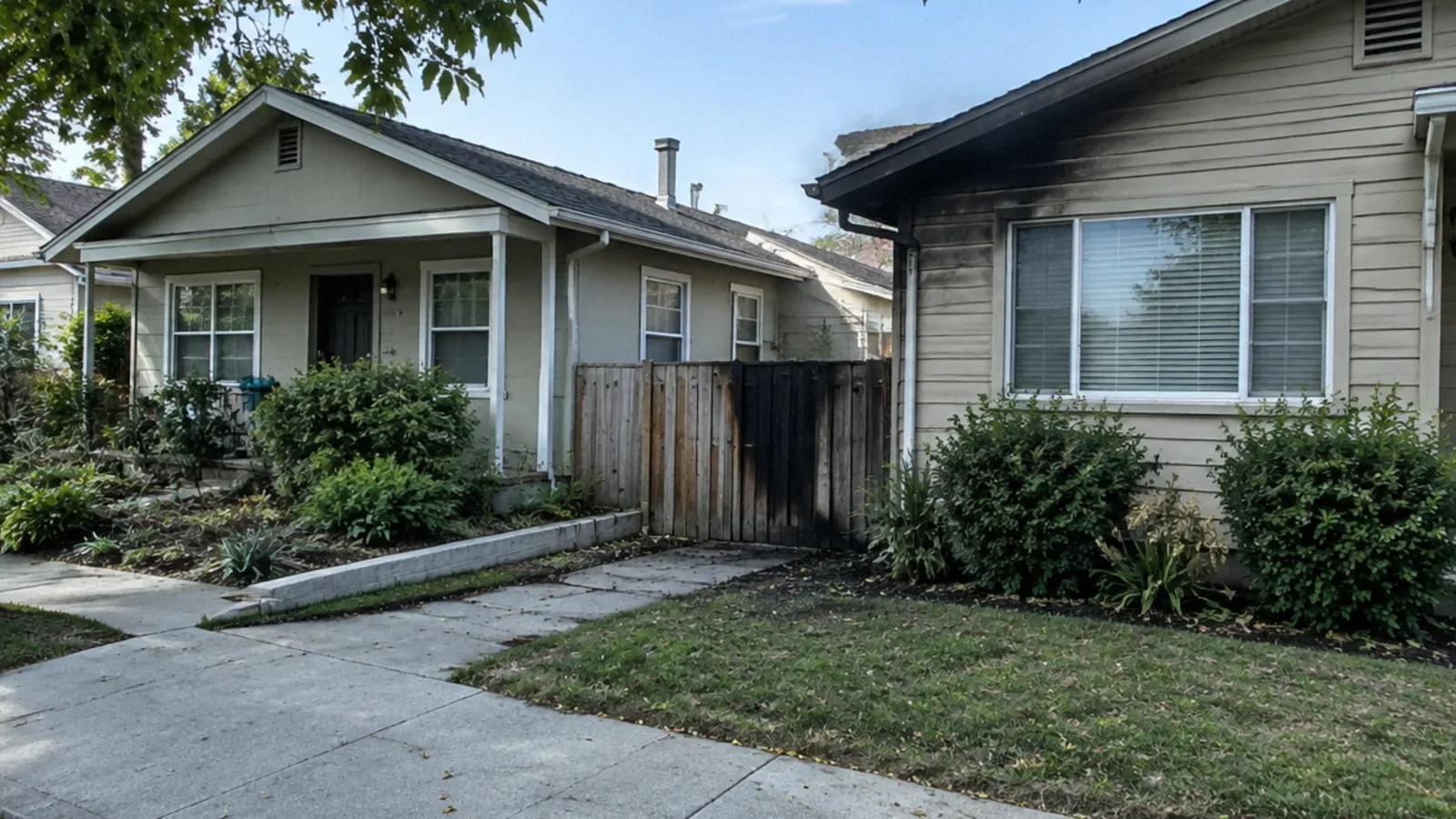
A fire spreading from one property to another does not by itself establish who is legally responsible. A neighbor may report damage to their own insurer, while the person alleged to be responsible can promptly notify their liability insurer. Coverage, defense and liability depend on the facts, policy terms and applicable law.
Put safety and emergency response first
If fire, smoke or another immediate danger is present, leave, warn others only if safe and call 911 from a safe place. Do not return to either property until responders authorize entry. Fire-damaged structures, utilities and debris can remain hazardous after flames are out.
Once people are safe, the occupants of each affected property should contact their insurer or property manager. Emergency mitigation and an insurer’s inspection are different steps; follow the insurer’s reporting instructions without delaying necessary safety measures.
A fire crossing a boundary does not settle fault
The location where a fire began and the question of legal responsibility are not the same. Investigators may need to determine the origin and cause, and responsibility can depend on conduct, evidence and applicable law. Do not assume a neighbor owes payment simply because the fire spread from their property.
Likewise, a person whose property was the starting point should not assume they have no potential responsibility. Share accurate observations with the appropriate insurer or investigator, distinguish what you saw from what you were told, and avoid speculation while the cause is being examined.
Property coverage and liability coverage differ
Property coverage addresses damage to the insured’s own building or belongings when the loss is covered. Liability coverage can address covered claims involving alleged responsibility for harm to others. California’s insurance department describes these as separate parts of a typical homeowners policy; the policy and endorsements control the actual terms.
For example, a neighbor might report smoke and fire damage to their own property insurer. A person facing a claim from that neighbor should report it to the insurer that provides their applicable liability coverage. The insurers may investigate separately; neither route guarantees payment.
Does liability insurance cover fire damage?
A homeowners or renters liability policy may respond to a covered claim for another person’s property damage, subject to its wording, exclusions and limits. NAIC describes personal liability as protection involving injury to others or damage to their property. Whether a particular fire claim is covered depends on the circumstances and insurer’s review.
Some policies can provide a defense as well as payment for covered damages, subject to their terms. Intentional acts, business activities or other circumstances may be excluded. Ask the insurer in writing which provisions apply; do not assume all policies include the same protection.
Check policy type and limits
The California Department of Insurance says the basic California FAIR Plan property policy does not provide liability coverage. A separate policy or endorsement may be relevant, depending on what was purchased. Read the declarations and complete policy and ask the insurer or licensed agent to explain any gap.
Limits, deductibles, defense provisions, named insureds and exclusions vary. A landlord, tenant, contractor or business may have different coverage and duties. An umbrella policy, if purchased, can have its own terms and underlying requirements. Keep a copy of each relevant notice and policy.
Document both the loss and communications
When responders permit access, photograph affected areas and make an inventory without disturbing evidence or entering unstable structures. Preserve relevant receipts, communications, photographs and inspection reports. Ask the fire department how to obtain its incident report; a preliminary report may not resolve the cause.
Report the incident promptly under the applicable policy and ask how to submit documents. If you receive a demand letter, claim notice or court papers, send them to the potentially responsible insurer promptly and follow its instructions. A lawyer can explain legal deadlines and duties in the relevant jurisdiction.
Discuss repairs and recovery carefully
An affected owner can ask their insurer about an inspection, emergency protection, temporary accommodation and coverage for the building or contents. Keep emergency work and permanent reconstruction distinct in records, and request an itemized written scope. Do not dispose of potentially important evidence before asking how it should be documented, unless disposal is necessary for safety.
An insurer may later seek recovery from another party, but the decision and any recovery depend on the facts and coverage. Do not promise reimbursement, sign a release or agree to a final settlement without understanding its consequences. Seek appropriate professional advice when needed.
If there is a coverage dispute
Request a written explanation identifying the applicable policy language and factual basis. Provide corrections and supporting documents through the insurer’s process. California consumers can contact the Department of Insurance for help with an insurance issue, while an attorney can advise on liability and deadlines.
Keep the dispute separate from immediate safety and drying needs. The outcome can differ for each affected property and policy, so generalized online examples cannot establish who must pay for a particular fire.
Business policies and rented premises
A third-party liability claim concerns alleged harm to someone else; property insurance concerns the insured property. Commercial liability policies and rented premises may contain distinct provisions, exclusions and limits. Ask the insurer or broker for the actual policy wording and advice for the specific occupancy rather than assuming that homeowners coverage applies.
Your next-step checklist
- Leave and call 911 for an active fire or immediate hazard.
- Wait for authorization before entering damaged areas.
- Notify each relevant insurer and preserve records.
- Distinguish your property coverage from liability coverage.
- Obtain qualified advice about disputes, deadlines and releases.
Related questions
Am I automatically liable if a fire starts at my house and reaches my neighbor?
No. The point of origin alone does not determine liability. The cause, conduct, evidence and applicable law matter.
Can my neighbor file a claim on their own insurance?
They can report the damage to their own insurer and ask about coverage. The insurer will review the policy and the circumstances.
Does a California FAIR Plan fire policy include liability?
The California Department of Insurance says the basic FAIR Plan property policy does not include liability coverage. Check any separate policy or endorsement you purchased.
What should I do if I receive a demand from a neighbor?
Promptly notify the insurer that may provide liability coverage, forward the demand and follow its instructions. Consider legal advice, especially if a deadline or lawsuit is involved.
Sources & context
Public guidance supports the principles in this article. The practical questions and examples are editorial interpretation, not a site assessment or a coverage decision. State-specific rules apply only where identified.
- California Department of Insurance: Residential insurance guidestate insurance guidance
- NAIC: Homeowners insuranceinsurance regulator guidance
- California Department of Insurance: Residential property claimsstate claims guidance