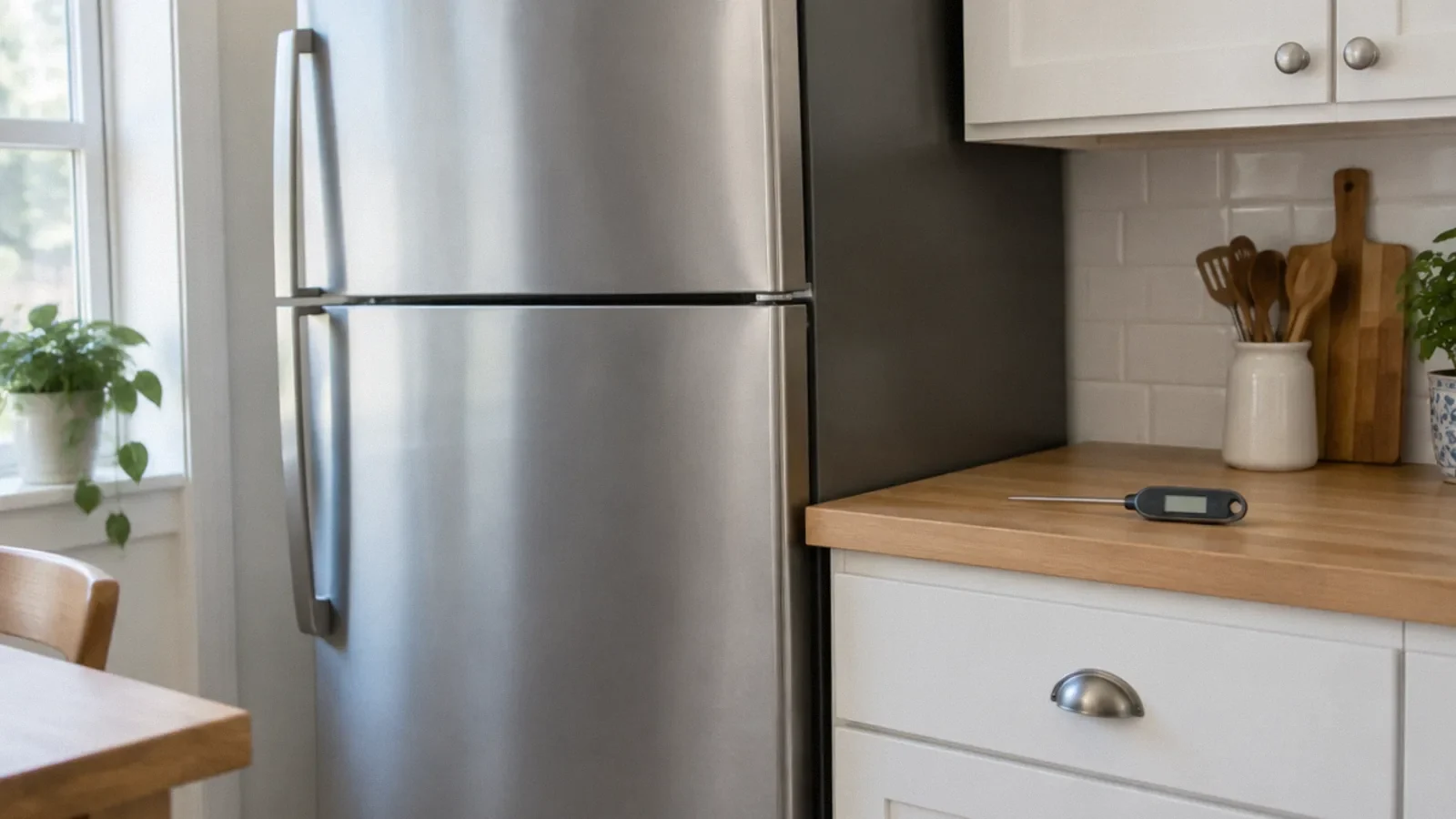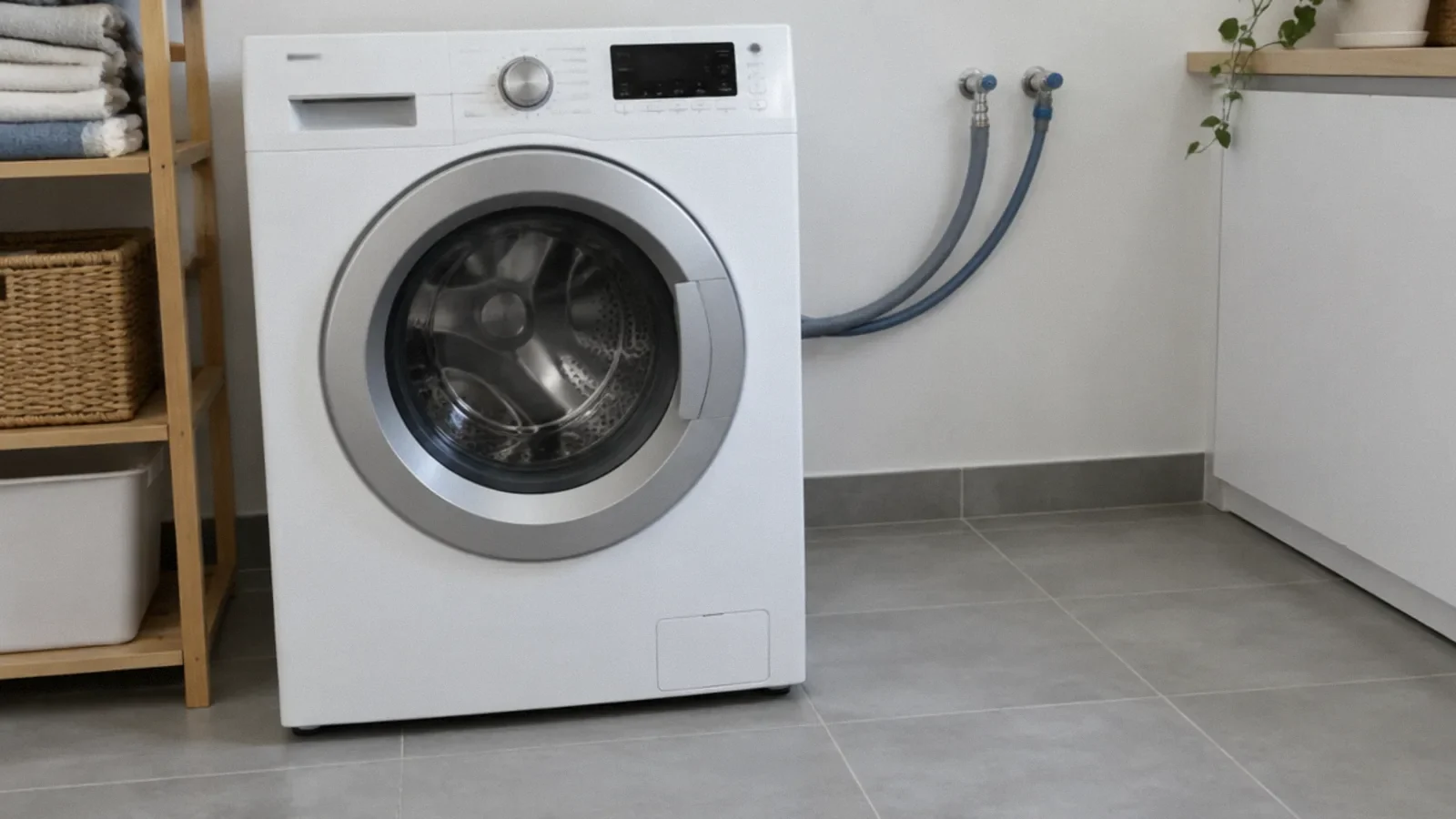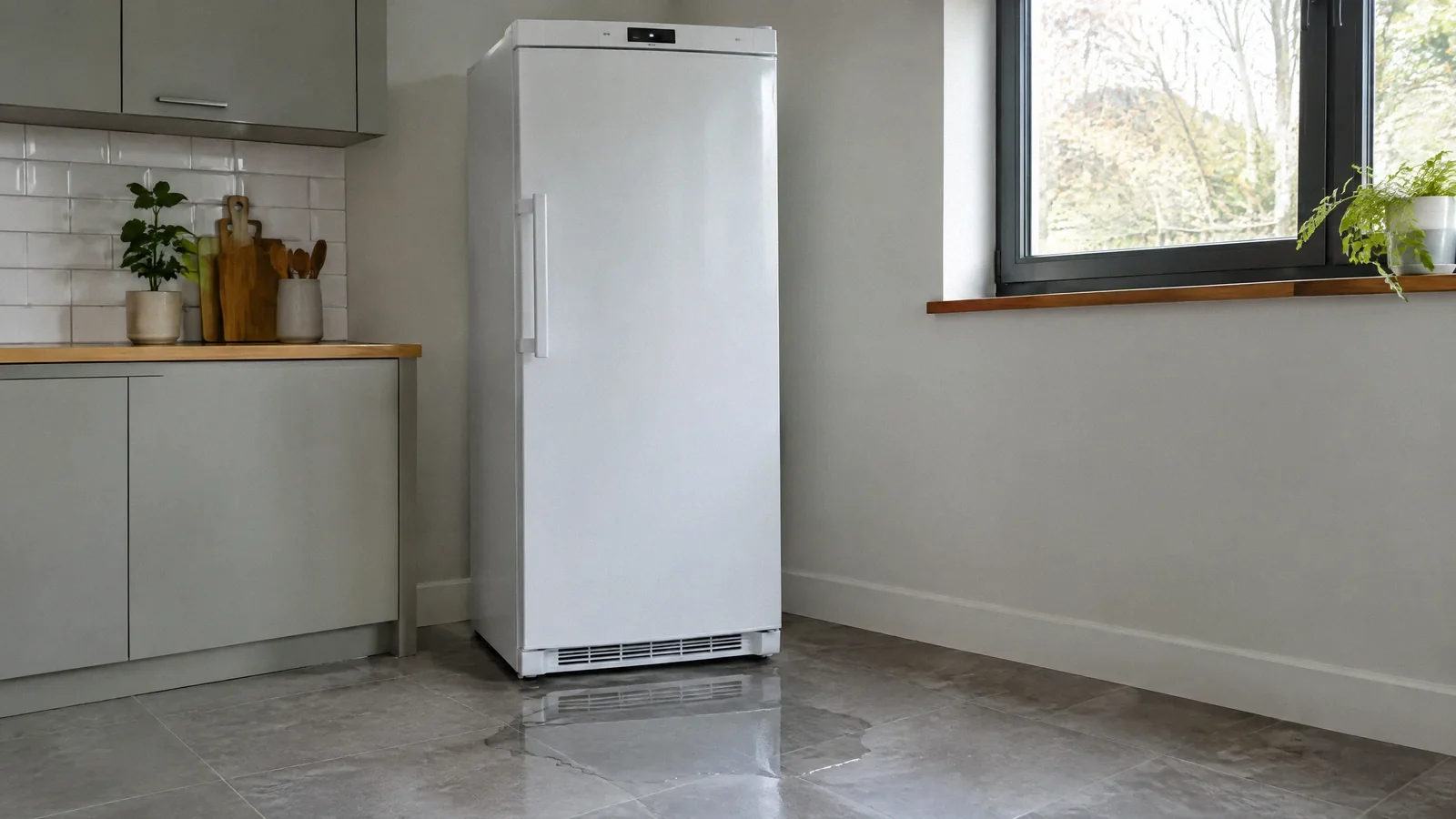
A freezer may leak because of a blocked defrost drain, a door or gasket problem, an ice-maker or water-line leak, or melting after a power interruption. Keep clear of water near electrical components and consult the model’s manual before inspecting it.
Start with safety and the food
Do not touch the plug, cord or appliance while standing in water. If the outlet or cord is wet, keep away and contact a qualified electrician. If a water supply is visibly leaking and its shutoff is safely accessible without approaching electricity or standing water, turn off the supply. Otherwise ask a professional for help.
Protect frozen food while the problem is investigated. Keep the door closed as much as practical and follow food-safety guidance for a power outage or thawed food; appearance and smell are not reliable safety tests. Note when the leak began and whether the appliance is still maintaining its normal temperature.
Locate the first visible water
Water under the front, inside the freezer, behind the appliance or below an ice maker can point to different causes. Wipe only an accessible dry-safe area and note where water reappears. Do not pull a heavy appliance across a wet floor or expose electrical components to look for the source. A technician can move and inspect it safely.
Check whether the puddle appears after a defrost cycle, after dispensing ice, during humid weather or following a power outage. A neighboring refrigerator, sink or supply line may also be responsible. Record the model number and any error message; standalone upright and chest freezers do not all have the same parts.
Blocked defrost drain
Many automatic-defrost models route meltwater through a drain to a pan. Whirlpool identifies a blocked drain line as one possible cause of freezer leaks. Ice on the freezer floor or recurring water after a defrost cycle may be a clue, but does not prove the drain is blocked. The drain layout and access vary by model.
Consult the owner’s manual before attempting any permitted cleaning or defrost procedure. Do not chip ice with a knife or use heat or chemicals not approved by the manufacturer; a punctured liner or damaged component can make the repair worse. If access requires removing panels, the drain refreezes or the cause is unclear, arrange appliance service.
Door, gasket and frost
A door held open by a package, a dirty or damaged gasket, or frequent openings can allow warm humid air into the freezer and contribute to frost or condensation. Check that food packages do not obstruct closure and that the gasket lies properly against the cabinet. Whirlpool notes that a freezer door gasket helps keep warm air out.
Clean the accessible seal using the manufacturer’s instructions, and inspect for visible tears or distortion. Do not assume every puddle comes from a seal: a water line, drain or another appliance may be involved. If the door does not close properly or the cabinet is unstable, request service rather than forcing hinges or guessing at adjustments.
Ice maker and water supply
Some refrigerator-freezer combinations and standalone models have an ice maker connected to a water line; many do not. If yours does, note whether dripping is associated with filling or ice production and whether water appears at the connection. Whirlpool identifies a loose water connection or ice-maker issue among possible sources.
A water line can continue leaking even when the freezer door is closed. If its shutoff is accessible and safe, stop the water supply and arrange an appliance technician or plumber as appropriate. Do not loosen fittings near wet electrical components. Check the manual for your model rather than assuming that every freezer has a water connection.
Power interruption and manual defrost
If the appliance lost power or the door was left open, accumulated ice or thawing contents can produce water. A chest freezer may require manual defrosting; the process and drain arrangement differ by model. Follow the manufacturer’s instructions for protecting the floor, collecting meltwater and restoring operation.
Do not use an extension cord as a permanent substitute for the proper receptacle. If power is unreliable, the freezer warms repeatedly or the breaker trips, arrange appropriate electrical or appliance service. A recurring leak after a completed defrost indicates that the underlying cause may remain.
Your next-step checklist
- Keep away from water near the plug or outlet.
- Record where and when water first appears.
- Check the manual for the model and its drain or ice maker.
- Call a technician for recurring leaks or inaccessible parts.
- Dry the floor and investigate water trapped underneath.
Related questions
Why is water inside the freezer?
A blocked defrost drain, door or gasket issue, power interruption or other fault may be involved. The location and timing help a technician narrow the cause.
Does every freezer have a water line?
No. A water line is relevant only to models with a connected ice maker or other supplied feature.
Can I chip out ice with a knife?
Avoid sharp tools and unapproved heat. Follow the manufacturer’s defrost instructions to avoid damaging the liner or components.
Sources & context
Public guidance supports the principles in this article. The practical questions and examples are editorial interpretation, not a site assessment or a coverage decision. State-specific rules apply only where identified.
- Whirlpool: Freezer Troubleshootingmanufacturer guidance
- Whirlpool: Ice Maker Leaking Watermanufacturer guidance
- CDC: Reentering Your Flooded Homefederal guidance
- FoodSafety.gov: Food Safety During Power Outagefederal guidance