Start by identifying the floor construction and the cause. Light finish scratches may need a maintenance coat; deep damage, loose boards or moisture may require individual board repair or replacement. Do not sand a wet floor.
Identify the floor and the damage
Hardwood flooring can be solid wood or engineered wood with a real-wood top layer over other layers. The thickness of that layer, finish type, installation and previous sanding affect repair options. Locate product information or ask a flooring professional to identify the construction before choosing sanding, refinishing or replacement. A surface that looks like wood may instead be laminate or vinyl and needs different care.
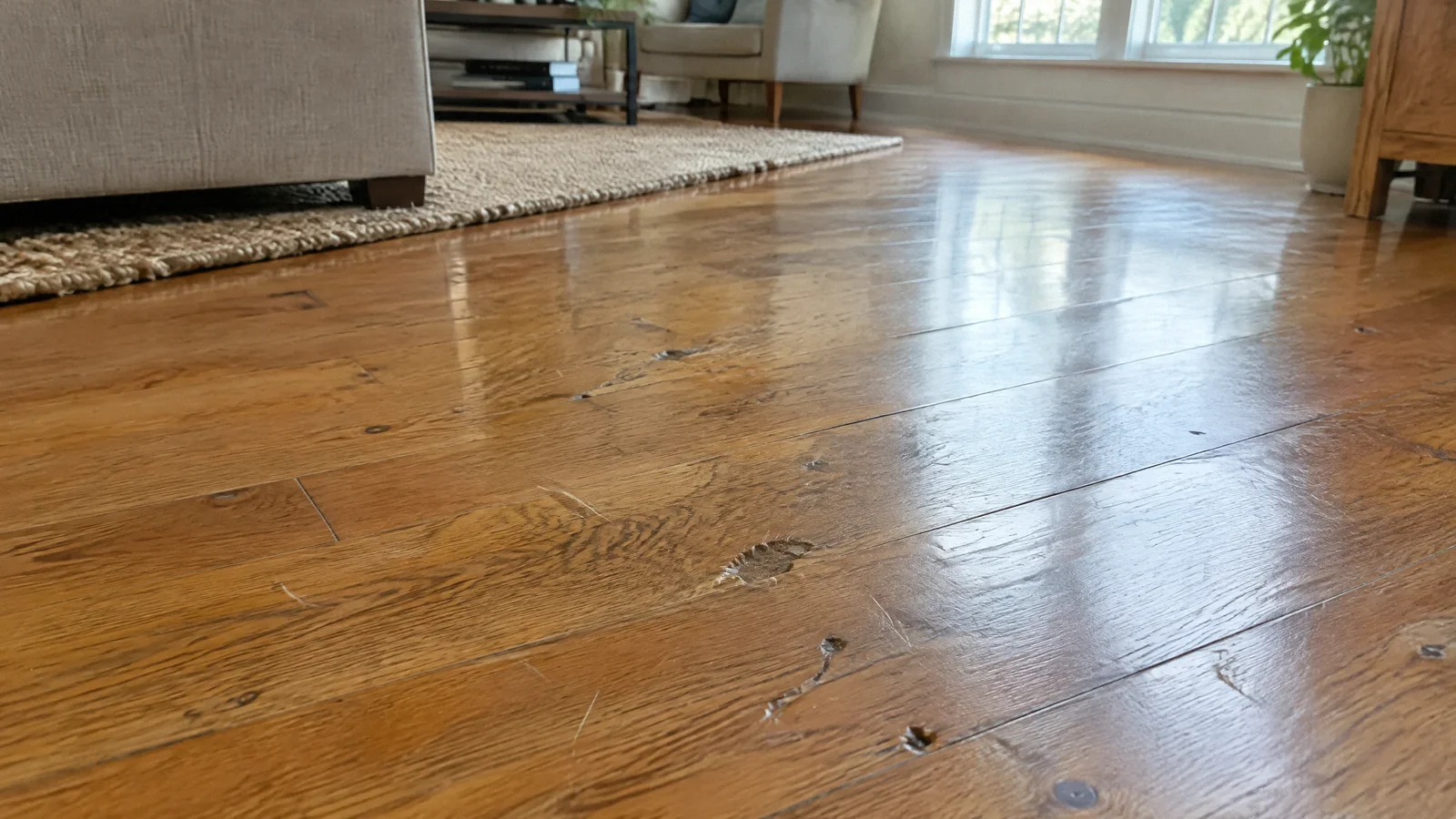
Look across the floor in natural light and record scratches, dents, gaps, loose boards, discoloration and uneven areas. Note whether the problem is confined to the finish or reaches the wood. Photographs and a description of when the damage appeared help a professional decide whether the floor needs a localized repair or a wider investigation.
Scratches and finish wear
Fine marks in a finish may be cosmetic, particularly in high-traffic areas. First remove grit using a soft broom or hard-floor vacuum setting and use a cleaner recommended for that specific floor. Dirt or residue can make a finish look uneven. Avoid abrasive pads, steam and a soaking mop. Test any recommended treatment in an inconspicuous location according to its instructions.
A flooring professional can assess whether a maintenance coat or a full refinish is appropriate. Deep scratches that cut into wood may remain visible through a new finish. Applying an incompatible polish, oil or wax can make future coatings difficult to bond, so do not assume a product advertised for wood is suitable for every factory finish.
Dents, gouges and damaged boards
A dropped object can compress the wood or break its surface. Minor dents may be lived with or addressed as part of a professional repair; deep gouges, splinters or an unstable board need closer attention. Filling a damaged area may improve appearance but will not restore the strength of severely compromised material. The right repair depends on the species, finish and how the board is secured.
Individual boards can sometimes be replaced and blended with the surrounding floor. Color and sheen can differ because older wood and finish have aged. Ask the contractor for a sample and a realistic explanation of the visible transition. A patch should not hide a loose subfloor or continuing leak.
Water damage needs a different first step
Cupping, raised edges, staining or buckling can follow a leak or a change in moisture. These signs do not establish exactly where the water came from. Stop the source if it is safe to do so, document the affected area, and arrange an assessment of the flooring and material below. Avoid walking on an unstable floor or entering an area where water may contact electrical equipment.
Do not sand or refinish flooring while it remains wet. A floor that appears dry on top may still hold moisture beneath the boards. A professional can measure conditions and determine whether drying, board replacement or a broader repair is appropriate. Contaminated water or visible growth may require specialized handling rather than ordinary floor cleaning.
Gaps, movement and structural concerns
Small seasonal gaps can appear as indoor humidity changes, while persistent wide gaps, loose boards or new movement may have other causes. Abrupt buckling, a soft area or a floor that moves underfoot deserves prompt attention. Ask an appropriate contractor to inspect the flooring and subfloor; cosmetic filler alone cannot correct a structural or moisture problem.
Keep records of temperature and humidity conditions when practical. Avoid attempting to force a buckled board flat or fastening through an unknown floor assembly. Hidden utilities, radiant heating and subfloor damage can make an apparently simple repair more complicated.
Repair, refinish or replace
A local repair makes sense when damage is isolated and the underlying assembly is sound. Refinishing may address broad finish wear if sufficient wood remains and the floor is suitable for sanding. Engineered products differ considerably in their top-layer thickness and allowable refinishing; some cannot be sanded again. Replacement may be necessary for severely damaged boards or an unsound substrate.
Request written estimates that distinguish preparation, board replacement, finish, drying or curing time, and protection of adjacent rooms. Ask how dust will be controlled and when occupants and furniture can return. A perfect color match cannot always be promised, particularly where sunlight has changed the existing floor.
Prevent new damage
Use entry mats compatible with the floor finish and remove grit regularly. Fit suitable furniture protectors, lift heavy furniture rather than dragging it and clean spills promptly with a dry or slightly damp cloth as the flooring maker recommends. Check protectors periodically because grit trapped beneath them can scratch the finish.
Follow the floor manufacturer’s humidity and care guidance. Address plumbing leaks promptly and do not let water stand at seams. Keep spare boards and product information when available. A routine maintenance plan protects the finish, but it does not replace investigation of repeated staining or moisture.
Your next-step checklist
- Identify the situation and document relevant conditions.
- Address the underlying cause before repairing or replacing affected materials.
- Use qualified help when hazards or the scope exceed your abilities.
- Keep inspection, repair and follow-up records.
Related questions
Can all engineered wood floors be refinished?
No. The available wear layer and manufacturer’s instructions determine whether sanding is possible.
Should I sand a cupped floor immediately?
No. Find and correct the moisture source and allow professional assessment before refinishing.
Sources & context
Public guidance supports the principles in this article. The practical questions and examples are editorial interpretation, not a site assessment or a coverage decision. State-specific rules apply only where identified.
- Wood Floor Careprimary
- Homeowners handbookprimary