Heat can support evaporation, but it does not remove water vapor by itself and can damage sensitive materials if uncontrolled. Use temperature as one part of a monitored drying system with appropriate access, vapor removal, and material-specific limits.
Heat supplies energy, not a complete moisture exit
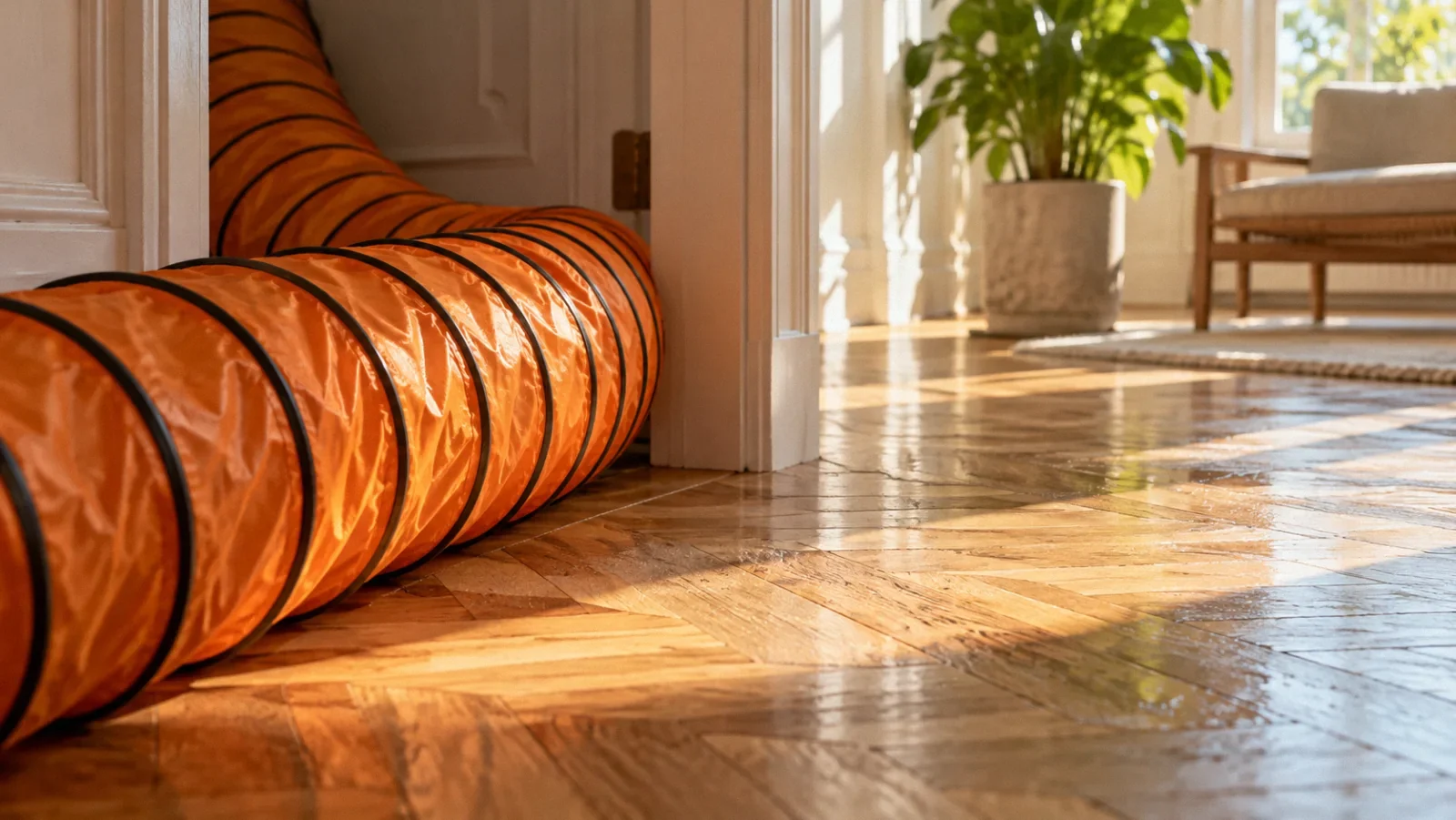
Warming a surface can help water evaporate when the surrounding conditions allow. The released moisture still needs to leave the space through dehumidification or suitable ventilation. Heating a closed wet room without managing vapor can move moisture rather than resolve it.
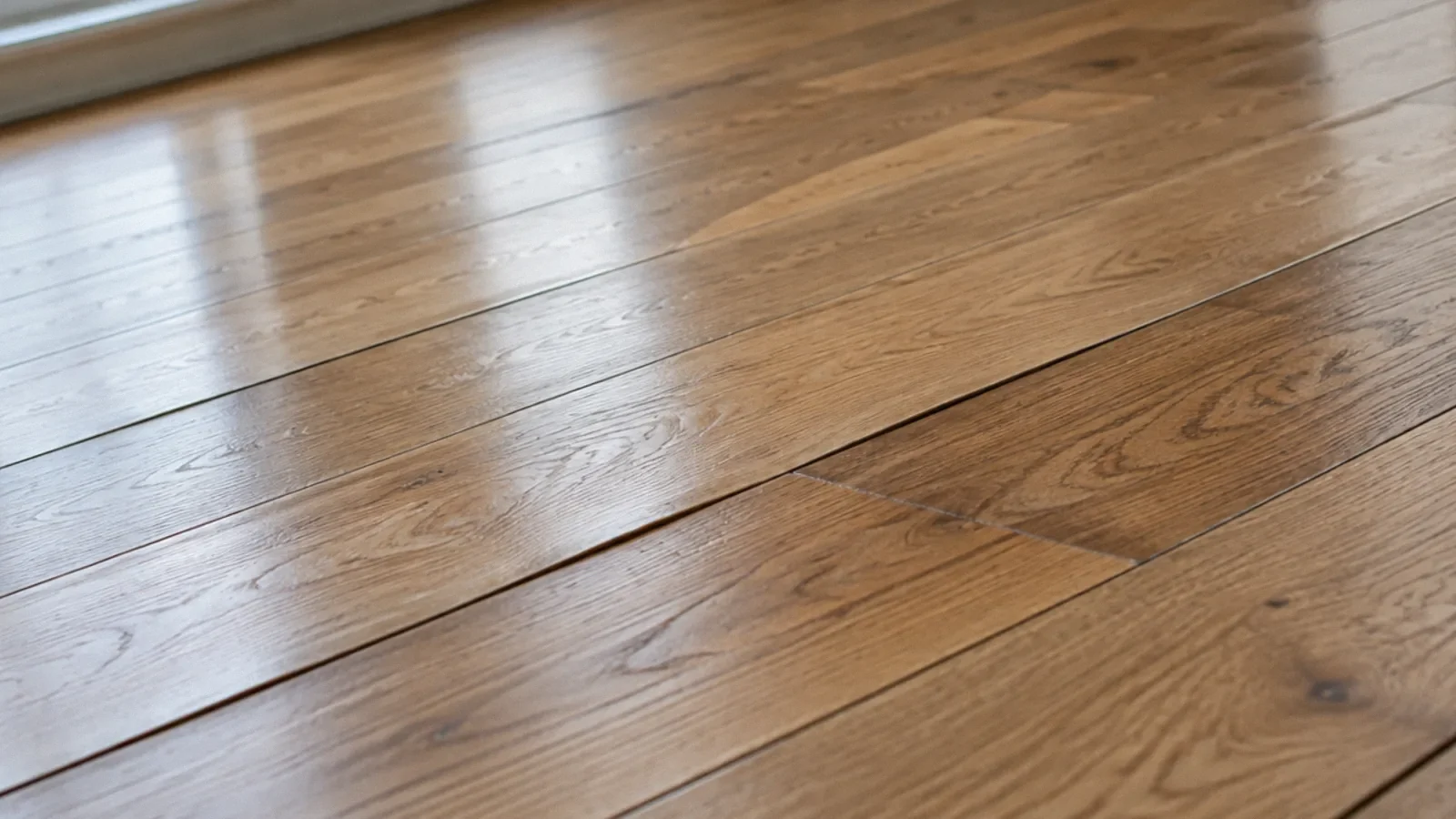
EPA’s clean-water guidance includes gentle heat for some wood drying and specifically cautions about heat on hardwood floors. The wording supports careful material-specific use, not a prescription to maximize thermostat settings or aim a portable heater at wet finishes.
Avoid mistaking a lower humidity display for removal
As air warms, relative humidity can fall even without a matching reduction in water vapor. A hot room may therefore appear improved on a humidity display while deep material moisture changes little. Pair environmental readings with the actual retained-material measurements.
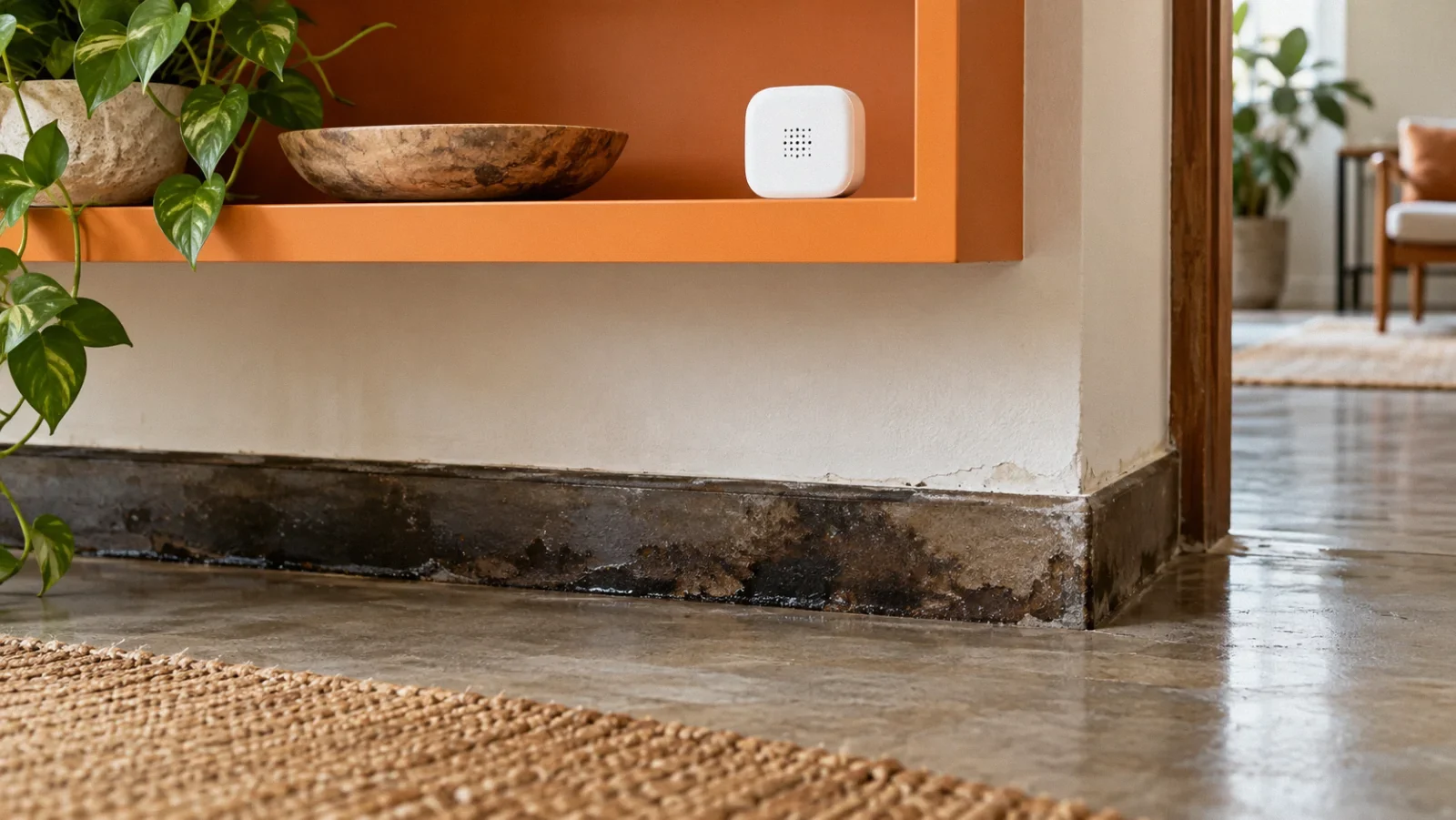
If progress is limited by a trapped layer or ongoing leak, more heat may not solve the bottleneck. Ask whether the floor underside, cabinet base, or wall cavity has an effective drying path before escalating temperature.
Materials can move as conditions change
Wood and wood-based products exchange moisture with surrounding air and change dimensions, as USDA’s Wood Handbook explains. Finishes, joints, adhesives, and mixed assemblies can respond differently. Cracks appearing during a dry-out deserve documentation and assessment rather than an automatic conclusion about cause.
Record before-and-after photographs, approximate timing, and the operating conditions. A professional should distinguish preexisting movement, drying-related changes, and another structural or installation issue. Do not accept a universal claim that any crack is normal or that every crack proves excessive drying.
Portable heat adds its own hazards
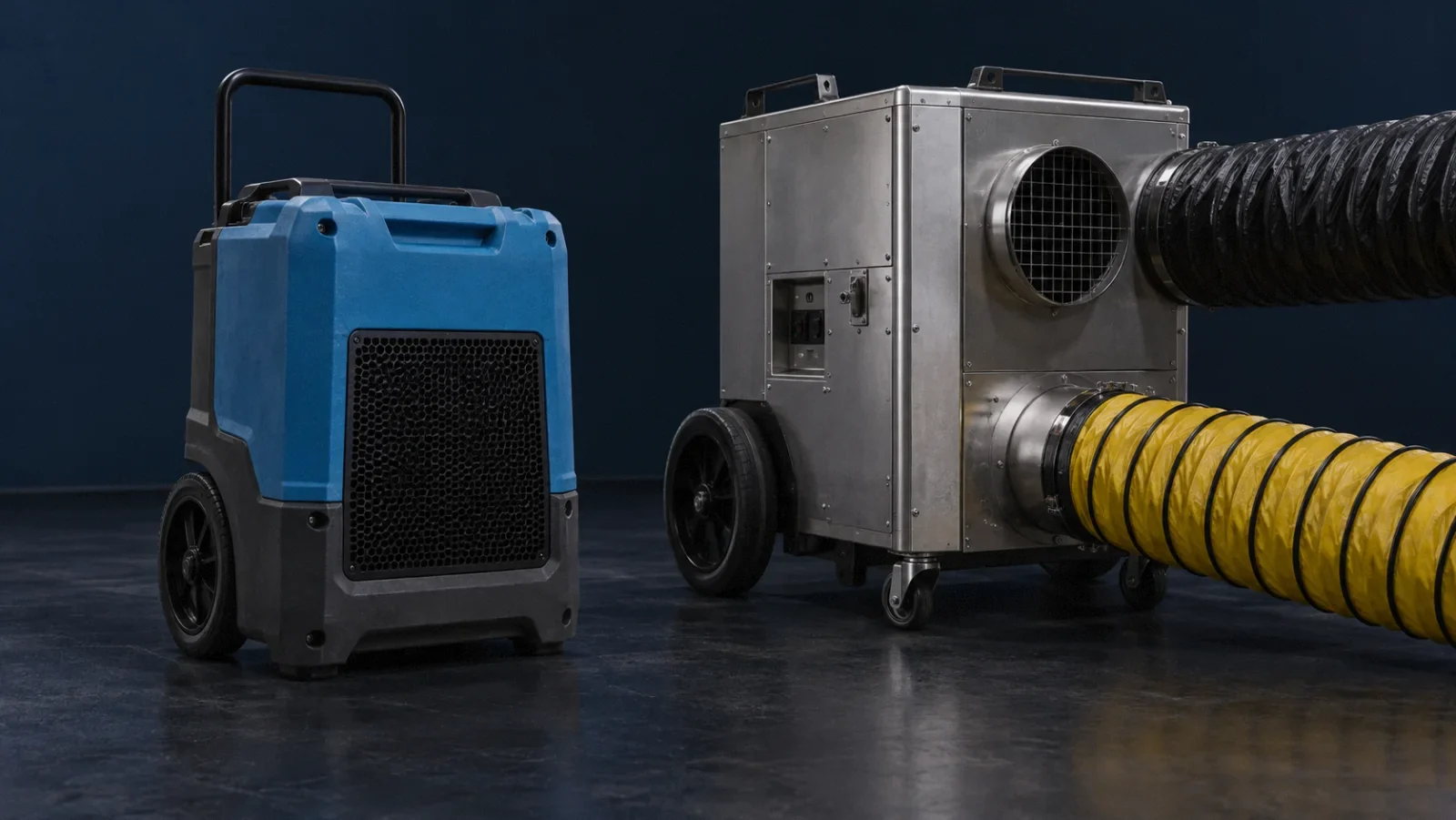
Do not use improvised combustion heating inside the building. CDC warns against gasoline-powered equipment in enclosed or partly enclosed spaces because of carbon monoxide. Electrical heaters also require suitable placement, power supply, and clearance under their instructions, especially around wet conditions and temporary barriers.
Restoration heating systems should be selected and managed by people responsible for the site conditions. Occupants should not add heaters to accelerate a professional setup without coordination. Report uncomfortable or unusual temperatures and let the plan be adjusted with monitoring.
Why a warmer room can look better before it is drier
Consider a room where the temperature rises while the amount of water vapor initially stays similar. Relative humidity falls because the reference capacity of the warmer air changes. If no vapor is removed, that lower percentage does not establish that water left the building. Cooling the same air can reverse the display change.
If heat accelerates evaporation from wet wood while a dehumidifier removes the resulting vapor, material moisture may fall even while the room humidity stays relatively steady. That is a different and potentially useful pattern. Judge it with repeated material measurements and actual equipment operation, not the display alone.
A third case is intense local heating of the floor surface while a wet subfloor remains shielded by the finish. The top can experience conditions very different from the underside. This is why the access path and material sensitivity deserve attention before increasing heat.
Interpret a plateau and a new crack separately
Suppose exposed wall framing improves but a cabinet base does not. The base may need access, source investigation, or a different method. Raising the entire room temperature can expose unrelated finishes without necessarily changing that concealed bottleneck. Ask which observation justifies the temperature change.
If a ceiling joint cracks during the same period, record its location, appearance, and timing along with the environmental log. The crack and the slow cabinet reading are separate findings. One should not be used to dismiss the other or to declare a cause without assessment.
The plan should name conditions that prompt adjustment: material goals met, unexpected distortion, unacceptable temperatures for the setup, equipment faults, or lack of progress despite suitable operation. A generic instruction to keep heating until a fixed date is weaker than those evidence-based decisions.
For the final handoff, retain any unresolved movement or finish damage in the repair scope even if drying is complete. Successful moisture removal does not mean every surface returned to its original condition. Likewise, a minor finish defect does not automatically mean the entire drying method failed. A careful record allows each consequence to be evaluated on its own evidence.
Define limits and stopping conditions
Ask what temperature range is intended, which materials are sensitive, and where conditions are measured. The plan should explain how equipment is adjusted as materials approach their goals. Continuing aggressive heat after its target is complete can create unnecessary exposure for unaffected finishes.
Completion still depends on appropriate material readings, condition, and the next repair requirements. Keep any newly observed cracking or distortion in the record and resolve its repair implications before refinishing.
Your next-step checklist
- Use heat only within an appropriate assessed drying method.
- Pair temperature changes with vapor removal and material readings.
- Check access limitations before increasing temperature.
- Document new movement or finish changes and seek a cause assessment.
- Keep combustion hazards, electrical supply, clearances, and occupant conditions under control.
Related questions
Can I simply turn the thermostat very high?
That does not establish effective or appropriate structural drying. The target material, vapor removal, access, and material sensitivity must be considered.
Does a crack during drying prove the crew damaged the ceiling?
Timing is useful evidence, but not proof of cause. Photograph and report the change so the condition and operating history can be assessed.
Is gentle heat always safe for hardwood?
No universal setting suits every floor. EPA specifically calls for caution, and flooring construction and condition should guide the approach.
Sources & context
Public guidance supports the principles in this article. The practical questions and examples are editorial interpretation, not a site assessment or a coverage decision. State-specific rules apply only where identified.
- EPA: Table 1, Water Damage Cleanup and Mold Prevention (clean-water material guidance)official
- CDC: Reentering Your Flooded Homeofficial
- USDA Forest Service: Wood Handbookofficial
Community questions behind this topic
These discussions helped identify reader concerns. They are anecdotal, not technical or legal authority.