Refrigerant and desiccant dehumidifiers remove moisture through different mechanisms. Choosing between them depends on operating conditions, the drying target, access, power, and discharge arrangements. Ask for the selection rationale and monitored performance rather than assuming one label always means faster drying.
Understand the broad mechanisms
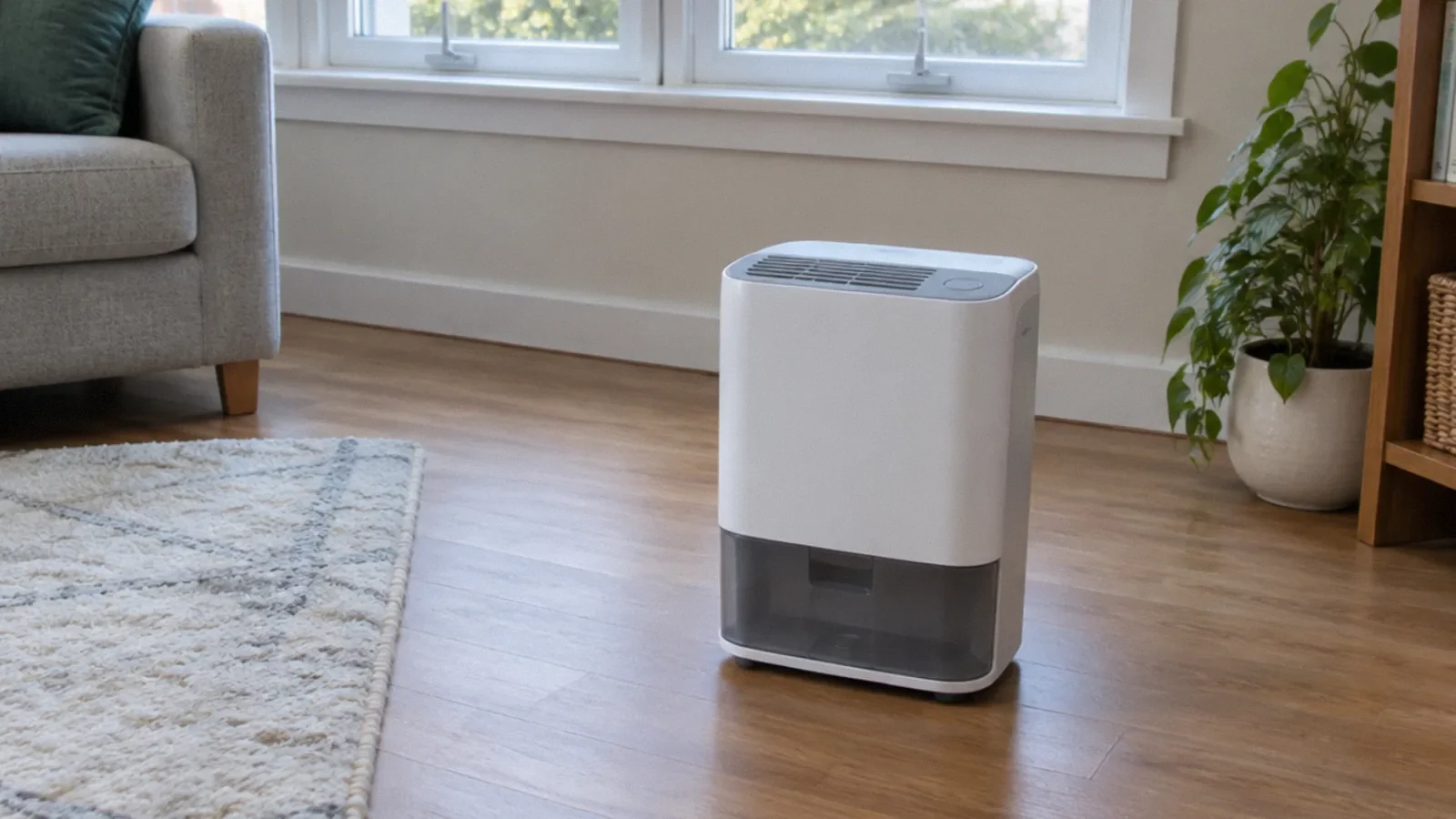
A refrigerant dehumidifier cools air across a coil so water condenses, then collects or drains that water. DOE describes this condensation mechanism for consumer dehumidifiers. Low-grain refrigerant, often abbreviated LGR in restoration, refers to a refrigerant-equipment design category intended for lower-humidity operation than basic units; actual capability remains equipment-specific.
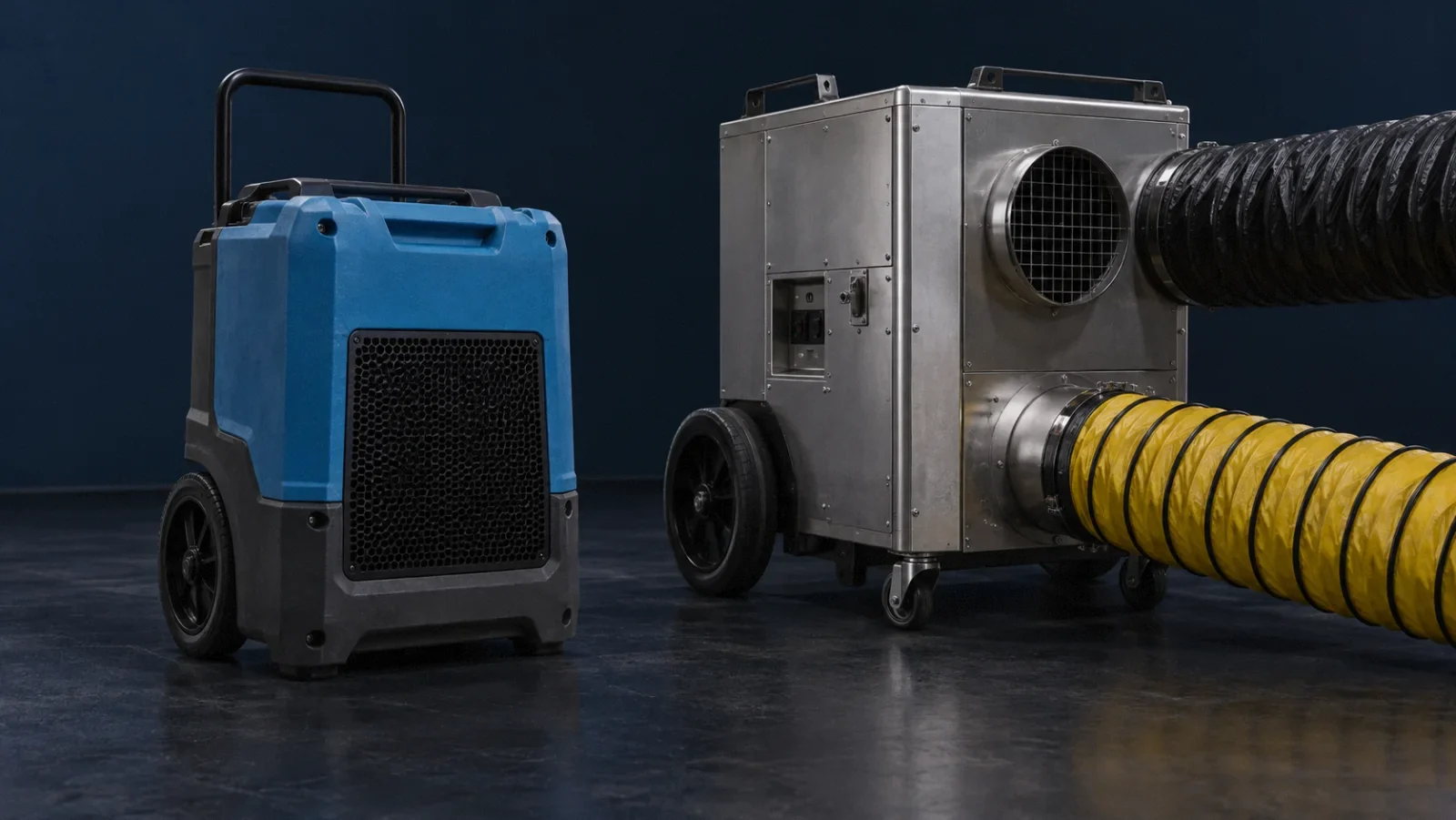
Desiccant equipment uses a moisture-attracting material and a regeneration process. Its installation may involve separate air streams and an exhaust arrangement. The details vary, so a household should ask the restorer to explain the actual unit and setup rather than treating the terms as interchangeable.
The environment changes performance
Temperature, humidity, moisture load, and air movement influence the job. A machine selected for one operating range may be less useful in another. A nameplate capacity measured under specified conditions is not a promise of the same collection rate in a cold basement or a nearly dry room.
Ask what indoor conditions the plan expects and how the crew will know the equipment is performing. Do not compare units solely by advertised square footage. Structural drying includes moisture inside materials and cavities, not merely controlling ordinary household humidity.
The drying target still needs an exit path
A powerful dehumidifier cannot automatically remove water sealed beneath an intact low-permeance finish. The material must release moisture into an air path or another suitable drying system. Limited access may be the dominant constraint even when the room air is very dry.
The public IICRC S500 overview includes psychrometry, drying technology, equipment, and assemblies. Those topics belong together. Ask how the selected system reaches the wet layer and which measurements will confirm progress there. Machine choice should not distract from the construction problem.
Installation details affect the household
Review power supply, drainage or exhaust, temperature effects, noise, and access routes. Ducts and hoses should not block safe egress, and discharge should not reintroduce moisture or contaminants. Equipment must be installed within its instructions and the site’s electrical and safety constraints.
If regeneration involves combustion or other specialized arrangements, have the professional explain the separation and safety provisions. Do not improvise venting or modify the setup because a hose is inconvenient. Report problems to the person responsible for monitoring the system.
Compare two hypothetical jobs, not two labels
An accessible wet room maintained within a refrigerant unit’s suitable operating range may be served effectively by a properly designed refrigerant setup. A colder or more demanding project may lead a specialist to consider a different technology or a conditioned system. These are reasons to compare actual performance conditions, not to announce that one type always wins.
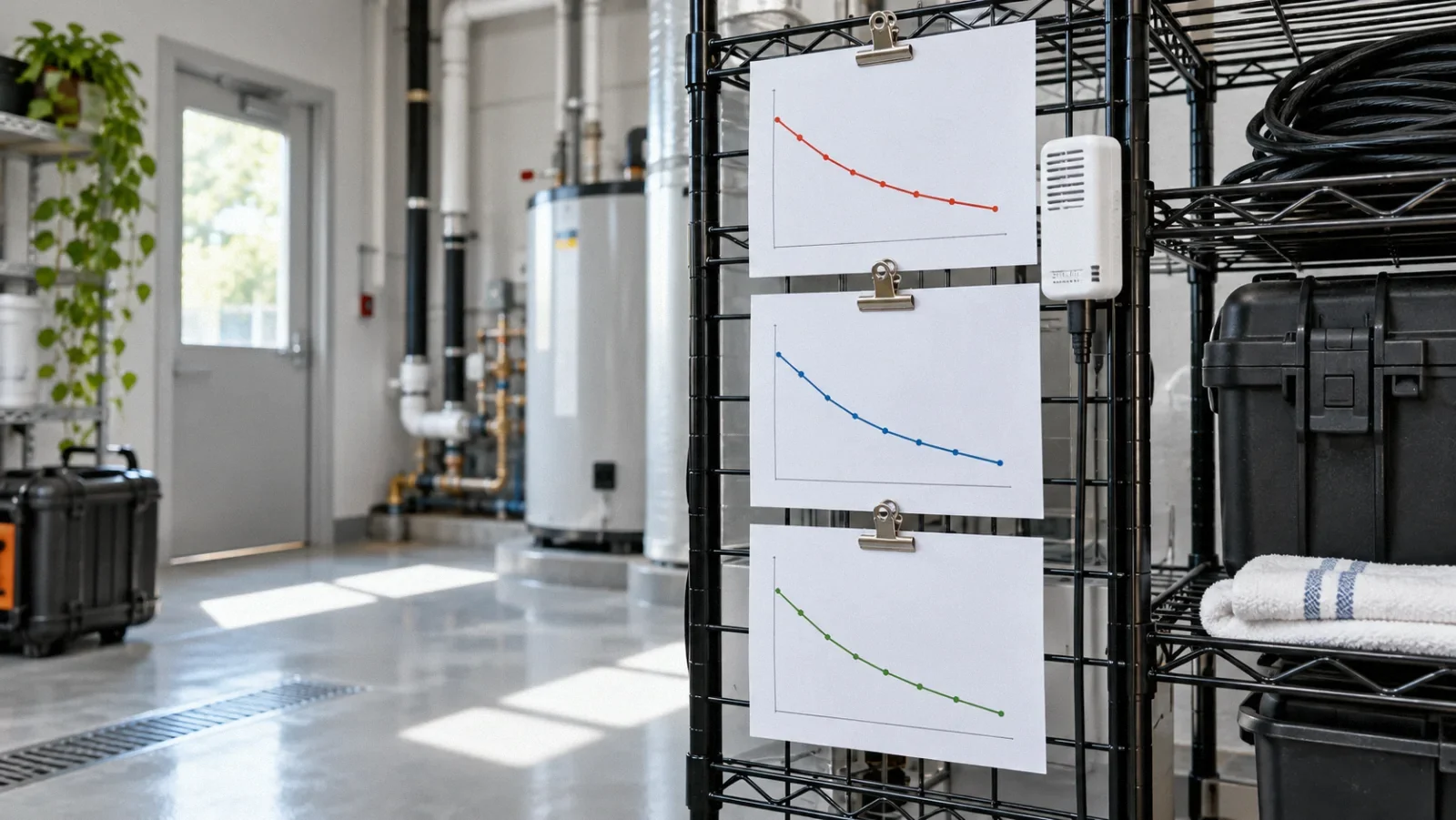
For each alternative, ask how the contractor will measure entering and leaving air conditions as appropriate, confirm proper operation, and track retained-material progress. A machine can operate normally while the assembly dries slowly because the controlling layer is inaccessible. The performance review should include both equipment and building.
NREL’s review of desiccant dehumidification describes moisture removal through a desiccant and regeneration for reuse. That establishes the broad mechanism; it does not rank current restoration models or promise performance in your building. Equipment-specific instructions and the practitioner’s monitored design supply that next level of detail.
Make the operating burden visible
A proposed setup may require ducts through an opening, a drainage route, substantial temporary power, or management of heat. Those practical conditions belong in the comparison because they affect safe operation and whether occupants can follow the plan. A theoretically suitable machine is not useful if its required discharge path cannot be provided correctly.
Ask who checks the arrangement after hours and what constitutes a reportable interruption. If a duct is crushed, a drain stops, or a breaker trips, record and report the event rather than modifying the system.
At the end, separate the technology decision from the completion decision. Material goals may be met using either suitable approach. The final report should show those goals and results, not simply state that an advanced machine was used. Avoid paying for an unexplained equipment upgrade that leaves the same inaccessible wet layer unaddressed.
A good comparison is a project comparison
Ask for two alternatives only when there is a meaningful choice: expected access, operating conditions, monitoring, and practical impacts. Avoid a false comparison where one quote includes cavity assessment and the other only supplies a machine. The scope differences may matter more than equipment type.
The decision can also change as the loss progresses. After bulk removal or exposure of a hidden layer, the moisture load may differ. Document why equipment is retained, replaced, or removed. The final criterion remains the condition of retained materials, not loyalty to a particular drying technology.
Your next-step checklist
- Ask the crew to explain the actual moisture-removal mechanism and operating range.
- Identify the wet material and the path by which its moisture reaches the equipment.
- Review power, hoses, exhaust, drainage, and occupant access.
- Compare complete scopes rather than advertised capacities alone.
- Require material progress and a reason for any equipment change.
Related questions
Is desiccant drying always better in cold conditions?
It can be useful in some conditions, but selection depends on the actual unit, system design, and project. Avoid a universal ranking without performance and site information.
Does LGR mean the room will dry within a fixed number of days?
No. Material depth, access, continuing water, and operating conditions still determine progress. The label does not establish a schedule.
Can I substitute a household dehumidifier?
Possibly for a limited suitable situation, but consumer capacity and ordinary humidity control are not equivalent to an assessed structural drying plan. Ask what target and monitoring the proposed substitute would satisfy.
Sources & context
Public guidance supports the principles in this article. The practical questions and examples are editorial interpretation, not a site assessment or a coverage decision. State-specific rules apply only where identified.
- DOE: Consumer Dehumidifiersofficial
- IICRC: S500 public scope overview (not the paid standard text)standard
- NREL: Review of Desiccant Dehumidification Technology, mechanism and regeneration discussionofficial
Community questions behind this topic
These discussions helped identify reader concerns. They are anecdotal, not technical or legal authority.