Maybe. Responsibility depends on state law, the property’s legal boundaries and the association’s governing documents. Report the crack promptly, obtain a qualified structural assessment when needed, and ask the association for a written explanation of the applicable provisions.
The answer starts with the property documents
A foundation can support several units, one unit or a detached home in an association. Whether the association must repair a particular crack cannot be determined from the word foundation alone. The recorded declaration, condominium plan, plats and other governing documents may define common areas, separate interests and exclusive-use areas differently. State law and the facts also matter.
Obtain the current documents, including amendments, and identify the specific structural component and its legal classification. Ask the association or manager for the provisions it relies on and a written response. Do not assume that a visible crack inside your unit proves that the underlying structural component belongs solely to you.
A California example, not a nationwide rule
California Civil Code section 4775 generally assigns an association responsibility for repairing, replacing and maintaining common area unless the declaration provides otherwise, subject to statutory distinctions and exceptions. The California Department of Real Estate’s 2026 legal excerpts contain the text. Whether a foundation is common area and whether a declaration changes the default require examination of the actual property and documents.
Other states may use different statutes, terminology and procedures. Even within California, a condominium, planned development and detached home can have different recorded boundaries. Do not apply the California example as a universal rule or assume that every structural repair is automatically the association’s obligation. A local attorney can interpret the documents and current law.
Maintenance duty, cause and payment are different
The party responsible for maintaining a component is not necessarily the same as the party ultimately responsible for every cost. The source of damage, any prior work, negligence, contract terms, insurance and applicable law can affect a claim. A technical report identifying movement or water entry does not itself decide legal liability.
Similarly, an association’s duty to arrange a repair does not establish that its insurer must pay, or that a homeowner’s policy covers interior finishes. Ask for separate explanations of who will investigate, who has authority to repair, how costs are allocated and whether any insurance claim will be submitted. Do not rely on a verbal statement about coverage.
Report and document the crack
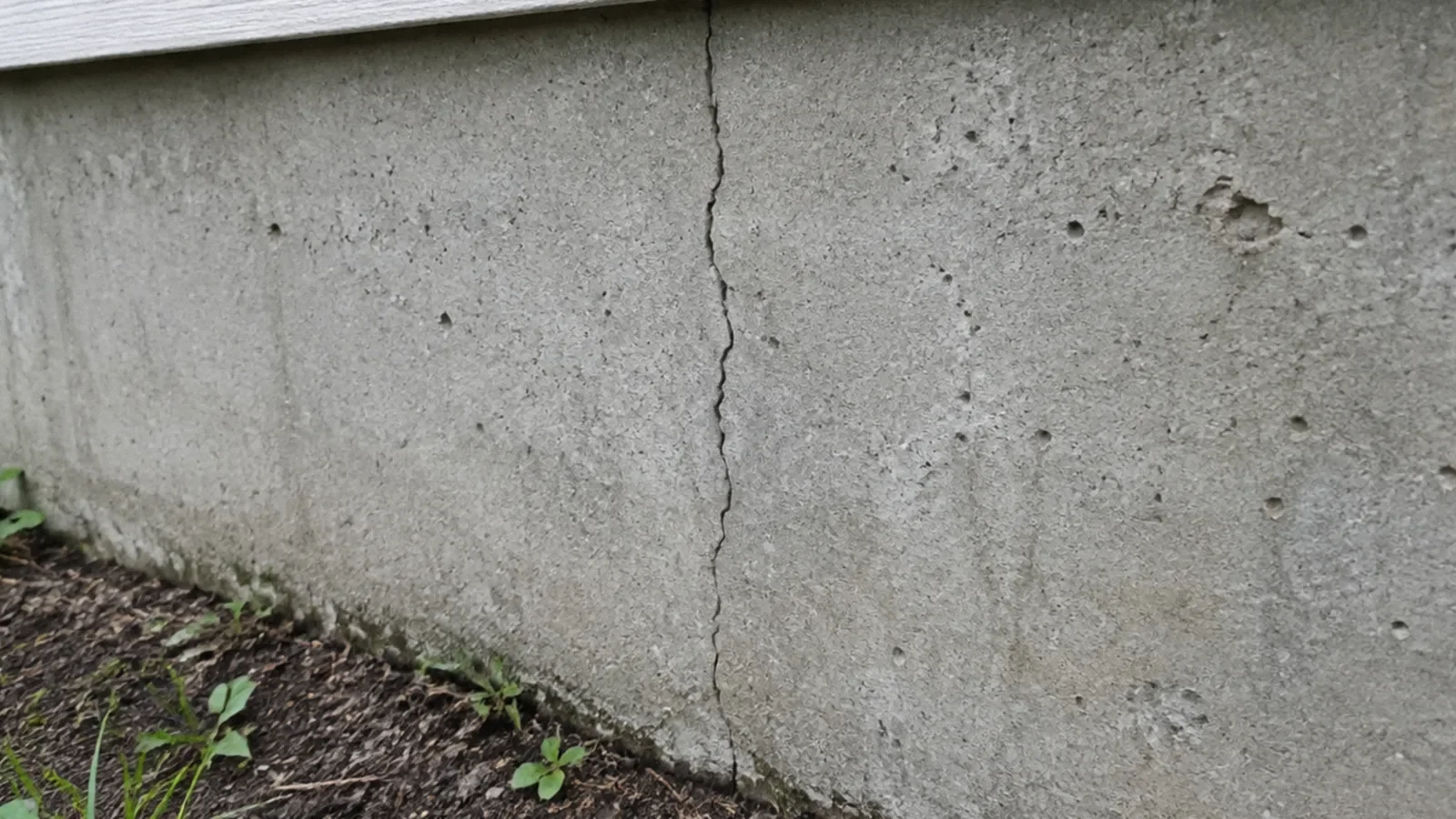
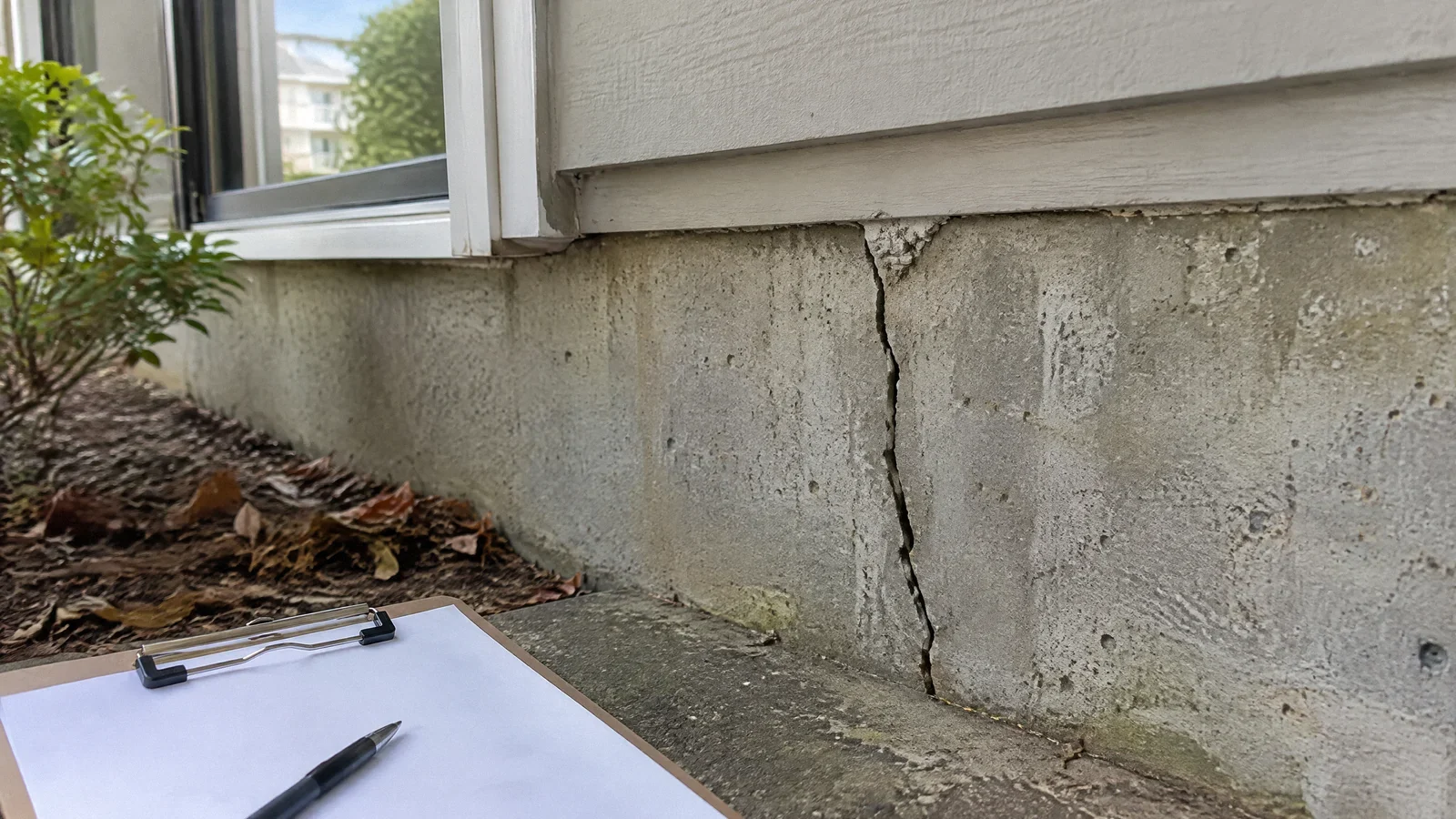
Notify the association or property manager promptly in writing using its published process. Include the location, when you noticed the crack, any changes, water entry, sticking doors or related damage. Take dated photographs from a safe position and retain correspondence, prior repair records and relevant inspection reports. Measurements and photographs can document change but cannot diagnose the cause.
Ask who will inspect, when you can expect a response and whether any emergency measures are needed. If the condition appears to be worsening rapidly, the building is visibly unstable or occupants may be in immediate danger, leave the affected area and contact emergency services or the local building authority. Do not wait for a routine board meeting.
Obtain the right technical assessment
A qualified structural engineer can assess whether a crack indicates movement or a structural concern and recommend further investigation. Water entry can involve drainage, grading, waterproofing or other pathways, and the visible location may not reveal the complete cause. A contractor can provide a repair proposal, but a repair estimate alone may not resolve an ownership or engineering question.
Ask for the report’s scope, observations, limitations and recommended next steps. If access to a common area or adjacent unit is needed, coordinate through the association and applicable procedures. Avoid sealing or concealing a changing crack before it is documented and assessed, particularly if doing so could obstruct an investigation.
Insurance and claims
Review the association’s master policy, the owner’s policy and any endorsements with the insurer or broker. A claim depends on the cause of loss, exclusions, deductibles, limits, definitions and the actual policy. Foundation movement, water intrusion and interior damage may be treated differently; a maintenance obligation does not create insurance coverage by itself.
Notify the appropriate insurer as required by the policy and preserve evidence when safe. Ask who will coordinate inspection and temporary protection, whether the association is making a claim and how deductibles or assessments are addressed. Do not delay an urgent safety response while waiting for a coverage decision.
If the parties disagree
Keep a dated record of requests and responses, and use the association’s applicable internal procedures. If a response is unclear, ask for the specific document provision and the factual basis for the decision. A qualified local attorney can review the governing documents, state law, deadlines and available dispute-resolution options.
Avoid making assumptions based solely on a neighbor’s experience or a generic online answer. Similar-looking buildings may have different declarations or ownership boundaries. The separate foundation crack repair guide addresses technical investigation and water pathways; legal allocation and repair design should inform each other but remain separate questions.
Your next-step checklist
- Report the crack and any water entry in writing.
- Leave and seek urgent help if the structure appears unsafe.
- Obtain the current declaration, amendments and property plan.
- Request a qualified technical assessment when appropriate.
- Review insurance and consult local counsel if responsibility is disputed.
Related questions
Does an HOA always repair foundation cracks?
No. Responsibility depends on the component’s legal classification, governing documents, applicable state law and the circumstances.
What is the California default for common-area repairs?
California Civil Code section 4775 generally assigns common-area maintenance, repair and replacement to the association unless the declaration provides otherwise, subject to statutory distinctions and exceptions.
Does the HOA’s repair duty mean its insurer will pay?
No. Insurance coverage is a separate question governed by the actual policy, cause of loss and applicable law.
Can a photograph determine whether a crack is structural?
No. A photograph can document a condition, but a qualified professional must evaluate the building and relevant evidence.
Sources & context
Public guidance supports the principles in this article. The practical questions and examples are editorial interpretation, not a site assessment or a coverage decision. State-specific rules apply only where identified.
- California Department of Real Estate: 2026 Real Estate Law ExcerptsCalifornia statutory compilation
- California Department of Real Estate: Living in a Common Interest DevelopmentCalifornia government consumer guidance
- California Department of Insurance: Residential Property ClaimsCalifornia insurance guidance