There is no reliable universal drying time. A thin muddy surface may dry much sooner than saturated clay or a low area that receives runoff. Rainfall, soil texture, drainage, sun, wind and the depth of wet soil all matter.
Why a fixed number of hours is unreliable
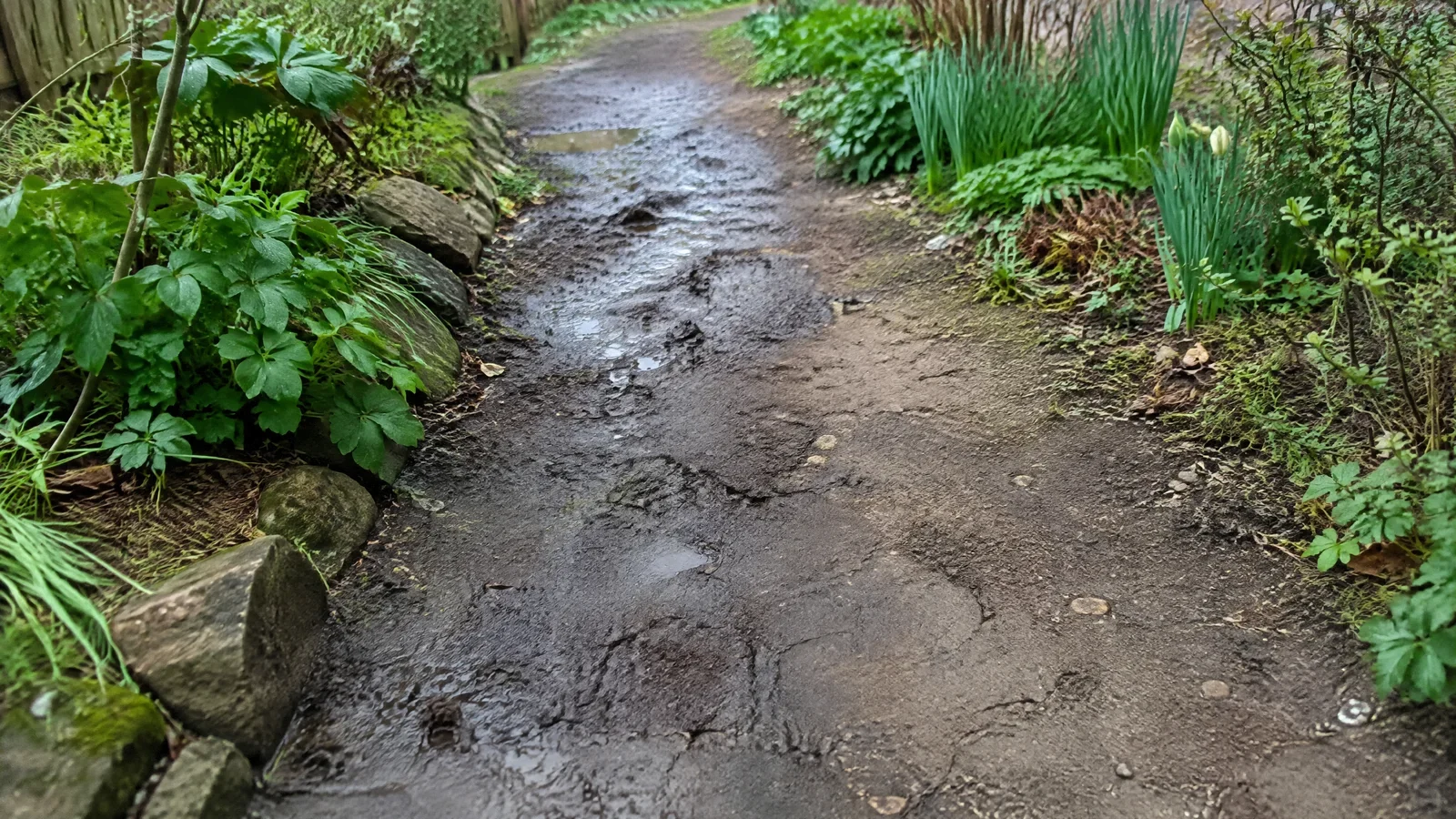
Mud is soil mixed with enough water to become soft or sticky. After rain, water may drain downward, move across the surface or evaporate. How long the area remains muddy depends on how much water entered, what is beneath the surface and what the weather does next. A dry-looking crust can cover soil that is still saturated below.
This guide concerns outdoor soil after rain, not drywall joint compound, sometimes called drywall mud. For a garden bed, path or work area, define what ready means: walking across it, gardening, driving equipment and installing a surface require different conditions. A surface suitable for a light footstep is not necessarily ready for machinery.
Soil texture and structure
USDA explains that soil texture reflects the proportions of sand, silt and clay. Sandy soils generally have larger pores through which water can drain more readily, while fine-textured clay can hold more water and move it more slowly. These are general tendencies; actual soil is a mixture, and layers beneath it can restrict movement.
Structure and compaction matter as well. Soil with compacted layers may accept and transmit water slowly even if the surface contains sand. Repeated foot traffic or heavy equipment on wet ground can damage soil structure and leave ruts. Avoid assuming that adding a small amount of sand to clay will immediately solve a drainage problem.
Rain, sun and air conditions
A short shower can wet only the surface, whereas prolonged rain can saturate deeper layers and fill low spots. If rain continues or another storm arrives, drying can be interrupted. Shade, cool temperatures, high humidity and limited air movement can slow surface evaporation; sun and moving air may help the exposed surface dry.
Conditions are not uniform across a yard. A shaded path, an exposed slope and a low area near a downspout may dry at different rates after the same storm. Observe the actual location over time instead of transferring a neighbor’s schedule to your own ground.
Drainage and the source of water
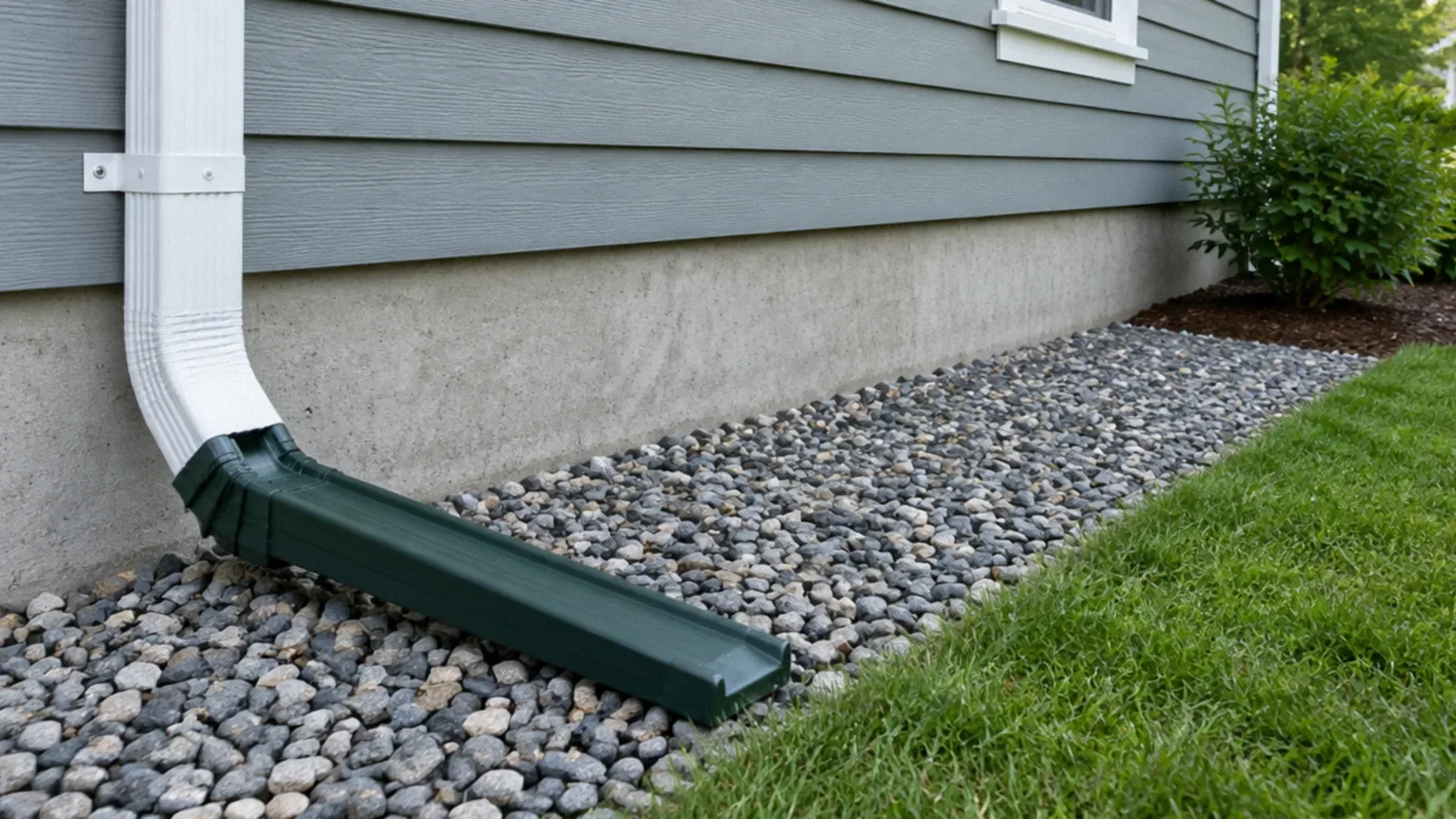
Look for water flowing toward the area from a roof downspout, paved surface, uphill slope or irrigation system. A low spot can remain wet because it receives more water after the rain has stopped. USDA identifies slope, infiltration, soil texture, restrictive layers and water-table depth among factors influencing internal drainage.
Check drainage from a safe position and arrange a qualified assessment for persistent ponding near a building, septic system or retaining wall. Do not redirect water onto a neighbor’s property or into a protected waterway without understanding local requirements. Address the source before placing a permanent covering over a recurring wet area.
Check readiness for the intended use
For a garden, take a small sample from the depth you intend to work if it is safe and the soil is not suspected of contamination. Squeeze it gently: a wet outline on the hand or a sticky, easily formed mass indicates substantial moisture, while a sample that crumbles more readily is generally less wet. Soil texture affects the result, so this is a practical observation rather than a laboratory measurement.
If soil sticks heavily to tools, forms deep footprints or smears instead of crumbling, give it more time before cultivating or moving heavy loads. Avoid testing during unsafe conditions or digging near unknown utilities. For construction, landscaping installations or vehicle access, ask the responsible professional for the project-specific criteria rather than relying on a hand test.
What can help and what can make it worse
If possible, keep people and equipment off saturated soil and allow drainage and evaporation to work. Repair a continuing leak or unnecessary irrigation and clear accessible drainage paths only when it is safe. For frequently muddy routes, a qualified landscape professional can evaluate grading and a suitable path assembly for the site.
Do not spread unknown chemicals or use heat sources to force soil dry. Adding heavy loads, repeated vehicle passes or deep digging into saturated ground can worsen compaction or create a hazard. An absorbent temporary surface may improve footing in some situations but does not prove that the underlying soil has dried or that a permanent installation is ready.
Floodwater and contamination are different
Mud left by floodwater, sewage or a chemical spill may contain contaminants. Do not handle it as ordinary garden soil or let children and pets play in it merely because the surface looks dry. Follow local public-health guidance and seek qualified help for cleanup and disposal. Keep away from floodwater near electrical equipment and unstable structures.
If mud or water has entered a building, the materials below the visible surface may remain wet. The separate guide to determining when water damage is dry addresses building materials and documented drying goals. Outdoor soil drying and structural dryout are different decisions.
When persistent mud needs investigation
If an area remains wet long after nearby ground has dried, note the weather, where water collects and whether a downspout, irrigation system or leak contributes. Photographs from safe locations can help a drainage professional understand the pattern. The cause may involve several layers or an ongoing water source that is not visible at the surface.
For a proposed garden, path or foundation repair, ask what assessment and approvals are appropriate before altering grade or drainage. Recheck after another comparable rain. The useful question is not whether a particular number of days has passed, but whether the ground and drainage are suitable for the next intended use.
Your next-step checklist
- Identify the intended use before deciding the ground is ready.
- Check below the surface as well as the top layer.
- Avoid traffic and cultivation on saturated soil.
- Look for continuing runoff or leaks.
- Treat flood- or sewage-contaminated mud as a separate safety issue.
Related questions
How long does mud take to dry after rain?
There is no single reliable duration. Rainfall, soil, drainage, weather and depth of saturation vary, so check the actual ground before using it.
Does clay generally dry more slowly than sand?
Fine-textured clay generally retains more water and transmits it more slowly, but compaction and underlying layers also affect drainage.
Can dry-looking soil still be wet underneath?
Yes. A surface crust can dry before deeper soil. Check the depth relevant to the intended work when it is safe.
Is this the same as drying drywall mud?
No. Drywall joint compound is a different material with product-specific drying instructions.
Sources & context
Public guidance supports the principles in this article. The practical questions and examples are editorial interpretation, not a site assessment or a coverage decision. State-specific rules apply only where identified.
- USDA NRCS: Land Judging Handbookfederal soil science guidance
- University of Minnesota Extension: Estimating Soil Moistureuniversity extension guidance
- USDA NRCS: Soil Properties and Drainagefederal soil guidance