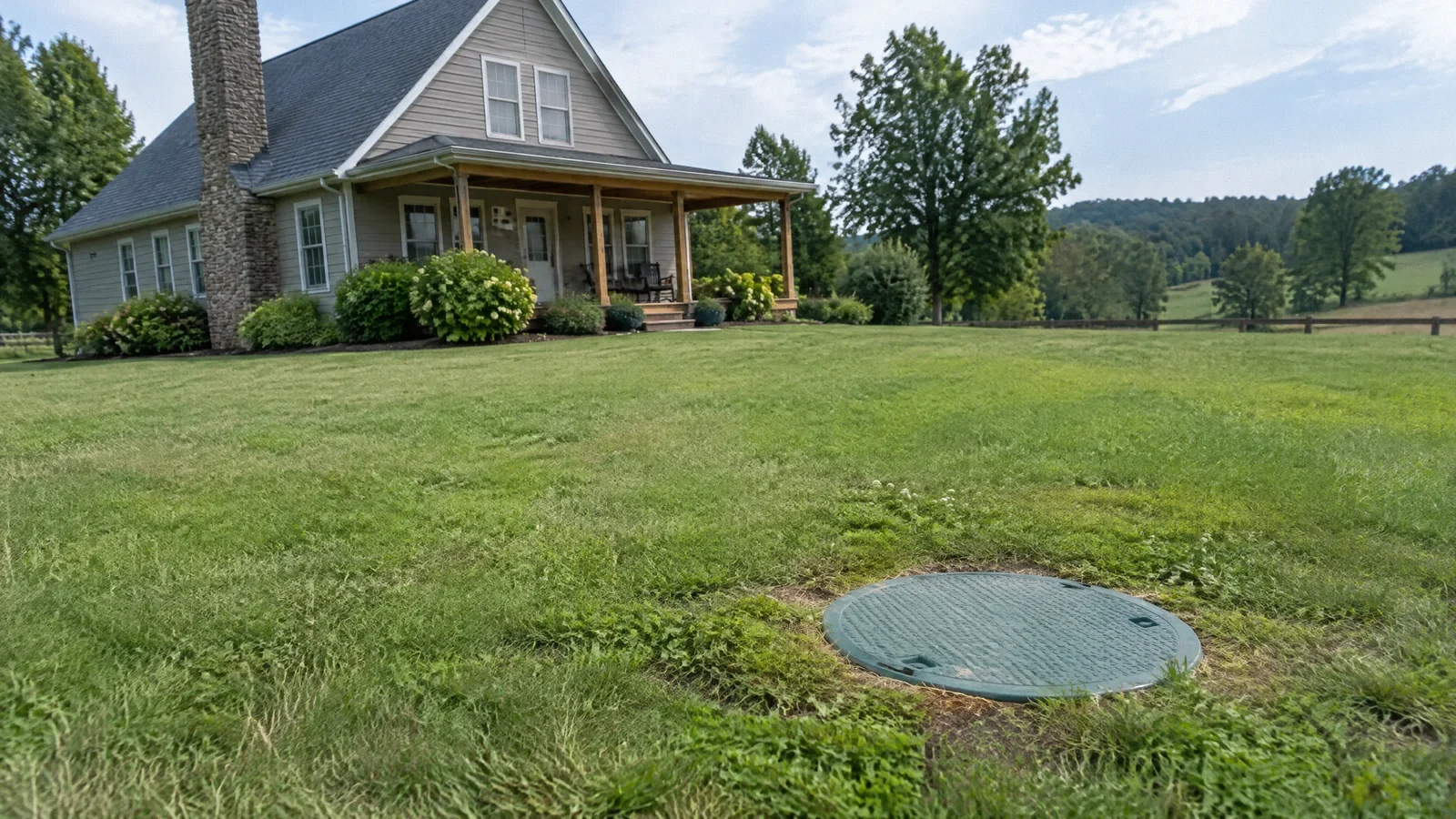
A conventional septic system carries household wastewater to a buried tank, where solids settle and grease floats. Liquid flows to a drainfield, where it moves through soil for further treatment. Designs vary, and the tank must be inspected and pumped as needed.
The path from house to soil
A septic system treats wastewater on the property instead of sending it to a municipal sewer. Water from toilets, sinks, showers and laundry usually travels through a main drain to a buried tank. From there, partially treated liquid moves to a drainfield or another treatment component. A system’s design depends on the site, soil, available space and local requirements. Your permit, as-built drawing and service records are more useful than assuming every system looks alike.
The tank and the drainfield do different jobs. The tank holds wastewater and separates materials; it is not simply an empty container that needs to be pumped every time it fills with liquid. A normally operating tank contains liquid between services. The soil beneath the field provides much of the remaining treatment as effluent moves through it.
What happens inside the tank
Wastewater enters a watertight tank, commonly made of concrete, fiberglass or polyethylene. Heavier solids settle into a layer called sludge. Oils and grease float and form scum. Bacteria break down some organic material, but the process does not eliminate all solids. Without periodic removal, accumulated material can travel out of the tank and damage downstream components.
Compartments and outlet fittings help keep the floating and settled layers inside while liquid leaves the tank. Some systems also have an effluent filter requiring service. The tank may have access risers or buried lids, but identifying a lid is not an invitation to open it. A septic tank is a confined space with potentially deadly gases. Never enter a tank or lean into an opening; leave inspection, access and pumping to a qualified service provider.
What the drainfield does
In a conventional gravity system, liquid leaving the tank flows to a shallow, covered drainfield. Distribution piping or chambers release it gradually into surrounding unsaturated soil. As liquid percolates, physical, chemical and biological processes in the soil reduce pollutants and disease-causing organisms. The field is part of the treatment system, not merely a place to dispose of water.
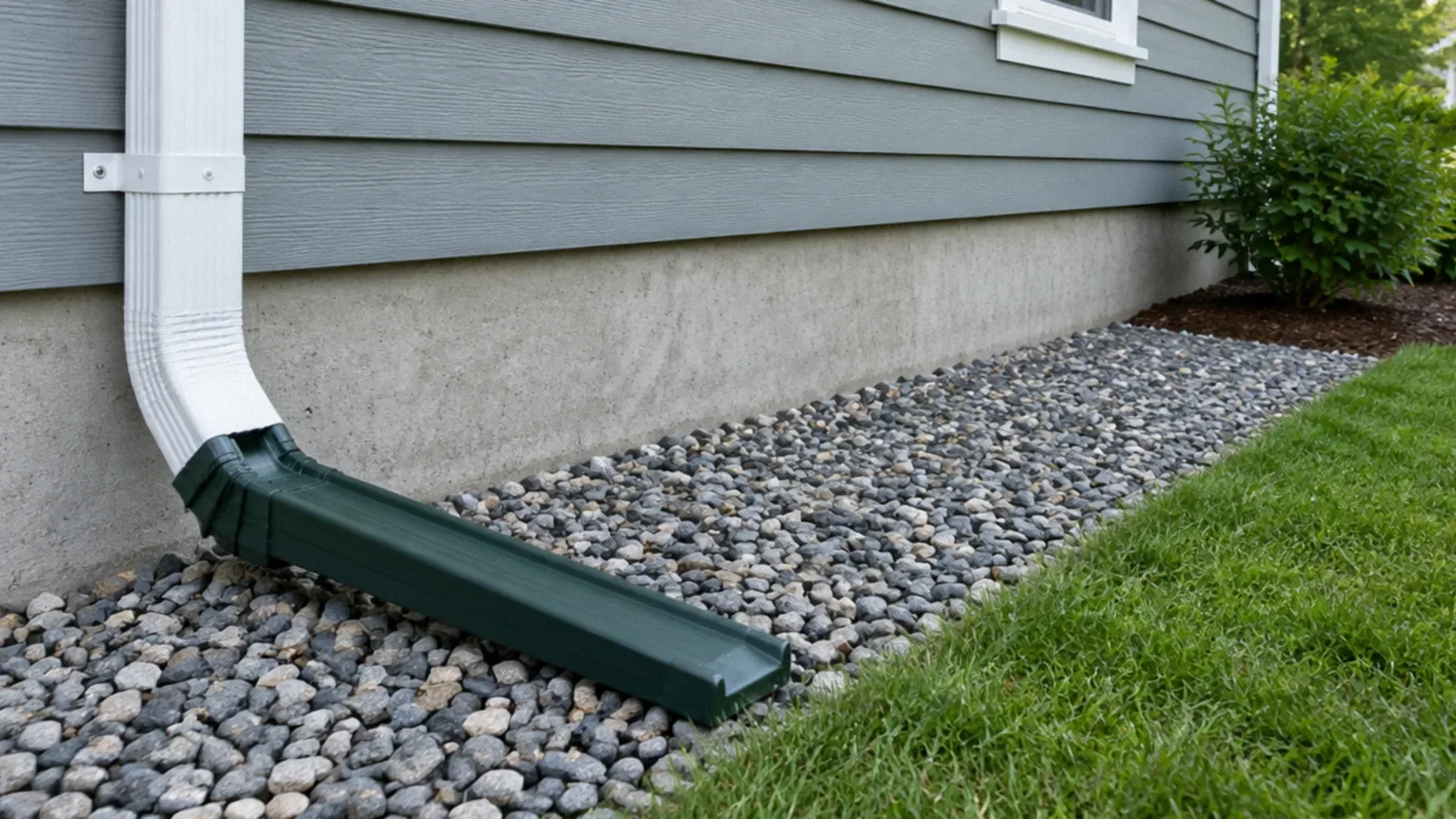
The soil needs enough capacity and appropriate conditions. When too much wastewater arrives in a short period, or solids clog the field, liquid may surface or back up into the house. Heavy vehicles, paving, buildings and roots can harm the field or interfere with its function. Keep roof drains and other excess surface water away, and consult local requirements before planting or changing the area.
Alternative designs and pumps
Not every property can use a standard gravity-fed field. Depending on soil and site conditions, a permitted design may use a pump, pressure distribution, a mound, sand filter or another treatment unit. A pump moves liquid; it does not by itself make wastewater safe to handle. Electrical controls, alarms and treatment equipment have their own service needs, and a system with mechanical components generally needs more frequent inspection.
If an alarm sounds, reduce water use and contact the service company promptly. Record the alarm and any symptoms, but do not open tanks or work on electrical equipment yourself. Ask your provider what the alarm means for your specific model and whether an emergency response is needed.
Inspection and pumping
EPA advises that the average household septic system be inspected by a septic professional at least every three years and typically pumped every three to five years. These are starting points, not a promise that a particular tank can wait that long. Household size, tank capacity, water use and the amount of solids affect the appropriate interval. Alternative systems may need annual inspection or a service contract. Follow the system designer, service provider and local authority when they require a different schedule.
During service, ask for a written record of the date, tank condition, sludge and scum measurements, any filter service and recommended repairs. Keep the map and reports together. Pumping removes accumulated solids from the tank, but it cannot automatically repair a failed drainfield or correct a broken pipe. If a contractor recommends a major replacement, ask which findings support it and whether further assessment or permits are needed.
Daily habits that protect the system
Spread laundry and other large water uses across the week instead of sending several loads in rapid succession. Repair running toilets and leaking fixtures. Efficient water use reduces unnecessary hydraulic loading; it cannot compensate for a system that is already damaged or too small.
Flush only human waste and toilet paper. Keep wipes, even those marketed as flushable, feminine hygiene products, diapers and other solids out of the toilet. Avoid pouring grease, paint, solvents or other hazardous chemicals down drains. Follow local disposal guidance. Additives are not a substitute for inspection and pumping, and a product claim alone is not evidence that an existing problem has been corrected.
Recognize a problem without entering the system
Slow drains, gurgling, sewage odors, wastewater backing up into the house, or wet and unusually lush patches over the field can signal a problem. None identifies the precise cause on its own: a blockage in one household drain may look different from an overloaded or failing field. Note which fixtures are affected, when symptoms began and whether wet weather or heavy water use preceded them.
Keep people and pets away from sewage or wet ground that may contain wastewater. Reduce water use and contact a septic professional or local health department. If sewage has entered the house, avoid contact and arrange qualified cleanup; do not treat it like a clean-water spill. Address the source before replacing finishes.
Find your system and plan ahead
A county health department or permitting office may have a permit or drawing. Previous owners and service companies may have pumping records. Compare any old plan with the actual service history: changes on the property may mean a drawing is incomplete. A qualified locator can help identify components without damaging them.
When buying or selling a home, request inspection records, pumping history, permit information and the location of both the tank and field. An inspection’s scope varies, so ask whether it includes the distribution system and field as well as the tank. A clean-looking lawn or a recent pumping receipt alone does not establish that every part of the system works properly.
Your next-step checklist
- Find the permitted system layout and keep service records.
- Schedule professional inspection and pumping based on the system’s actual condition.
- Spread out water use and fix leaks.
- Keep vehicles and excess runoff away from the drainfield.
- Call a professional for backups, odors, alarms or surfacing wastewater.
Related questions
Does a full septic tank always need pumping?
No. A working tank normally contains liquid. A professional assesses the sludge and scum layers, service history and condition to determine when pumping is needed.
Can I inspect the inside of my septic tank myself?
Do not open or enter the tank. Septic tanks are confined spaces with potentially fatal gases. Hire a qualified service provider.
Does pumping fix a failing drainfield?
Not necessarily. Pumping removes tank solids, but damaged or overloaded downstream components need their own diagnosis and repair.
Sources & context
Public guidance supports the principles in this article. The practical questions and examples are editorial interpretation, not a site assessment or a coverage decision. State-specific rules apply only where identified.