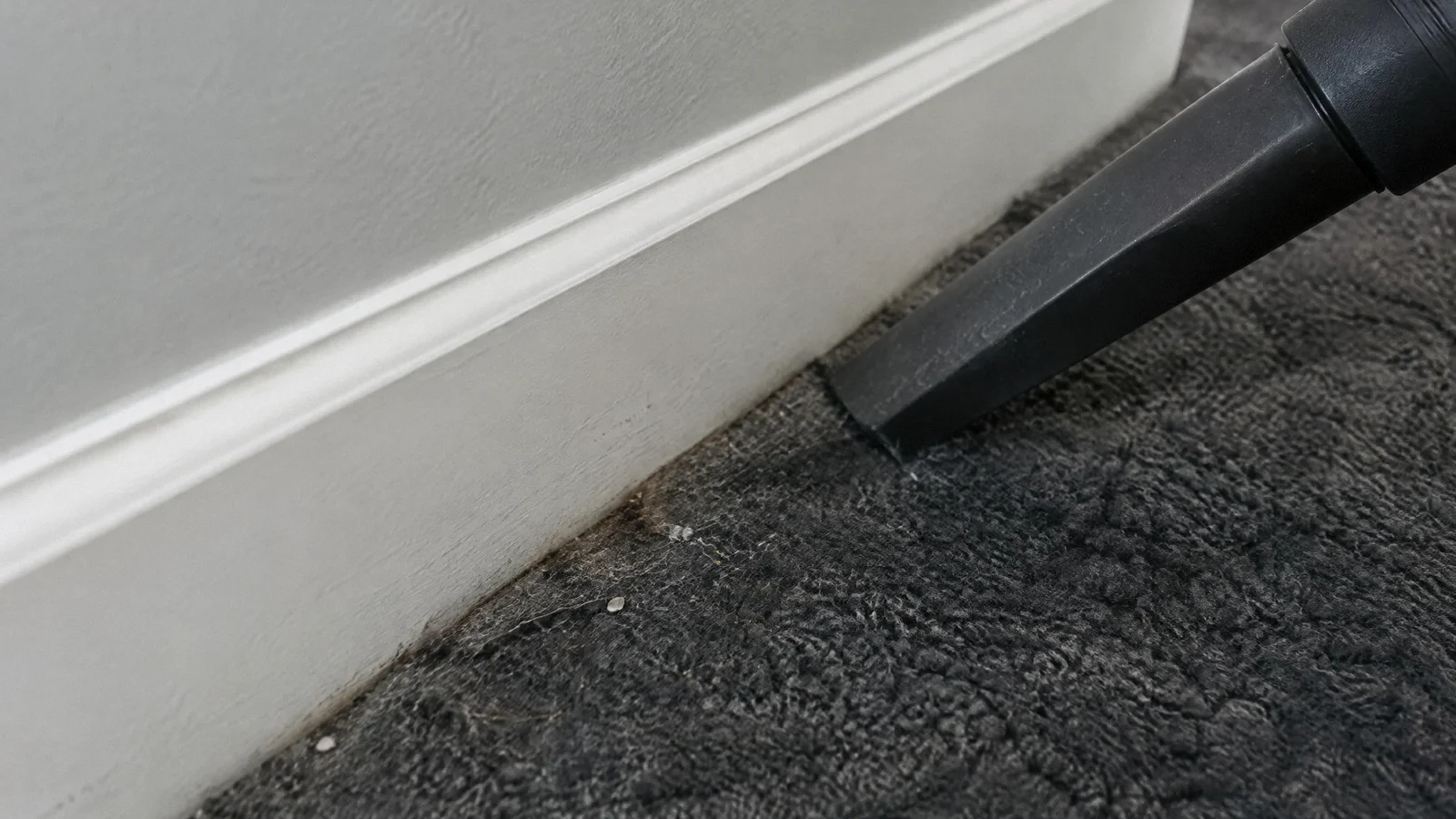
Vacuum the edges with a crevice tool, then use a carpet-compatible spot treatment according to its label. Persistent dark lines can require professional cleaning and attention to airflow gaps.
Why edges turn dark
A dark line along a baseboard, under a closed door or beside stairs can be filtration soil: airborne particles collect where air moves through carpet fibers and a narrow gap. Ordinary tracked soil, a spill, soot or water damage can look similar, so the location is a clue rather than proof. Examine the whole room and consider whether the line is dry, damp, oily or accompanied by an odor. If there was a fire, flooding or suspected contaminated material, ask a qualified professional to assess it before ordinary carpet cleaning.
Start with dry removal
Move small furniture away and vacuum slowly along the wall using a crevice attachment. Work in overlapping passes, taking care not to scrape painted trim or pull loose carpet fibers. Empty or change the vacuum collection container as needed. Avoid pushing a nozzle under a sharp tack strip or lifting the carpet. A vacuum may remove loose particles even when embedded dark residue remains.
Check the carpet and test a cleaner
Read the carpet manufacturer’s instructions and choose a spot cleaner intended for that fiber and backing. Test in a hidden area according to the product instructions and allow it to dry; look for color loss, transfer or texture change. A sensitive wool carpet or unknown material may need specialist care. Never combine different cleaners or use bleach as a shortcut. Avoid saturating the edge, where water can reach the backing, tack strip and wall.
Treat a small area carefully
Apply the product to a clean white cloth if the label calls for that method. Blot rather than grind the dirt into the pile, replacing the cloth surface as it becomes dirty. Work in small sections and follow the label’s rinse or extraction instructions. Do not scrub hard against the baseboard. Afterward remove as much moisture as the instructions permit and allow the carpet and backing to dry fully before replacing furniture.
Know the limits of spot treatment
Filtration soil can be fine and oily, and repeated home attempts may leave residue or abrade fibers. A clean test patch does not guarantee a uniform result on an older carpet. If the line remains after a careful treatment, ask a professional carpet cleaner about filtration-soil methods and the expected outcome. Provide the fiber and product information, and show where you tested. A cleaner cannot promise that permanent discoloration or damaged fibers will disappear.
Address the source of airborne particles
Vacuuming the edges regularly may slow buildup. Check that heating and cooling filters fit correctly and are changed according to equipment guidance. Reduce indoor particle sources where practical. Air movement through gaps may contribute to a recurring line; a qualified contractor can assess accessible gaps and the building’s ventilation before sealing anything. Do not block a required vent, combustion-air opening or door clearance in an attempt to stop the mark.
When a different problem needs attention
A damp edge, soft baseboard, spreading stain or musty smell calls for a moisture investigation. Fix a leak and dry the affected materials rather than hiding it with cleaner or fragrance. If the carpet was affected by sewage or other contaminated water, seek experienced remediation help. Dark deposits following a fire may require a different cleaning plan; avoid rubbing soot into the carpet.
Set a practical maintenance routine
Inspect edges during regular vacuuming and note where marks return. Keep entry mats clean and follow the carpet maker’s routine maintenance guidance. Photograph a recurring mark before treatment so you can compare it after the area has dried. When arranging professional service, ask about carpet protection, drying time and whether the cause of recurring soil should be investigated separately.
Separate a persistent line from a new stain
Compare the dark edge with the carpet farther into the room and with other walls. A narrow line following gaps or the bottom of a frequently closed door may suggest airflow-related filtration soil; isolated marks directly below a leaking window suggest a different investigation. Check the condition in daylight and again after the carpet has fully dried from cleaning. If the edge is wet, do not begin repeated spot treatments: inspect for the source of water and consult a professional when access is unsafe or the extent is unclear. Note whether the discoloration returns after cleaning and how quickly. Share that record with the cleaner and, if necessary, a building professional. Neither a photograph nor the line’s color can establish whether a deposit is mold, soot or ordinary soil. That distinction matters because different causes require different cleanup and prevention plans.
Your next-step checklist
- Why edges turn dark
- Start with dry removal
- Check the carpet and test a cleaner
- Treat a small area carefully
Related questions
What if the first attempt does not solve the problem?
Stop and reassess the material and underlying cause. A qualified professional can help with inaccessible, damaged or persistent problems.
Should I follow the manufacturer’s care instructions?
Yes. Use the instructions for the actual material, equipment and cleaning product.
Sources & context
Public guidance supports the principles in this article. The practical questions and examples are editorial interpretation, not a site assessment or a coverage decision. State-specific rules apply only where identified.