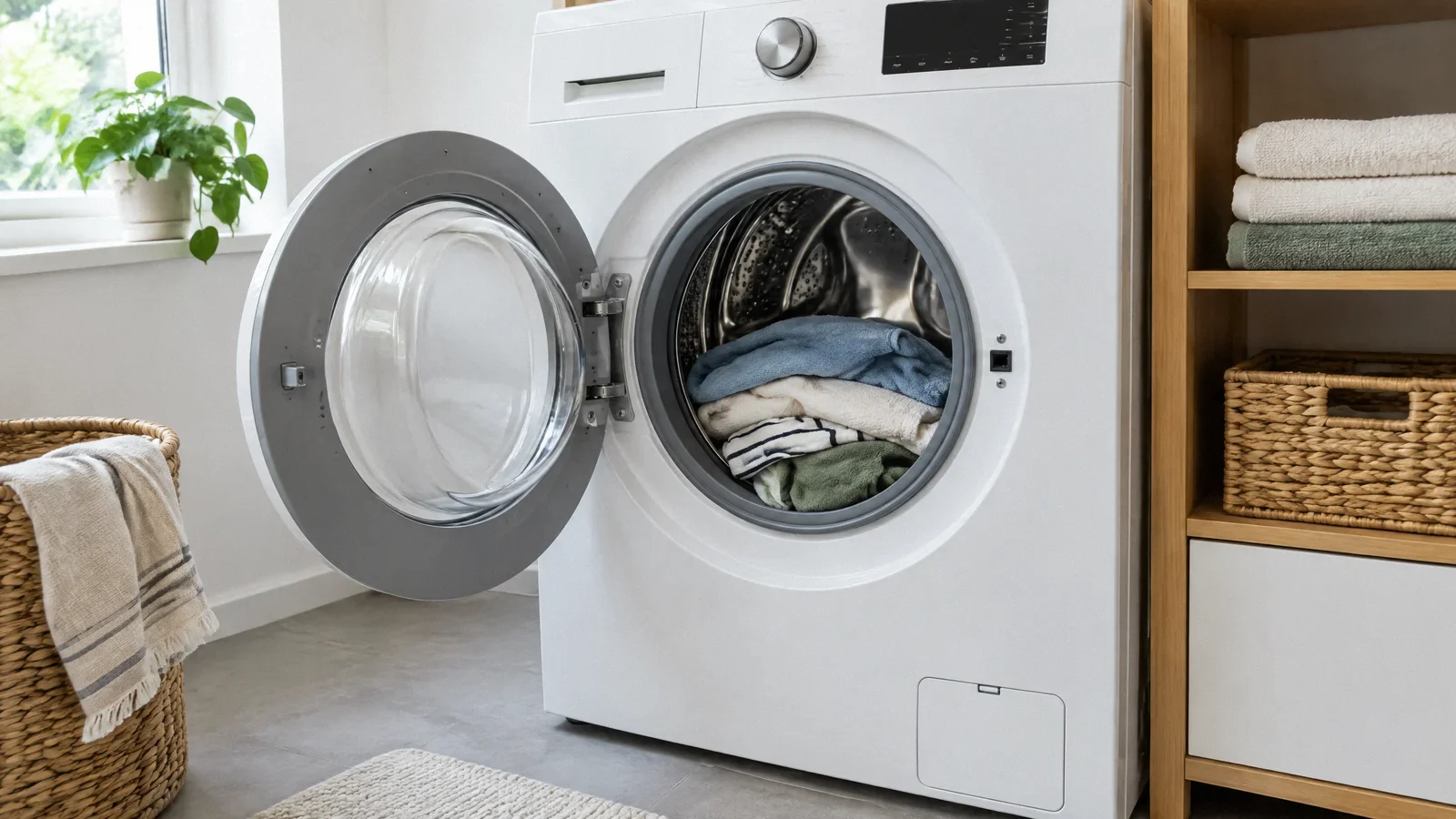
Remove loose lint from the drum and accessible door seal, then check your model’s instructions for a user-serviceable filter. Sorting loads and using the correct detergent can help prevent lint from returning.
Find where lint is collecting
Start with an empty machine and look inside the drum, around the door opening and in the folds of the seal on a front loader. Lint on clothes does not necessarily mean the washer has a clogged filter. A tissue left in a pocket, shedding towels, overloaded drum or too much detergent may all leave residue. Examine the lint: paper fragments suggest a different cause from a persistent wet deposit around the door.
Check your exact model before opening a filter
Not every washer has a user-removable lint filter. Some models have a drain pump filter accessible behind a small lower panel; others have a self-cleaning system or require a service technician. Look up the model number and manual before opening any cover. Do not pull apart the machine or assume a dryer lint screen belongs in a washer. If the manual does not give an owner procedure, contact the manufacturer or a service professional.
Clean the drum and seal
With the machine empty and off, pick up visible lint with a soft damp cloth. On a front loader, gently pull back the accessible rubber door seal and wipe its folds as the manufacturer directs. Do not use a sharp tool that could cut the rubber. Remove trapped small objects carefully without reaching into a mechanism. Wipe the door glass and the surface that contacts the seal, then dry them. Leave the door or lid open to air only when safe for children and pets.
If the manual permits filter cleaning
Follow the model-specific instructions to turn off and disconnect the washer as directed. The filter can retain water even after a cycle, so use the manual’s drain procedure and have a shallow container and towels ready. Water can be hot; allow it to cool. Slowly remove the filter only after the manual says it is safe, clear debris and reinstall the seal and cover exactly as directed. Check for leaks during the next cycle. Stop and call for service if the cap will not turn, the seal is damaged, or water continues leaking.
Run the maintenance cycle
After removing loose lint, use the machine-cleaning cycle and cleaning product recommended for that model. Follow the product label and the washer manual. Do not combine cleaners or add more than directed. A maintenance cycle is useful for residue inside the tub but is not a substitute for a blocked drain repair. Wipe and dry reachable surfaces afterward. If there is a separate dispenser, remove and clean it only as the manual allows.
Keep lint off the next load
Empty pockets and close zippers before washing. Wash heavy lint-shedding items such as new towels separately from dark garments or fabrics that attract lint. Avoid packing the drum so tightly that clothing cannot move and rinse properly. Use the detergent type and amount recommended for the machine and load; more detergent does not necessarily improve cleaning. Select a suitable water level and cycle if the machine offers those choices.
When to call for help
A little lint after washing a shedding item is different from standing water, slow drainage, repeated error codes or a burning smell. Stop using the washer and seek service if it leaks or does not drain. Never reach into an operating machine. Tell the technician the model, the error code if any, and whether the problem occurs on every load. These observations help distinguish a laundry-sorting issue from a mechanical fault.
Check whether the change worked
Run a normally sized test load of similar fabrics with empty pockets. Inspect both the clothes and the door seal after the cycle. If lint decreases, keep the sorting and maintenance routine. If a clean load still has heavy deposits, check the manual for cycle and detergent guidance and arrange a service visit. Do not keep opening inaccessible pump parts or applying strong chemicals to the machine.
A simple test for the next wash
After the machine is cleaned, run a normally sized load of similar, non-shedding garments with all pockets checked. Use the detergent amount and cycle recommended for the load and washer. When the cycle ends, inspect the clothing and accessible seal. If the result improves, add towels and other lint-producing items back as a separate load and see whether the issue returns. If the residue resembles paper, examine pockets and the wash load before assuming a pump fault. If water remains in the drum, the machine displays a drain error, or a leak develops, stop the test and consult the manual or a service technician. Keep the model number and any error code available. This sequence helps you separate a load-related problem from a recurring machine issue without opening parts the manufacturer has not made user-serviceable. Avoid running repeated cycles if the washer is malfunctioning.
Your next-step checklist
- Find where lint is collecting
- Check your exact model before opening a filter
- Clean the drum and seal
- If the manual permits filter cleaning
Related questions
Should I ignore the manufacturer’s directions?
No. Follow the instructions for your specific surface or machine and product.
When should I call a professional?
Stop if the problem involves inaccessible components, persistent damage, or conditions you cannot safely assess.
Sources & context
Public guidance supports the principles in this article. The practical questions and examples are editorial interpretation, not a site assessment or a coverage decision. State-specific rules apply only where identified.