For a small accessible patch on a hard surface, limit disturbance, protect yourself and nearby areas, clean with detergent and water, and fix the moisture source. Larger, hidden or contaminated-water problems need professional assessment.
Decide whether this is a small cleanup
EPA says a moldy area smaller than about 10 square feet can often be handled by the homeowner, but size is only one factor. Growth inside an HVAC system, extensive water damage, sewage or other contaminated water, hidden cavities, or repeated growth warrants professional help. A person with health concerns should consult a health professional before beginning. Infants and people with asthma, severe allergies or weakened immune systems should avoid the work area.
Prepare the area before disturbing material
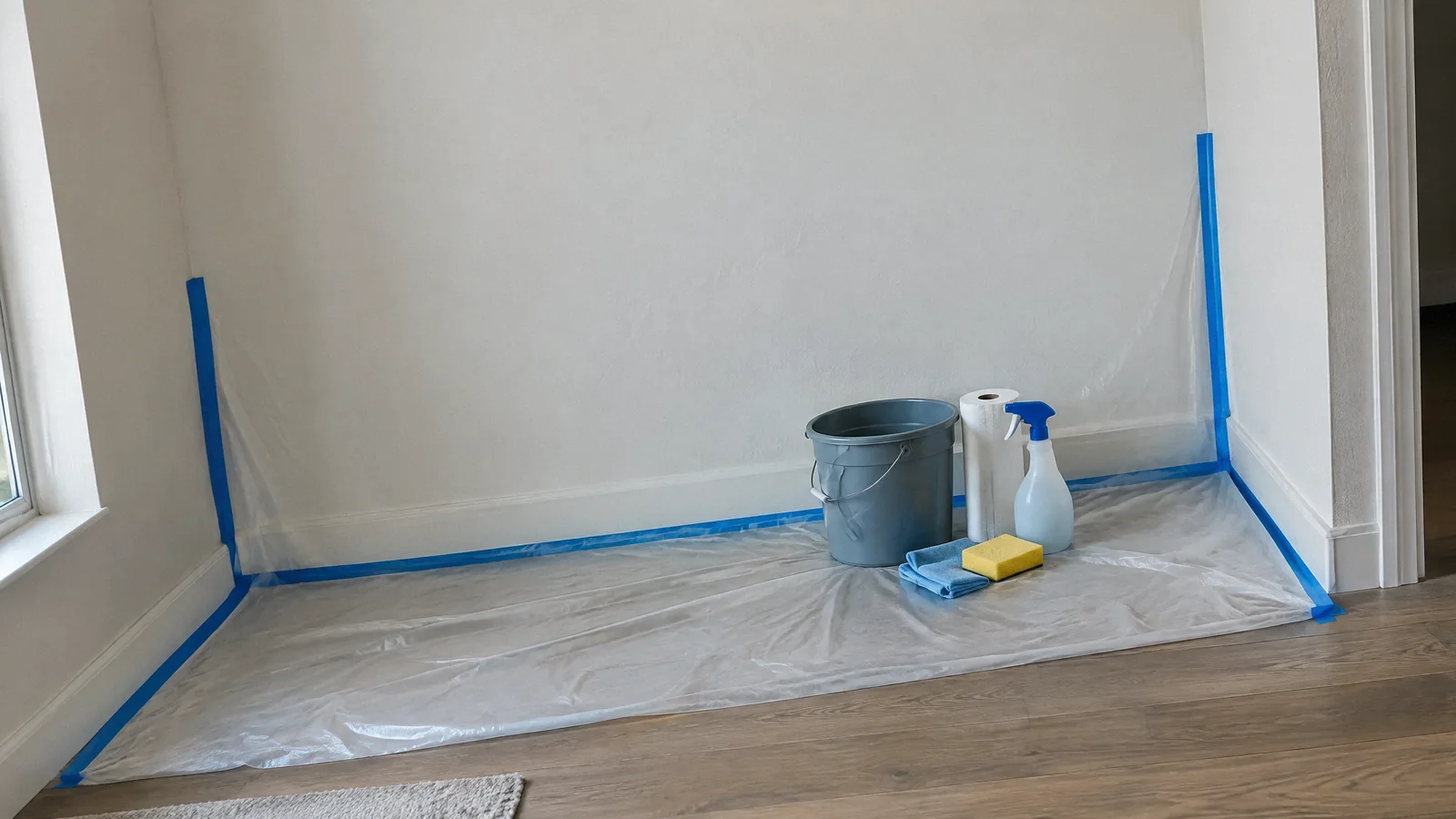
Remove movable clean belongings from the immediate work area. Cover surfaces that cannot be moved with secured plastic to reduce contamination by debris. Keep other people and pets away. Do not run a system suspected of mold contamination; EPA warns that it can spread mold. For a small patch, extensive containment is not necessarily required. A larger or more complex job may need professionally designed containment and filtration; plastic alone does not guarantee isolation.
Choose protection that fits the task
Wear gloves, goggles without ventilation holes, and a well-fitting N95 respirator as EPA recommends for mold cleanup. Follow respirator instructions for fit and use. Protective equipment reduces exposure but does not make every situation appropriate for do-it-yourself work. If breathing protection is unsuitable for you, or if the area cannot be accessed safely, arrange qualified help. Keep work clothes and cleaning items from contaminating clean rooms.
Clean hard surfaces gently
On a small, accessible hard surface, scrub the mold off with detergent and water and dry completely. Use a damp cloth or soft brush rather than dry brushing, sanding, or directing compressed air at it. Work carefully so droplets and debris stay on the protected surface. Do not saturate drywall or force water into a wall, outlet, or appliance. Dispose of cleaning materials in a closed bag; avoid carrying loose debris through the home.
Understand porous materials
Mold can grow into porous materials, making complete removal difficult or impossible. Wet, moldy ceiling tiles, carpet, insulation or drywall may need to be discarded rather than merely wiped or painted. Do not cut open a wall just to search for a larger problem without a safe plan; older painted surfaces may also present lead hazards. A professional can assess the hidden extent and arrange appropriate containment and disposal.
Fix moisture before calling it finished
Mold returns when the material stays wet. Repair the leak, address condensation or correct another identified moisture source, and dry the affected area. A stain can remain after material is cleaned, so color alone is not a clearance test. Conversely, covering visible growth with paint or using a scented spray does not remove it. If visible growth returns or the source is unknown, stop and get an assessment rather than repeatedly wiping the same patch.
Avoid unnecessary chemical exposure
EPA notes that biocides such as chlorine bleach are not routinely recommended for mold cleanup. Physical removal and drying are central. If a product is used, follow its label, protect skin and eyes and ventilate as directed. Never mix bleach with ammonia, acids, or other cleaners. A respirator for particles does not protect against chemical gases. Do not fog the room or blow fans directly across visible mold as a shortcut.
Check the result and monitor
The area should be clean, dry and free of visible debris, with the water problem corrected. Carefully remove protective coverings without shaking them, bag debris, and clean reusable tools. Inspect the location after the next rain or period of condensation. Returning dampness, renewed visible growth or a persistent musty odor means the underlying problem may remain. Testing for a particular species is generally unnecessary to decide that visible mold and the moisture causing it need attention.
A practical boundary for stopping
A small patch on a washable bathroom surface is different from material spreading behind a cabinet or a ceiling damaged by a leak. If cleaning reveals a larger wet area, stop disturbing it and reassess. Do not cut through building materials merely to establish the full boundary without considering hidden wiring, plumbing and older paint. Similarly, an ordinary household fan aimed at a visible patch can scatter debris, while a vacuum without suitable filtration may release fine particles back into the room. EPA’s recommendations for professional containment and HEPA filtration depend on the scale and conditions of the job. A professional can design those controls when needed. Keep the area inaccessible to others while arranging help, and tell the contractor about the water source, the approximate visible area and any sensitive occupants. The threshold for outside help is lower when health or access makes the work unsafe.
Your next-step checklist
- Identify the affected area and the moisture source.
- Keep people and pets away from cleanup.
- Follow the manufacturer’s instructions and seek qualified help for inaccessible or extensive contamination.
- Dry the area and check for recurrence.
Related questions
Can color identify the type of mold?
No. Appearance alone cannot reliably identify a mold species. Address visible contamination and the moisture source.
Will bleach alone solve the problem?
Removing contamination and correcting moisture are essential. EPA does not routinely recommend biocides such as bleach for mold cleanup.
Sources & context
Public guidance supports the principles in this article. The practical questions and examples are editorial interpretation, not a site assessment or a coverage decision. State-specific rules apply only where identified.
- Mold Cleanup in Your Homegovernment
- Mold Clean Up Guidelines and Recommendationsgovernment