Identify the exact finish and follow its manufacturer’s care instructions. Start with an approved gentle method and a soft cloth; avoid abrasive pads and unapproved rust removers. Pitting or missing plating cannot be restored by cleaning.
First identify the finish and the mark
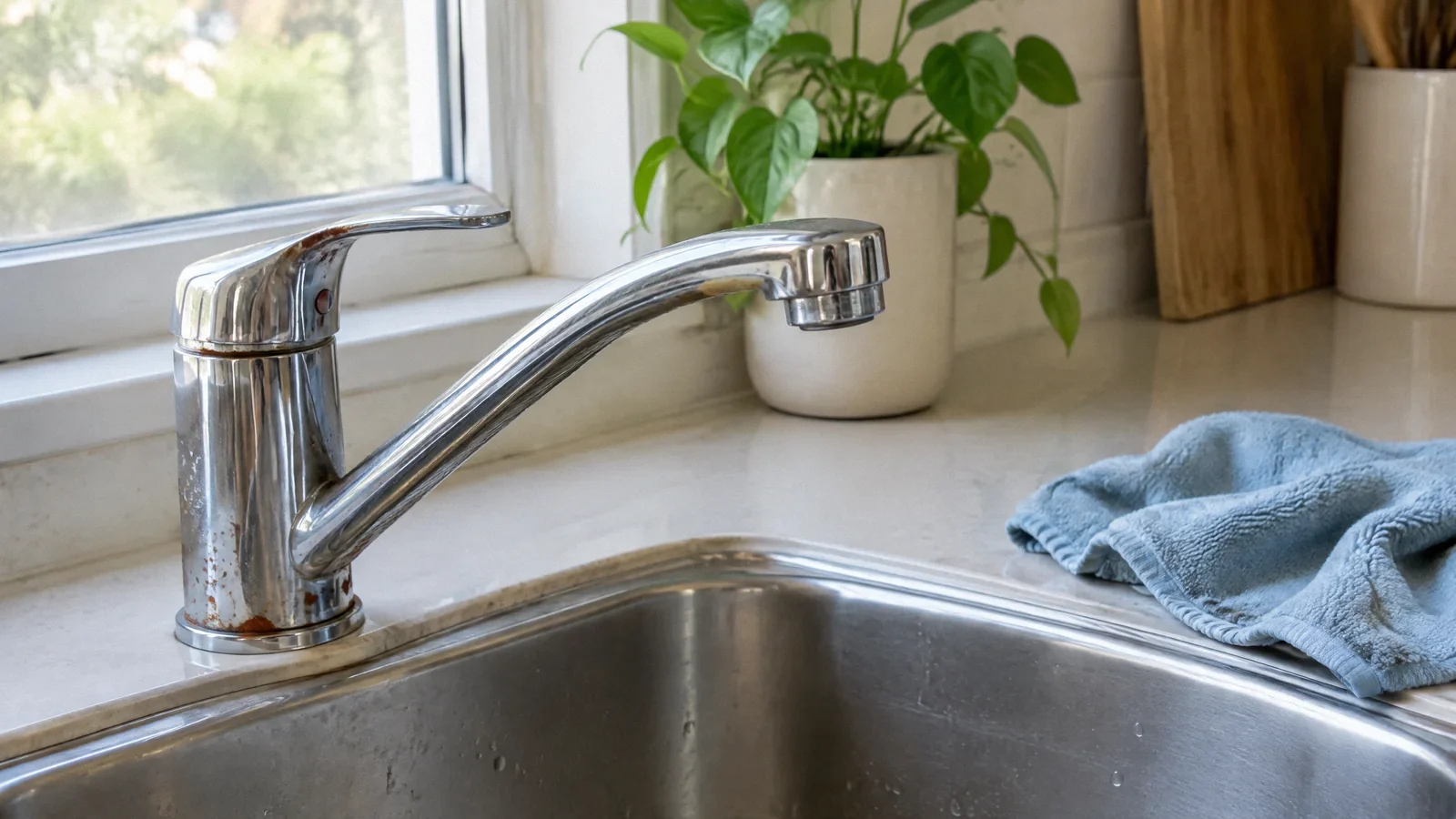
A reddish-brown mark on a chrome-looking fixture can be a surface deposit, corrosion at damaged plating or material transferred from another object. Color alone does not establish which one it is. Chrome plating is a finish over a substrate; an exposed or pitted area will not necessarily become smooth and intact after cleaning. Identify the manufacturer, model and finish before selecting a cleaner. Different chrome and chrome-look finishes can have different care instructions, and advice for a car bumper or solid metal object may damage a bathroom faucet.
Start with the gentlest permitted method
For a fixture whose manufacturer permits it, use a soft damp cloth and the specified mild soap or detergent. Kohler’s guidance for specified chrome faucets recommends mild dishwashing soap, rinsing and blotting the surface dry. Work gently on a small, inconspicuous area first and observe the finish after drying. A test reduces uncertainty but cannot guarantee that an already damaged coating will tolerate treatment. If a mark does not lift with the approved method, stop rather than increasing pressure or trying several chemicals in succession.
Rinse and dry carefully
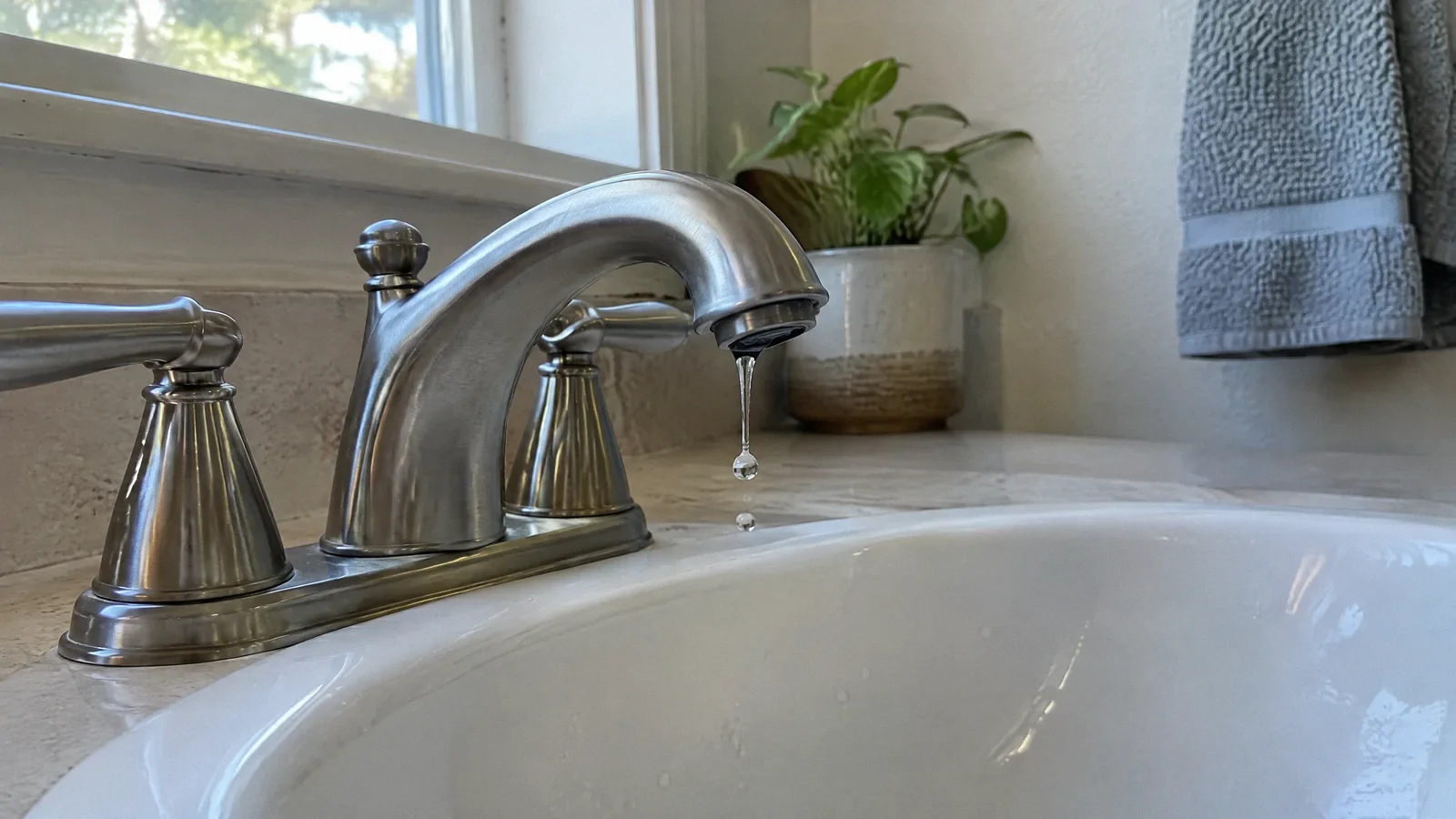
Follow the fixture maker’s directions about rinsing. Moen advises rinsing cleaners off promptly and avoiding harsh cleaners and abrasive pads for its faucet finishes. Use a separate damp cloth to remove approved cleaner, then dry with a soft clean cloth. Do not let water or a cleaner collect around a loose base or damaged joint. If water is leaking from the fixture, a cleaning cloth is not a repair: identify and address the leak. Drying routine splashes can reduce water deposits but will not stop corrosion under damaged plating.
Avoid abrasive shortcuts and rust removers
Steel wool, abrasive powders and scouring pads can scratch a polished finish. Delta advises against harsh abrasives and products marketed to remove rust or tarnish on its finishes; some acids and caustic chemicals can also damage them. Do not assume that aluminum foil, a wire brush or a polishing compound is safe simply because a household tip calls the surface chrome. Check the actual fixture’s instructions. Never mix cleaning agents, and keep a product off adjacent stone, grout or finishes unless its label confirms compatibility.
What about vinegar?
Manufacturers do not give identical guidance for every finish. Moen permits a limited application of diluted household vinegar for dried water spots on certain faucets, followed by rinsing and drying, while a Kohler care guide for specified chrome faucets advises against acid-containing cleaners. Neither instruction is a universal rust-removal recipe. Check the precise product and the purpose of the instruction. If its manufacturer does not approve vinegar for the finish, do not use it. Avoid using a homemade acid mixture on an unknown or damaged surface.
When the finish is already damaged
If a brown area is accompanied by flaking, pitting, roughness or an exposed dark patch, cleaning may remove a loose deposit without restoring the missing coating. Repeated scrubbing can make damage more noticeable. Photograph the area and ask the manufacturer about the finish, replacement parts and any applicable warranty. A fixture professional can assess whether a replaceable trim piece or the whole fixture should be changed. Refinishing or replating is a specialist decision and is not guaranteed to be practical or economical for every item.
Check the source of recurring deposits
A mark that returns at the base may be associated with retained water, a leaking connection or contact with another corroding item. Dry the accessible surface and observe when moisture reappears. Water can travel from another location, so do not identify a hidden leak by appearance alone. Stop using a fixture that is actively leaking and shut off its supply only if the valve is known and safely accessible. A plumber can investigate a persistent leak; affected cabinetry or walls may also need assessment and drying.
Care after cleaning
Wipe routine splashes and dry the finish with a soft cloth as the manufacturer recommends. Keep metal cans, razors and abrasive tools from resting on wet chrome. If the finish requires a specific protective product, use only what its manufacturer allows. Regular inspection makes it easier to notice a new leak or damaged spot before a larger area is affected, but it does not guarantee corrosion prevention. Save the model information so the right care guide and replacement parts can be found later.
When the problem is more than a stain
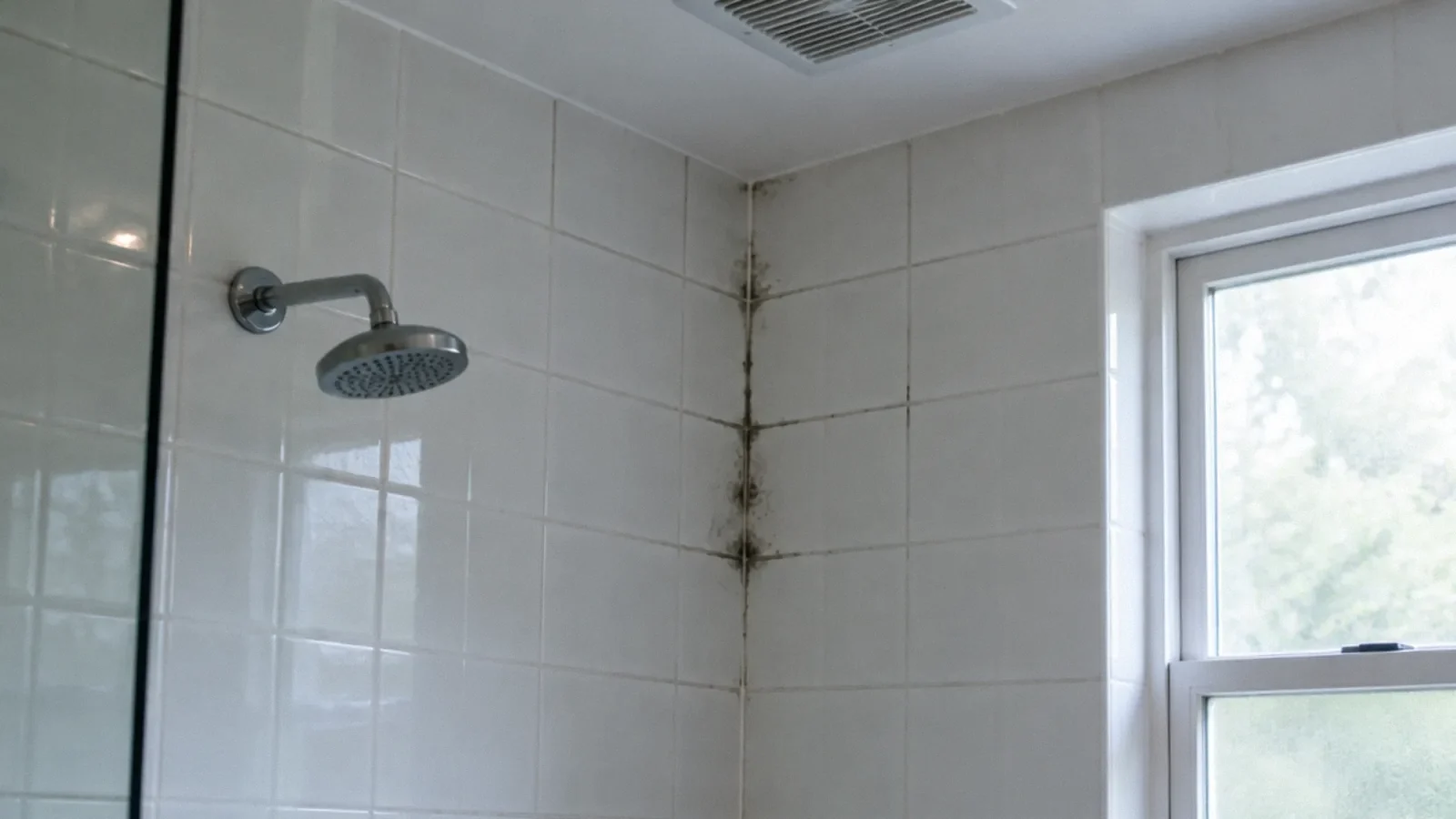
Do not confuse orange staining with evidence of mold or assume that color identifies any biological material. If the surrounding shower has a recurring damp area, loose caulk or a musty odor, the moisture source needs its own assessment. The separate shower mold guide covers suitable small hard-surface cleanup and signs that damage may extend behind the surface. For a valuable antique or unknown plated object, consult a conservator or finish specialist before treating it. The safest choice may be to leave a stubborn mark rather than remove intact plating.
Your next-step checklist
- Identify the fixture and its finish.
- Test the manufacturer-approved method in an inconspicuous area.
- Use a soft cloth and avoid abrasive pads.
- Rinse and dry as directed.
- Investigate recurring moisture or damaged plating.
Related questions
Will cleaning restore pitted chrome?
No. Cleaning may remove a surface deposit, but it cannot replace missing plating or make a pit intact.
Can I use steel wool on chrome faucets?
Avoid it unless the specific manufacturer explicitly permits it. Abrasive pads can scratch the finish.
Is vinegar safe on every chrome finish?
No. Manufacturer instructions differ. Check the exact product and do not assume instructions for water spots apply to rust.
What if the mark keeps returning?
Look for a recurring moisture source or damaged finish and seek a qualified assessment if the fixture is leaking.
Sources & context
Public guidance supports the principles in this article. The practical questions and examples are editorial interpretation, not a site assessment or a coverage decision. State-specific rules apply only where identified.