Wait for safe access, separate heavily contaminated and delicate items, and follow care labels. Launder lightly affected washable garments separately and inspect before drying; extensive soot, hazardous contamination or valuable textiles need specialist assessment.
Safety and sorting come first
Do not enter a fire-damaged home until the fire department says it is safe. Smoke residue can contain particles and chemicals from what burned; a stain or odor alone does not reveal its composition. Keep children, pets and people with health sensitivities away from cleanup. If clothing was exposed to heavy soot, hazardous materials, sewage or firefighting chemicals, seek advice from a professional textile restoration service before handling or washing it at home.
Document the affected garments for your insurer before treatment or disposal. Photograph labels, damage and groups of items, and ask the insurer how restoration and replacement are handled. Separate clean clothing from affected clothing. Bag items for transport without shaking them in living areas, and tell the cleaner what burned if known. Heat-damaged or melted material may not be structurally sound even if its odor improves.
Separate washable and delicate fabrics
Read the care label for each item. Sort washable garments by color, fabric and degree of contamination; keep visibly sooty items away from lightly smoky garments and from clean laundry. Dry-clean-only wool, silk, structured garments, leather, suede and items with unstable dyes or embellishments deserve professional evaluation. Tell the cleaner about smoke and soot before leaving the items so the shop can decide whether it is equipped to treat them.
Heirlooms and irreplaceable textiles should go to a textile conservator. Fire, water and suppression agents can cause different forms of damage at once. Do not assume a favorite item can withstand a household stain remover just because a similar garment can. Test any permitted product in an inconspicuous spot and follow both the product and garment labels.
Handle loose soot gently
Soot can smear or be driven into fibers by rubbing, brushing aggressively or pressing a vacuum nozzle against the fabric. Avoid shaking it indoors. If an item has substantial deposits, ask a fire-restoration specialist whether it can be safely handled and whether professional particle removal should precede laundering. Delicate fabrics require particular care; a professional can assess whether particle removal is suitable.
Do not apply water or a stain chemical indiscriminately to a valuable or heavily contaminated textile. A professional can evaluate whether the residue is dry or oily and select a method that will not make staining harder to remove. An ordinary household vacuum can redistribute fine particles. Keep contaminated clothing and tools away from clean sleeping areas.
Launder lightly affected washable items
For a washable garment with light smoke exposure and no suspected hazardous contamination, follow the label and use the recommended amount of laundry detergent. Wash it separately from clean clothing and avoid overloading the machine so water and detergent can reach the fabric. Follow the washer manufacturer’s instructions, and use only the water temperature and laundry products the garment allows. Do not mix bleach with ammonia or other cleaning products.
Inspect the garment after washing and before using dryer heat. If soot or odor remains, a second label-compliant wash may help, but repeated washing can damage some materials and cannot guarantee removal of all contaminants. Do not place a heavily contaminated item into a shared washer. If visible residue transfers to the drum or other garments, stop and consult a cleaner about equipment cleaning and the affected load.
Dry, inspect and reassess
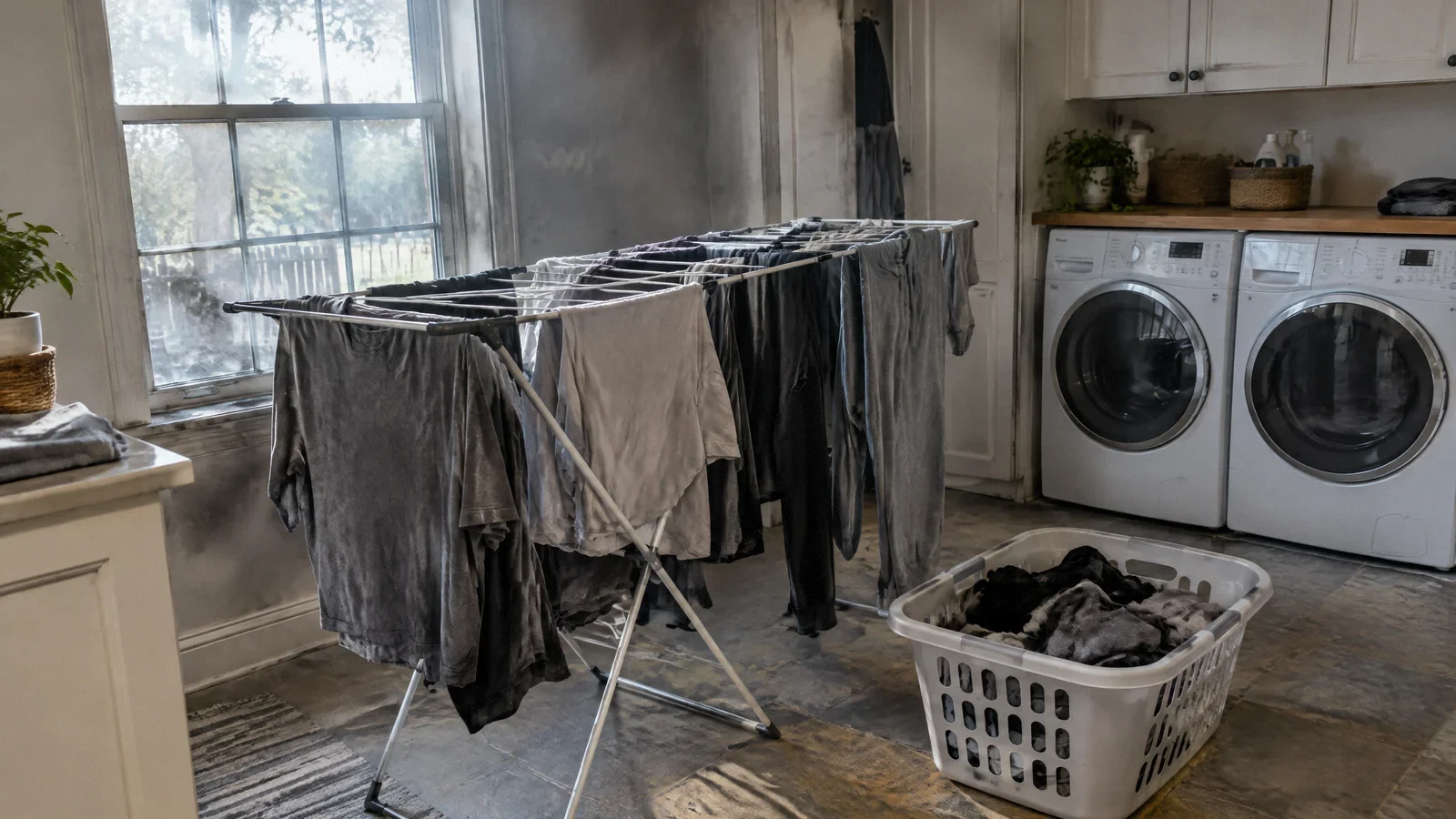
Dry according to the care label in a clean area. Air-drying can make it easier to inspect an item before applying dryer heat, but outdoor air should be clean and weather suitable. Check seams, collars, pockets and linings after the fabric is fully dry. A garment may look clean yet still smell smoky, or it may have permanent discoloration or heat damage. Odor reduction alone does not prove that all hazardous residue has been removed.
If the smell persists after appropriate cleaning, ask a professional whether the fabric and contamination are suitable for further treatment. Do not rely on perfume, scented spray or storage with fragrance to remove soot. Avoid ozone treatment in occupied spaces; discuss any proposed specialty treatment and its risks for the fabric with a qualified provider.
When to replace or seek specialist care
Professional help is appropriate for extensive soot, unknown chemicals, melted fibers, specialty clothing and large loads after a structure fire. Firefighter protective equipment is governed by its own cleaning and service procedures and should not be treated as ordinary household laundry. A garment that is damaged, cannot be cleaned adequately or continues to shed residue may need replacement.
Ask a restoration company what it will inspect, whether each item is cleaned individually or in a batch, and how it evaluates remaining odor and damage. Request a written estimate and discuss payment with the insurer beforehand. The U.S. Fire Administration recommends contacting the insurer promptly and obtaining a written estimate from a contents-cleaning company.
Return only clean, dry clothing to storage
Store cleaned garments separately from untreated items in a clean, dry place. If the closet itself was smoke-affected, address its surfaces and any water damage first; otherwise the clothing may acquire odor again. Label bags of untreated items so that they are not accidentally mixed with clean laundry. Retain an inventory of discarded items and treatment outcomes for the claim.
Review the result after the fabric and storage area have dried. Recurring odor can point to remaining residue in the clothing or its surroundings. If an item remains questionable, keep it separate and consult the cleaner rather than repeatedly adding chemicals. Not every fire-damaged textile can be restored, and a professional assessment may be more economical for a large or mixed load.
Your next-step checklist
- Wait for safe entry and document affected clothing.
- Sort by care label and degree of soot.
- Launder only suitable lightly affected items separately.
- Inspect before dryer heat and seek help for persistent residue.
Related questions
Can I wash sooty clothes with clean laundry?
Keep them separate. Heavy soot or unknown contamination warrants professional advice before using a home washer.
Will one wash remove all smoke residue?
Not necessarily. Follow the care label, inspect after washing and seek professional help if contamination or odor persists.
Should I dry clean a smoke-damaged silk garment?
Ask a cleaner experienced with smoke-damaged textiles and describe the exposure; delicate and valuable fabrics need individual assessment.
Sources & context
Public guidance supports the principles in this article. The practical questions and examples are editorial interpretation, not a site assessment or a coverage decision. State-specific rules apply only where identified.
- After the Firegovernment
- Guidance for Those Returning to Areas Affected by Fire Damagegovernment
- Post-Fire Cleanup Guidancegovernment