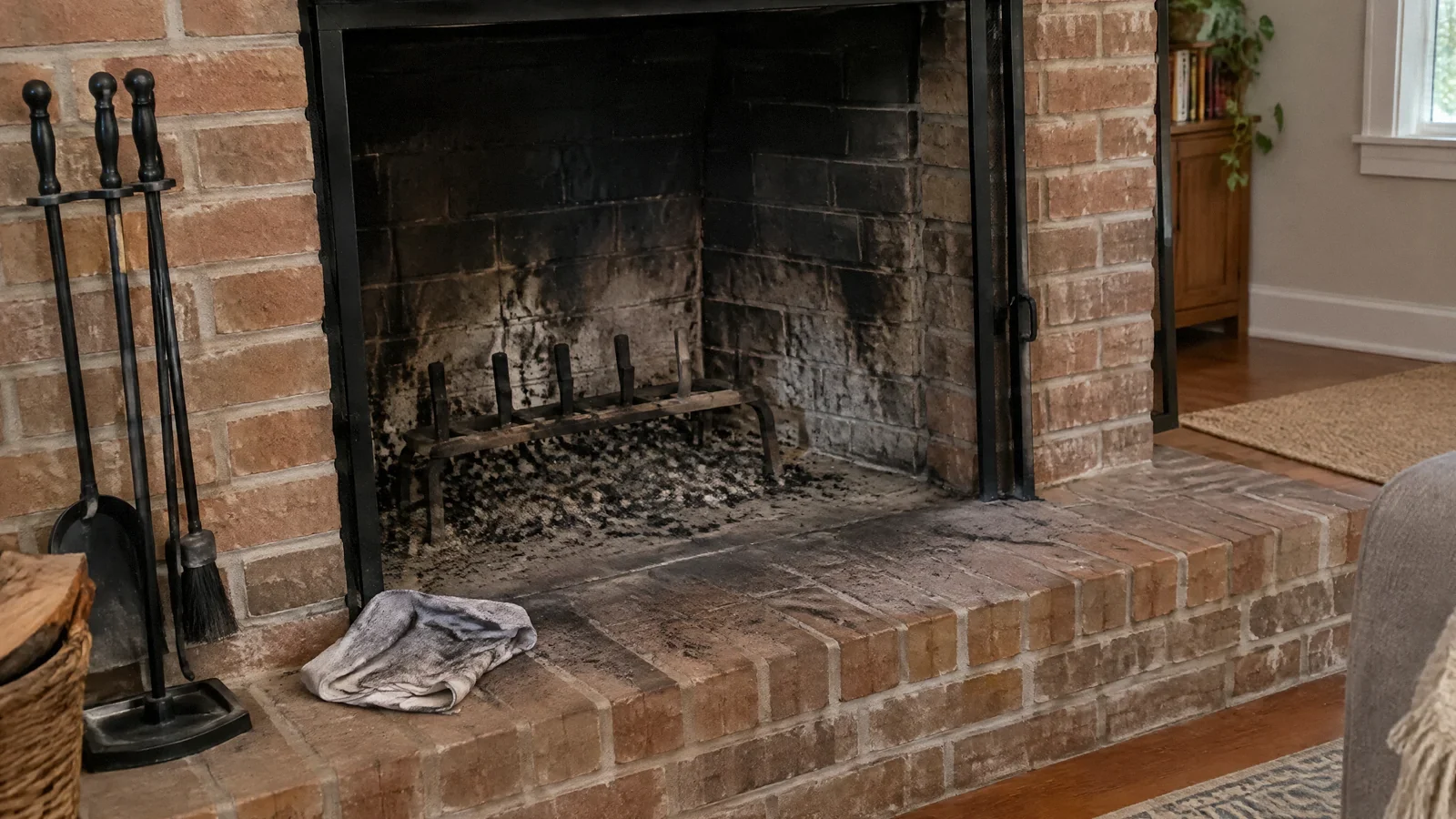
After the area is declared safe, identify the brick and the extent of residue. For a small, accessible deposit, test a gentle, brick-compatible method first; extensive fire damage, fragile historic masonry or persistent oily soot calls for a specialist.
Distinguish fireplace soot from fire damage
A small soot mark around a fireplace opening is different from masonry exposed to a structure fire. If there was a fire outside the appliance, wait for the fire department to authorize entry and have the chimney and masonry evaluated before using the fireplace again. Cracks, loose mortar, spalling brick or a changed fireplace opening can indicate damage that cleaning will not repair. Do not scrub unstable masonry or use the appliance until a qualified professional has assessed it.
Photograph the brick and surrounding surfaces before treatment, especially if an insurance claim is possible. Ask your insurer about documentation. Smoke and soot may have reached nearby trim, flooring and cavities; a clean brick face does not establish that the rest of the room is clean. Heavy, greasy soot or unknown combustion residue may require a fire-restoration company rather than a household cleaning attempt.
Prepare the surface and the work area
Let a fireplace cool completely and make sure there are no hot embers. Protect nearby flooring with a suitable covering and move washable furnishings away. Keep children and pets out of the work area. Wear gloves and eye protection; a well-fitting N95 can help reduce inhalation of particles but does not protect against smoke gases or every hazardous material. People sensitive to smoke or with respiratory conditions should avoid cleanup and seek help.
Identify whether the brick is painted, sealed, glazed, historic or unsealed and inspect the mortar. Cleaning products can change color or damage finishes. Test a small, inconspicuous area and let it dry before treating a larger area. For old, soft, crumbling or valuable brick, consult a masonry conservator. Do not use a pressure washer, sandblaster or strong acid as a first step: these can damage masonry or force water into the wall.
Remove loose particles without spreading them
Do not dry sweep or blow soot around the room. EPA advises avoiding actions that send ash into the air; a HEPA-type vacuum may be used on suitable dusty surfaces. Carefully collect loose material without grinding it into the brick or mortar. If the deposit is large or contaminated with debris from burned materials, stop and obtain a professional assessment.
Place used disposable materials in a suitable bag and handle them according to local instructions. Protect the floor and adjacent rooms from tracked residue. A conventional vacuum or an aggressive wire brush can spread particles or scratch the surface. The goal is to remove accessible loose material while preserving the brick, not to abrade the dark mark away.
Test a gentle cleaning method
For ordinary sound brick with a small remaining mark, begin with a mild detergent solution compatible with the masonry and finish. Use a soft nylon brush or cloth in the test area, working gently and keeping water controlled. Blot or wipe away the dirty solution with a clean damp cloth, then allow the test to dry. Compare it in the same light before proceeding; wet brick can look darker than dry brick.
Clean in small sections and change dirty cloths or solution so residue is not spread. Avoid saturating the brick, mortar or adjoining drywall. If the test causes color loss, a white residue, loose mortar or spreading stain, stop. Do not mix cleaning chemicals. A stronger masonry cleaner may be appropriate for some surfaces only when the manufacturer approves it and its directions can be followed safely; historic or delicate brick should be assessed by a specialist.
Treat stubborn smoke staining as a separate decision
Brick and mortar are porous and soot may penetrate or leave oily residue. Several gentle passes may improve a small mark, but they may not restore the original appearance. Do not keep increasing pressure or chemical strength simply to make the surface uniformly light. A masonry or fire-restoration professional can test a method on the actual brick and explain the expected result and potential changes to the finish.
Painting or applying a sealer over an unclean, damp surface can trap a problem or produce an uneven appearance. If a coating is considered, first resolve the source and have the masonry dry and suitable for the specific product. A coating changes the appearance and future maintenance of brick; it is not proof that hidden soot or structural damage has been removed.
Check the source and surrounding materials
Soot returning around a fireplace may indicate combustion or venting trouble. Stop using the appliance and arrange a qualified chimney or appliance inspection. Cleaning the brick does not correct a blocked flue, pressure imbalance or damaged chimney. If smoke or carbon monoxide alarms activate, leave and contact emergency services; do not rely on the absence of a visible soot mark.
Check adjoining painted walls, grout, hearth, mantel and flooring for deposits. Each material needs its own care method. Avoid allowing dirty rinse water to run onto porous flooring or unfinished wood. For broad smoke damage, a professional can assess concealed areas, contents and ventilation equipment as well as the visible brick.
Dry and reassess
Let the treated masonry dry thoroughly under normal ventilation before judging the result or returning items to the hearth. A dark damp patch is not a reliable indicator of permanent staining. Photograph the dry test and note the product used, dilution and result. If staining returns or odor remains, identify the source rather than repeatedly applying cleaners.
Keep records of work, damaged materials and any professional recommendations. For irreplaceable historic masonry, a conservative trial and documented treatment can preserve more than aggressive cleaning. If brick is crumbling, heat-damaged or stained deep into the material, restoration or repair may be more appropriate than attempting complete cosmetic removal.
Your next-step checklist
- Confirm the fireplace is cold and the building is safe.
- Protect nearby surfaces and test an inconspicuous area.
- Remove loose soot without dry sweeping or aggressive brushing.
- Use a gentle compatible cleaner and let the brick dry before judging.
Related questions
Can I pressure wash indoor brick soot?
Avoid pressure washing indoors or on fragile brick; it can spread contamination and force water into materials.
Why does the brick still look dark after cleaning?
It may be wet or stained below the surface. Let it dry and consult a specialist before using stronger treatment.
Can I use the fireplace if soot returns?
Stop using it and arrange a qualified inspection of the appliance and chimney.
Sources & context
Public guidance supports the principles in this article. The practical questions and examples are editorial interpretation, not a site assessment or a coverage decision. State-specific rules apply only where identified.
- Guidance for Those Returning to Areas Affected by Fire Damagegovernment
- Post-Fire Cleanup Guidancegovernment
- Wildfires and Indoor Air Qualitygovernment