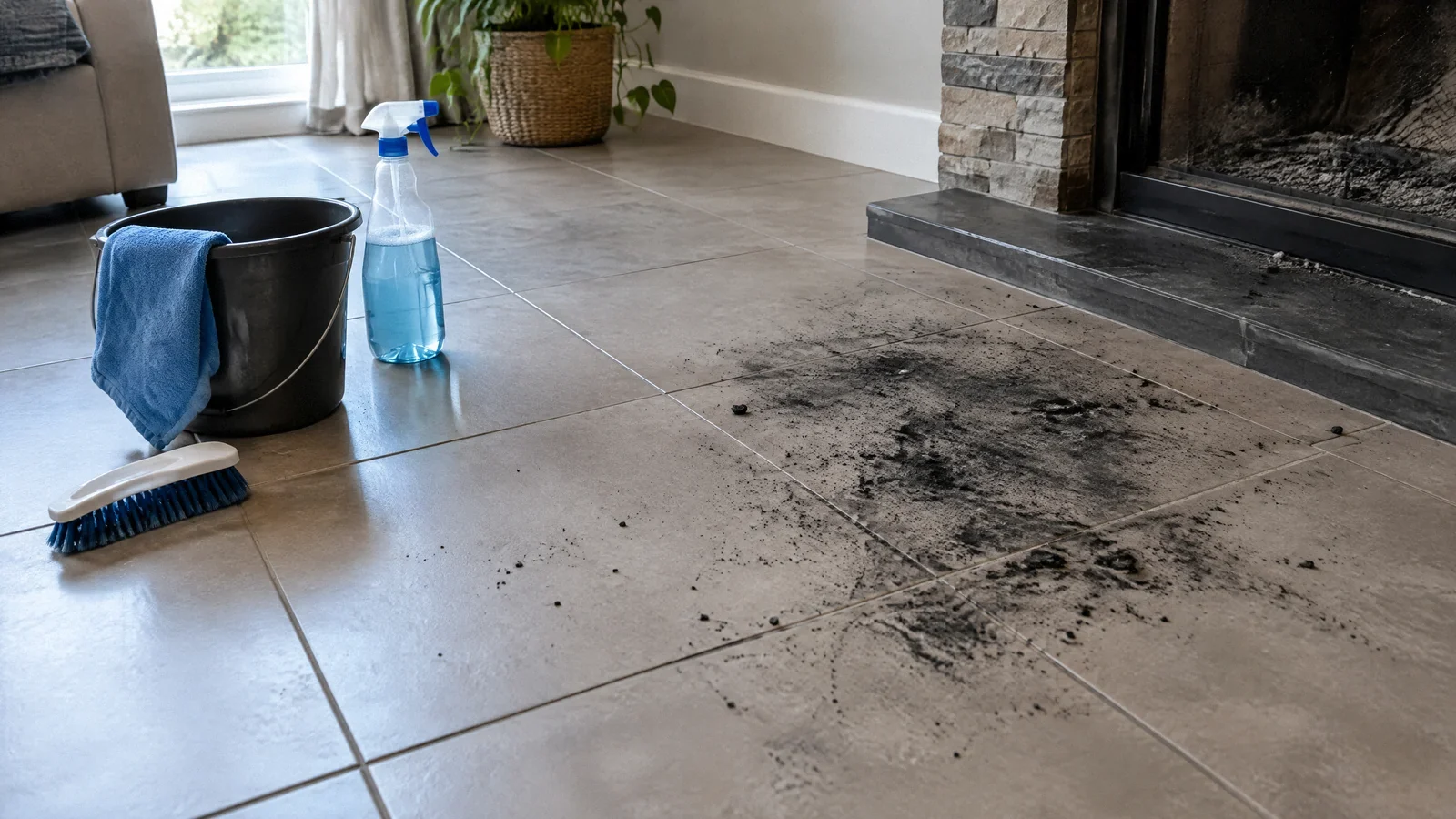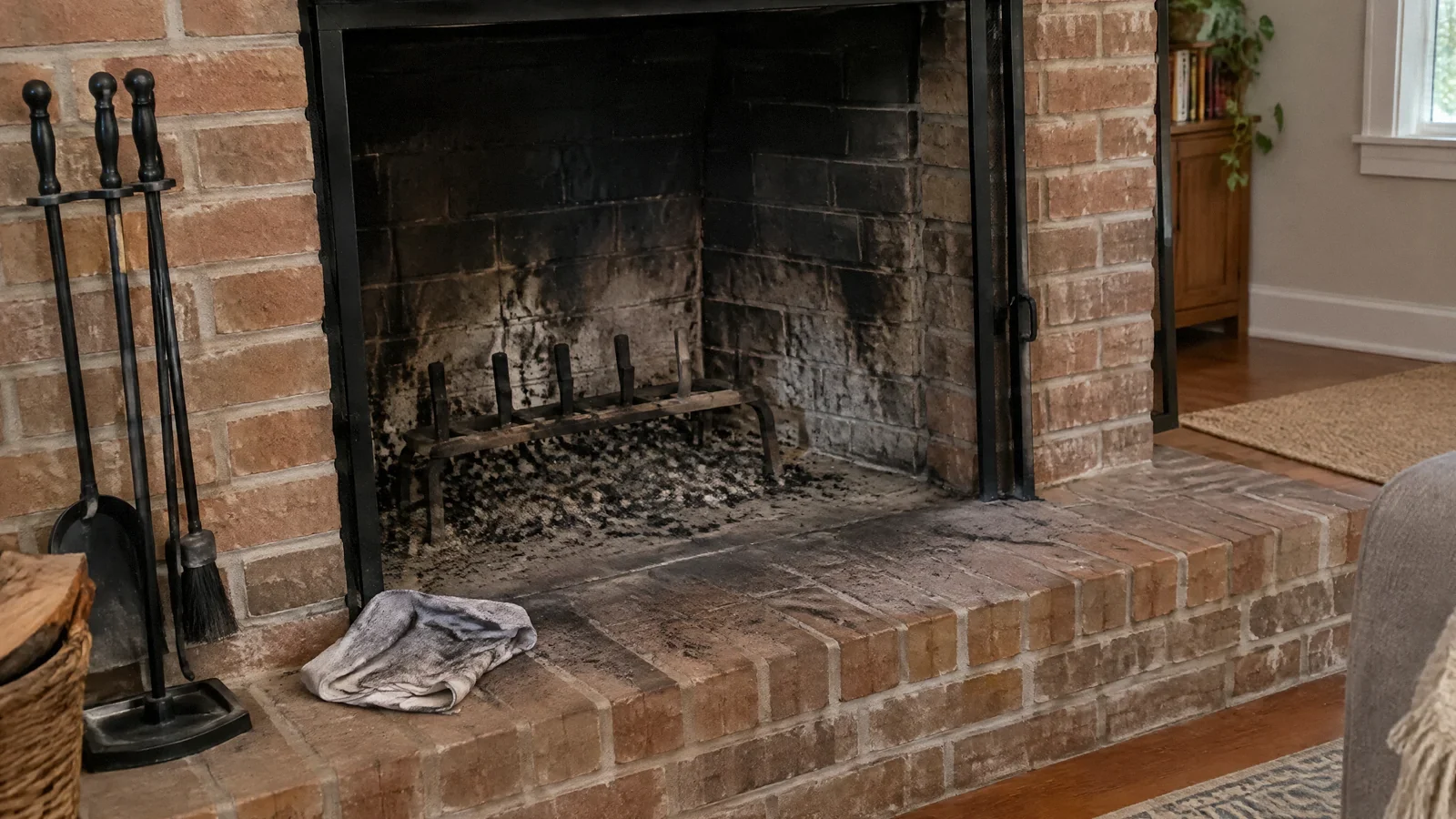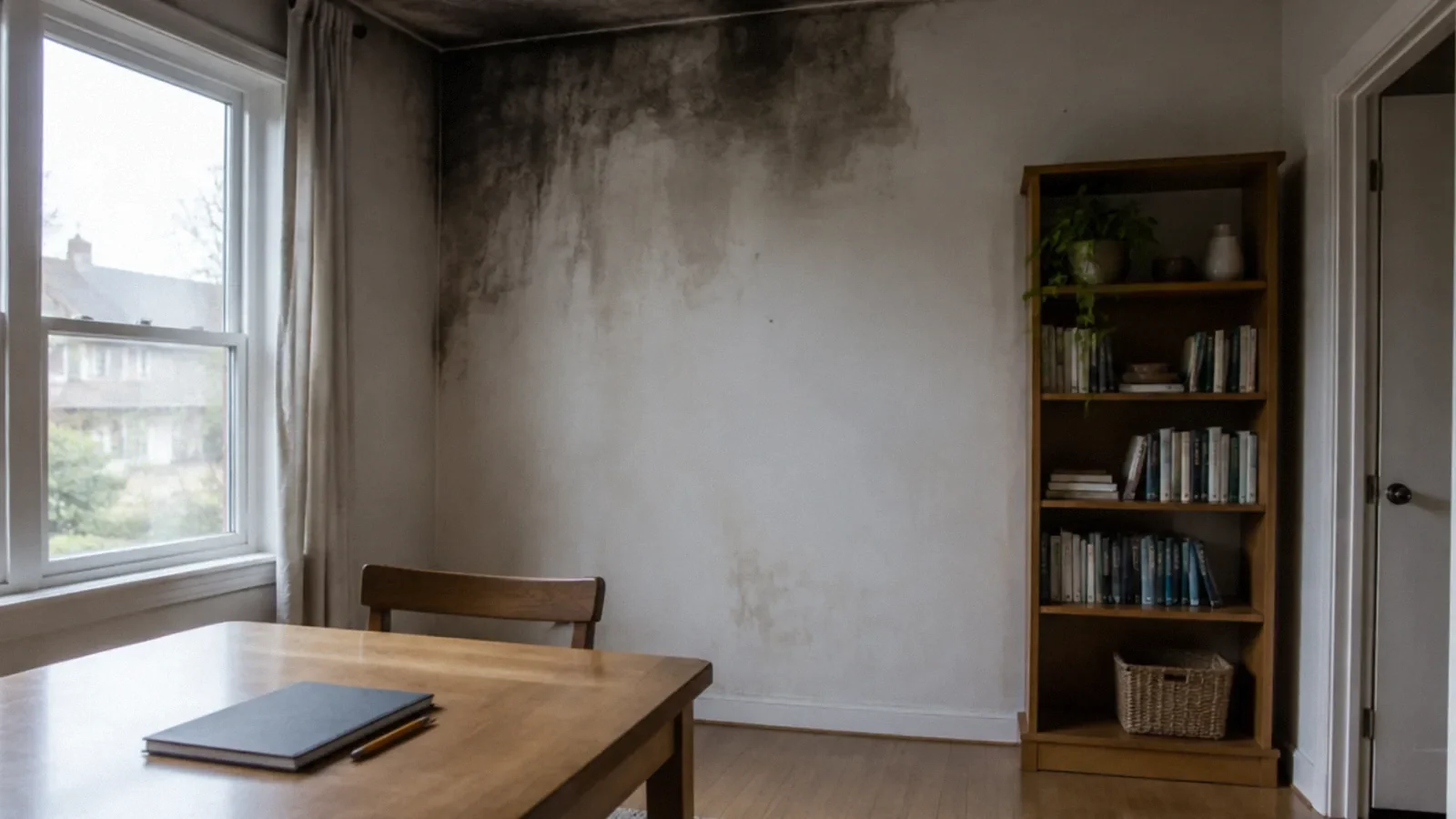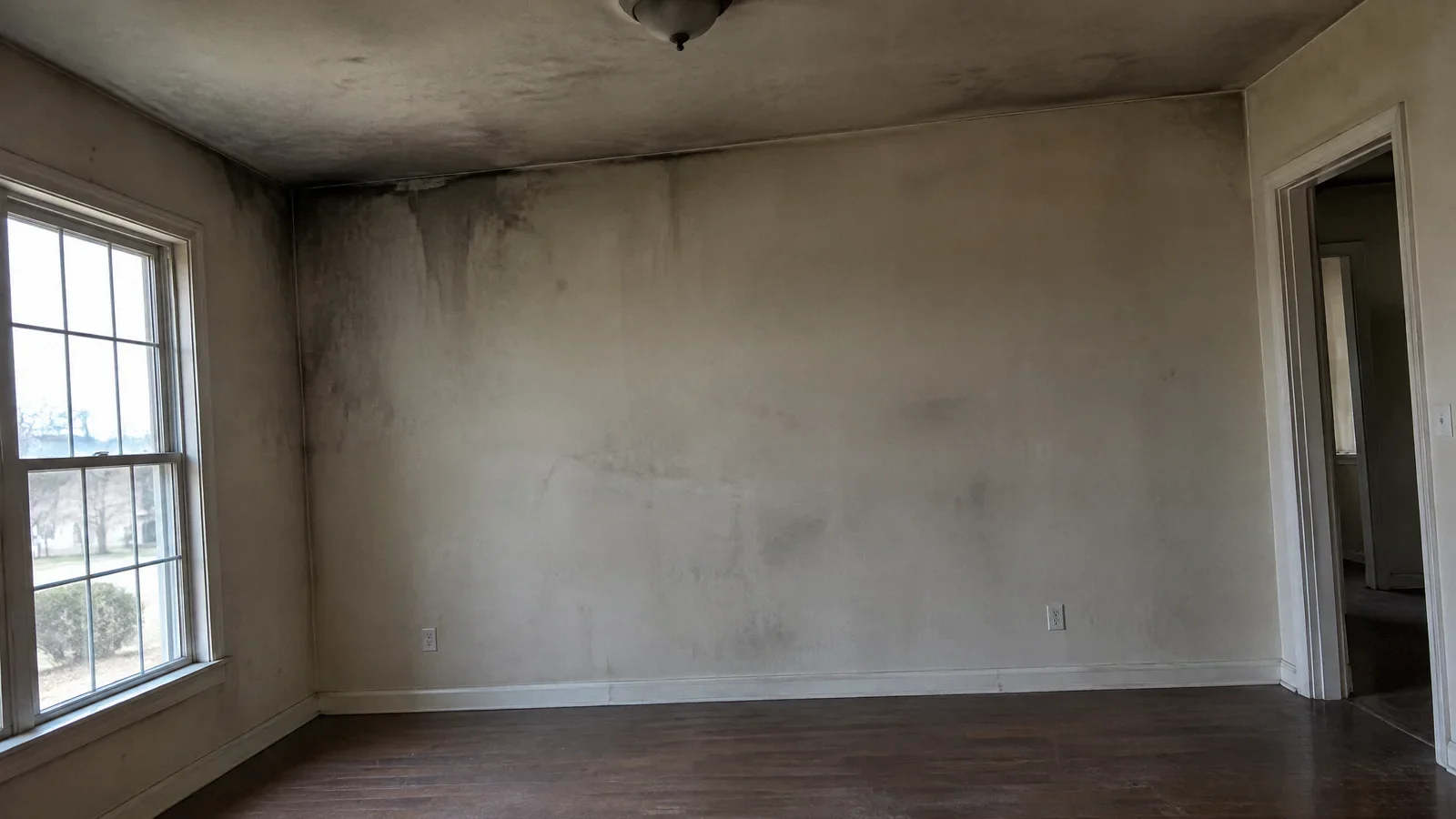
After safe entry, assess the extent and type of residue and test a gentle method on the actual finish. Avoid spreading particles or soaking drywall; widespread, oily or heat-damaged surfaces should be evaluated by a fire-restoration professional.
Determine whether cleanup is safe
A small soot mark near a candle or fireplace is different from damage after a structure fire. Do not enter a fire-damaged home until the fire department says it is safe. Heat-damaged ceilings, wet drywall, electrical components and debris can present hazards. If the ceiling sags, the wall is wet around an outlet, wiring is exposed or structural damage is suspected, keep away and arrange qualified help. Do not stand beneath a damaged ceiling or reach around fixtures.
Smoke residue can contain material from many burned products. Extensive deposits, greasy soot, unknown chemicals or contamination throughout a home merit a professional assessment. Keep children, pets and smoke-sensitive people out of the area. Photograph the damage and contact your insurer before disposal or major work where safe; the policy and cause determine coverage.
Identify the wall or ceiling finish
Painted drywall, plaster, washable wallpaper, textured ceilings and unfinished wood do not respond alike. Find the paint or wall-covering care instructions if possible. Flat paint may mark more readily than a washable finish, and a textured ceiling can shed material when touched. Historic finishes or decorative plaster deserve a conservator’s advice. If the building may have older asbestos-containing materials or lead paint, do not sand, scrape or disturb them before appropriate assessment.
Inspect for soot above openings, around a fireplace, at ceiling corners and behind movable furnishings. These observations help determine the affected area but do not reveal the full extent of smoke in wall cavities or ventilation equipment. A recurring soot mark after cleaning may indicate an ongoing appliance, combustion or airflow problem that requires investigation.
Prepare without spreading soot
Remove small clean items and protect the floor and furnishings with suitable coverings. Work only in an area with safe access and ventilation appropriate to outdoor conditions. Wear gloves, protective clothing and eye protection. EPA recommends a well-fitting N95 for ash cleanup; it can reduce particle inhalation but does not protect against gases or make an unsafe building safe. Avoid dry sweeping or blowing soot into other rooms.
If a suitable HEPA-type vacuum is available, use it according to the manufacturer’s directions to collect loose deposits without grinding them into the finish. Do not climb on unstable furniture or use a ladder beneath a damaged ceiling. For high areas, extensive residue or limited mobility, hire a professional.
Test before wiping a painted surface
Choose a small inconspicuous area and inspect it before and after the test. For a washable, intact painted surface with light residue, a mild detergent solution may be appropriate if the paint manufacturer permits it. Use a soft cloth only lightly dampened with the solution, then wipe with a clean damp cloth as directed and dry. Avoid saturating drywall, wallpaper seams or electrical devices. Change cloths as they pick up residue so soot is not spread.
Let the test dry fully before judging color and sheen. If the paint softens, transfers, streaks or the soot smears, stop and consult a restoration professional. Some dry-cleaning sponges are sold for soot, but their suitability depends on the residue and finish; test a product and follow its directions rather than assuming that rubbing harder will improve the result. Never mix cleaning chemicals.
Work in controlled sections
Once a test succeeds, work on a small area at a time. Work in manageable sections, following the finish manufacturer’s cleaning instructions. Use limited moisture and avoid letting dirty liquid run over untreated areas or into baseboards. Keep clean and used cloths separate. Stop if residue spreads, the finish deteriorates or the surface becomes wet.
Ceilings need special caution because cleaning overhead can expose eyes and skin to drips and particles. A fragile, textured or water-damaged ceiling should not be scrubbed. For a sound, washable ceiling, follow its coating manufacturer’s instructions and use suitable access equipment. Do not clean around a light fitting until electrical safety is established. Large overhead areas are often better handled by a professional with appropriate protection and containment.
Smoke odor, staining and repainting
A dark stain and a smoke odor are related but not identical problems. Soot can remain in trim, insulation, furnishings, ceiling cavities or ventilation equipment after the visible wall is wiped. A fragrance masks odor temporarily and adds material to the air; it does not remove the residue. Persistent odor or marks that reappear require investigation of the source and extent, not repeated painting.
Do not paint over loose soot, damp drywall or damaged material. After the source is corrected and surfaces are properly cleaned and dried, a suitable stain-blocking primer may be part of a repainting plan. Follow the paint manufacturer’s directions and ask a restoration professional whether concealed materials also need treatment. Primer is a finish preparation, not evidence that hidden contamination or the cause of smoke has been addressed.
Know when to replace or seek help
Porous wallboard or insulation affected by firefighting water, heavy soot or contamination may not be restorable with a surface wipe. A restoration professional can inspect moisture, identify material that needs removal and determine how to prevent the spread of dust during work. Do not cut into suspect cavities without a plan for hidden wiring, plumbing, hazardous materials and containment. If a landlord manages the property, report the damage and request an inspection.
Request a written scope describing the areas to be cleaned, removed or sealed, the proposed products and how completion will be evaluated. Keep the insurer informed and record photographs and drying information. A cleaned painted face does not guarantee that the material behind it is dry or that all smoke odors have been eliminated.
Check the result after drying
Inspect the dry wall and ceiling under consistent light for remaining streaks, soot transfer, blistered paint and odor. Check adjoining trim and nearby rooms before replacing clean furnishings. If a small tested area still has residue, repeat only a compatible gentle treatment; increasing chemical strength or abrasive pressure can damage the finish. Persistent odor, spreading stains or recurring soot calls for professional reassessment.
If smoke came from a fireplace or appliance, arrange an appropriate inspection before using it again. If a smoke or carbon monoxide alarm sounds, leave and call emergency services. Cleaning a wall can improve its appearance, but it cannot fix an appliance fault, confirm safe indoor air or restore a heat-damaged ceiling.
Your next-step checklist
- Confirm safe entry and inspect for damaged or wet materials.
- Protect the area and avoid dry sweeping soot.
- Test a mild compatible method on a hidden section.
- Dry completely and investigate persistent stains or odor before repainting.
Related questions
What removes soot from painted walls?
A mild detergent may work on a washable finish after a hidden-area test. Heavy or oily soot may require professional treatment.
Should I clean walls or ceilings first?
Work in small sections and follow the surface manufacturer’s instructions. Seek professional help for a fragile or damaged ceiling.
Will painting over smoke stains remove the odor?
Not reliably. Clean and dry the material, correct the source and assess concealed residue before considering a suitable primer.
Sources & context
Public guidance supports the principles in this article. The practical questions and examples are editorial interpretation, not a site assessment or a coverage decision. State-specific rules apply only where identified.