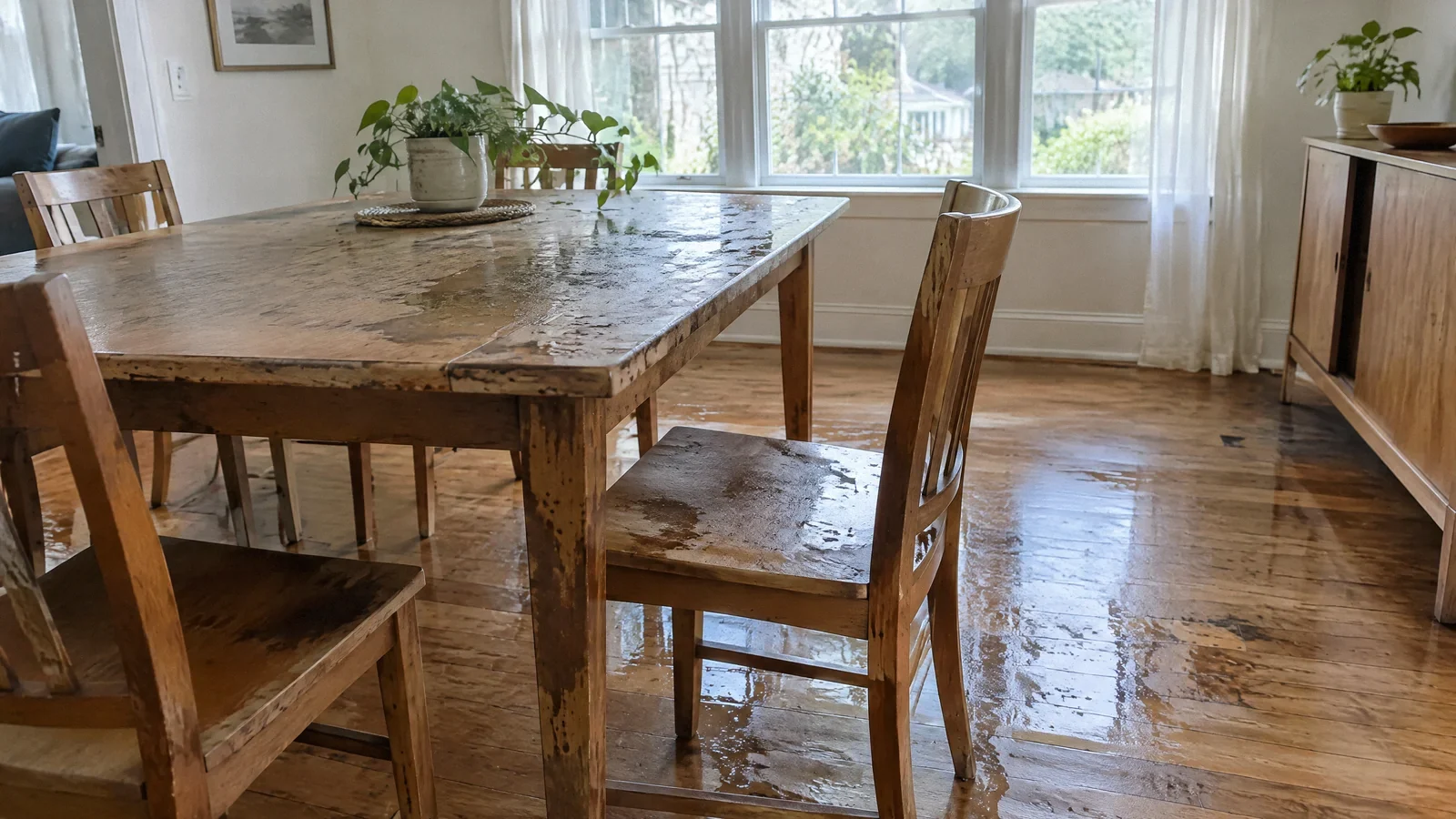
Wait until the area is safe, document the item and identify the water source. Solid wood may sometimes be cleaned and dried; soaked upholstery, severely swollen engineered wood and contaminated pieces can be difficult or impossible to restore safely.
Begin with safety and the water source
Do not enter a flooded building until electrical, structural and other hazards have been assessed. Floodwater can contain sewage, chemicals and debris, so appearance alone cannot establish that furniture is clean. Wear suitable gloves, waterproof footwear and eye protection when handling affected items, and keep children and pets away. If the item is heavy, unstable or near electrical equipment, leave it for qualified help.
Record whether the exposure was a clean supply leak, outdoor floodwater or sewage, how high the water reached and how long the piece remained wet. Unknown water should not be assumed clean. CDC advises prompt cleaning and drying, and notes that items that cannot be adequately cleaned or dried may need to be discarded. Flood-soaked upholstery and cushions are particularly difficult to clean and dry throughout.
Document and sort before treatment
Photograph each item from several angles, including labels, joints, water lines and damaged finish. Make a list of the item, estimated age or purchase information and condition for the insurer. Ask what documentation is required before disposal, while taking safe steps to limit further damage. Insurance coverage depends on the policy and cause of loss.
Separate furniture with removable cushions or fabric from the wooden frame. A solid-wood frame, veneered cabinet and particleboard bookcase behave differently when saturated. Swollen, crumbling particleboard or delaminated panels may no longer support their load even after the surface dries. Do not sit on, stack or load an unstable piece. A conservator can assess a valuable antique before cleaning changes its finish or removes evidence.
Move and open the piece carefully
Once the location is safe, move a manageable piece to a clean, sheltered area where it can dry without being exposed to rain. Lift with help rather than dragging weakened legs or joints. Keep the furniture off a wet floor and allow space around it. If a drawer is swollen and stuck, do not force it; forcing can split a drawer front or damage the runners. Let a specialist decide how to release it as the wood dries.
Open doors or remove drawers and shelves only when they move freely and can be handled without damage. Photograph their original arrangement and keep hardware together. Air reaching concealed surfaces helps drying, but a fan blowing directly across visible mold can spread particles. EPA recommends gently cleaning visible mold before operating fans or dehumidifiers in an affected space.
Clean a salvageable hard surface
For an ordinary, structurally sound hard-wood surface, CDC recommends cleaning flood-affected hard surfaces with detergent and water. Remove loose soil gently and use a cloth dampened with the cleaning solution, working in manageable sections. Avoid soaking joints, veneer and unfinished edges. Wipe away residue with a clean, lightly damp cloth as appropriate for the finish, and dry the surface. Test any method in an inconspicuous area first.
Finishes and veneers vary. Painted, waxed, antique or water-sensitive surfaces may change color or lift when wetted. Stop if finish transfers to the cloth or veneer loosens and consult a furniture conservator. Do not mix cleaners. Bleach is not a substitute for physically removing soil and is not a universal treatment for wooden furniture. Do not sand or aggressively scrape suspect coatings without assessing possible lead or other hazards.
When to discard or call a specialist
Discard or seek professional assessment for furniture contaminated by sewage or chemicals when thorough cleaning cannot be established, for wet upholstery and padding that cannot be dried, or for a piece that has lost structural integrity. CDC recommends discarding flood-soaked upholstered furniture and other items that cannot be cleaned and dried quickly. Visible mold or persistent musty odor after drying needs investigation, not a deodorizer.
A trained furniture conservator can advise on a valuable item, loose veneer, delicate finishes and joint repair. A restoration professional can assess widespread mold or contamination. Ask what will be removed, how hidden surfaces will be treated, how drying will be verified and whether the item can safely be used afterward. If the cost or uncertainty exceeds the item’s value to you, replacement may be the practical choice.
Before returning it to the room
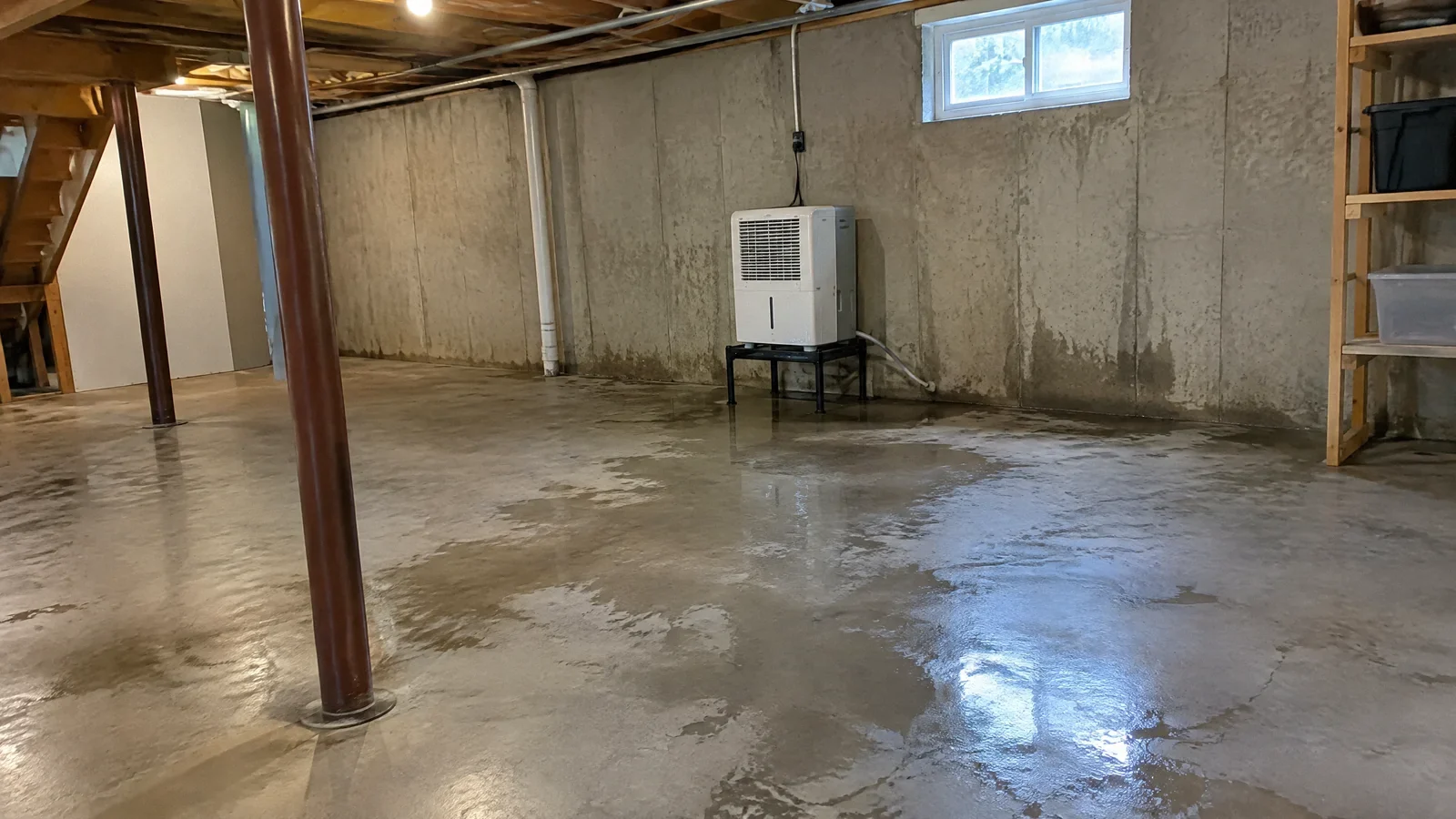
Do not put cleaned furniture back into a wet basement or against a damp wall. Address the leak or flood source and dry the room first; otherwise the piece can absorb moisture again. Inspect flooring and wall cavities nearby, because a clean chair does not mean the building materials beneath it are dry. Keep records of cleaning, disposal and professional recommendations with your photographs.
Recheck joints and drawers after drying. Wood can warp or joints can loosen as its moisture changes, so have a repair specialist assess a chair or table before loading it if stability is doubtful. A lingering chemical smell, recurring water marks or visible mold are reasons to stop use and reassess rather than cover the problem with polish or fragrance.
Your next-step checklist
- Wait for safe entry and document the item.
- Separate solid wood from upholstery and damaged engineered wood.
- Clean salvageable hard surfaces gently and dry hidden areas.
- Seek specialist help for contamination, unstable pieces or valuable finishes.
Related questions
Can flooded particleboard furniture be saved?
Severe swelling, crumbling or loss of strength often makes replacement practical. Have uncertain contamination or stability assessed.
Can I dry furniture in direct hot sun?
Rapid uneven drying can damage wood and finishes. Use a sheltered, ventilated space and seek conservator advice for valuable pieces.
Does a dry surface mean the whole piece is dry?
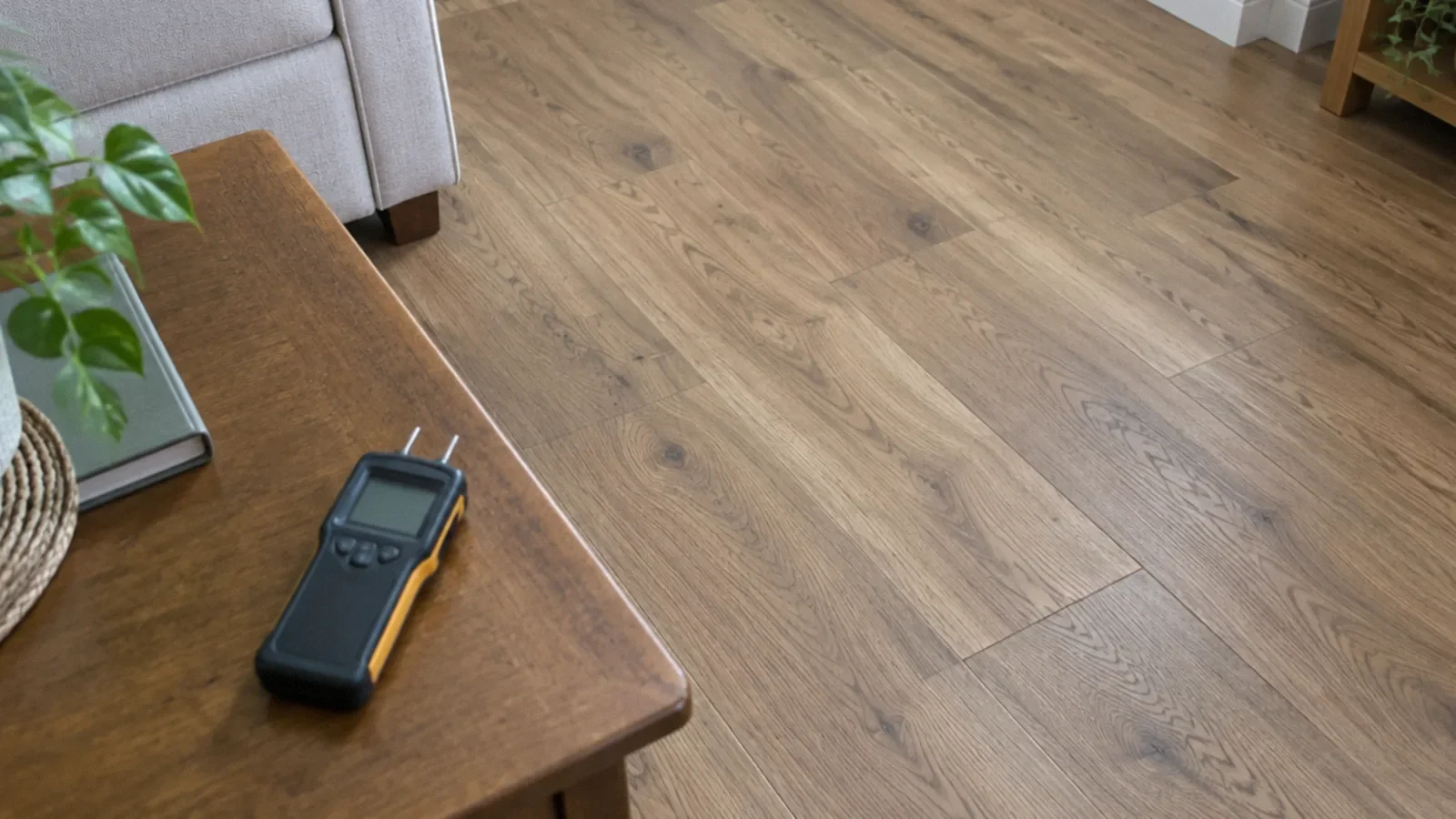
No. Joints, thick sections and concealed surfaces can retain moisture after the surface feels dry.
Sources & context
Public guidance supports the principles in this article. The practical questions and examples are editorial interpretation, not a site assessment or a coverage decision. State-specific rules apply only where identified.