If smoke indicates an active fire or an unknown danger, evacuate and call emergency services. Once a small source is stopped and conditions are safe, ventilate with cleaner outdoor air and use a properly sized mechanical air cleaner to reduce remaining particles.
First stop the source and assess danger
Visible smoke can arise from a burnt meal, a fireplace problem, an electrical fault or an active fire. If the source is unknown, smoke is increasing, an alarm sounds or you cannot quickly and safely control a small cooking incident, leave immediately and call the fire department from outside. Close the door behind you if you can do so safely. Never delay evacuation to open windows or retrieve a purifier. Do not reenter a fire-damaged building until the fire department says it is safe.
A gas smell, a smoking electrical device or recurring fireplace smoke needs qualified attention. A particle filter does not remove carbon monoxide reliably; use working carbon monoxide alarms as required and seek fresh air and emergency help if an alarm sounds. Household air cleaners are not emergency protection against an active fire or a substitute for emergency responders.
A small cooking-smoke incident
If a pan is smoking but there is no continuing fire, turn off the heat only if you can safely reach the controls. Move people and pets away from the smoke. Do not carry a burning pan through the home or pour water on a grease fire. Once the source is stopped and conditions are safe, a range hood that exhausts outdoors can remove air near the kitchen; a recirculating hood filters and returns air to the room and is not equivalent to outside exhaust.
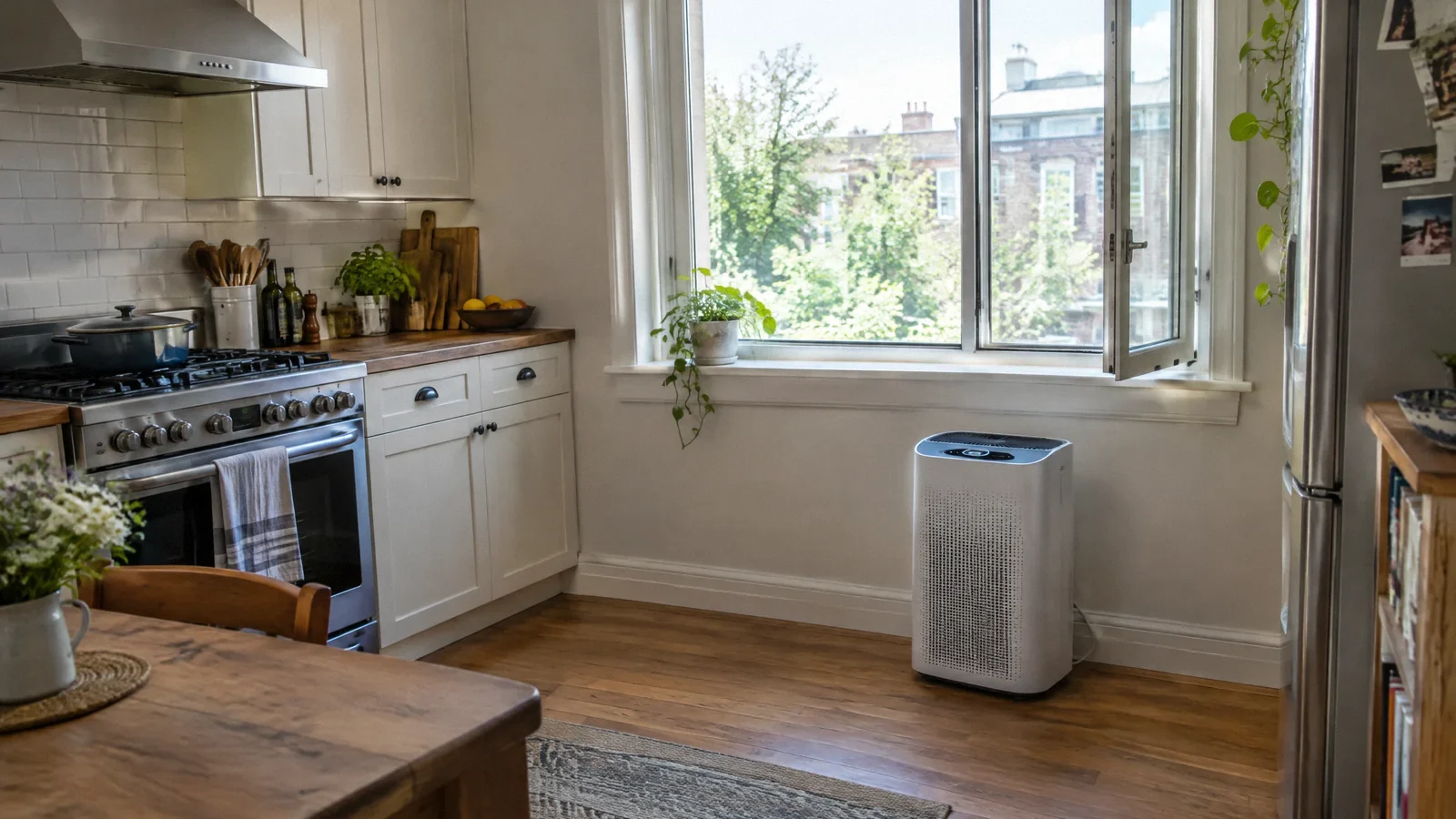
When outdoor air is cleaner, open an available window or door and use a suitable exhaust fan to move contaminated air outside. Another opening can supply replacement air. Close doors to rooms you want to protect where doing so does not prevent safe exit or create another hazard. Avoid placing a fan where its cord crosses a wet surface, its blade is accessible to children, or it could fall. There is no reliable universal number of minutes for the smoke to clear.
Ventilate only when outdoor air helps
The direction of airflow matters. Exhaust can pull air from adjacent rooms or outdoors through available gaps, so think about where replacement air will come from. For an apartment, use the ventilation that the building permits and notify management if the source is in a shared corridor, neighboring unit or mechanical system. Do not block exits or tamper with shared fire-safety equipment. Smoke moving between units requires building management or emergency response, not just a window fan.
During a wildfire, opening windows can bring in more smoke. Follow local alerts and air-quality information; keep windows and doors closed when outside air is worse and create a cleaner indoor room. When outside conditions improve, EPA recommends airing out the home. People with heart or lung disease, children and older adults may be particularly affected by smoke and should follow health advice and local directions.
Filter remaining airborne particles
A portable mechanical air cleaner sized for the room can reduce airborne smoke particles. Look for a clean air delivery rate appropriate for the room and operate it according to the manufacturer’s instructions, allowing space around its intake and outlet. A HEPA filter is one type of mechanical filter. Running a suitable unit at a higher safe setting moves more air through the filter, though noise and airflow vary by model. Keep doors and windows positioned according to whether you are ventilating with cleaner outside air or keeping smoky outdoor air out.
A filter removes particles from the air that passes through it; it does not instantly clear an entire house, remove every gas, or make an active fire safe. Some activated carbon media can reduce certain gases and odors, but effectiveness varies with the pollutant, amount of media and replacement schedule. EPA does not recommend ozone-generating and several electronic technologies for smoke removal because of limited effectiveness or potential harmful byproducts.
What if the room has no window?
First make sure there is a safe way out and that smoke is not coming from an active fire or faulty appliance. A windowless room has fewer direct ventilation options. If the building has a functioning exhaust vent that discharges outside, use it only as designed. Open the door to a cleaner adjacent area when safe and when doing so will not spread smoke into an occupied escape route. An appropriately sized portable mechanical air cleaner can reduce particles in the room, but it cannot supply fresh air or guarantee gas removal.
If smoke remains dense, the source is unknown, symptoms develop or the only route leads through smoke, leave and seek help rather than waiting in the room. In an apartment, contact building management about the ventilation and source after the immediate danger has passed. Do not modify ducts or disable alarms to make air move.
After the air clears, deal with residue
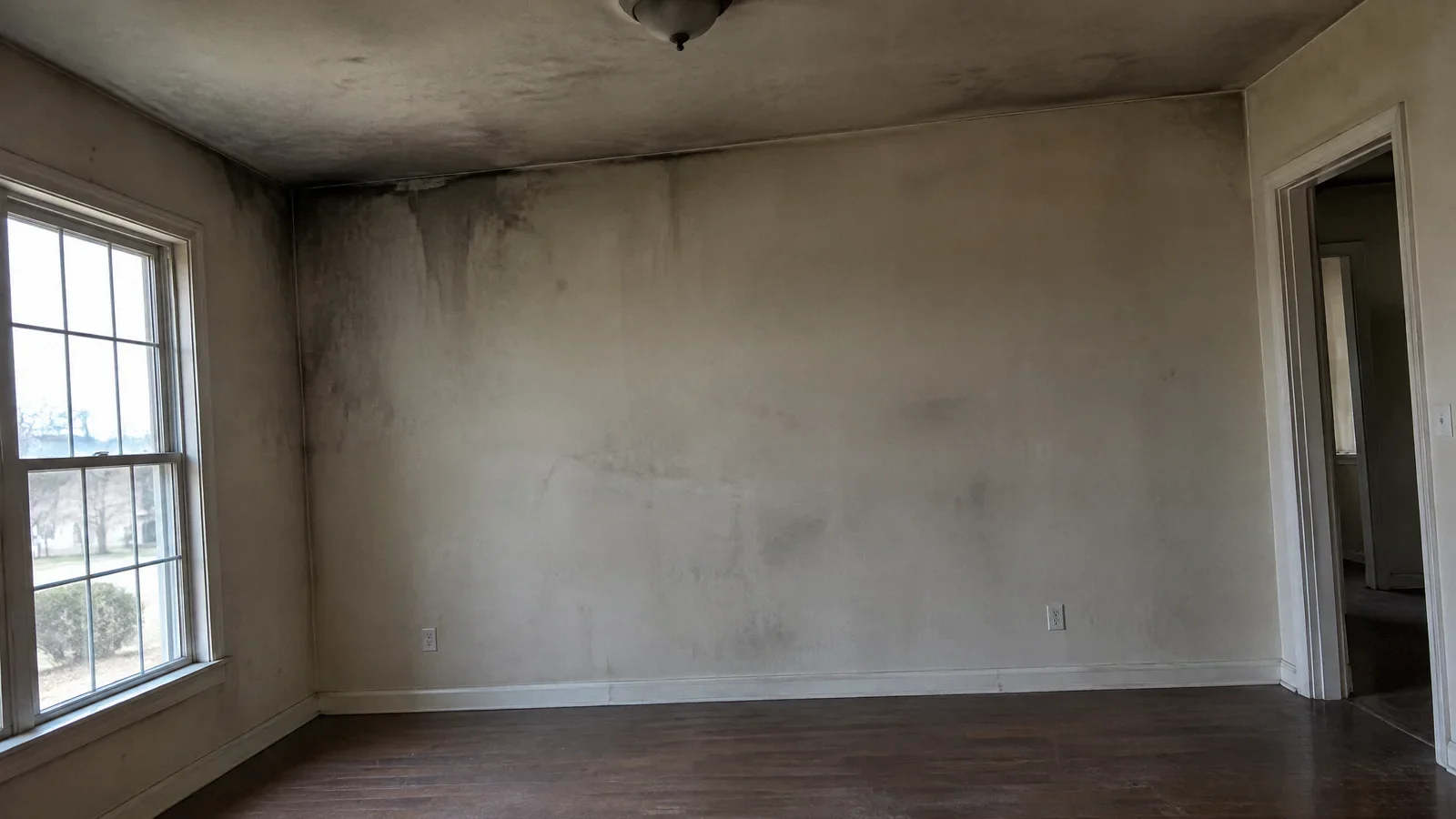
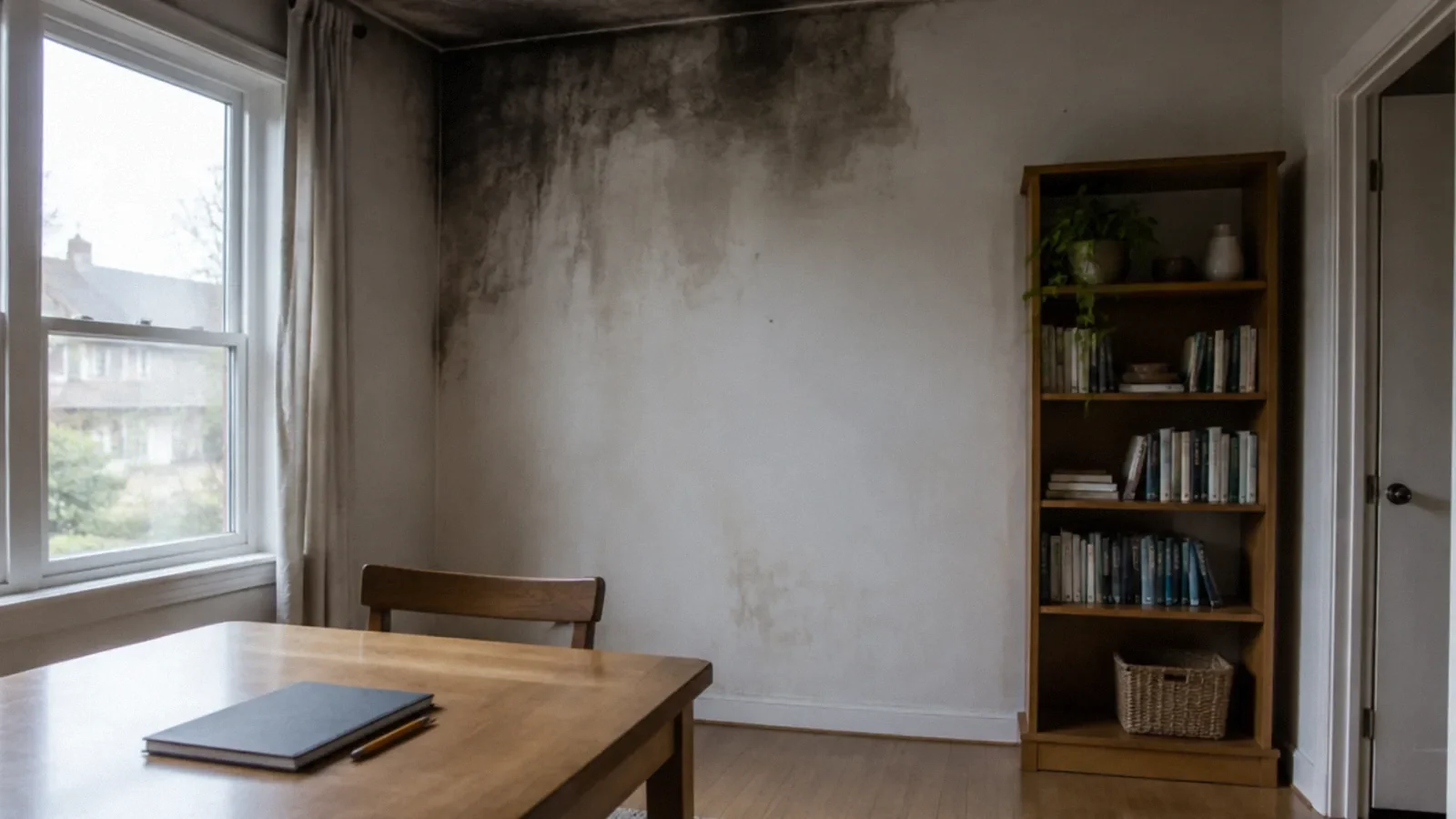
Smoke in the air and smoke residue on surfaces are separate problems. When the area is safe and outdoor conditions permit, lightly deposited ash may be wiped with a damp cloth on compatible hard surfaces. EPA advises avoiding dry sweeping, which can put ash back into the air, and using a HEPA-type vacuum if dusty surfaces are vacuumed. For extensive soot, fire damage, sensitive materials or uncertain contamination, request a professional assessment. Follow manufacturer instructions for finished surfaces and avoid soaking porous materials.
A lingering odor can come from fabric, wall coverings, furnishings or residues in inaccessible areas. Masking it with candles or fragrance adds pollutants and does not remove the source. Replace or clean filters as their manufacturer directs, and arrange inspection of the HVAC system when it may have been affected. A persistent odor or returning smoke warrants a search for the source; do not assume ventilation alone repaired the cause.
Monitor conditions before returning to normal
The disappearance of visible haze does not prove the air is free of all irritants or gases. Let the space air out when appropriate, use filtration and avoid adding smoke through candles, smoking, frying or other particle-producing activities while recovering. Check that the original source has been corrected before using the appliance or fireplace again. If anyone has breathing difficulty, chest pain or severe symptoms, move to fresh air and seek urgent medical help.
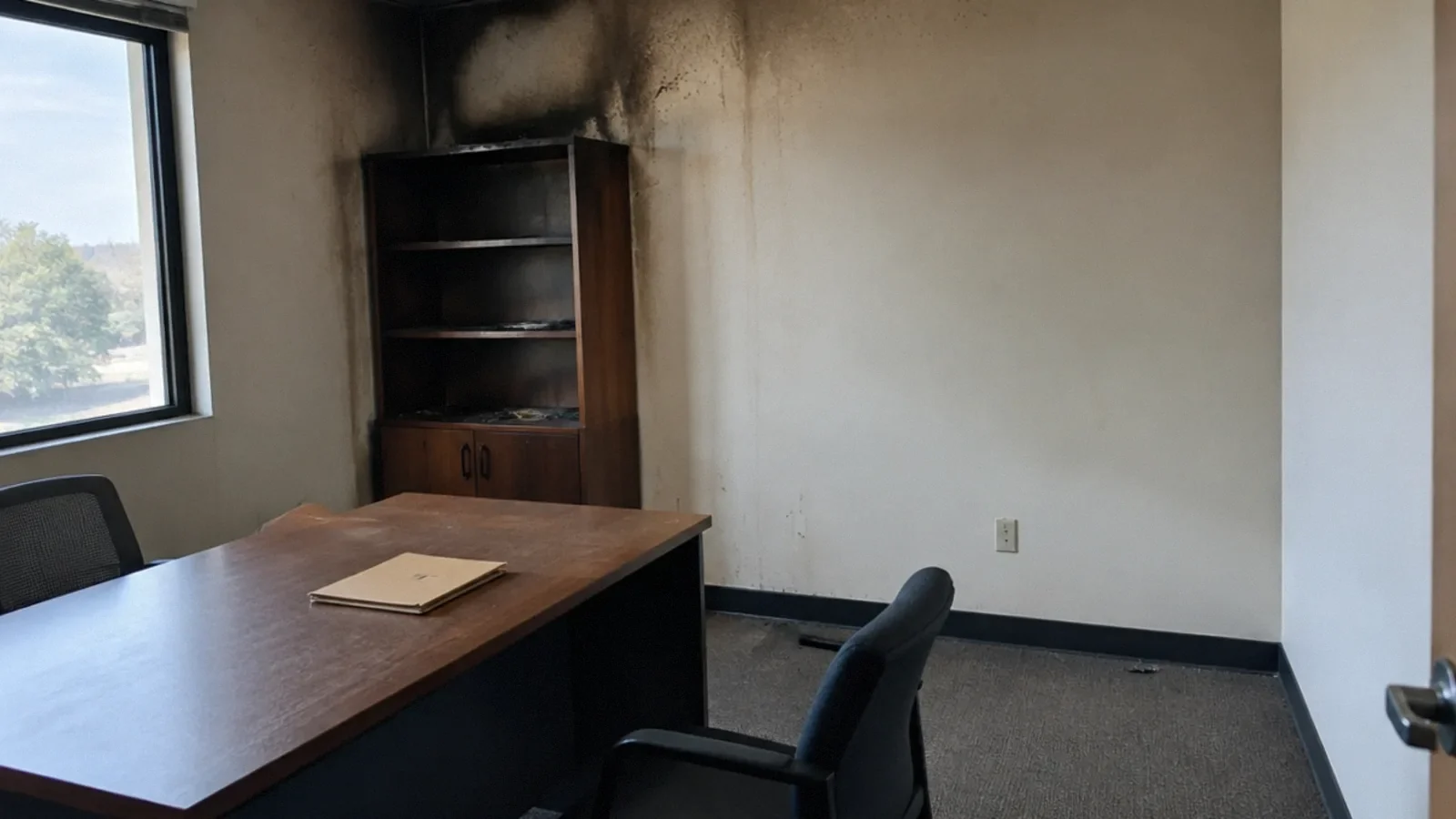
Keep a record of the incident and photographs of fire-related damage if an insurance claim may be needed. For a significant fire, follow instructions from the fire department and insurer, and use an experienced restoration company for contaminated contents and structural materials. A clean-looking surface or a shorter period of ventilation is not a guarantee of safe reoccupancy after structural fire damage.
Your next-step checklist
- Evacuate if there is an active fire, an unknown source or increasing smoke.
- Stop a small source only if it is safe to do so.
- Ventilate when outdoor air is cleaner and use a suitable particle filter.
- Investigate persistent residue, odor or recurring smoke.
Related questions
How do I clear smoke from a room without a window?
Use a properly functioning outside exhaust if available, and a room-sized mechanical air cleaner for particles. Leave if smoke is dense or the source is unknown.
Will a HEPA filter remove smoke odor?
It captures particles, but does not remove all odor-causing gases. Suitable carbon media may reduce some gases, with limits.
Should I open windows during wildfire smoke?
When outdoor air is worse, keep windows closed and filter indoor air. Air out the home when outdoor conditions improve.
Sources & context
Public guidance supports the principles in this article. The practical questions and examples are editorial interpretation, not a site assessment or a coverage decision. State-specific rules apply only where identified.
- Wildfires and Indoor Air Qualitygovernment
- Indoor Air Filtrationgovernment
- After the Firegovernment